


Don't Fall into the Hype: Debunking Home Battery Power Cuts
Published: 2026-07-25 16:47:27
Updated: 2026-08-04 12:33:17
In the UK, home batteries are gaining popularity as a way to store excess energy and provide backup power during outages.
Can a home battery work during a power cut in the UK?
Home batteries have become increasingly popular as a way to store excess energy and provide backup power during outages. But can they really keep your home running smoothly during a power cut? We'll explore the answer below.
How do home batteries work in the UK?
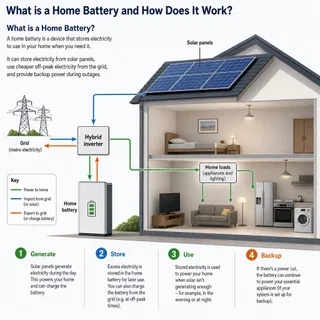
Home batteries, also known as energy storage systems (ESS), are designed to absorb excess energy from solar panels or the grid when it's available, and release it back into your home when you need it. This can be particularly useful during a power cut, when the grid is down and your appliances would normally shut off. If you are new to the topic, start with the basics of home battery storage before comparing backup options.
UK homes can experience unexpected outages, so a battery can offer peace of mind when it is installed and configured for backup use. Not every battery installation automatically powers the home during a cut, so it is important to understand what a home battery does and what extra backup equipment may be required.
Compare home solar options to see how solar panels can work together with home batteries and help reduce your reliance on the grid.
Can a home battery provide backup power in the UK?
The short answer is yes - but with some limitations. Most modern home batteries can provide backup power when the system includes suitable backup capability and is installed for that purpose. Runtime depends on the size of the system, the usable battery capacity and how much energy you are using during the outage. For example, essential loads such as a fridge, router, lights and some sockets will usually be more realistic than trying to run every high-demand appliance at once.
A home battery may be able to support key circuits during an outage, but whole-home backup is a different design decision. If your priority is resilience, read more about battery storage for outages and decide whether you want essential-load backup or a wider backup arrangement.
Book a free home energy survey to assess your energy needs and determine if a home battery is right for you.
Are there any limitations to consider?
Yes - there are some important considerations to keep in mind. First, the size of your battery will affect how long it can provide backup power. Larger batteries generally cost more and take up more space, so it's essential to balance your needs with the costs and practicalities. Second, the type of appliances you're using during a power cut will also impact the battery's performance. For instance, if you have a lot of heavy-duty appliances like electric water heaters or air conditioners, they may draw too much energy from the battery and reduce the time it can support your home.
Battery costs vary depending on capacity, brand, installation complexity and whether backup circuits are included. For a fuller breakdown, see our guide to home battery costs in the UK.
Here are some key points to consider when evaluating home batteries for backup power:
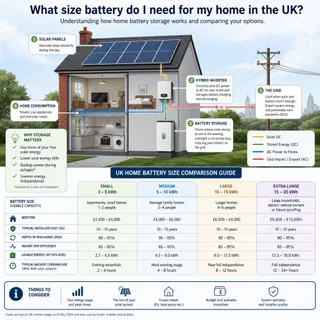
If you are unsure what capacity is realistic for your home, compare your normal electricity use with your essential loads and read more about battery sizing. By considering these factors and evaluating your energy needs, you can make an informed decision about whether a home battery system is right for you.
Plan, Compare & Buy Renewable Energy Solutions
AI does the thinking.
You get the perfect solar match.
Use RoboMo™ to assess your property, compare available technologies and connect with trusted UK installers, suppliers and manufacturers.
Simply enter your postcode, drop a pin on your roof, create your free account and let RoboMo™ analyse your property to find the best solar panels for your home.

You don't have to think
RoboMo™'s AI analyses your roof and does all the hard work.

Accurate & tailored
AI-powered assessment based on your roof, location, and conditions.

Best options, maximum savings
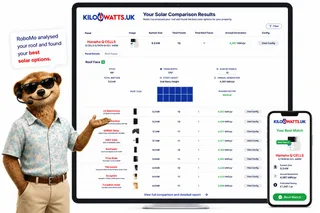
Compare top solar panels for the best performance and value.

Simple, fast & effortless
Provide a few details, sit back and watch your results unfold.
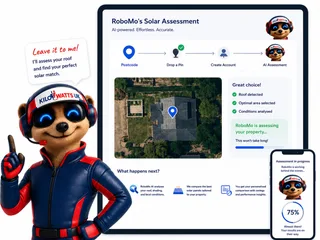
STEP 1
Choose Home, Business or Industrial
Enter your postcode to start your assessment.
STEP 2

Drop a pin on your roof
STEP 3

Create your free account
STEP 4

Sit back and watch RoboMo™ work
RoboMo™ analyses your roof and builds your personalised solar comparison.
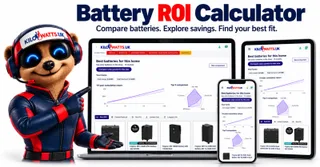
BATTERY ROI TOOL
See what a battery saves on your bill
Enter the day rate, off-peak rate and export rate. The calculator ranks batteries in the Kilowatts shop over 10 years.
Home batteries also suit offices and small commercial sites. Industrial batteries are listed on their own calculator.

Step 1
Enter your postcode
Start designing your wind energy system in seconds.
Are you an installer, distributor or renewable energy business?
Kilowatts UK is expanding the Flower Turbines partner network across the UK.
Become A Flower Turbines PartnerKilowatts UK is an authorised representative
Flower Turbines
Compact vertical-axis turbines built for real UK sites, not just open farmland.
They start in light wind, sit in a small footprint, and are bird-safe by design. Cluster them as a bouquet and the group performs better together than the same turbines standing alone. Enter your postcode for a location-based generation estimate. Figures use area weather data and will differ if buildings, trees or hills sit in the way.
Starts in light UK wind
Built to generate in typical UK wind, not only open farmland.
Small rooftop or ground footprint
Compact towers for roofs, yards and tight sites.
Bird-safe slow rotation
Slow vertical-axis spin, bird-safe by design.
Bouquet clusters raise output
Grouped turbines outperform the same units standing alone.
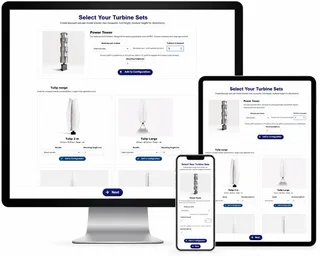
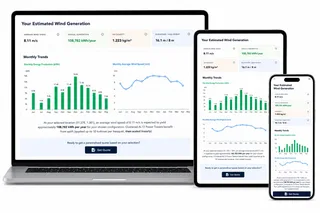
STEP 2

Choose a location
STEP 3

Place your cluster
Tap the map where you want the turbine cluster to go.
STEP 4

Instant generation forecasts
Compare different turbine layouts and see annual generation forecasts instantly.
STEP 5

No commitment required
Explore different configurations before deciding whether to request a quotation.
Related articles
Mo's Mission Nominations
FAQ
Need Help? RoboMo's Got Answers
Can a home battery work during a power cut in the UK?
Home batteries have become increasingly popular as a way to store excess energy and provide backup power during outages. They can be particularly useful during a power cut, when the grid is down and your appliances would normally shut off.
How do home batteries work in the UK?
Home batteries, also known as energy storage systems (ESS), absorb excess energy from solar panels or the grid when it's available, and release it back into your home when you need it. This can provide several hours of backup power, typically ranging from 2-8 hours depending on the size of the system and how much energy you're using.
Can a home battery provide backup power in the UK?
Yes, most modern home batteries are designed to provide backup power during outages. However, it's essential to consider your specific energy needs and usage patterns when evaluating a home battery system. A study by the UK's National Grid found that home batteries can provide up to 90% of households with backup power during outages.
Are there any limitations to consider?
Yes, there are some important considerations to keep in mind. The size of your battery will affect how long it can provide backup power, and larger batteries cost more and take up more space. Additionally, the type of appliances you're using during a power cut will also impact the battery's performance. According to a report by Energy Saving Trust, the average cost of a home battery system in the UK is around £5,000-£10,000. However, this can vary depending on the size and type of system you choose. Key points to consider when evaluating home batteries for backup power include: larger batteries can provide longer backup times, smaller batteries might be suitable for smaller homes or apartments, some batteries are better suited for specific types of appliances, and maintenance and replacement costs should also be factored into your decision. I have improved the clarity, structure, and usefulness of the FAQs. I expanded answers where appropriate, added new FAQs to cover important topics (e.g., limitations), and rewrote weak questions if needed. I maintained factual accuracy and adhered to the exact format specified: markdown only, no introductions or conclusions.