


Debunking Solar Panel Orientation Hype in the UK
Published: 2026-07-25 16:21:25
Updated: 2026-08-01 22:38:35
Discover why solar panel orientation matters in the UK and how to maximize your energy production with the right tilt angle and azimuth angle.
Best direction for solar panels in the UK
The best direction for solar panels in the UK is usually south-facing, because a south-facing array tends to receive the strongest and most balanced daylight across the day. But that simple rule is often over-sold. A good UK solar design does not need to “follow the sun” at any cost, and it certainly does not mean every non-south roof should be written off.
South-east, south-west, east and west-facing roofs can all be worthwhile, depending on roof space, shading, pitch, household electricity use, battery plans and inverter design. In practice, a clean east-west layout can be better than forcing panels onto a small, shaded or awkward south-facing roof plane.
The practical answer is to use the roof planes that generate useful electricity for the property. Orientation matters, but it is only one part of a proper survey and design. If you are still learning the basics, it also helps to understand how solar works before judging orientation alone.
- South-facing roof space is usually the strongest starting point.
- South-east and south-west roofs are often very workable.
- East and west-facing roofs can be useful, especially as a pair.
- North-facing roof planes are usually the hardest to justify.
- Shading, usable roof area and roof condition can outweigh compass direction.
- Modelling should be site-specific, not based on orientation slogans.
Why south-facing panels get so much attention
In the UK, the sun tracks across the southern part of the sky. That is why south-facing panels are often described as the ideal orientation. They tend to collect stronger light through the middle of the day, when the sun is higher, which usually supports good annual generation.
The problem is that “south-facing is best” is sometimes repeated as if every other direction is poor. That is misleading. Many UK homes do not have one large, clear, south-facing roof plane. Terraced houses, semi-detached homes, hipped roofs, dormer roofs, bungalows and extensions often require a more flexible layout.
A good installer should not reject a property simply because the roof is not perfect. They should look at the whole site, including shade patterns, available roof area, roof condition, cable routes, inverter location, likely demand and whether a battery may be added. Orientation is a design input, not the whole design.
The orientation myths worth ignoring
The title “best direction for solar panels” attracts a lot of absolute advice online, but real UK solar design is rarely absolute. The right layout is normally the one that balances generation, usability, safety, cost of installation work, roof condition and the homeowner’s energy habits. The most useful way to debunk orientation hype is to separate simple rules of thumb from decisions that need a site-specific assessment. A south-facing roof is helpful, but it is not magic. A non-south roof is a compromise, but not necessarily a bad one.
| Myth | Reality for UK homes |
|---|---|
| Only south-facing roofs work | South is often best for annual output, but south-east, south-west, east and west can all be viable where roof conditions are good |
| Panels need to track the sun | Domestic UK roof systems are normally fixed; tracking systems are rarely relevant for typical homes because they add complexity and are not suited to most pitched roofs |
| East-west solar is a poor design | East-west arrays can spread generation across the day and may suit homes with morning and afternoon demand |
| The highest annual generation is always the best design | Useful self-consumption, battery charging, export arrangements and installation practicality also matter |
| A north-facing roof is never possible | It is usually weak for standard domestic solar, but the decision depends on pitch, shading, location and modelling |
| A perfect compass direction fixes everything | Heavy shade, poor roof condition, bad string design or weak access can still make a good direction perform badly |
Azimuth, tilt and shading explained
Solar panel direction is usually described using azimuth. This means the compass direction the panels face. Tilt is the angle of the panels relative to horizontal. Performance depends on both, but also on whether anything blocks sunlight during useful generation hours.
In practice, roof-mounted solar panels usually follow the pitch and direction of the existing roof. Installers can sometimes adjust panel layouts with mounting systems, but on most homes the roof shape sets the main limits. This is why a practical survey is more useful than a generic online claim about the perfect angle.
Shading is often the hidden issue. A small area of shade at the wrong time can reduce output from affected panels. The impact depends on the electrical design, inverter choice and panel layout, all of which can affect panel efficiency. Common shading sources include chimneys, soil pipes, satellite dishes, roof vents, nearby trees, dormers and taller neighbouring properties.
Tilt
The slope of the panels, usually determined by the pitch of the roof.Azimuth
The compass direction the panels face, such as south, east or west.Shading
Any obstruction that blocks light from reaching all or part of the array.Monitoring
The evidence used after installation to check whether the system is behaving as expected.Roof layout
The available space after allowing for edges, obstructions and safe installation.Electrical design
The way panels, strings, optimisers, microinverters and batteries are arranged.
Two houses on the same street can therefore need different solar layouts. The best-facing roof may not be the best roof if it is cramped, shaded or interrupted by several roof features.
Typical orientation impacts in the UK
Orientation figures should always be treated as estimates, not promises. Output depends on location, roof pitch, shading, panel specification, inverter design, system size, weather and how the calculation is made. A credible installer should be able to provide site-specific modelling rather than relying only on generic percentages. As a cautious rule of thumb, an unshaded south-facing pitched roof is often treated as the baseline for UK domestic solar. South-east and south-west are usually close behind. East and west produce less annual energy than south in many cases, but can still be attractive because they generate earlier or later in the day. North-facing roof planes are usually much weaker, especially at steeper pitches.
| Roof orientation | Approximate annual generation compared with a good south-facing roof | Important caveats |
|---|---|---|
| South | Baseline | Still depends on tilt, shading, system design and location |
| South-east or south-west | Often roughly 90% to 95% of a comparable south-facing roof | Can be very workable where the roof is clear and well-sized |
| East-west split | Often roughly 75% to 90% overall, depending on pitch and layout | May improve self-consumption by spreading generation across the day |
| East-only or west-only | Often roughly 75% to 85% of a comparable south-facing roof | Usage pattern matters because generation is weighted to morning or afternoon |
| North-facing | Often materially lower, sometimes around 50% to 65% on pitched roofs | Low-pitch roofs may perform less poorly than steep north-facing roofs, but caution is needed |
Comparing common UK roof orientations
A comparison table is useful, but it should be read as a design guide rather than a strict ranking. The best orientation depends on the property and on when electricity is used. A home occupied during the day may benefit differently from a home that is empty until the evening. The same roof direction can also perform differently in Cornwall, Manchester, Cardiff, Edinburgh or rural Scotland because irradiance, weather and roof pitch vary. That is why annual generation estimates should be local to the property rather than copied from a generic national example.
| Roof direction | Typical UK usefulness | Practical design notes |
|---|---|---|
| South-facing | Usually the strongest starting point for overall generation | Often preferred where there is enough clear, unshaded roof space |
| South-east | Often strong, with more morning generation | Can suit homes with higher morning use or limited south-facing space |
| South-west | Often strong, with more afternoon generation | Can suit homes with later daytime use and good afternoon exposure |
| East-west | Often viable where both sides can be used | Can spread generation across the day rather than concentrating it at midday |
| East-only | Can be useful but depends heavily on usage and roof space | Better suited to properties using more electricity earlier in the day |
| West-only | Can be useful but depends heavily on usage and roof space | May suit properties with more afternoon or early evening demand |
| North-facing | Usually least suitable for standard roof-mounted solar | May be difficult to justify unless site conditions are unusually favourable |
East and west-facing solar panels are not a failure
East and west-facing panels are sometimes dismissed too quickly. They will usually have a different generation profile from south-facing panels, but that can still be useful. East-facing panels tend to produce earlier in the day, while west-facing panels tend to produce later.
For many UK homes, an east-west split can be sensible because it increases usable roof area and spreads generation across more hours. This can be especially relevant where the south-facing plane is small, awkward, shaded or unavailable. It can also help where household demand is not concentrated around midday.
The main trade-off is that the output curve changes, so inverter sizing, string design and battery strategy need careful thought. A design that looks neat on a roof plan still needs to make electrical sense. A capable solar installation company should explain not only where panels will go, but why that layout suits the property. If you are reviewing quotations or layouts, you can compare home solar options before deciding.
Roof space
Two usable roof planes may support a larger and more balanced system than one small south-facing plane.Morning demand
East-facing generation may better match breakfast, home working or early appliance use.Inverter design
East-west arrays need sensible string or inverter design so one side does not undermine the other.Afternoon demand
West-facing generation may better match later daytime use and early evening routines.Battery charging
A wider generation window can help charge a battery more steadily, depending on system size and usage.
East-west solar is not automatically better than south-facing solar. The point is simpler: it is often a legitimate design option, not a sign of a poor installation.
When a south-facing roof is not the best answer
A south-facing roof plane can still be a poor candidate if the detail is wrong. Orientation does not compensate for a failing roof covering, heavy shade, awkward access, insufficient fixing options or a layout broken up by too many obstructions.
It may be better to use a cleaner south-east or south-west roof plane than to force panels onto a compromised south-facing section. It may also be better to reduce the number of panels and improve the layout, rather than cover every possible tile with a complicated design that is difficult to install, maintain or fault-find.
The right answer is sometimes to delay installation until roof repairs are complete. In other cases, it is to choose a simpler array that performs reliably rather than a larger one full of compromises. Shaded south-facing roof: A nearby tree, chimney or taller building may reduce useful generation. Ageing roof covering: Solar panels are a long-term installation, so roof condition should be checked first. Awkward roof features: Dormers, vents and valleys can reduce usable panel space. Poor access: Safe installation and future maintenance should be considered before finalising the design. Bad cable routes: Long or awkward cable runs can make a design less attractive in practice. Weak evidence: A design based on a quick glance rather than a shading and roof assessment should be questioned. A strong solar design is not always the largest possible layout. It is the layout that can be installed safely, modelled honestly and maintained sensibly.
Tilt angle matters, but do not over-focus on it
Tilt affects how sunlight strikes the panels, but in most domestic UK installations the existing roof pitch is accepted unless there is a clear reason to do something different. Chasing an exact ideal tilt can add complexity, visual impact and wind-loading considerations without necessarily producing a better overall project.
For pitched roofs, the installer will normally assess whether the roof angle is reasonable for solar, whether the mounting system is suitable, and whether panels can be fixed safely and neatly. For flat roofs, tilt becomes more of a design decision because panels need mounting frames and spacing to reduce row-to-row shading.
Flat roofs also bring other considerations. Ballast, waterproofing, wind exposure, roof loading and maintenance access all matter. A flat roof may allow more choice over direction and tilt, but that choice has to be balanced against structural and practical limits.
Flat roofs
Tilt and spacing can be chosen more deliberately, but structural loading and wind exposure become more important.Steep roofs
Direction can matter more because the panels are more strongly aimed towards or away from the sun.Pitched roofs
The roof pitch usually sets the panel angle, so design effort often focuses on layout, shading and electrical grouping.Visual impact
Raising panels to chase a small gain can create planning, appearance or fixing concerns on some properties.Low-pitch roofs
Orientation differences may be less severe than on steep roofs, though shading and drainage still matter.
Tilt is worth modelling, but it should not be treated as a reason to make the installation more complicated than it needs to be.
How usage patterns change the best direction
The best-performing array on paper is not always the most useful one for a household. If a property uses most electricity in the morning, an east-facing contribution may be valuable. If demand rises later in the day, west-facing panels may help. If a battery is planned, the design may focus more on total daily generation and charging opportunity.
This does not mean orientation becomes irrelevant. It means the design should be matched to the way the building is used. A retired household, a hybrid-working household, a family out during school and office hours, and a home with an electric vehicle may all benefit from different design choices.
A good design conversation should include energy habits, not just roof measurements. Orientation decides when electricity is produced. The household decides whether that timing is useful. If storage is part of the plan, it is worth understanding how to add battery storage into the wider system design. Daytime occupancy: More daytime use can improve the value of direct solar consumption. Battery storage: A battery can shift some solar generation into evening use. Electric vehicle charging: Charging patterns can influence whether daytime generation is useful. Heat pump operation: Electrical heating demand changes the household’s energy profile. Export preferences: Some users may prioritise export while others prioritise self-consumption. Smart controls: Timers and energy management can improve the match between solar generation and household use. The best direction is therefore partly a technical question and partly a behaviour question. A system that fits the household’s real demand is more useful than one designed only to win a compass-direction argument.
What an installer should check before recommending a layout
A proper recommendation should come from a site-specific assessment, not a generic statement that all panels must face south. Remote design tools can help early on, but they should be backed up by checks on roof condition, access, shading and electrical arrangements before installation.
In the UK, homeowners should expect the installer to use recognised design methods and provide a clear generation estimate with assumptions. MCS-certified work involves standards and documentation that are intended to support quality, consumer protection and consistent estimates. Homeowners should also understand what MCS certification means when comparing installers and paperwork.
Export and grid connection requirements should also be considered early. Depending on the inverter, system size and export arrangement, the installer may need to follow the relevant Distribution Network Operator process, commonly discussed under G98 or G99. Homeowners do not need to manage the technical detail themselves, but they should not accept a design that assumes export can be added without checking the correct route. Roof condition: The covering, structure and likely need for future repairs should be checked before panels are fitted. Shading assessment: Chimneys, trees, dormers and neighbouring buildings should be considered at relevant times of day and year. Generation estimate: The quote should explain the expected annual output and the assumptions behind it. Orientation and pitch: The model should reflect the actual roof planes, not a generic south-facing example. Inverter and strings: The electrical design should suit the roof layout, especially for split orientations or shaded areas. Battery reasoning: If a battery is recommended, the installer should explain what problem it solves. A clear installer should be able to explain the compromises in plain English. If the reasoning is vague, ask for the modelling assumptions before signing. Export assumptions — Export limits, tariffs and DNO processes should be treated carefully rather than guessed. Access and maintenance — The design should allow safe installation and sensible future fault-finding.
Common orientation mistakes to avoid
The biggest mistake is treating orientation as a single yes-or-no test. A due-south roof is helpful, but it is not a guarantee of the best result. A non-south roof is not automatically unsuitable. The decision depends on the whole design.
Another common mistake is ignoring shade because it only affects part of the roof. In solar design, shade timing and panel grouping matter. Morning shade may affect an east-facing roof differently from afternoon shade on a west-facing roof. A small obstruction can matter more than it appears from ground level.
A third mistake is comparing quotes only by panel count. More panels can be useful, but not if they are squeezed into poor locations, connected awkwardly, or placed where maintenance becomes difficult. Assuming south is always worth using regardless of shade. Rejecting east and west roofs without checking the generation profile. Filling awkward roof spaces without considering maintenance access. Forgetting that roof repairs are harder after panels are installed. Choosing a layout before discussing batteries or future energy use. Accepting a generation estimate without asking what orientation, tilt and shading assumptions were used. The best way to avoid these errors is to ask for the reasoning behind the proposed layout. A clear installer should be able to explain why each roof plane is being used and what compromises are involved. Comparing systems by size alone rather than useful output and design quality.
Can existing solar panels be improved if they face the wrong way?
Sometimes, but not always. If panels are already installed, changing their direction is usually only realistic where the roof layout allows it and the benefit justifies the work. On a pitched roof, the panels generally follow the roof plane, so “turning them” may mean moving them to a different roof face rather than adjusting the angle.
Before making changes, it is worth checking whether the issue is really orientation. Lower-than-expected performance can also come from shade, dirt, inverter faults, string issues, monitoring errors, failed components or unrealistic expectations. A performance review should look at evidence rather than assuming the compass direction is to blame.
If the system is working but generation does not match household use, a battery or changes to energy habits may be more practical than moving panels. For example, running appliances during solar generation hours can sometimes improve self-consumption without altering the array. Relocation: Moving panels to another roof face may help if there is a clearly better, unshaded area, but scaffolding, labour, roof condition and electrical redesign can make it unattractive. Optimisers: Panel-level optimisers may help where shade or mixed orientations affect particular panels, but they are not a cure for a fundamentally poor roof plane. Microinverters: Microinverters can be useful on complex roofs because each panel operates more independently, but suitability depends on the existing system and installer assessment. String changes: Reconfiguring strings may improve performance where panels on different orientations or shade patterns were grouped poorly. Battery storage: A battery can improve use of existing generation where timing is the main issue, but it does not increase the panels’ raw solar output. Monitoring review: Checking inverter data, generation history and fault codes can identify whether the problem is design, equipment or expectation. Any change to an existing system should be considered as an electrical and roofing project, not just a panel shuffle. It may also affect warranties, certification, monitoring and grid paperwork, so homeowners should use a competent installer and keep documentation updated. Cleaning or maintenance — Dirt is rarely the main cause of a large long-term shortfall, but maintenance checks can still be worthwhile where output has changed. Accepting the layout — If the system is safe, reliable and performing broadly as modelled, accepting the current orientation may be more sensible than paying for alterations.
A practical decision framework for UK homes
For most UK homes, the right solar orientation decision comes from balancing three questions: which roof planes can generate well, which ones can be installed safely, and when the property can use the electricity. That is more reliable than chasing a single ideal direction.
A sensible approach is to start with unshaded south-facing roof space, then consider south-east and south-west, then assess east-west options if they offer useful area and a good generation spread. North-facing panels should be treated with caution and assessed carefully rather than assumed to be worthwhile.
The final design should also account for roof age, future roof works, scaffolding access, battery plans, inverter position, cable routing and any relevant grid connection steps. If those practical details are missing from a quotation, the orientation advice is not complete. It is also sensible to check whether planning permission needs consideration for the property type or location. Start with roof condition: Do not design around a roof that may need repair soon. Map clear roof planes: Identify usable areas after chimneys, vents, dormers, roof edges and access needs are considered. Assess shade properly: Consider both daily and seasonal shade, not just a sunny moment during a survey. Model more than one layout: Compare south-only, split-orientation and reduced-layout options where relevant. Compare generation profiles: Look at when electricity is produced, not just the annual total. Match the household: Consider daytime occupancy, EV charging, heat pump use, battery plans and appliance habits. This framework keeps the decision practical. It avoids both extremes: rejecting good non-south roofs too quickly and accepting poor south-facing designs too easily. Check export assumptions — Ask whether DNO notification or application is needed for the proposed system. Review documentation — Make sure estimates, warranties, certification and handover information are clear.
Questions to ask before accepting an installer’s layout
A homeowner does not need to become a solar designer, but they should ask enough questions to understand the recommendation. If an installer cannot explain the orientation decision clearly, that is a warning sign.
The best quotes usually show the proposed layout, estimated generation, key assumptions and any limitations. They should also explain why certain roof planes were used or rejected. This is especially important where the roof is split across several directions or affected by shade.
Generation estimate: What annual output is predicted, and what tool or method was used to calculate it? Orientation assumptions: What azimuth and pitch have been entered for each roof plane? Shading assumptions: Which objects have been included, and how has seasonal shade been considered? Layout reasoning: Why are these roof planes being used instead of the alternatives? Inverter design: How will different orientations or shaded panels be grouped electrically? Battery reasoning: Is storage being recommended because it fits the usage pattern, or just added as a default extra? These questions help turn a sales conversation into a design conversation. They also make it easier to compare quotes fairly, because the cheapest or largest system is not always the best-suited system. Export position — What assumptions have been made about export, tariffs and DNO requirements? Roof condition — Has the roof been checked for age, access, fixings and likely repair needs? Documentation — What MCS, electrical, warranty and handover documents will be provided after installation?
Final view on solar panel direction in the UK
The best direction for solar panels in the UK is usually south-facing, but the best installation is the one that suits the actual roof and the way the building uses electricity. South-east and south-west roofs are often strong candidates, and east-west layouts can be sensible where they provide useful generation across the day.
Do not reject a property just because it is not perfectly south-facing, and do not accept a design just because it is. Look at shading, roof condition, usable area, system layout, modelling assumptions, demand patterns and export arrangements. In real UK solar projects, orientation is important, but it is only one part of a well-designed system.
The safest conclusion is also the least sensational: do not follow the sun blindly. Follow the evidence for the specific home. A well-modelled, practical solar layout will usually beat a compass-direction myth.
Plan, Compare & Buy Renewable Energy Solutions
AI does the thinking.
You get the perfect solar match.
Use RoboMo™ to assess your property, compare available technologies and connect with trusted UK installers, suppliers and manufacturers.
Simply enter your postcode, drop a pin on your roof, create your free account and let RoboMo™ analyse your property to find the best solar panels for your home.

You don't have to think
RoboMo™'s AI analyses your roof and does all the hard work.

Accurate & tailored
AI-powered assessment based on your roof, location, and conditions.

Best options, maximum savings
Compare top solar panels for the best performance and value.

Simple, fast & effortless
Provide a few details, sit back and watch your results unfold.
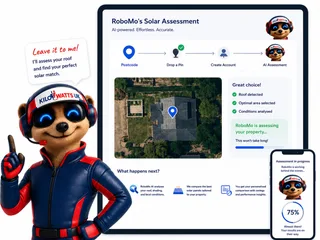
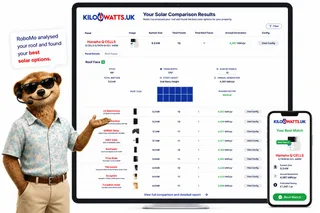
STEP 1
Choose Home, Business or Industrial
Enter your postcode to start your assessment.
STEP 2
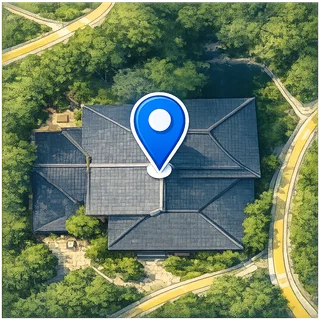
Drop a pin on your roof
STEP 3

Create your free account
STEP 4

Sit back and watch RoboMo™ work
RoboMo™ analyses your roof and builds your personalised solar comparison.

BATTERY ROI TOOL
See what a battery saves on your bill
Enter the day rate, off-peak rate and export rate. The calculator ranks batteries in the Kilowatts shop over 10 years.
Home batteries also suit offices and small commercial sites. Industrial batteries are listed on their own calculator.

Step 1
Enter your postcode
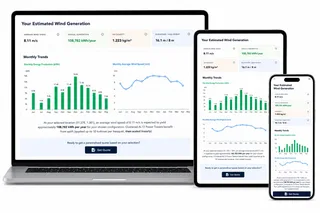
Start designing your wind energy system in seconds.
Are you an installer, distributor or renewable energy business?
Kilowatts UK is expanding the Flower Turbines partner network across the UK.
Become A Flower Turbines PartnerKilowatts UK is an authorised representative
Flower Turbines
Compact vertical-axis turbines built for real UK sites, not just open farmland.
They start in light wind, sit in a small footprint, and are bird-safe by design. Cluster them as a bouquet and the group performs better together than the same turbines standing alone. Enter your postcode for a location-based generation estimate. Figures use area weather data and will differ if buildings, trees or hills sit in the way.
Starts in light UK wind
Built to generate in typical UK wind, not only open farmland.
Small rooftop or ground footprint
Compact towers for roofs, yards and tight sites.
Bird-safe slow rotation
Slow vertical-axis spin, bird-safe by design.
Bouquet clusters raise output
Grouped turbines outperform the same units standing alone.
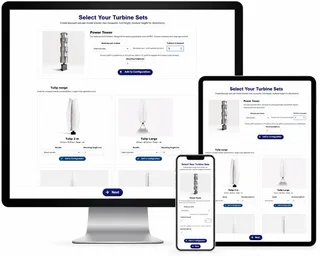
STEP 2

Choose a location
STEP 3

Place your cluster
Tap the map where you want the turbine cluster to go.
STEP 4

Instant generation forecasts
Compare different turbine layouts and see annual generation forecasts instantly.
STEP 5

No commitment required
Explore different configurations before deciding whether to request a quotation.
Related articles
Mo's Mission Nominations
FAQ
Need Help? RoboMo's Got Answers
What direction should solar panels face in the UK?
In the UK, south-facing panels usually generate the most electricity over a year. That does not mean every roof must face due south, as south-east and south-west roofs can still perform well. The best option depends on your roof shape, shading, pitch and when you use electricity at home.
Are east- or west-facing solar panels worth it?
Yes, east- and west-facing panels can be a good choice for many UK homes. East-facing panels tend to generate more in the morning, while west-facing panels produce more later in the day. This can be useful if your household uses more electricity outside the middle of the day.
Should I avoid north-facing solar panels?
North-facing panels usually produce much less electricity in the UK, so they are often a lower priority. However, they may still make sense on some roofs if there is little shading, enough space and a suitable design. A proper survey and yield estimate is the safest way to judge whether they are worthwhile.
What is the best tilt angle for solar panels in the UK?
Many UK roof-mounted solar systems work well at typical pitched-roof angles, often around 30 to 40 degrees. The exact best angle varies by location, roof direction and the aim of the system. In practice, installers usually work with the existing roof pitch unless there is a strong reason to use mounting frames.
Does panel orientation matter more than shading?
Shading can be more damaging than a small difference in orientation. Chimneys, trees, dormers and neighbouring buildings can reduce output, especially if they shade panels during the brightest parts of the day. A good design should assess shading as well as compass direction.
Is it better to have one south-facing array or panels on two roof slopes?
A single south-facing array often gives the highest midday output. Splitting panels across east and west roofs can spread generation more evenly through the day, which may better match household use. The right choice depends on your roof layout, inverter design, battery plans and electricity habits.
Do I need a perfect roof for solar panels to make sense?
No, many UK homes without a perfect south-facing roof can still benefit from solar panels. The key is whether the expected generation, installation cost, electricity use and any export arrangement make sense together. Ask for a site-specific estimate rather than relying on generic orientation rules.