


Are Solis inverters a good choice for UK solar panels?
Published: 2026-09-08 14:28:48
Updated: 2026-09-09 03:15:44
A Solis inverter can be a good choice for a UK solar panel system, but only if the exact model suits your roof layout, grid connection.

Solis inverter?
Learn solis inverter with UK-specific guidance, including costs, savings, rules, and what to do next.
Are Solis inverters a good choice for UK solar panels?
A Solis inverter can be a good choice for a UK solar panel system, but only if the exact model suits your roof layout, grid connection, battery plans and installation design. The name “Solis inverter” is not enough on its own because Solis includes solar-only string inverters, hybrid battery inverters and models intended for different system sizes and supply types.
For many straightforward UK homes, Solis is a credible mid-market option. It is often considered where the installer wants a practical string or hybrid inverter without presenting the system as a premium-brand specification. The real question is not whether Solis is good in general. It is whether the proposed model, warranty terms, monitoring setup, DNO process and battery compatibility are right for your property.
A quote that simply says “Solis inverter” should be treated as incomplete. You should expect to see the full model number, AC output rating, whether it is string or hybrid, how the MPPTs match the roof layout, how export control is handled and what happens if you later want battery storage or backup power.
What a Solis inverter actually does
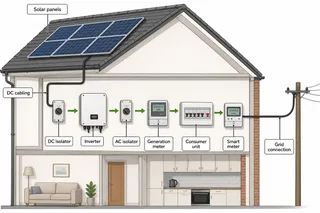
A solar inverter converts the direct current electricity produced by solar panels into alternating current electricity used by the home and exported to the grid. In a UK grid-tied system, it also manages safety shutdown, export behaviour, grid compliance and monitoring. It is a core part of the system, not an add-on to the panels. If you want the wider generation picture first, it helps to understand how solar panels work.
Solis is the inverter brand of Ginlong Technologies. In UK domestic solar, the main distinction is between a string inverter and a hybrid inverter. A string inverter is usually used for solar-only systems. A hybrid inverter can manage compatible battery storage as well as solar generation, provided the battery, communication method, firmware and installation design all match.
The inverter choice affects practical details that homeowners often overlook. These include where the unit can be mounted, how warm the location gets, whether the Wi-Fi connection is reliable, how shading is managed and who has access to the monitoring platform if a fault needs investigating later.
Solis model types and details to verify
Solis domestic installations in the UK commonly involve single-phase string inverters for solar-only systems or hybrid models where battery storage is included or planned. Larger homes, three-phase properties and commercial sites may use different inverter ranges, so do not assume that advice for one Solis model applies to another.
Solis product literature typically highlights model-specific details such as maximum efficiency, MPPT configuration, environmental rating, monitoring options and compatible battery lists. These details change by range and over time. The installer should provide the current datasheet and warranty information for the exact unit being quoted, not rely on a generic brochure.
Warranty length, monitoring access and battery compatibility should be checked at model level. Some warranty terms depend on registration, installation conditions or approved use. Battery compatibility can depend on the inverter generation, battery firmware and communication protocol.
These are not paperwork niceties. They determine whether the inverter is serviceable, expandable and appropriate for the way the home actually uses electricity.
String, hybrid or optimiser-based design?
For a simple unshaded roof, a conventional string inverter can be the most straightforward solution. It usually suits homes with one or two clear roof faces, sensible panel grouping and limited shading from chimneys, dormers, trees or neighbouring buildings. A hybrid inverter becomes more relevant when battery storage is part of the plan from the start, or when the homeowner wants a properly designed battery route later. However, “battery-ready” is not enough on its own. The installer should confirm which batteries are compatible with the exact Solis model and whether future battery installation would require extra metering, consumer unit work, firmware changes or design alterations.
Overview
The best option is usually the one that fits the property rather than the one that sounds most advanced. On a clean roof, extra electronics may add cost and complexity without much benefit. On a difficult roof, a basic string design can underperform if shading and orientations are not handled properly.
How Solis compares with other UK inverter choices
Solis is often considered alongside other inverter brands and system architectures used in the UK, including conventional string inverters, hybrid inverter ecosystems and optimiser-led designs. A fair comparison should focus on design fit, support route, monitoring, battery pathway and warranty terms rather than a vague “best inverter” claim. Some alternatives may offer a more integrated battery ecosystem, stronger panel-level monitoring, a longer standard warranty or a more familiar app experience. Others may cost less, be simpler to install or be better supported by a particular installer. The right comparison depends on the house, the roof and the owner’s priorities.
Overview
This is why a cheaper Solis quote is not automatically a bargain, and a more expensive alternative is not automatically better. The comparison only becomes meaningful when each option is designed against the same roof, electricity use, DNO position and battery expectations.
UK grid rules and DNO checks that matter
The inverter is the part of the solar system that interfaces with the electricity network, so UK grid compliance matters. Smaller single-phase systems may be handled under G98 if they meet the relevant requirements. Larger systems or higher export arrangements may need G99 approval from the Distribution Network Operator.
A common domestic reference point is the G98 limit of 16 A per phase, often discussed as around 3.68 kW AC output on a single-phase supply. That does not mean every home should have exactly that inverter size. It also does not mean larger systems are impossible. It means the installer must use the correct notification or application route for the actual inverter and export arrangement.
For a Solis quote, the UK-specific checks should be made against the exact model, not just the brand. The installer should check the relevant ENA Type Test Register entry for the model, explain whether the job is G98 or G99, and confirm whether export limitation is being used.
These checks become especially important if the solar array is larger than the inverter rating, a battery is included, export is being limited, or the property already has generation equipment. A neat design on paper can become awkward if the consumer unit has no spare capacity, the meter cupboard is remote, or the DNO response changes the allowable export.
Battery storage and backup need careful wording
A Solis hybrid inverter may work well in a battery system, but compatibility is model-specific. The installer needs to confirm the supported battery options, voltage range, communication method and warranty conditions before you rely on a future upgrade path.
This matters because a homeowner may accept a solar quote thinking a battery can be added easily later, only to discover that the proposed inverter does not support the battery they want. An AC-coupled battery can sometimes be added to a solar-only system, but that is a separate design with its own inverter, metering and control requirements.
Backup power is another area where wording can be misleading. Standard grid-tied solar and battery systems do not necessarily keep the whole house running during a power cut. If the system includes an emergency power supply or backup output, it may only support selected circuits. It must also be designed with the right switching, protection and load limits.
If backup matters to you, ask the installer to put the expected behaviour in writing. The answer should explain what stays on, what turns off, how long the battery might support the chosen loads and what equipment is required to make the arrangement safe and compliant.
Monitoring, app access and aftercare
Monitoring is one of the most visible parts of an inverter system after installation. Solis systems can be monitored through manufacturer-supported monitoring hardware and software, but the exact setup depends on the model, data logger and installer configuration.
The practical question is who can see the system, who receives alerts and what happens if the broadband router changes. Homeowners often discover too late that they do not have full access, the installer account controls key settings, or a simple Wi-Fi change stops data upload until someone reconfigures the logger.
Monitoring does not generate electricity by itself, but it helps faults get spotted. If the inverter trips, a string underperforms, a battery stops communicating or export readings look wrong, good monitoring access can shorten the time between fault and diagnosis.
A strong installation handover should leave you knowing what normal operation looks like. It should also explain which issues are urgent, which are routine and who to contact if the monitoring data looks wrong.
Costs, savings and payback depend on the whole design
It is not useful to judge a Solis inverter by a single generic price because the installed cost depends on the exact model, power rating, hybrid capability, accessories, warranty terms, installation complexity and whether it is part of a full solar package or a replacement. The inverter price is only one component of the quote.
Savings also depend on how the system is used. A home that uses plenty of electricity during the day may benefit differently from one that exports most generation. Battery storage can improve self-consumption for some households, but it adds cost and introduces assumptions about usage, tariffs, capacity and round-trip efficiency. For storage planning, it is worth separating inverter choice from solar and battery costs.
For payback, the more reliable approach is to compare the whole proposed system against your actual annual electricity use, roof generation estimate, export assumptions and tariff. Be cautious of any quote that presents a payback as guaranteed, especially if it does not explain daytime usage, export rate, battery behaviour or likely inverter replacement over the life of the system.
What to check in a quote that includes Solis
A quote that simply says “Solis inverter” is too vague for a proper decision. You should be able to see the model number, AC output rating, whether it is string or hybrid, the warranty position, the monitoring setup and how the inverter has been matched to the panel layout.
The hidden design work matters. The installer should string the panels so the inverter operates within its voltage range in UK summer and winter conditions, while also accounting for roof orientation and shading. If panels are split across different roof faces, the MPPT layout becomes important because poor grouping can reduce performance.
The physical installation location also deserves attention. Inverters need access, ventilation and reliable communications. A loft may be convenient for cable routes but can become hot in summer. A garage or utility space may be easier to access. An outdoor position needs the right environmental suitability and tidy cable management. The warranty process should also be clear, including who registers the warranty and who deals with any claim.
If the installer answers these points clearly, the Solis part of the quote is easier to judge. If they cannot, the risk may be less about the brand and more about the design quality behind the proposal.
When a Solis inverter may be less suitable
A Solis inverter may be less suitable where the roof is complicated, the shading is heavy, or the homeowner expects advanced features that have not been specified. Multiple small roof planes, dormers, chimneys and seasonal tree shading can make inverter architecture more important than the headline brand.
It may also be the wrong fit if the chosen battery is not compatible with the proposed hybrid model. Battery-first projects should start with the storage requirement and then work backwards to the inverter and solar design, rather than choosing an inverter and hoping the battery options line up later.
Three-phase properties, unusual export requirements and backup-heavy projects need particular care. These homes can still have well-designed solar and storage systems, but the specification should be treated as a project design rather than a simple product substitution.
None of these points means Solis should be avoided by default. They mean the design needs more evidence before you accept the quote.
Primary documents worth checking
For a more reliable decision, ask the installer to support the proposal with current primary documents. These should come from the manufacturer, the relevant grid compliance sources and the installer’s own design work, rather than from generic product claims.
Useful documents include the Solis or Ginlong datasheet for the exact model, current warranty terms, compatible battery documentation where a hybrid inverter is proposed, monitoring setup information and the relevant ENA type-test evidence for UK grid connection. For DNO handling, the installer should be able to explain the G98 or G99 route in plain English.
You do not need to become an inverter engineer to read these documents. The aim is to confirm that the proposal is specific, current and consistent with what is being installed at your property.
If a quote cannot be backed up with these basics, pause before signing. Missing paperwork is often an early warning that the specification has not been thought through properly.
Practical next steps before you decide
If you already have a quote with a Solis inverter, ask for the full model number and a short explanation of why that model suits your roof, supply type and battery plans. Then check that the proposal explains DNO handling, export assumptions, warranty terms and monitoring access in plain English.
If you are comparing options, focus on system design rather than brand reputation alone. A Solis inverter, a different string inverter, a hybrid inverter or an optimiser-based system can each be the right answer in different homes. The quote should make that reasoning visible, especially when you compare your options.
The most useful next step is to gather your annual electricity use, note when you use power during the day, take clear photos of your roof faces, consumer unit and meter area, and ask installers to quote against the same brief. That makes it much easier to compare Solis fairly against other inverter options.
Plan, Compare & Buy Renewable Energy Solutions
AI does the thinking.
You get the perfect solar match.
Use RoboMo™ to assess your property, compare available technologies and connect with trusted UK installers, suppliers and manufacturers.
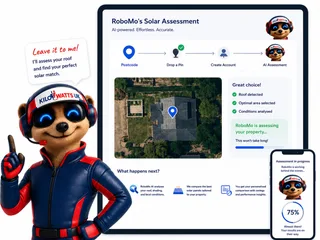
Simply enter your postcode, drop a pin on your roof, create your free account and let RoboMo™ analyse your property to find the best solar panels for your home.

You don't have to think
RoboMo™'s AI analyses your roof and does all the hard work.

Accurate & tailored
AI-powered assessment based on your roof, location, and conditions.

Best options, maximum savings
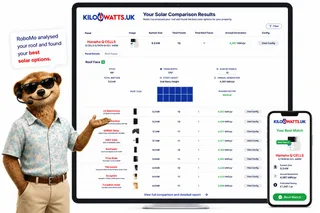
Compare top solar panels for the best performance and value.

Simple, fast & effortless
Provide a few details, sit back and watch your results unfold.
STEP 1
Choose Home, Business or Industrial
Enter your postcode to start your assessment.
STEP 2

Drop a pin on your roof
STEP 3

Create your free account
STEP 4

Sit back and watch RoboMo™ work
RoboMo™ analyses your roof and builds your personalised solar comparison.
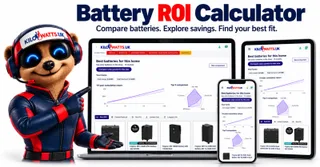
BATTERY ROI TOOL
See what a battery saves on your bill
Enter the day rate, off-peak rate and export rate. The calculator ranks batteries in the Kilowatts shop over 10 years.
Home batteries also suit offices and small commercial sites. Industrial batteries are listed on their own calculator.

Step 1
Enter your postcode
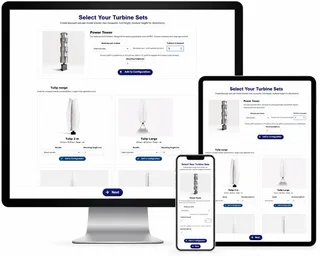
Start designing your wind energy system in seconds.
Are you an installer, distributor or renewable energy business?
Kilowatts UK is expanding the Flower Turbines partner network across the UK.
Become A Flower Turbines PartnerKilowatts UK is an authorised representative
Flower Turbines
Compact vertical-axis turbines built for real UK sites, not just open farmland.
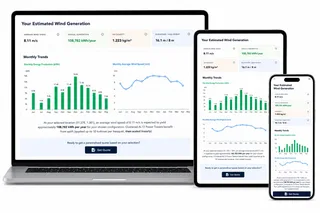
They start in light wind, sit in a small footprint, and are bird-safe by design. Cluster them as a bouquet and the group performs better together than the same turbines standing alone. Enter your postcode for a location-based generation estimate. Figures use area weather data and will differ if buildings, trees or hills sit in the way.
Starts in light UK wind
Built to generate in typical UK wind, not only open farmland.
Small rooftop or ground footprint
Compact towers for roofs, yards and tight sites.
Bird-safe slow rotation
Slow vertical-axis spin, bird-safe by design.
Bouquet clusters raise output
Grouped turbines outperform the same units standing alone.
STEP 2

Choose a location
STEP 3

Place your cluster
Tap the map where you want the turbine cluster to go.
STEP 4

Instant generation forecasts
Compare different turbine layouts and see annual generation forecasts instantly.
STEP 5

No commitment required
Explore different configurations before deciding whether to request a quotation.
Related articles
Mo's Mission Nominations
FAQ
Need Help? RoboMo's Got Answers
Are Solis inverters a good choice for UK homes?
Solis can be a good mid-market inverter choice for many UK solar installations, but the exact model matters. It should suit your roof layout, supply type, battery plans and grid connection requirements. A quote should name the full model, not just say “Solis inverter”.
What is the difference between a Solis string inverter and a Solis hybrid inverter?
A Solis string inverter is typically used for a solar-only system, converting panel output into electricity for the home and grid. A Solis hybrid inverter can also work with compatible battery storage, if the battery, firmware and installation design match. Do not assume every hybrid model supports every battery.
What should I check on a Solis inverter quote?
Ask for the full model number, AC output rating, warranty details and current datasheet. The quote should also explain the MPPT and string design, monitoring setup and whether the job is being handled under G98 or G99. If a battery is planned, ask for the compatible battery options in writing.
Can I add a battery later if I choose a Solis inverter?
It depends on whether the proposed Solis model is a compatible hybrid inverter and whether the installation has been designed for that future upgrade. “Battery-ready” should mean a clear route with named compatible batteries, not just a vague promise. A solar-only inverter may still allow an AC-coupled battery later, but that is a separate design.
Will a Solis inverter keep my home running during a power cut?
Not automatically. Standard grid-tied solar systems usually shut down during a power cut for safety, and battery systems only provide backup if they are specifically designed to do so. If backup matters, ask which circuits would stay on, what loads are allowed and what extra equipment is required.
Does a Solis inverter need DNO approval in the UK?
The installer should decide the correct DNO route based on the exact inverter, export level and site conditions. Some smaller single-phase systems may be handled under G98, while larger or higher-export systems may need G99 approval. The model should be checked against relevant UK type-test information.
Is a Solis inverter suitable for a shaded roof?
A basic string inverter can work well on a simple, mostly unshaded roof. If there is shading from chimneys, trees, dormers or several roof directions, the installer needs to show how the string design will manage it. In some cases, optimisers or a different inverter approach may be more suitable.
What should I know about Solis monitoring and app access?
Monitoring depends on the inverter model, data logger and how the installer sets up the account. Ask whether you will have your own login, whether the installer can view faults remotely and what happens if your Wi-Fi details change. Good handover should include serial numbers, login information and basic fault steps.