


Do I Need a Qualified Electrician for Solar Panels?
Published: 2026-07-20 18:45:19
Updated: 2026-08-01 07:27:45
For a grid-connected solar PV system in the UK, you should use a qualified electrician or a competent solar PV electrical installer to design, connect.
Do I need a qualified electrician for solar panels?
Yes. For a grid-connected solar PV system in the UK, you should use a qualified electrician or a competent solar PV electrical installer to design, connect, test, and certify the electrical work.
A home solar installation is not just a set of panels fixed to a roof. It becomes part of your property’s electrical installation. It can include DC wiring from the panels, an inverter, AC cabling, protective devices, isolators, earthing arrangements, labels, testing, commissioning, certification, and grid connection paperwork.
Roofers may install the mounting system and panels, but the electrical side must be handled by someone competent to work safely with solar PV and mains electricity. This is especially important because solar panels can generate live DC voltage whenever there is daylight, even when parts of the household electrical system are switched off. The practical rule is simple: if the system connects to your home’s fixed wiring, charges a home battery, or exports electricity to the grid, treat it as specialist electrical work, not a DIY appliance.
The short answer for UK homeowners.
A qualified electrician is usually needed because a domestic solar PV system becomes part of the fixed electrical installation. It must be designed safely, installed correctly, tested before use, and documented properly.
In a typical UK solar project, the electrician or solar PV electrical specialist will check:
- The consumer unit.
- Earthing and bonding.
- Cable routes.
- Protective devices.
- Inverter connection.
- Isolation arrangements.
A good installer will not simply ask whether your roof has space for panels. They will also check whether your existing electrical installation can accept the solar circuit safely. For example, an older consumer unit, inadequate bonding, or unsuitable protective devices may need attention before solar can be connected. This matters for safety, insurance, export payments, future maintenance, and selling the property. If the installation is not properly certified, you may have problems proving that the system was installed correctly. Labelling. Test results. DNO notification or approval requirements.
What “qualified” means in practice.
A qualified electrician is someone trained and assessed to carry out electrical work safely. For solar PV, general electrical competence is essential, but solar adds specialist requirements that not every electrician deals with every day.
The key issue is competence for the task. An electrician who mainly changes sockets, lights, and consumer units may not automatically be competent to design and commission a solar PV system. Equally, a solar roofer who is excellent at fitting panels is not automatically competent to connect the electrical installation.
In UK domestic work, relevant competence commonly includes knowledge of BS 7671, often called the Wiring Regulations, plus the ability to inspect, test, and certify electrical work. Many domestic electricians operate through competent person schemes such as NICEIC or NAPIT, which can allow certain notifiable work to be self-certified where the scheme and work type are covered. Solar PV competence is more specific. A competent solar electrician should understand DC string design, inverter requirements, isolation, labelling, earthing, export limitation, and the interaction between solar equipment and the home’s existing electrical installation. MCS is related but not identical. An MCS-certified installer has been assessed under the Microgeneration Certification Scheme for renewable installations. MCS certification is not the same thing as being a qualified electrician, but for homeowners it is often important because energy suppliers commonly ask for an MCS certificate, or acceptable equivalent evidence, when setting up Smart Export Guarantee payments. The strongest setup is usually a properly managed solar installer that uses suitably qualified electrical staff, follows MCS standards where applicable, handles DNO paperwork, and provides a clear handover pack.
Which parts of a solar installation need electrical competence.
Solar panels produce DC electricity whenever there is daylight. That creates different risks from normal AC household circuits. DC faults can sustain arcs, connectors must be compatible and correctly made off, and PV cables may remain live even when the consumer unit is switched off.
A competent solar electrician will understand both the DC and AC sides of the installation.
The DC side can include:
- Panel strings.
- DC connectors.
- PV cable routing.
- DC isolators.
- String voltage and current limits.
- Inverter input requirements.
The AC side can include: Important tasks usually include checking the existing consumer unit, selecting suitable cable sizes, installing protective devices, connecting the inverter, testing polarity and insulation resistance, checking earth fault loop impedance where required, completing certification, and ensuring the system is labelled clearly. This is why a solar PV system should not be treated like plugging in a normal appliance. A grid-tied inverter must be installed and configured correctly so that it works safely with the property and the local electricity network. A poor connection can cause serious problems. These may include nuisance tripping, overheating, failed inspections, loss of export eligibility, inverter faults, or unsafe conditions that are not obvious to the homeowner. Protection against mechanical damage. Safe shutdown and labelling. The circuit from the inverter to the consumer unit. Cable sizing. Protective devices. RCD compatibility. Earthing and bonding. Isolation. Metering arrangements. Final inspection and testing. Certification.
Building Regulations, Part P, and certification.
In England and Wales, domestic electrical work may fall under Part P of the Building Regulations. Solar PV work also has to comply with the relevant Building Regulations and BS 7671. In Scotland and Northern Ireland, the regulatory structure is different, but the same practical principle applies: the electrical installation must be safe, compliant, and properly documented.
If a registered competent person carries out notifiable domestic electrical work, they can usually self-certify the work within the scope of their registration. If an unregistered person carries out notifiable work, local building control normally needs to be notified before the work starts. That can add cost, delay, and administration.
A typical grid-connected domestic solar PV installation often involves a new circuit or alteration to the fixed electrical installation. That is why certification should be treated as a core part of the job, not an optional extra. The paperwork matters. Without proper certificates, you may have problems when: Selling the property. Making an insurance claim. Applying for export payments. Arranging future maintenance. Diagnosing a fault. Proving the installation was completed safely. For most homeowners, the certificate pack should be considered part of the installation itself. If an installer cannot clearly explain what certificates you will receive, that is a warning sign.
DNO notification and grid connection rules.
A grid-connected solar PV system must be notified to the local Distribution Network Operator, known as the DNO. The DNO manages the local electricity network. It is separate from your electricity supplier and your energy tariff.
Smaller systems up to 16 amps per phase usually follow G98 rules. This is about 3.68 kW per phase at 230 volts. In many straightforward domestic cases, the installer can install first and notify the DNO afterwards under the correct process.
Larger systems, or systems with multiple inverters, batteries, EV chargers, three-phase supplies, or higher export capacity, may fall under G99. G99 applications can require DNO approval before installation. The DNO may approve the design, ask for changes, or set an export limit. Export-limited systems may also need G100-compliant export limitation. This is where the system is designed and configured to prevent export above an agreed limit. The details matter because batteries, hybrid inverters, AC-coupled batteries, EV chargers, and three-phase supplies can change the application route. A competent installer will know when a simple notification is enough and when approval should be obtained before work starts. They should also be able to explain whether the system is being installed under G98, G99, or with G100 export limitation. A red flag is anyone saying DNO rules do not apply to home solar. If a system connects to the grid, the DNO process matters.
Can I install solar panels myself?
DIY solar is possible only in limited circumstances, and it is very different from installing a normal grid-connected domestic system. Small off-grid, low-voltage kits for sheds, caravans, boats, or remote equipment are not the same as a mains-connected PV installation on a house.
If the system connects to your home’s fixed wiring or exports electricity to the grid, it must comply with electrical safety rules, Building Regulations, and grid connection requirements. Even if you can physically mount panels, the electrical design, connection, testing, and certification still need competent handling.
DIY work can also create practical problems. You may struggle to obtain acceptable certification afterwards, and many installers will not sign off work they did not design, install, or supervise. Building control involvement may be required, and mistakes in DC connectors, cable routes, isolation, or inverter settings can be difficult and expensive to correct. For example, a homeowner might successfully fix panels to a garage roof but then discover that the inverter connection needs a new circuit, the consumer unit is unsuitable, the DNO needs a different application, or the cable route does not meet the required standard. Correcting those issues after the panels are in place can cost more than having the system designed properly from the start. The safest approach is to use a competent solar installer from the beginning, particularly for grid-connected systems.
What the electrician checks before installation.
A proper survey should look beyond the panel layout. Many UK homes need some electrical assessment or remedial work before solar can be connected safely.
- Consumer unit condition.
- Earthing and bonding.
- Spare circuit capacity.
- RCD compatibility.
- Meter and isolator arrangements.
- Main fuse and supply type.
Older homes may need more attention. Rubber, lead, or fabric-insulated wiring, inadequate bonding, damaged service equipment, or an outdated consumer unit can all affect the installation. The electrician should also consider whether the home already has, or may later have, an EV charger, heat pump, battery, or other high-load equipment. The main fuse is another common issue. A normal electrician should not simply pull a sealed main fuse unless authorised. If an isolator is needed near the meter, this may involve the meter operator or DNO. The survey should also consider practical issues such as where the inverter will go, how cables will be routed, how the system will be isolated, whether there is suitable access for maintenance, and whether the proposed location is likely to cause overheating or nuisance noise. A good installer should explain any required remedial work before installation, not surprise you on the day. Cable routes between the inverter and consumer unit. Existing electrical faults or ageing wiring.
How batteries and backup power change the electrical design.
Adding a battery can make the design more useful, but also more complex. A battery is not just a storage box attached to solar panels. It may affect inverter sizing, DNO rules, export limitation, earthing arrangements, isolation, cable routes, ventilation, internet connectivity, and fire safety considerations.
A common misunderstanding is that a battery automatically gives backup power during a blackout. Most standard grid-tied solar systems shut down during a power cut. This is a safety feature designed to stop electricity being exported onto the local network while engineers may be working on it.
Backup power normally needs a specific gateway, emergency power supply output, or dedicated backup circuit designed for that purpose. Even then, it may only support selected circuits rather than the whole home. For example, a correctly designed backup circuit might keep a fridge, router, lighting circuit, or boiler controls running during a power cut. It may not support an electric shower, oven, heat pump, or whole-house load unless the system has been specifically designed for that duty. Battery location also matters. Manufacturer guidance should be followed, and batteries should not be installed where they compromise escape routes or are exposed to unsuitable temperatures. Hot lofts can reduce the lifespan of inverters and batteries, even if the location seems convenient for cable runs. The installer should explain exactly what the battery will and will not do before the system is installed. If backup power is important to you, say so at the design stage, not after installation.
Who is responsible for what.
Different trades may be involved in the same solar project. The safest projects have clear responsibility, rather than vague promises that “the team” will sort it out.
Homeowner
Provides accurate information about the property, checks permissions where needed, keeps handover documents, and raises concerns about roof condition, planning restrictions, or future electrical upgrades.Solar roofer
Installs the mounting system and panels safely, with attention to roof condition, fixings, weatherproofing, access, and wind loading.Solar electrician
Designs, connects, tests, and certifies the electrical installation, including inverter connection, isolation, protection, labelling, and DNO-related electrical requirements.
On a well-run installation, these responsibilities overlap through proper coordination. For example, cable routes involve both roof work and electrical safety. Inverter location affects electrical performance, maintenance access, noise, temperature, and future servicing. Responsibility should be clear before work starts. You should know who is designing the system, who is carrying out the electrical work, who is certifying it, who is submitting DNO paperwork, and who you contact if something goes wrong.
When solar may need extra checks before you proceed.
Solar can work well for many UK homes, including east-west roofs and properties planning to add heat pumps or EV charging. However, it is not always a straightforward fit.
Extra checks are sensible if the roof is old, heavily shaded, due for replacement, or structurally uncertain. Listed buildings, conservation areas, flats, leasehold homes, and ground-mounted systems may also need planning or ownership checks before installation.
Electrical limitations can also affect the project. Homes with very old wiring, inadequate bonding, limited consumer unit capacity, or unresolved earthing issues may need remedial work first. Larger systems can need DNO approval before installation, and in some areas export limits may affect the final design. You should also ask for extra attention if you already have, or plan to add: A home battery. An EV charger. A heat pump. An immersion diverter. A three-phase supply. A generator. These technologies can work well together, but they need coordinated electrical design. A solar system installed without considering future loads may need rework later. A good installer should be willing to say when solar needs preparation work, rather than forcing a standard package onto every property. Smart energy controls. Backup power circuits.
Documents to ask for after the installation.
The handover pack is your evidence that the system has been installed, tested, and commissioned properly. Do not rely only on a verbal assurance.
Electrical Installation Certificate. Building Regulations compliance certificate where applicable. MCS certificate where applicable. DNO G98 notification confirmation. DNO G99 approval where applicable. Inverter commissioning record.
Keep these documents with your home records. They may be needed for export payments, insurance, future maintenance, fault diagnosis, and property sale enquiries. It is sensible to ask before you sign the quote exactly which documents will be provided and when. A professional installer should be comfortable listing the expected handover documents in writing. If a battery or backup circuit is fitted, ask for clear operating instructions. You should know what happens in normal operation, what happens during a power cut, how to shut the system down safely, and who to contact if a fault code appears. Battery commissioning record if fitted. Product and workmanship warranties. System schematic and shutdown procedure.
Red flags when choosing a solar installer.
A low price can become expensive if the installation is not properly designed, connected, or certified. The biggest warning signs are usually about missing process rather than missing equipment.
No electrical certificate is offered. No DNO notification or approval is mentioned. No consumer unit assessment is carried out. No clear roof condition check is included. No written system design is provided. No explanation of MCS status is given.
Be especially cautious if someone says solar panels will work normally during a power cut without extra equipment. That may be possible with the right battery and backup design, but it is not automatic. Other warning signs include pressure to sign immediately, vague answers about who does the electrical work, refusal to provide a written design, or promises that another electrician can “sign it off later”. Certification should come from the competent person responsible for the work, not be treated as an afterthought. A trustworthy installer should be able to explain the system in plain English: what is being installed, where it will connect, how it will be protected, what it will generate, what it will not do, and what paperwork you will receive. No isolators, labels, or shutdown procedure are discussed. No warranty documents are promised. Claims are made that DNO rules do not apply. Claims are made that a grid-connected system can simply plug into a socket.
Practical next steps.
If you are planning a solar PV installation, ask early who will carry out and certify the electrical work. Also ask whether the installer will handle DNO paperwork, whether the system is MCS-certified, and whether your consumer unit, earthing, and roof condition have been checked.
Before accepting a quote, ask these practical questions:
Who is responsible for the electrical design? Who will connect and test the system? What qualifications or scheme memberships do they hold? Will I receive an Electrical Installation Certificate? Will I receive an MCS certificate where applicable? Will you handle the DNO notification or application? For a mains-connected UK system, the safest assumption is that you need a qualified electrician with solar PV competence, not just someone who can mount panels. The right person should be able to explain the design, test results, certificates, DNO route, and handover documents in plain English. If you want a properly designed solar PV system for your home, book a survey with an installer who will assess both the roof and the electrical installation before recommending a system. Is this a G98 or G99 installation? Will a battery or backup function change the design? Are any remedial electrical works needed first? What happens if the DNO applies an export limit?
Plan, Compare & Buy Renewable Energy Solutions
AI does the thinking.
You get the perfect solar match.
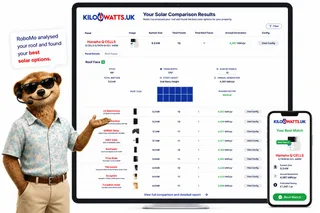
Use RoboMo™ to assess your property, compare available technologies and connect with trusted UK installers, suppliers and manufacturers.
Simply enter your postcode, drop a pin on your roof, create your free account and let RoboMo™ analyse your property to find the best solar panels for your home.
You don't have to think
RoboMo™'s AI analyses your roof and does all the hard work.

Accurate & tailored
AI-powered assessment based on your roof, location, and conditions.

Best options, maximum savings
Compare top solar panels for the best performance and value.
Simple, fast & effortless
Provide a few details, sit back and watch your results unfold.
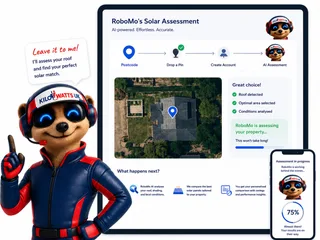
STEP 1
Choose Home, Business or Industrial
Enter your postcode to start your assessment.
STEP 2
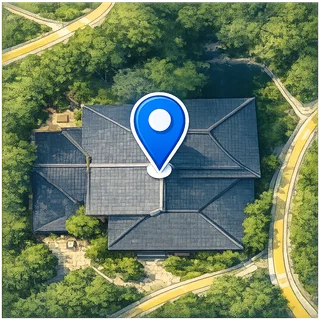
Drop a pin on your roof
STEP 3
Create your free account
STEP 4

Sit back and watch RoboMo™ work
RoboMo™ analyses your roof and builds your personalised solar comparison.

Kilowatts UK is an authorised representative
Flower Turbines
Compact vertical-axis turbines built for real UK sites, not just open farmland.
They start in light wind, sit in a small footprint, and are bird-safe by design. Cluster them as a bouquet and the group performs better together than the same turbines standing alone. Enter your postcode for a location-based generation estimate. Figures use area weather data and will differ if buildings, trees or hills sit in the way.
Starts in light UK wind
Built to generate in typical UK wind, not only open farmland.
Small rooftop or ground footprint
Compact towers for roofs, yards and tight sites.
Bird-safe slow rotation
Slow vertical-axis spin, bird-safe by design.
Bouquet clusters raise output
Grouped turbines outperform the same units standing alone.
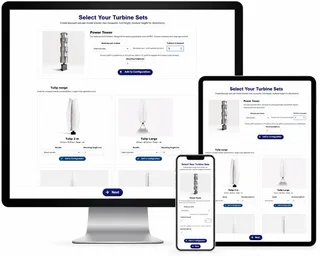
Step 1
Enter your postcode
Start designing your wind energy system in seconds.
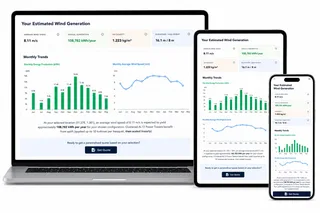
STEP 2
Choose a location
STEP 3
Place your cluster
Tap the map where you want the turbine cluster to go.
STEP 4
Instant generation forecasts
Compare different turbine layouts and see annual generation forecasts instantly.
STEP 5
No commitment required
Explore different configurations before deciding whether to request a quotation.
Related articles
Mo's Mission Nominations
FAQ
Need Help? RoboMo's Got Answers
Do I need a qualified electrician to install solar panels in the UK?
Yes. For most UK domestic solar PV installations, a qualified electrician or competent solar PV electrical installer is needed to design, connect, test and certify the electrical work. Roofers may fit mounting rails and panels, but the DC wiring, inverter connection, AC circuit, isolators, protective devices, consumer unit connection, labelling and final testing should be carried out by someone competent to work safely with both solar PV and mains electricity.
Can any electrician install solar panels?
Not necessarily. A general domestic electrician may be qualified for many household electrical jobs but may not have the solar PV experience needed for DC string design, inverter setup, safe isolation, PV testing, export limitation and DNO paperwork. Solar PV systems have specific risks and requirements, so you should use an electrician who understands BS 7671, solar PV circuits, inverter manufacturer instructions and the relevant grid connection process.
Is MCS certification the same as being a qualified electrician?
No. MCS certification and electrical competence are different things. MCS relates to renewable installation standards, product standards and consumer protection, while a qualified electrician is responsible for safe electrical design, installation, inspection, testing and certification. Many good solar companies are MCS certified and use qualified electricians or competent solar PV electrical staff as part of the installation team.
Is MCS legally required for solar panels?
MCS is not always a legal requirement, but it is often important in practice. Many Smart Export Guarantee suppliers ask for an MCS certificate or an accepted equivalent before paying you for exported electricity. MCS documentation can also help with warranty support, finance, insurance checks and future property sale enquiries, so it is worth confirming the installer’s MCS status before you accept a quote.
What electrical work does a solar electrician do?
A solar electrician checks the existing electrical installation, designs the solar electrical circuit, connects the inverter, installs or verifies isolators and protective devices, tests the system, labels the equipment and provides electrical certification. They also check earthing, bonding, consumer unit capacity, cable routing, inverter location, RCD compatibility, shutdown procedures and whether the system can be connected safely to the property and the grid.
Do solar panels need DNO approval or notification?
Yes. Any grid-connected solar PV system must be notified to the local Distribution Network Operator, known as the DNO. Smaller domestic systems are often installed under G98 rules and notified after installation, while larger systems, multiple inverters, battery systems or higher export designs may need G99 approval before installation. A competent solar installer should confirm which route applies before work starts and provide evidence of the notification or approval.
What is the 3.68kW solar export limit?
The 3.68kW figure is linked to the G98 limit of 16A per phase on a typical single-phase domestic supply. It usually refers to export capacity rather than the total size of the solar panel array. A property may have a larger panel array with an export-limited inverter, but the inverter settings, export control and DNO paperwork must match the approved design.
What is G100 export limitation?
G100 export limitation is a method of controlling how much electricity a system can export to the grid. It is often used where the solar array, battery or inverter setup could export more than the DNO allows. The system must be designed, configured and tested correctly so export stays within the agreed limit, especially where batteries, hybrid inverters, AC-coupled batteries or EV chargers are involved.
What paperwork should I receive after a solar installation?
You should receive a handover pack including an Electrical Installation Certificate, DNO notification or approval evidence, system schematic, commissioning records, inverter and panel warranty details, user instructions, shutdown procedure, equipment serial numbers and, where applicable, an MCS certificate or accepted equivalent. If a battery or backup circuit is installed, you should also receive battery commissioning details and clear operating instructions. Keep all documents safe for export payments, insurance, maintenance and future property sale checks.
Is solar PV electrical work notifiable under Building Regulations?
In England and Wales, some domestic electrical work is notifiable under Part P of the Building Regulations, and a solar PV installation often involves a new circuit or an alteration to the fixed electrical installation. A registered competent person may be able to self-certify work within the scope of their registration. If the work is not self-certified, building control may need to be notified before work starts. Scotland and Northern Ireland have different systems, but the same practical principle applies: the electrical work must be safe, compliant and properly documented.
Can I install solar panels myself?
You can buy solar equipment yourself, but connecting a solar PV system to your home’s fixed wiring or to the grid is not a sensible DIY task for most homeowners. The risks include electric shock, fire, DC arcing, incorrect protection, invalid certification, insurance issues and problems receiving export payments. Working at height also creates serious safety risks, and many electricians will not sign off solar work they did not design, install or supervise.
Can a grid-connected solar system plug into a normal socket?
No. A domestic grid-connected solar PV system should not simply be plugged into a normal socket. It needs a correctly designed connection to the fixed electrical installation, suitable protection, isolation, testing, certification and DNO notification or approval. Claims that a household solar PV system can be connected like a normal appliance are a major warning sign.
Will solar panels work during a power cut?
A standard grid-tied solar PV system will normally shut down during a power cut for safety reasons. This prevents the system from energising the local grid while engineers may be working on it. If you want backup power during an outage, you need suitable battery and backup equipment designed, installed and commissioned for that purpose. Backup systems may only supply selected circuits unless the installation is specifically designed for whole-home backup.
Does my consumer unit need upgrading for solar panels?
Sometimes. If your consumer unit has no spare capacity, lacks suitable protection or is an older fuse board, remedial work may be needed before solar can be connected safely. The electrician should also check earthing, bonding, protective devices, RCD compatibility, cable routes and whether the existing installation is suitable for the new generating system.
Can I add a battery, EV charger or heat pump to solar panels?
Yes, but these additions make the electrical design more involved. Batteries, EV chargers and heat pumps can affect electrical load, earthing, protective devices, cable sizing, inverter setup, export control, DNO applications and future expansion plans. If you may add any of these later, tell the installer before the solar system is designed so the installation can be planned properly.
Where should the inverter and battery be installed?
The inverter and battery should be installed in locations that meet the manufacturer’s requirements for ventilation, temperature, access, protection and maintenance. Lofts are often unsuitable for batteries because they can become too hot, too cold or difficult to access safely. Garages, utility rooms or suitable external cabinets are often better options, depending on the equipment, fire safety considerations and property layout.
What should be checked before solar panels go on the roof?
The installer should check the roof condition, structure, shading, access, cable routes and suitability of the proposed mounting system. Solar panels add weight and are exposed to wind uplift, so weak rafters, damaged tiles, asbestos materials or a roof that needs replacement soon can affect whether installation is practical or cost-effective. Electrical checks should also be completed before installation so roof work and cable routes are properly coordinated.
Do I need planning permission for solar panels?
Many domestic solar panel installations in the UK fall under permitted development, but not all do. Extra checks may be needed for listed buildings, conservation areas, flats, leasehold properties, ground-mounted systems or installations that significantly alter the appearance of the building. You should confirm planning, ownership and leasehold restrictions before work starts, especially if the property is unusual or protected.
What are the main risks of using an unqualified solar installer?
The main risks are unsafe wiring, DC arcing, fire, electric shock, poor earthing, overheating, nuisance tripping, invalid certification, rejected export applications, insurance problems and difficulty selling the property later. Poor cable routing, mismatched DC connectors, incorrect inverter settings and missing DNO paperwork can also create long-term safety and reliability issues that may not be obvious immediately.
How do I choose the right electrician for solar panels?
Choose someone with both electrical competence and solar PV experience. Ask who will complete and sign off the electrical work, whether the installation is notifiable, how DNO notification or approval will be handled, what certification you will receive and how the design deals with earthing, inverter location, cable routes, shading, export limits and future battery compatibility. A good installer should be able to explain the system, paperwork and responsibilities clearly before you sign a quote.
What questions should I ask before accepting a solar quote?
Ask who is responsible for the electrical design, who will connect and test the system, what qualifications or scheme memberships they hold, whether you will receive an Electrical Installation Certificate, whether MCS certification applies, whether the installer will handle DNO paperwork and whether the project falls under G98, G99 or export limitation. You should also ask whether any consumer unit, earthing, bonding, roof or access issues need fixing before installation.
Who is responsible for the electrical certification?
The person or company responsible for the electrical design, installation, inspection and testing should provide the electrical certification. Certification should not be treated as something another electrician can casually add later. Many competent electricians will not sign off work they did not design, install or supervise, so you should confirm before work starts who will certify the installation and what documents you will receive.