

Need help right now?
Talk to RoboMo™ and get instant answers.


2 local comparisons · West Sussex
Solar installation patterns across West Sussex vary significantly between towns and residential areas. Regional data highlights how variation in housing density and roof characteristics influence system output across different areas.
Across the wider West Sussex region, system performance is influenced by a mix of urban housing, suburban developments, and rural properties.
Savings in West Sussex depend on how well system size matches energy usage. Homes with higher daytime consumption typically see stronger returns, while others benefit from battery storage.
Based on real comparison data, households typically see savings ranging from £247 to £2480, with most systems delivering around £1363 annually.
Across West Sussex, different towns present different solar installation conditions, from dense housing layouts to more open properties.
This variation means system design must be adapted based on location within the county.
Energy generation in West Sussex depends on roof orientation, shading, and system size. South-facing roofs generally achieve the highest output, while east-west systems provide more balanced generation.
Typical systems generate around 6197 per year, with higher-performing setups reaching 11270. Most installations include approximately 16 panels.
Typical yearly generation
6197 kWh
What a usual system here is modelled to produce
Typical yearly saving
£1363
From £247 to £2480
Usual system
16 panels
Mostly 400W
Best result in the data
11270 kWh
Highest modelled yearly output
Enter a postcode. RoboMo™ uses it to see how many panels of each type fit that roof.
Enter your postcode to start your assessment.
RoboMo™ analyses your roof and builds your personalised solar comparison.
Properties here are typically modelled at 6197 kWh a year, from systems of about 16 panels. The score mixes that output with how many people are comparing solar in the area.
Most installations in West Sussex fall under permitted development, but conservation areas and listed buildings may require additional approvals.
Positioning and visual impact can influence planning decisions in certain cases.
Installations across West Sussex reflect a mix of urban and rural energy usage patterns, influencing system sizing and design.
Properties with more available space typically achieve higher output and flexibility in system configuration.
What we're seeing locally: West Sussex includes a mix of housing layouts that can influence solar performance, particularly where surrounding buildings or trees introduce partial shading.
Local score
out of 100
Yearly output
kWh, best 11270
Yearly saving
up to £2480
South-facing roofs
of modelled systems
Average system
panels, scale to 40
Common panel class
scale to 600W
Best modelled year
kWh peak in the data
Roof direction
South 33%
East/west 67%
Mixed 0%
Flat 0%
Figures come from real residential comparisons for local homes. They show the system sizes people compare and the generation those sizes reach.
| Panel type | Typical setup | Average yearly generation |
|---|---|---|
| 25 panel system High-efficiency panel | 25 panels | 11271 kWh |
| 6 panel system High-efficiency panel | 6 panels | 1124 kWh |

Depot Cottages, 2, The, Horsham Rd, Beare Green, Dorking RH5 4QR, United Kingdom RH5 4QR

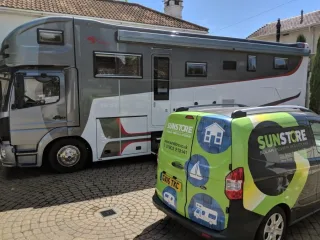
Woods Way, Goring-by-Sea, Worthing BN12 4QY, United Kingdom BN12 4QY

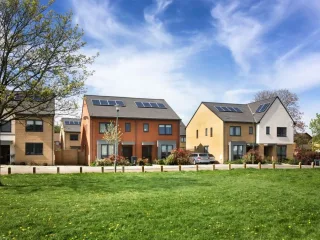
Unit 4, Lynx Business Park, Colliers Green Rd, Goudhurst, Tonbridge TN17 2LR, United Kingdom TN17 2LR

Most homes here are modelled around 6197 kWh a year, with typical savings of £1363.
Compare installers and prices for solar in West Sussex.
Get solar quotes in West SussexFAQ
Live Chat: