


Common Lot: Inside Oxfordshire's Community-Owned Solar-and-Battery Project
Published: 2026-11-23 21:25:34
Updated: 2026-11-23 13:26:31
See how Oxfordshire’s planned Common Lot park pairs 7.4 MW of solar with a 10 MWh battery and what Low Carbon Hub’s community share offer helps fund.
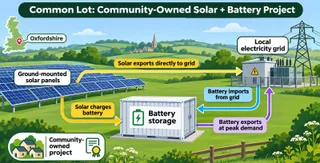
Common Lot solar battery park and the community share offer
Common Lot is a planned community-owned solar and battery park near Yarnton, Oxfordshire. It will combine a 7.4 MW ground-mounted solar array with a 10 MWh battery that can store electricity for later export. Low Carbon Hub aims to start construction in May 2027 and commission the site in February 2028. Its community share offer, launched on 5 November 2026, aims to raise at least £500,000 for the wider Community Energy Fund, which helps finance Common Lot and other renewable energy projects. Low Carbon Hub’s project timetable. Share offer launch announcement.
Where Common Lot is being built and what the council approved
The site lies beside Yarnton industrial estate, between the A44 and the Cherwell railway line. On 30 October 2019, Cherwell District Council granted planning permission for the ground-mounted solar park and associated infrastructure under application 19/01046/F. The permission included landscaping and ecology conditions. In September 2023, the council approved a non-material amendment, 23/02311/NMA, to add battery storage to the approved infrastructure. Cherwell District Council’s decision notice. Planning register and amendment history.
Low Carbon Hub says a grid connection agreement was already in place when it acquired the project. Its biodiversity plans include planting native hedgerows and sowing wildflower meadows. The council’s decision and later approvals set out the formal landscaping and ecology requirements. Low Carbon Hub’s site plans and timetable. Cherwell planning register.
The design uses bifacial panels, which generate electricity from light reaching either face. The extra output depends on how much light reaches the rear. Ground reflectivity, clearance beneath the panels and spacing between rows all affect how much the rear contributes. A generation forecast needs to account for the layout as well as the choice of panel. Low Carbon Hub’s project announcement.
How the Common Lot battery will charge and discharge
The battery can charge from the solar array or the grid. Low Carbon Hub says software will schedule charging and discharging based on solar output, grid signals and electricity prices. The park could store some midday generation for evening export or charge from the grid when electricity is cheaper. Each cycle loses some energy. The value of storage depends on the cost of charging, the income the park could earn from exporting solar electricity straight away and the price it can get for the stored electricity later. Low Carbon Hub’s battery operating description.
Megawatts (MW) measure power, or how quickly electricity flows. Megawatt-hours (MWh) measure energy. Dividing the published 10 MWh capacity by the maximum discharge rating of 4.9 MW gives about two hours at full power on paper. At the published grid import limit of 2 MW, drawing 10 MWh takes five hours at a constant rate. Storing that much energy takes longer once charging losses are included. The battery’s operating charge range also affects how much energy it can take in or deliver in a cycle. Low Carbon Hub’s battery and grid connection figures.
To estimate what Common Lot can deliver during a peak period, check the battery’s usable energy capacity and the site’s agreed export limit. Usable capacity determines how long the battery can sustain a given output. The export limit caps the power that can reach the grid when the solar array and battery are both exporting.
How much electricity and community benefit are forecast
Low Carbon Hub forecasts about 7.9 GWh of solar generation a year, equivalent to the annual electricity use of more than 3,000 homes by its calculation. The comparison uses annual totals. The park exports to the grid, and its output varies with daylight and weather. The battery can shift some generation to later hours, within its storage and power limits. Low Carbon Hub’s generation forecast.
Low Carbon Hub also forecasts £6.3 million in community benefit over a 42-year project life. The amount available for community funding will depend on how the project performs. The financing plan includes community shares and bank debt, with a community bond also possible. The £500,000 share-raising target covers one part of that financing. Low Carbon Hub’s project forecasts and financing plans.
What the Common Lot community shares buy
Subscribers buy withdrawable shares in Low Carbon Hub through its Community Energy Fund. The fund helps finance Common Lot, and Ethex says it calculates interest annually based on the performance of Low Carbon Hub’s wider energy portfolio. The offer launched on 5 November 2026 with a subscription range of £100 to £100,000, a target annual interest rate of 5% and an advertised closing date of 5 February 2027. Interest is uncertain, investors could lose their entire investment, and the shares carry no Financial Services Compensation Scheme (FSCS) protection. Low Carbon Hub’s offer announcement. Ethex offer terms and risk information.
As of 23 November 2026, Ethex’s published terms say investors can apply to withdraw shares after holding them for at least four years. The society handles applications annually, with a maximum withdrawal of £20,000 in any one year. Repayment depends on the society’s withdrawal rules and its ability to meet requests. Read the current share offer document before subscribing, especially if you may need the money by a particular date. Ethex requires registration to view the full offer. Ethex’s Common Lot share offer.
What homes, flats and businesses can learn from Common Lot
The case for a battery starts with when you generate electricity and when you use it. A home with surplus solar at midday and high evening demand may have more energy to shift than a workshop that uses most of its generation during opening hours. Compare half-hourly consumption with expected solar output before choosing a battery size. For each unit of surplus solar you could store, weigh the saving on electricity bought later against the export income you would give up. Allow for losses when the battery charges and discharges.
For a flat or balcony, start with the space available for panels, shading, safe mounting and any building permissions. Estimate generation before pricing storage, especially if space is tight. When comparing solar options for your home or solar options for your business, bring a recent bill and half-hourly usage data if available. Ask the installer for the battery’s usable capacity in kWh, its continuous discharge power in kW and an estimate of how much of your demand the system could cover. If you need backup during a power cut, ask which circuits would run, how long they would run under a realistic load and what backup equipment the quote includes.
Solar comparison
Compare solar for your property
Enter your postcode to assess your roof, compare solar options and get quotes from UK installers.
- Free postcode start
- Home, business and industrial
- RoboMo™ maps your roof
See which panels fit your roof
Choose home, business or industrial, then enter your postcode. RoboMo maps the roof and ranks panel brands by fit.
1. Postcode Start the assessment for your property.
2. Pin the roof Mark the array on the map.
3. Compare RoboMo™ builds your options.

Battery ROI tool
See what a battery saves on your bill
Enter the day rate, off-peak rate and export rate. The calculator ranks batteries in the Kilowatts shop over 10 years. Home batteries also suit offices and small commercial sites.
Reading
Sources and further reading
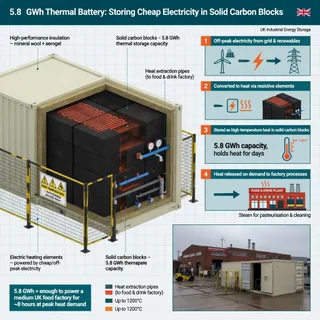
A 5.8GWh thermal battery will store cheap electricity as heat in solid carbon blocks. The Kansas figure is process heat, not a UK grid battery.
Read article
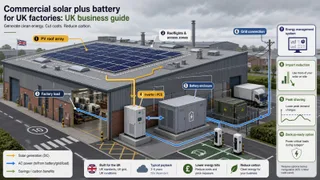
See when commercial solar plus a battery fits a UK factory: shift timing, export caps and connection headroom. A standard battery is not backup power.
Read article
Discover the UK Warm Homes Plan 2026. Learn about £15 billion in grants and low-interest loans for solar panels, heat pumps, insulation and batteries.
Read article
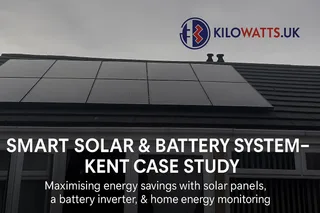
See how a Broadstairs, Kent household is cutting bills and earning from exports with a £7,300 solar + battery system, real performance data, savings, warranties, and why now is the perfect time to act.
Read article


Mo's Solar Mission
Mo's Mission Nominations
Garlinge Primary School and Nursery
Garlinge Primary School and Nursery is a foundation primary school on Westfield Road in Margate, Kent, for children aged 3 to 11. It is m...
St Luke's Church of England Primary SchoolSt Luke's Church of England Primary School is a voluntary controlled Church of England primary school on Jubilee Road in Formby, Merseysi...
Comberbach Nursery and Primary SchoolComberbach Nursery and Primary School is a primary academy on Mather Drive in the village of Comberbach, near Northwich in Cheshire, for...
Locations
Solar installation near you
Write for Kilowatts.uk
Got a trade and something worth saying?
Write it here under your own name. Sign in, put a profile up, and start a guide. Pay only if you want more links from your articles out to your own site.
Register
Create a Kilowatts.uk account, or sign in if you already have one.
Author profile
Put your name, photo and experience on a public author page.
Start creating
Write a guide or a blog. Free authors can put one followed link to their own site in articles each month.
FAQ
Need Help? RoboMo's Got Answers
What is the Common Lot solar and battery park, and when is it due to open?
Common Lot is a planned community-owned energy project beside Yarnton industrial estate in Oxfordshire. It will combine a 7.4 MW ground-mounted solar array with a 10 MWh battery. Low Carbon Hub’s published timetable targets May 2027 for the start of construction and February 2028 for commissioning.
Will Common Lot supply electricity directly to local homes?
Common Lot is designed to export electricity to the grid. Low Carbon Hub forecasts about 7.9 GWh of solar generation a year, which it estimates is equivalent to the annual electricity use of more than 3,000 homes. That comparison uses annual totals, while actual output will vary with daylight and weather.
How will Common Lot’s battery work, and how long can it discharge?
The battery can charge from the solar array or the grid and export electricity later, such as during the evening. Its published 10 MWh capacity and 4.9 MW maximum discharge rating imply about two hours at full power on paper. Actual discharge time depends on how much usable energy is available, and the site’s export limit caps how much power the solar array and battery can send to the grid together.
How could Common Lot benefit the local community?
Low Carbon Hub forecasts £6.3 million in community benefit over the project’s expected 42-year life. The amount available for community funding will depend on how the project performs. The site plans also include native hedgerows and wildflower meadows.
What do I buy through the Common Lot community share offer, and what are the risks?
You buy withdrawable shares in Low Carbon Hub through its Community Energy Fund, which helps finance Common Lot and other renewable energy projects. The advertised subscription range was £100 to £100,000, with a closing date of 5 February 2027. The 5% annual interest rate is a target, and interest depends on the performance of Low Carbon Hub’s wider energy portfolio. You could lose your entire investment, and the shares have no Financial Services Compensation Scheme protection.
When can I apply to withdraw my Low Carbon Hub community shares?
Under Ethex’s published terms as of 23 November 2026, you can apply after holding the shares for at least four years. Low Carbon Hub handles applications annually, with a maximum withdrawal of £20,000 in any one year. Repayment depends on the society’s withdrawal rules and its ability to meet requests, so check the current offer document before subscribing.
How can I tell whether a battery is worth adding to my home solar system?
Compare your expected solar generation with your half-hourly electricity use, if available, to see how much surplus you could shift to the evening. Weigh the savings on electricity you would otherwise buy against the export payments you would give up, allowing for charging and discharging losses. Ask for the battery’s usable capacity in kWh and continuous discharge power in kW. If you want power-cut backup, check which circuits the quote covers and how long they could run under a realistic load.
Live help
Need help right now?
Talk to RoboMo™ and get instant answers.