


5.8GWh Thermal Battery Will Store Cheap Electricity in Solid Carbon Blocks
Published: 2026-10-02 11:13:23
Updated: 2026-10-02 04:14:17
A 5.8GWh thermal battery will store cheap electricity as heat in solid carbon blocks. The Kansas figure is process heat, not a UK grid battery.

5.8GWh Thermal Battery Will Store Cheap Electricity in Solid Carbon Blocks
How renewable energy story radar 2 october 2026 1 work, typical output, costs and limits, and whether they have a future for UK homes.
What the 5.8 GWh thermal battery announcement actually means for British readers
On 1 October 2026 Antora Energy announced equity financing for a 5.8 GWh thermal battery at Pratt Energy's ethanol biorefinery in Kansas. That figure is stored heat for an industrial process, not electrical energy a lithium-ion grid battery could export. The same 2 October 2026 briefing also covers a Finnish memorandum on methane-pyrolysis balancing power, and a US lawsuit about how some TOPCon solar cells are manufactured. None of the three is a finished British project, and none changes home-solar paperwork.
The Kansas system, as described, would turn low-cost electricity into heat, hold it in insulated solid-carbon blocks, and supply continuous process heat under a long-term offtake. Deliveries are described as expected the following year. That would mean 2027 only if the timetable holds. Charging power, discharge power, temperature, efficiency, cost, lifetime and the electricity source were not published. Without those, the gigawatt-hour headline cannot support a price, a payback or a carbon-intensity claim.
A homeowner comparing this with a domestic battery, or with a small heat battery sold alongside a heat pump, is looking at a different product. Those stores are specified in kilowatt-hours. A factory energy manager should be equally careful. A heat contract in Kansas is not evidence that the same blocks can fire a cement kiln, cut a British site's bill, or stand in for an electrical storage tender.
What Antora and Pratt Energy have financed, and what has not yet been built in Kansas
Antora Energy and Pratt Energy are the parties named for the Kansas project. The host is an ethanol biorefinery, so the heat duty in view is process heat for that plant, not a generic factory and not a power-station offtake. Equity financing has been announced. The 5.8 GWh plant is not described as constructed or commissioned.
Antora has also said it commissioned a separate 5 GWh system in South Dakota earlier in 2026. If that claim is confirmed, the solid-carbon approach has moved past a laboratory prototype. It still would not transfer cost, life, heat price or connection terms from South Dakota to Kansas. A commissioned plant and a financed plant are different stages. Only the former has operating evidence.
The questions that change a project at this stage are commercial and physical. Who must take the heat, at what temperature and pressure, for how many hours a week, and what happens if the store is late? Those terms sit in the offtake, which has not been published. Until they are, continuous industrial heat is a description of intent, not a performance guarantee.
How insulated solid-carbon blocks turn cheap electricity into stored industrial heat
The storage medium is solid carbon, held in heavy insulation. Electricity heats the blocks when power is cheap or otherwise available. The heat stays in the solid until the process needs it, then leaves as useful heat rather than as an electrical export. That is what "thermal battery" means here. The battery is the hot mass, not a bank of electrochemical cells.
Antora has said its modules can provide heat or electricity. This project is still being developed around a heat-offtake agreement, so the Kansas headline should be read as a heat plant. Making electricity from stored heat would mean a further conversion, with losses that have not been stated. An "electrical equivalent" of 5.8 GWh would invent that missing efficiency.
A multi-day claim cannot be turned into hours without a discharge rating. The same 5.8 GWh lasts longer if heat is drawn slowly, and shorter if the biorefinery needs a high steam rate. Standing losses matter more as the hold time grows. Insulation, cycle length and how fully the store is used decide whether cheap charging hours are still there when the process needs the heat. None of those figures was disclosed on 1 October 2026.
Why a thermal gigawatt-hour is not the same thing as an electrical grid battery
A grid battery's gigawatt-hour figure is electrical energy it can deliver, inside a stated power rating and after its own losses. The Kansas figure, as announced, is thermal energy tied to a heat contract. Treating the two numbers as the same battery is a comparison this story does not support. Unit arithmetic does not fix it. 5.8 GWh is 5,800 MWh. That conversion says nothing about megawatts of heat or of power. Where heat is later turned back into electricity, a large share is lost in the conversion. Because this project's electrical efficiency is not published, no electrical equivalent should be quoted. Even a pure heat store is not automatically loss-free. Pipework, heat exchangers and standing losses all take a cut. The size of that cut is a design outcome, not a slogan.
Overview
Use the thermal figure when the question is how much heat might be held. Use an electrical figure only when someone has published electrical output, power and efficiency for that same project.
Why industrial process heat is still harder to decarbonise than grid electricity
Electricity supply in Britain already varies hour by hour with wind and solar, and individual hours can be low-carbon. A large part of industrial energy is not electricity. It is steam, hot water, hot oil or direct firing. Much of that is still produced by burning gas or other fossil fuels on the site. Replacing that heat is a different job from adding a rooftop array.
Temperature is the split that matters. Distilling, brewing and ethanol production mainly need steam or hot water. Papermaking and many chemical steps also use steam, though some steps are hotter or need a particular process atmosphere. Cement, ceramics and glass often need much higher temperatures, and frequently a flame or a controlled kiln atmosphere, not just a hot pipe. A store that can raise steam is not automatically a kiln.
Fuel-ethanol heat, the duty behind this announcement, is mainly steam for distillation and related steps. That is why the Kansas project is a coherent heat story. It is also why it does not prove a cement or ceramics application. Anyone mapping the idea onto a British factory has to start from the actual heat grade, not from the fact that the site uses energy.
When charging on cheap renewable power does not produce cheap industrial heat in Britain
The case rests on a simple sequence. Charge when electricity is inexpensive, store the heat, and avoid buying gas during the hours the process runs. That only works if low-price power turns up often enough at that site, after network charges, and if the connection can accept the charging load in those hours. A store that must charge on expensive import power will not undercut a gas boiler just because wind was cheap somewhere else that afternoon.
US Midwest prices and curtailment patterns must not be copied across as British figures. No credible pounds-per-megawatt-hour comparison can be written from this announcement, and none is offered here. Wholesale price, network charges, import capacity and the boiler being displaced all sit between a renewable headline and a site bill. They are local facts.
Claims about affordable energy, or about zero-carbon-intensity ethanol, depend on the electricity contract and on full life-cycle accounting. They are not established by the capacity number, and they are not established by equity financing. If the power is only cheap because it is unconstrained fossil generation, the heat is not a renewable product. If the power is renewable but scarce, the store may still be useful, but the carbon case has to be calculated, not assumed.
Which British industries could use a carbon-block heat store, and which could not
Britain does have large, fairly steady heat users in food and drink, distilling, parts of chemicals and paper, and in higher-temperature sectors such as ceramics and cement. They are not one market. A carbon-block store is only worth an industrial reader's time if heat demand is large and reasonably steady, the heat grade matches what a supplier can actually deliver, and the site can secure enough electrical import capacity to charge in low-price periods.
It is a poor fit where the real need is exportable electricity, where demand comes in short bursts with no steam tie-in, or where the site is small. Listing cement and ceramics as applications merely because they consume heat would overreach. A very hot solid might raise steam if it is hot enough, but Pratt's steam conditions and the delivery temperature for this project are not public. Without those, a British kiln owner has nothing to specify against.
No carbon-block plant of this type is identified here as under way in Britain. A proposal at this electrical scale would still need land, a safety case for a large hot solid, a tie-in to existing boilers or steam mains, planning and environmental permissions, and a network connection for a heavy import. Charging power has not been published, so it is not possible to say whether that connection would sit with the distribution network or at transmission level. Those steps are often slow. They also decide the project, long before a gigawatt-hour headline does. A domestic heat battery sold with a heat pump should not be described in this language. Installers quoting homes should stay in kilowatts and kilowatt-hours, and should name the storage type. A customer who asks for gigawatt-hour storage on a house is mixing up a biorefinery contract with a consumer unit.
Performance, cost and carbon questions the Kansas announcement still leaves unanswered
Financing is a real step. It is not commissioning. Until the Kansas plant is built, run and metered, outside readers cannot know whether the store holds what was advertised, how fast it can be charged, or what the heat costs. The South Dakota system, if the commissioning claim is confirmed, is the place to look for operating lessons. It is not a substitute for Kansas data.
The gaps below are absences in the 1 October 2026 announcement, not minor footnotes. Each one blocks a different commercial judgement.
Anyone treating the project as a template for a UK factory should ask for those five items in writing, plus steam pressure, the weekly load shape, whether a fuel boiler remains as backup, and who warrants the heat. Those answers will not be on a solar datasheet, and they are not in the Kansas headline.
Why Finland's pyrolysis proposal is not zero-emission backup power for Britain
On 29 September 2026, GEN-H Energy and the Finnish company Hycamite signed a memorandum of understanding for a proposed balancing plant at Kotka, rated at 200 to 300 megawatts, with a separate solar installation of up to 100 megawatts of peak capacity planned nearby. This is a memorandum, not a final investment decision. No construction date, capital cost, conversion efficiency or electricity price has been disclosed. It should not be described as a funded 300 megawatt trial, and it is not Britain's backup plan.
The technical idea is methane pyrolysis, sometimes called turquoise hydrogen. Methane would be split into hydrogen and solid carbon. The hydrogen would then be burned to generate power, and the carbon would be recovered as a solid rather than leaving the stack as carbon dioxide. That is different from green hydrogen, made by electrolysis, and from blue hydrogen, made by reforming with carbon capture. Gas turbines can respond when wind and solar fall. A conventional plant emits carbon dioxide while it does so. Pyrolysis is a proposed way to keep dispatchable generation while separating carbon before combustion.
Zero-emission gas power does not hold once the full chain is counted. No carbon dioxide in the splitting step, and no carbon dioxide from hydrogen combustion, are real process points. They are not a life-cycle result. Extraction, processing, transport, methane leakage, the energy used by the plant, and the fate of the solid carbon all remain. Solid carbon helps the climate ledger only if it is not later burned. Hydrogen burned in air can still form nitrogen oxides, depending on turbine design and temperature, and no turbine design has been chosen for Kotka. Upstream methane leakage can dominate the result. Calling the plant zero-emission is only defensible, if at all, at the direct process and combustion stage. The 200 to 300 megawatt figure is a power rating, not an energy store and not annual output. The plant should not be assumed to run all year. Annual electrical output, and the mass of solid carbon, stay unknown until efficiency and running hours are known. A plant at that scale would produce substantial solid carbon if it ran hard. Stable markets or permanent handling would be required. Neither has been shown.
What the Barrow-in-Furness assessment shows, and what it does not prove for Britain
Hycamite has separately been working with the UK company EnergyPathways on an assessment of a methane-splitting plant at Barrow-in-Furness. That note, as reported, targets about 20,000 tonnes of hydrogen and 60,000 tonnes of graphite a year, and is described as part of the MESH long-duration storage project. It is an assessment, not a consented plant, and it is not the Kotka power station moved to Cumbria. The two should not be merged. Neither should be called long-duration storage unless the storage medium and the duration are stated.
The mass ratio is at least internally consistent with complete pyrolysis, which yields about three tonnes of solid carbon for each tonne of hydrogen. Consistency is not performance, and it is not evidence that a plant exists. If those hydrogen tonnes are an annual target, the fuel energy in that hydrogen is on the order of 670 gigawatt-hours a year, using a lower heating value of about 33 kilowatt-hours per kilogram. That is a conversion of a reported mass, not a company claim of electrical export. Losses in any later conversion to power are undisclosed. The figure must not be added to the Finnish megawatts.
Barrow already sits near gas and offshore-wind infrastructure, which is why the location is plausible to study. A UK project would still need a gas supply, a use or store for the hydrogen, a lasting home for the solid carbon, and combustion-emissions control. UK gas is a mix of North Sea production, pipeline imports and liquefied natural gas, not a single emissions factor. The climate case would stand or fall on leakage and on what happens to the carbon, not on the word turquoise. There is no basis here for treating pyrolysis as household backup, or as a description of Britain's near-term capacity mix. One item is a memorandum in Finland. The other is an assessment in Cumbria. Both would have to reach a final investment decision, permissions, a gas contract and a carbon outlet before either became an operating plant.
Should UK solar owners or installers act now on the JA Solar TOPCon patent lawsuit in Britain?
First Solar sued JA Solar and American Panel Solutions in Delaware, alleging infringement of US Patent 9,130,074. The case was filed on 28 September 2026 and publicised on 1 October 2026. The patent is said to cover certain manufacturing methods for tunnel-oxide passivated-contact cells, usually called TOPCon, which are now common in high-efficiency crystalline-silicon modules. Infringement is alleged, not established. This is general information about a public filing, not legal advice. JA Solar's substantive response was not available in the sources behind this briefing.
First Solar is best known for cadmium-telluride thin-film modules. The company has said it acquired the relevant silicon-cell portfolio when it bought TetraSun in 2013, and that related patents have been granted in the United States, the European Union, China, Australia, Canada, Japan and elsewhere, with some rights extending to 2030 or beyond. A company list of foreign rights is not a finding that a UK patent is in force, and it is not an injunction. This lawsuit is a US case about a US patent. It has not been shown to restrict UK sales, to change module certification, or to alter distribution-network connection rules.
There is no immediate reason for a UK owner or installer to panic, and no basis in these facts for treating installed JA Solar modules as illegal, unsafe, decertified or out of warranty. A US manufacturing allegation does not void a British warranty by itself. Warranty terms are contractual. Read the warranty before commenting, and do not add a patent-risk line to a yield or payback estimate. The defendants named in this filing are JA Solar and American Panel Solutions only. That does not make every TOPCon manufacturer a party, and it does not show that every TOPCon product infringes. Possible outcomes include dismissal, settlement, a licence or a judgment. Any effect on future module prices or availability is speculative until one of those outcomes, or an injunction, actually exists. Installers should not drop JA Solar from a design solely because a Delaware case was filed. If a salesperson urges a panel swap on the back of this headline, ask for a UK court order, a certification withdrawal or a warranty notice from the manufacturer. None of those documents is this lawsuit.
What a British reader should do with these three renewable energy headlines now
Treat the Kansas announcement as a heat-storage story of unusual stated scale, dated 1 October 2026, and still pre-construction. Treat the Finnish item as a memorandum about a proposed power plant, dated 29 September 2026, with a carbon and methane problem still attached. Treat the patent item as an allegation in the United States, not as a UK product recall. Dated claims age more slowly than a line that simply says the news broke yesterday.
Industrial readers who genuinely have a large, steady steam load can use the Kansas news as a prompt to measure their own site, not as a specification. A supplier needs steam pressure or temperature, the daily and weekly load shape, electrical import capacity, whether a fuel boiler stays as backup, and who would warrant the heat. If those facts are missing, a conversation about solid-carbon storage is premature. Any public support would depend on scheme rules current at the time. This US financing round creates no British entitlement, and no cost should be assumed.
Homeowners and small commercial solar customers can leave connection paperwork unchanged on the back of all three stories. Keep any storage quote in kilowatts and kilowatt-hours, and keep a domestic heat battery in its own category. If a headline is being used to rush a decision, ask which published figure the recommendation rests on: power, temperature, efficiency, cost, or a court outcome. If the answer is only the gigawatt-hour number, the recommendation is not ready.
Plan, Compare & Buy Renewable Energy Solutions
AI does the thinking.
You get the perfect solar match.
Use RoboMo™ to assess your property, compare available technologies and connect with trusted UK installers, suppliers and manufacturers.
Simply enter your postcode, drop a pin on your roof, create your free account and let RoboMo™ analyse your property to find the best solar panels for your home.

You don't have to think
RoboMo™'s AI analyses your roof and does all the hard work.

Accurate & tailored
AI-powered assessment based on your roof, location, and conditions.

Best options, maximum savings
Compare top solar panels for the best performance and value.

Simple, fast & effortless
Provide a few details, sit back and watch your results unfold.


STEP 1
Choose Home, Business or Industrial
Enter your postcode to start your assessment.
STEP 2

Drop a pin on your roof
STEP 3

Create your free account
STEP 4

Sit back and watch RoboMo™ work
RoboMo™ analyses your roof and builds your personalised solar comparison.

BATTERY ROI TOOL
See what a battery saves on your bill
Enter the day rate, off-peak rate and export rate. The calculator ranks batteries in the Kilowatts shop over 10 years.
Home batteries also suit offices and small commercial sites. Industrial batteries are listed on their own calculator.

Step 1
Enter your postcode
Start designing your wind energy system in seconds.
Are you an installer, distributor or renewable energy business?
Kilowatts UK is expanding the Flower Turbines partner network across the UK.
Become A Flower Turbines PartnerKilowatts UK is an authorised representative
Flower Turbines
Compact vertical-axis turbines built for real UK sites, not just open farmland.
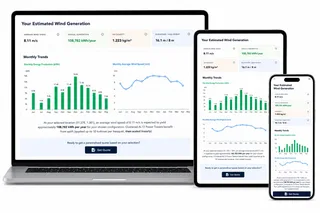
They start in light wind, sit in a small footprint, and are bird-safe by design. Cluster them as a bouquet and the group performs better together than the same turbines standing alone. Enter your postcode for a location-based generation estimate. Figures use area weather data and will differ if buildings, trees or hills sit in the way.
Starts in light UK wind
Built to generate in typical UK wind, not only open farmland.
Small rooftop or ground footprint
Compact towers for roofs, yards and tight sites.
Bird-safe slow rotation
Slow vertical-axis spin, bird-safe by design.
Bouquet clusters raise output
Grouped turbines outperform the same units standing alone.

STEP 2

Choose a location
STEP 3

Place your cluster
Tap the map where you want the turbine cluster to go.
STEP 4

Instant generation forecasts
Compare different turbine layouts and see annual generation forecasts instantly.
STEP 5

No commitment required
Explore different configurations before deciding whether to request a quotation.
Related articles

Mo's Mission Nominations
FAQ
Need Help? RoboMo's Got Answers
What does the 5.8 GWh thermal battery announcement mean for a British homeowner?
On 1 October 2026 Antora Energy announced equity financing for a 5.8 GWh thermal battery at Pratt Energy's ethanol biorefinery in Kansas. That figure is stored heat for an industrial process, not electrical energy a home battery could export. The plant is not described as built, it is not a British project, and the announcement does not change home-solar paperwork. If you are buying storage for a house, you are looking at a different product, usually specified in kilowatt-hours.
Is this solid-carbon thermal battery the same as a home solar battery?
No. Electricity would heat insulated solid-carbon blocks, and the store would supply process heat rather than an electrical export. A domestic solar battery holds electrical energy and supplies the home within its stated power rating. Antora has said its modules can provide heat or electricity, but this project is being developed around a heat offtake. Turning the stored heat back into electricity would add a conversion loss that has not been published, so 5.8 GWh should not be treated as an electrical figure.
Can I buy a carbon-block store like this for my home, and is one being built in Britain?
This is an industrial scheme, not a product a household can order. Equity financing for the Kansas plant has been announced, but the 5.8 GWh store is not described as constructed or commissioned. Antora has said it commissioned a separate 5 GWh system in South Dakota earlier in 2026; if that is confirmed, it is evidence for a different plant, not a British offer and not a transfer of cost or connection terms. No carbon-block plant of this type is identified here as under way in Britain. Asking for gigawatt-hour storage on a house mixes up a biorefinery contract with a domestic installation.
Does this announcement change home-solar paperwork, or give buyers a new price or grant?
Nothing in this briefing is a finished British project, and nothing in it is described as changing home-solar paperwork. Equity financing in Kansas does not publish a domestic price, a payback, or a rule a buyer can rely on. When you compare home quotes, ask for the storage type, the usable kilowatt-hours and what the price includes. Do not use the 5.8 GWh headline as evidence about grants, certifications or paperwork.
Why can 5.8 GWh not tell me how long the store lasts, what it costs, or how low-carbon it is?
Hours of cover depend on discharge power, which was not published. The same 5.8 GWh lasts longer if heat is drawn slowly and shorter if the plant needs a high steam rate. Charging power, temperature, efficiency, cost, lifetime and the electricity source were also absent from the 1 October 2026 announcement. Without them, the headline cannot support a price, a payback or a carbon-intensity claim. Converting 5.8 GWh to 5,800 MWh does not reveal megawatts of heat or of power.
If the blocks charge on cheap renewable electricity, will that cut a British bill?
Only if low-price power is available often enough at that site, after network charges, and if the connection can take the charging load in those hours. A store forced to charge on expensive import power will not undercut a gas boiler just because wind was cheap somewhere else. US Midwest prices must not be copied across as British figures, and no pounds-per-megawatt-hour comparison can be written from this announcement. Wholesale price, network charges, import capacity and whatever heating is being displaced are local facts, not something settled by the capacity number or the financing news.
How is this different from a small heat battery sold with a heat pump?
A domestic heat battery sold with a heat pump should not be described in the language of this industrial project. Installers quoting homes should stay in kilowatts and kilowatt-hours and should name the storage type. The Kansas store is intended to supply continuous process heat, mainly steam for ethanol distillation, under an offtake that has not been published. That is a different duty from space heating and hot water in a house. Temperature and steam conditions for the Kansas project are not public, so they cannot be mapped onto a home system.
Is the Finnish pyrolysis proposal zero-emission backup power for Britain?
No. On 29 September 2026 GEN-H Energy and Hycamite signed a memorandum of understanding for a proposed plant at Kotka, rated at 200 to 300 megawatts, with up to 100 megawatts of peak solar planned nearby. A memorandum is not a final investment decision, and the scheme is not Britain's backup plan. The idea is methane pyrolysis: methane would be split into hydrogen and solid carbon, and the hydrogen burned for power. No carbon dioxide in the splitting step is a process point, not a full-chain zero-emission claim, and capital cost, efficiency and electricity price have not been disclosed.