


Warm Homes Plan 2026 - Grants Loans - Energy Upgrades Explained
Published: 2026-02-04 23:50:27
Updated: 2026-02-05 00:15:22
Discover the UK Warm Homes Plan 2026. Learn about £15 billion in grants and low-interest loans for solar panels, heat pumps, insulation and batteries.
Understanding the Warm Homes Plan
The UK government launched the Warm Homes Plan in January 2026. It represents the largest public investment in home energy upgrades in British history. The plan allocates £15 billion to improve up to 5 million homes by 2030. It aims to reduce energy bills, tackle fuel poverty, and support the transition to clean energy. Martin Lewis of Money Saving Expert has commented on the scheme. He stated that improving housing stock through energy efficiency is a good long-term way to cut energy bills if done right. He noted previous government schemes were overly complex and poorly designed.
Key Funding and Support Available
The plan operates through three main pillars. These target different household types and income levels. Direct support for low-income families: Low-income households can receive fully funded packages of upgrades. This includes solar panels with battery storage, insulation, and heat pumps. Funding covers the full average cost of £9,000 to £12,000 for solar and battery systems. This pillar is backed by £5 billion of public investment. Universal offer for all households: Working families can access government-backed low and zero-interest loans. These loans cover solar panels, batteries, and heat pumps. The plan aims to triple the number of homes with rooftop solar by 2030. New protections for renters: The plan introduces rules requiring landlords to upgrade properties. This applies to both private and social housing. An estimated 500,000 families in rented accommodation could be lifted out of fuel poverty by 2030.
Boiler Upgrade Scheme Extensions
The existing Boiler Upgrade Scheme continues to offer grants of £7,500. These grants support the installation of air-source and ground-source heat pumps. The scheme has been expanded to include new technologies. Air-to-air heat pumps: Grants of £2,500 are now available for air-to-air heat pumps. These systems can also cool homes during summer months. Heat batteries: Grants of £2,500 are available for heat batteries for central heating systems. Biomass boilers: The scheme continues to offer £5,000 grants for biomass boilers in rural properties not connected to the gas grid. The Boiler Upgrade Scheme budget has been increased to £2.7 billion until 2030. Funding starts at £295 million in 2025-26 and rises to £709 million by 2029-30.
Warm Homes: Local Grant
This scheme provides grants of up to £30,000 for energy efficiency improvements. It targets low-income households in England with properties rated EPC D to G. Eligibility requirements: Available measures: Landlords can apply if tenants meet income criteria. For additional properties beyond the first, landlords must contribute 50% of costs. Landlords must declare they will not raise rents directly due to upgrades.
- Household income of £36,000 or less
- Property must be privately owned or rented
- Valid Energy Performance Certificate showing rating D, E, F, or G
- Certain postcode areas may qualify regardless of income
- Wall, loft, and underfloor insulation
- Air source heat pumps
- Solar panels
- Smart heating controls
Low and Zero Interest Loans
A new loan scheme makes clean energy accessible to all households regardless of income. The government is providing £2 billion for this programme. Loan features: Details on how to access these loans will be published later in 2026 following consultation with financial institutions.
- Government-backed guarantees
- Zero or low interest rates
- Available for solar panels, batteries, and heat pumps
- Open to all homeowners including landlords
Planning and Regulatory Changes
The plan includes several planning reforms to accelerate installations. Heat pump installations: New build requirements:
- Removal of the one-metre boundary rule
- Maximum unit size increased from 0.6m3 to 1.5m3
- Multiple heat pumps allowed in detached homes
- No planning permission required for most installations
- All new homes must include solar panels as standard from 2026
- Future Homes Standard implementation ensures properties are cheaper to run
Support for Social Housing
The Warm Homes: Social Housing Fund provides £1.2 billion from 2025 to 2028. This supports eligible social housing landlords to upgrade properties. The fund aims to improve entire streets simultaneously. This reduces costs and minimises disruption for tenants.
How to Apply for Support
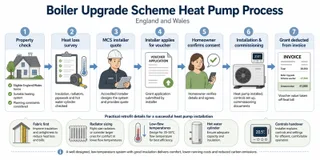
Different schemes have different application routes. Warm Homes: Local Grant: Apply through your local council via the government website. Councils typically respond within 10 working days to arrange a home survey. Call 0800 098 7950 for assistance with applications. Boiler Upgrade Scheme: Contact an MCS-certified installer. They apply for the voucher on your behalf. You receive a discount on the installation cost. Low-interest loans: Details on accessing these will be announced later in 2026.
Eligibility Checklist
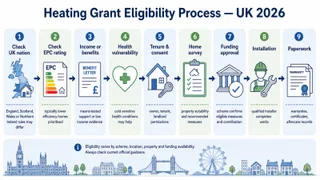
To benefit from Warm Homes Plan schemes, you will generally need: Most schemes require your property to have an EPC rating of D or below. You can check your EPC rating on the government website if you do not have a certificate.
- A valid Energy Performance Certificate for your property
- Proof of ownership or landlord permission
- Income documentation for means-tested grants
- A property in England, Wales, or Scotland (some schemes vary by region)
Technologies Covered
The plan supports a range of energy efficiency and clean heating technologies.
- Solar photovoltaic panels
- Solar thermal systems
- Air-source heat pumps (including air-to-air)
- Ground-source heat pumps
- Home battery storage systems
- Heat batteries
- Cavity wall insulation
- Solid wall insulation
- Loft and roof insulation
- Underfloor insulation
- Smart heating controls
- Draught proofing
Long-term Goals
The government has set specific targets for the plan to achieve by 2030.
- Lift 1 million families out of fuel poverty
- Upgrade 5 million homes
- Triple the number of homes with rooftop solar
- Ensure 70% of heat pumps installed are manufactured in the UK
- Create 180,000 jobs in energy efficiency and clean heating
- Reduce reliance on imported fossil fuels
Ready to compare your options?
Get tailored comparisons and connect with trusted installers in under a minute.
Plan, Compare & Buy Renewable Energy Solutions
AI does the thinking.
You get the perfect solar match.
Use RoboMo™ to assess your property, compare available technologies and connect with trusted UK installers, suppliers and manufacturers.
Simply enter your postcode, drop a pin on your roof, create your free account and let RoboMo™ analyse your property to find the best solar panels for your home.

You don't have to think
RoboMo™'s AI analyses your roof and does all the hard work.

Accurate & tailored
AI-powered assessment based on your roof, location, and conditions.

Best options, maximum savings
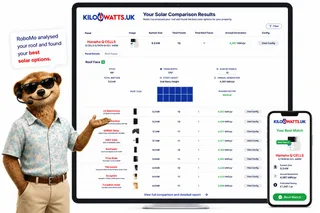
Compare top solar panels for the best performance and value.

Simple, fast & effortless
Provide a few details, sit back and watch your results unfold.
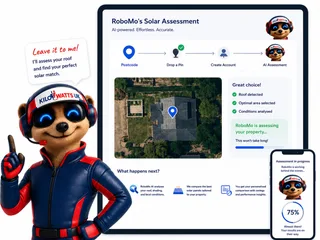
STEP 1
Choose Home, Business or Industrial
Enter your postcode to start your assessment.
STEP 2

Drop a pin on your roof
STEP 3

Create your free account
STEP 4

Sit back and watch RoboMo™ work
RoboMo™ analyses your roof and builds your personalised solar comparison.

Step 1
Enter your postcode
Start designing your wind energy system in seconds.
Are you an installer, distributor or renewable energy business?
Kilowatts UK is expanding the Flower Turbines partner network across the UK.
Become A Flower Turbines PartnerKilowatts UK is an authorised representative
Flower Turbines
Compact vertical-axis turbines built for real UK sites, not just open farmland.
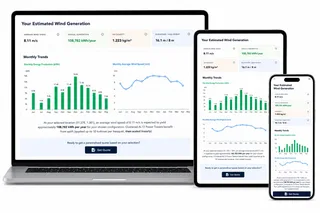
They start in light wind, sit in a small footprint, and are bird-safe by design. Cluster them as a bouquet and the group performs better together than the same turbines standing alone. Enter your postcode for a location-based generation estimate. Figures use area weather data and will differ if buildings, trees or hills sit in the way.
Starts in light UK wind
Built to generate in typical UK wind, not only open farmland.
Small rooftop or ground footprint
Compact towers for roofs, yards and tight sites.
Bird-safe slow rotation
Slow vertical-axis spin, bird-safe by design.
Bouquet clusters raise output
Grouped turbines outperform the same units standing alone.
STEP 2

Choose a location
STEP 3

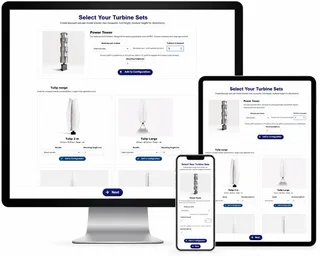
Place your cluster
Tap the map where you want the turbine cluster to go.
STEP 4

Instant generation forecasts
Compare different turbine layouts and see annual generation forecasts instantly.
STEP 5

No commitment required
Explore different configurations before deciding whether to request a quotation.
Related articles

Mo's Mission Nominations
FAQ
Need Help? RoboMo's Got Answers
What is the Warm Homes Plan?
The Warm Homes Plan is a UK government scheme launched in January 2026. It allocates £15 billion to improve up to 5 million homes by 2030. The plan aims to reduce energy bills, tackle fuel poverty, and support the transition to clean energy. It represents the largest public investment in home energy upgrades in British history.
What has Martin Lewis said about the Warm Homes Plan?
Martin Lewis of Money Saving Expert has commented that improving housing stock through energy efficiency is a good long-term way to cut energy bills if done right. He noted that previous government schemes were overly complex and poorly designed.
Who qualifies for fully funded upgrades under the Warm Homes Plan?
Low-income households can receive fully funded packages of upgrades. This includes solar panels with battery storage, insulation, and heat pumps. Funding covers the full average cost of £9,000 to £12,000 for solar and battery systems. This pillar is backed by £5 billion of public investment.
Can working families access support through the Warm Homes Plan?
Yes. Working families can access government-backed low and zero-interest loans. These loans cover solar panels, batteries, and heat pumps. The government is providing £2 billion for this programme. Details on how to access these loans will be published later in 2026.
What support is available for renters?
The plan introduces rules requiring landlords to upgrade properties. This applies to both private and social housing. An estimated 500,000 families in rented accommodation could be lifted out of fuel poverty by 2030.
How much can I get from the Boiler Upgrade Scheme?
The Boiler Upgrade Scheme offers grants of £7,500 for air-source and ground-source heat pumps. Grants of £2,500 are available for air-to-air heat pumps and heat batteries. The scheme continues to offer £5,000 grants for biomass boilers in rural properties not connected to the gas grid.
What is the Warm Homes: Local Grant?
This scheme provides grants of up to £30,000 for energy efficiency improvements. It targets low-income households in England with properties rated EPC D to G.
Who is eligible for the Warm Homes: Local Grant?
You must have a household income of £36,000 or less. Your property must be privately owned or rented with a valid Energy Performance Certificate showing rating D, E, F, or G. Certain postcode areas may qualify regardless of income.
What improvements does the Warm Homes: Local Grant cover?
The grant covers wall, loft, and underfloor insulation. It also includes air source heat pumps, solar panels, and smart heating controls.
Can landlords apply for the Warm Homes: Local Grant?
Yes. Landlords can apply if tenants meet income criteria. For additional properties beyond the first, landlords must contribute 50% of costs. Landlords must declare they will not raise rents directly due to upgrades.
How do I apply for the Warm Homes: Local Grant?
Apply through your local council via the government website. Councils typically respond within 10 working days to arrange a home survey. Call 0800 098 7950 for assistance with applications.
How do I apply for the Boiler Upgrade Scheme?
Contact anMCS-certified installer. They apply for the voucher on your behalf. You receive a discount on the installation cost.
What planning changes affect heat pump installations?
The one-metre boundary rule has been removed. The maximum unit size has increased from 0.6m3 to 1.5m3. Multiple heat pumps are allowed in detached homes. No planning permission is required for most installations.
What is the Warm Homes: Social Housing Fund?
This fund provides £1.2 billion from 2025 to 2028. It supports eligible social housing landlords to upgrade properties. The fund aims to improve entire streets simultaneously to reduce costs and minimise disruption for tenants.
What are the government's targets for 2030?
The government aims to lift 1 million families out of fuel poverty. They plan to upgrade 5 million homes and triple the number of homes with rooftop solar. They also aim to create 180,000 jobs in energy efficiency and clean heating.