


Solar Eclipse Set to Knock Out Britain's Solar Power
Published: 2026-08-09 14:44:12
Updated: 2026-08-11 02:01:06
The solar eclipse will cause a sharp but temporary drop in solar generation across Great Britain as the Moon blocks sunlight from reaching solar panels.
How the eclipse could affect solar power in Great Britain
An eclipse can briefly reduce solar generation across Great Britain because panels receive less sunlight while the Moon obscures the Sun. It should not damage solar panels. It should not, by itself, cut power to homes with solar. For most people, it is a grid-balancing issue rather than a household emergency.
The practical effect is lower PV output during the eclipse window, possible extra grid import, and battery discharge if a battery is available and set up to respond. The exact impact depends on the eclipse date, time of day, path and depth of obscuration, cloud cover, installed solar capacity, and how much daylight generation was still expected at that point.
For a live event, check the National Energy System Operator forecast for system impacts, the Met Office forecast for cloud cover, and astronomical visibility information from sources such as the Royal Astronomical Society or HM Nautical Almanac Office. The phrase “knock out the last of Great Britain’s solar power generation for the day” needs care. If the eclipse occurs late in the day, it may reduce solar output that was already falling towards sunset. That is not the same as saying all solar systems fail. Panels follow the available light, and generation should recover if daylight remains after the eclipse.
The key facts for solar owners
For most homes, the eclipse will show up as a dip in the solar monitoring app rather than a fault. A grid-connected home can still draw electricity from the network while PV output is lower, as it does at night, in winter or during heavy cloud. If you have a battery, it may cover some of the shortfall, but only if it has charge available and its inverter settings allow it to discharge.
Before relying on any headline, check the timing, regional visibility and expected system impact. A partial eclipse seen more strongly in one part of Britain will not affect every rooftop in the same way. Cloud can also hide or exaggerate the effect in monitoring data.
The household response should be proportionate. Moving a dishwasher, washing machine or EV charge may help if it is convenient. Medical equipment, heating controls, cooking needs and essential routines should not be disrupted for a short solar dip.
Why solar output drops during an eclipse
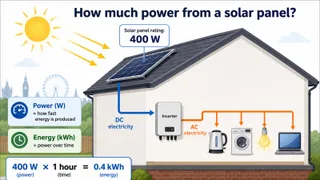
Solar panels generate electricity from light, not heat. When the Moon passes between the Sun and the Earth, the amount of irradiance reaching the panel surface falls. The inverter then has less DC power to convert into AC electricity for the home or grid export.
This can look sharper than ordinary weather variation because the timing is predictable and many systems can be affected at once. Heavy cloud can also reduce output quickly, but clouds are more local and less uniform. An eclipse is unusual because the reduction is driven by astronomy and can occur across a wide area in a known time window.
For the electricity system, the challenge is not that solar is “unreliable” in a simple sense. The challenge is that generation and demand must be balanced continuously. If a large amount of solar output falls at broadly the same time, other resources need to be scheduled or instructed to cover the gap.
What determines the size of the generation dip
The size of the solar reduction cannot be judged from the word “eclipse” alone. A shallow partial eclipse at a poor solar time may have a modest effect. A deeper eclipse during a high-generation period can be more significant. Weather matters too, because a heavily overcast day may already have pushed output down before the eclipse begins. The system-level effect also depends on how much solar is connected and producing at the time. Rooftop PV, commercial solar and larger solar farms can all contribute to the visible fall in generation, but they are monitored and forecast in different ways. Some embedded generation is not directly metered in the same way as transmission-connected power stations, so forecasts and demand patterns are used to understand its impact.
| Factor | Why it matters | What to check before drawing conclusions |
|---|---|---|
| Eclipse timing | Solar output is naturally higher at some times of day than others. | Published start, maximum and end times for the event. |
| Regional visibility | Obscuration can vary across England, Scotland and Wales. | Location-specific eclipse visibility information. |
| Cloud cover | Weather may hide or exaggerate the monitoring-app effect. | Local Met Office conditions during the event. |
| Solar capacity online | The more PV generating at the time, the larger the possible system impact. | Current NESO and market forecasts rather than generic assumptions. |
| Battery and demand response | Storage and flexible demand can reduce pressure on the grid. | Supplier instructions, battery state of charge and tariff settings. |
Overview
A reliable article about a specific eclipse should state the date, expected time window, regional visibility and forecast reduction using named sources. If those details are not available, the honest answer is to explain the mechanism and tell readers where to verify live figures rather than presenting unsourced numbers.
Will your home solar panels stop working?
Your panels should not stop working in the sense of developing a fault. They will produce less electricity while less light reaches them, then return to normal behaviour as daylight returns. A standard grid-tied solar PV installation should keep operating unless there is an unrelated inverter issue, grid outage, protection trip or communications fault.
The homes most likely to notice the eclipse clearly are those with relatively unshaded panels, a well-performing inverter and good monitoring data. A south-facing array on a clear day may show a clear notch in the generation curve. On a cloudy day, the same eclipse may be hard to separate from normal weather variation.
A common misunderstanding is that owning solar means the home is independent of the grid. Most UK domestic systems are designed for self-consumption and export, not automatic off-grid operation. If the grid is available, the home can import power when solar output falls. If the grid fails, many solar systems shut down for safety unless they have a correctly specified backup arrangement.
What households can do during the eclipse window
The simplest useful action is to move flexible electricity use away from the lowest solar-output period if it is convenient. This is not rationing and it is not a sign of system failure. It is the same principle as avoiding unnecessary peak-time demand when the grid is under pressure or when a time-of-use tariff rewards shifting.
If your supplier runs a demand-shifting event, follow the exact time window and terms they provide. Do not assume every supplier is using the same period or offering the same reward. Demand flexibility depends on tariff rules, smart meter arrangements, supplier systems and the specific event being called.
For many households, the benefit of shifting one appliance will be modest. The value is greater when many homes and businesses reduce avoidable demand at the same time, especially if solar generation is falling across a wide area.
How batteries change the picture
A home battery can reduce grid import during an eclipse if it has enough stored energy and enough power output to cover the loads being used. During the dip, the battery may discharge to support normal household consumption while PV output is lower. If the battery is empty, held in reserve, limited by settings or already discharging heavily, it may make little difference.
The distinction between kWh and kW matters. Usable kWh describes how much energy the battery can store. kW describes how much power it can deliver at a given moment. A battery may have enough stored energy for general background loads but still be unable to support several high-demand appliances at once.
A solar eclipse is not a strong reason on its own to buy a battery. Battery suitability should be judged against annual consumption, solar generation profile, tariff structure, usable capacity, inverter compatibility, installation design, warranty terms, backup requirements and total installed cost. Current product specifications and prices should be checked directly before making any comparison.
Solar, batteries, EVs and tariffs during an eclipse
The households with the most to think about are usually those combining solar panels, batteries, EV charging and time-of-use tariffs. These systems can work well together, but only if schedules and priorities are set sensibly. An eclipse is a useful reminder that solar generation, import prices, export settings and battery behaviour interact. EV charging is often the largest flexible load in a home. If an EV charger starts during the eclipse window, its demand can easily exceed the temporary output from rooftop solar. That does not mean charging is unsafe, but it may increase grid import at the exact time when solar generation is reduced.
| Household situation | What the eclipse changes | What to check before acting |
|---|---|---|
| Solar panels only | The home may import more from the grid while PV output drops. | Monitoring app, normal daytime usage and export expectations. |
| Solar plus battery | Stored energy may cover some demand if the battery is charged. | State of charge, inverter settings, usable capacity and power limit. |
| EV charging at home | EV charging can dominate household demand during the dip. | Charging schedule, tariff window and whether charging can be delayed. |
| Time-of-use tariff | Shifting demand may help if the tariff rewards it. | Supplier instructions, smart meter status and tariff terms. |
| Backup-capable system | Eclipse output reduction is separate from power-cut resilience. | Backup circuits, inverter capability and installer documentation. |
Overview
The most common mistake is assuming a battery provides whole-house backup. Many solar-plus-battery systems are installed for self-consumption or tariff optimisation, not islanded operation during a power cut. Backup requires suitable equipment, wiring and configuration, and it should be confirmed from installer documentation rather than assumed from a battery brand name.
Why the grid can manage a predictable solar dip
Great Britain’s electricity system is balanced continuously. When a predictable solar reduction is expected, the system operator and market participants can plan around it using generation scheduling, interconnectors, storage, reserve services and demand-side response. The exact tools used depend on market conditions and the size and timing of the forecast change.
An eclipse is operationally awkward because output can fall and recover faster than a normal evening ramp, and because the effect can be widespread. But it is also forecastable. That makes it different from an unexpected plant fault or sudden network issue.
The useful distinction is between variability and failure. Solar output varies every day with sunrise, sunset, season, cloud and shading. An eclipse adds an unusual but predictable light reduction. It does not mean solar technology is unsuitable. It means the wider system must be planned around real generation patterns.
What to check if you have solar, a battery or both
Before the eclipse window, check your system in the same way you would before any unusual tariff or grid event. Look at the monitoring app, confirm battery mode, and make sure any scheduled charging or discharging reflects what you actually want. This is particularly important if you recently changed tariff, installed a battery, added an EV charger or altered export settings.
If you are considering a new solar installation, ask how the system behaves during low-solar periods, not only on ideal summer days. A credible specification should explain likely self-consumption, grid import, export limitation, inverter capacity, battery compatibility and whether backup circuits are included. It should not rely on a rare eclipse as the main financial justification.
EV charging
Move charging away from the dip if convenient and compatible with your tariff.Battery mode
Confirm whether the system is set for self-consumption, off-peak charging, export optimisation or backup reserve.Solar monitoring
Check whether the output dip aligns with the published eclipse timing before assuming a fault.Installer evidence
Use annual consumption, roof conditions, shading and tariff details to judge long-term value.Backup expectations
Ask whether your inverter and wiring support backup power, because many systems do not.
If the system shows errors, repeated shutdowns or poor generation outside the eclipse period, that is different from a normal eclipse-related dip. Keep screenshots from the monitoring app and note the time, weather conditions and any fault codes before contacting your installer.
How to judge claims about eclipse solar disruption
Strong claims about an eclipse and solar power should be checked against named evidence. For a specific Great Britain event, look for the date, local time window, maximum obscuration, regional visibility, expected solar generation reduction and the source of the forecast. Without those details, a headline may be broadly plausible but not sufficiently evidenced.
Authoritative references for the underlying picture include the National Energy System Operator for electricity system operation, the Met Office for weather conditions, and recognised astronomy sources for eclipse visibility. Supplier communications may also matter if a demand-shifting event is being offered to customers, but supplier requests should not be treated as UK-wide instructions unless stated.
Date and time
A useful report should state when the eclipse starts, peaks and ends in UK time.Forecast basis
It should distinguish measured output, modelled output and expected reduction.Regional effect
It should explain whether the eclipse is stronger in some parts of Britain than others.Practical action
It should explain what solar, battery and EV users should do without overstating risk.Household relevance
It should separate system-level balancing from what happens inside a solar home.
This is especially important because solar generation is already variable near sunset. If an eclipse happens late in the day, a sharp phrase about losing the “last” solar power may be describing a reduction in a declining generation tail, not a collapse from peak output.
The sensible takeaway for UK energy users
The eclipse may temporarily reduce solar generation in Great Britain, but that should not be read as a failure of solar power. Panels respond to available light, and a predictable reduction in light produces a predictable reduction in output. The electricity system can plan around that using a mix of supply, storage, interconnectors and demand flexibility.
For households, the useful actions are straightforward. Check the timing, shift flexible appliance use if convenient, avoid unnecessary EV charging during the lowest-output window, and review battery settings if you have storage. Do not assume you need new equipment because of one eclipse, and do not assume a battery provides backup unless it was specified and installed for that purpose.
The bigger lesson is that solar panels, batteries, EV charging and tariffs work best when they are designed as one energy system. A well-specified UK installation should make sense across the year, through ordinary cloud and winter evenings as well as rare astronomical events.
Plan, Compare & Buy Renewable Energy Solutions
AI does the thinking.
You get the perfect solar match.
Use RoboMo™ to assess your property, compare available technologies and connect with trusted UK installers, suppliers and manufacturers.
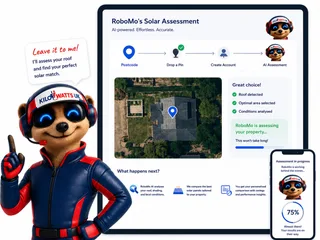
Simply enter your postcode, drop a pin on your roof, create your free account and let RoboMo™ analyse your property to find the best solar panels for your home.
You don't have to think
RoboMo™'s AI analyses your roof and does all the hard work.

Accurate & tailored
AI-powered assessment based on your roof, location, and conditions.

Best options, maximum savings
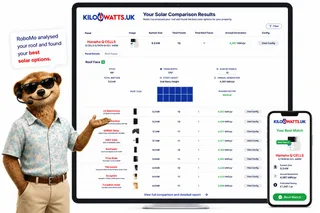
Compare top solar panels for the best performance and value.

Simple, fast & effortless
Provide a few details, sit back and watch your results unfold.
STEP 1
Choose Home, Business or Industrial
Enter your postcode to start your assessment.
STEP 2
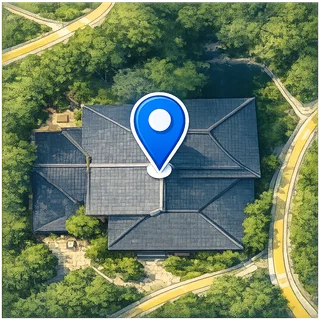
Drop a pin on your roof
STEP 3

Create your free account
STEP 4

Sit back and watch RoboMo™ work
RoboMo™ analyses your roof and builds your personalised solar comparison.
Kilowatts UK is an authorised representative
Flower Turbines
Compact vertical-axis turbines built for real UK sites, not just open farmland.
They start in light wind, sit in a small footprint, and are bird-safe by design. Cluster them as a bouquet and the group performs better together than the same turbines standing alone. Enter your postcode for a location-based generation estimate. Figures use area weather data and will differ if buildings, trees or hills sit in the way.
Starts in light UK wind
Built to generate in typical UK wind, not only open farmland.
Small rooftop or ground footprint
Compact towers for roofs, yards and tight sites.
Bird-safe slow rotation
Slow vertical-axis spin, bird-safe by design.
Bouquet clusters raise output
Grouped turbines outperform the same units standing alone.
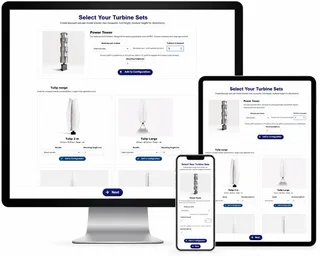
Step 1
Enter your postcode
Start designing your wind energy system in seconds.
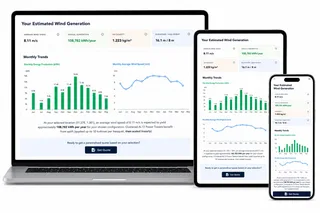
STEP 2

Choose a location
STEP 3

Place your cluster
Tap the map where you want the turbine cluster to go.
STEP 4

Instant generation forecasts
Compare different turbine layouts and see annual generation forecasts instantly.
STEP 5

No commitment required
Explore different configurations before deciding whether to request a quotation.
Related articles
Mo's Mission Nominations
FAQ
Need Help? RoboMo's Got Answers
Will the eclipse stop my solar panels working?
No, an eclipse should not damage solar panels or make them fail. Your panels will simply receive less light for a short period, so generation will fall and then recover if there is daylight left. If your inverter shows fault codes or the system stays off afterwards, treat that as a separate issue and contact your installer.
Will my home lose power if solar output drops during the eclipse?
A normal grid-connected home should continue to receive electricity from the grid while solar output is lower. This is similar to what happens at night, in winter or during heavy cloud. Homes with backup-capable systems should check their installer documentation, as not all solar and battery systems provide power during a grid outage.
How much will my solar generation fall during the eclipse?
The drop depends on the eclipse timing, how much of the Sun is obscured in your location, cloud cover and the size and orientation of your solar array. A clear day with good monitoring may show a distinct dip in the generation curve. On a cloudy day, the eclipse effect may be hard to separate from normal weather changes.
Should I change how I use electricity during the eclipse?
You do not need to make major changes for a short solar dip. If convenient, you could delay flexible loads such as a dishwasher, washing machine, immersion heater or EV charge until outside the affected window. Do not change essential use such as medical equipment, heating controls, cooking needs or safety-related electricity.
Will a home battery cover the solar shortfall?
A battery may reduce grid import during the eclipse if it has charge available and its settings allow it to discharge. It may not help much if it is empty, held in reserve, power-limited or already supporting other loads. Check the battery state of charge and operating mode before assuming it will cover the dip.
Does an eclipse prove solar power is unreliable in the UK?
No. Solar output varies every day with daylight, season, cloud and shading, and an eclipse is an unusual but predictable reduction in light. The electricity system can plan for forecast changes using other generation, storage, interconnectors and demand-side response. For homeowners, the eclipse is usually a short monitoring-app event rather than a household emergency.
Where can I check reliable information before the eclipse?
For system-level impacts, look for updates from the National Energy System Operator. For local conditions, check the Met Office forecast and reputable astronomical visibility information such as the Royal Astronomical Society or HM Nautical Almanac Office. Be cautious with headlines unless they state the date, time window, location and source of the forecast.