


Install an EV Charger at Home: What You Need to Know
Published: 2026-06-28 23:20:56
Updated: 2026-08-22 09:59:45
In the UK, the right charger depends on your electrical supply, parking position, cable route, earthing arrangement, smart charging needs, tariff plans.
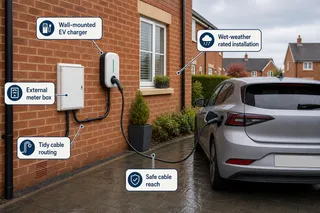
how can i compare popular home charging units before buying?
Find out how can i compare popular home charging units before buying? in the UK, including costs, what affects price, and how to choose an installer.
How to compare popular home charging units before buying
To compare popular home charging units before buying, start with your home, not the brand. In the UK, the right charger depends on your electrical supply, parking position, cable route, earthing arrangement, smart charging needs, tariff plans, solar ambitions, installer support and whether the unit suits your vehicle.
Most domestic buyers are comparing single-phase AC wallboxes, often in the 7 kW class where the property and vehicle allow it. A charger that looks better on a comparison page can still be the wrong choice if it is awkward to install, poorly supported, unreliable on your Wi-Fi, or incompatible with the way you want to charge.
A useful shortlist should answer three questions. Can your home safely support the charger? Will it make daily use simple? Will the installer design, fit, commission and document the installation properly? Once those are clear, brand, appearance and app preferences are easier to judge.
Start with the property before comparing brands
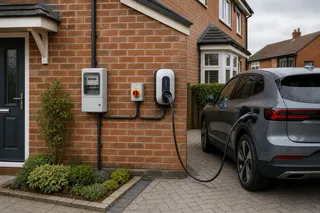
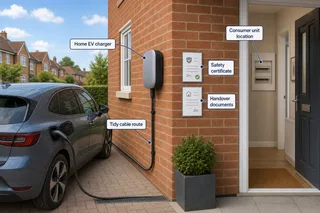
A home charger is part of your electrical installation, not just an accessory for the car. Before looking at model names, an installer should understand where the vehicle parks, how the cable will reach it, the condition of the consumer unit, the incoming supply, the earthing arrangement and whether load management may be needed.
The neatest charger in a brochure can become a poor choice if the cable route is long, the wall is unsuitable, the consumer unit needs work, the supply capacity is limited, or the charger position has weak communications signal. These details affect the installed cost, the installation date and how reliable the charger feels after handover.
Off-street parking is usually the simplest situation because the cable can remain within private land. If the car is parked on-street, across a shared area, in a rented property or in a leasehold space, permission and cable safety need to be resolved before assuming a standard home wallbox is viable. For a broader overview of the process, start with this guide to EV charger installation.
Compare popular UK home charger options by need
Popular UK home chargers do not all solve the same problem. Some are strongest for solar diversion. Some focus on time-of-use tariff control. Others are chosen for compact design, premium finish, or simple tethered use. Compare them by use case rather than treating one model as universally best. The examples below are common names UK buyers often encounter, but availability, features and integrations can change. Always check the current manufacturer specification, the installer’s supported product list and whether the unit complies with current UK requirements at the point of purchase.
| Buyer priority | Common UK examples to investigate | What to compare | Watch-outs before buying |
|---|---|---|---|
| Solar-focused charging | myenergi zappi, Hypervolt, Wallbox models with suitable monitoring | Solar surplus control, CT clamp requirements, battery interaction and app settings | Solar diversion is only useful when surplus generation is available and correctly monitored |
| Tariff-focused smart charging | Ohme Home Pro, Ohme ePod, Pod Point Solo 3 and other supplier-supported units | Tariff integration, scheduling, supplier support and manual override | Tariff integrations can change and may depend on the car, supplier and account setup |
| Compact or discreet installation | EO Mini Pro range, Wallbox Pulsar range, Easee-style compact units where compliant and supported | Size, cable option, connectivity method and mounting position | Small units still need suitable protection, communications and commissioning |
| Tethered convenience | Pod Point Solo 3, Hypervolt, Ohme Home Pro and tethered variants from other makers | Cable length, cable storage, charge-port reach and driveway layout | A fixed cable is convenient but less tidy and must suit current and future vehicles |
| Premium appearance | Andersen-style units and other design-led chargers | Finish, cable concealment, mounting surface and aftercare route | A premium-looking unit may not improve charging performance or simplify installation |
| Lower-complexity specification | Simpler smart chargers from reputable supported ranges | Essential smart compliance, warranty, installer familiarity and support | The cheapest unit is not necessarily the cheapest installed job |
Overview
Do not compare only app screenshots and headline charging speeds. A sensible comparison includes the protective design, connectivity, installer familiarity, documentation, warranty terms, manufacturer support and whether the charger remains usable if an app feature or third-party integration changes. If you are still narrowing down product types, compare the practical features in this guide to choosing a home charger.
Compare charging speed in terms of real use
Charging speed is measured in kilowatts, while the energy stored in the vehicle battery is measured in kilowatt hours. A higher charger rating only helps if the property supply, charger and vehicle can all support it. For many UK homes, a 7 kW class single-phase charger is the normal reference point, but the actual result depends on the site and the car.
A 22 kW home charger is not a premium version of a 7 kW unit. It generally needs a suitable three-phase supply and a vehicle that can accept higher-power AC charging. Many domestic properties and many EVs will not make use of that rating, so it should be treated as a site-specific option rather than a default upgrade.
The right question is whether the car can recover enough charge during its normal dwell time. A low-mileage driver who parks overnight may need fewer advanced features than a high-mileage driver who relies on scheduled charging most nights. Usage pattern matters as much as the number printed on the charger specification.
Decide whether tethered or untethered suits everyday charging
A tethered charger has the cable permanently attached, which makes daily charging quick because you uncoil and plug in. An untethered charger uses a separate Type 2 cable, which can look tidier on the wall and may suit households wanting flexibility, but it means handling and storing the cable each time.
Cable length is easy to overlook until the first awkward parking position. Charge-port locations vary between vehicles, and a future car may not have the socket in the same place as the current one. The charger position should be chosen for practical reach, safe cable routing and how the driveway is actually used.
Weather exposure and cable management also matter. A charger fitted in a visible or exposed position should be suitable for its environment, with an appropriate IP rating and a cable arrangement that does not create trip risks or leave the lead where it can be crushed, scraped or damaged.
Check smart charging, tariff and app support
Most new home chargers are sold with smart features, but the details vary. Scheduling, remote control, load balancing, usage history, firmware updates, tariff integration and solar diversion are separate capabilities. A unit described as smart may not support the particular tariff, vehicle, solar system or monitoring arrangement you have in mind.
Connectivity is a practical installation issue. If the charger relies on Wi-Fi, mobile signal, Ethernet or another communications method, the signal needs checking at the charger position, not just inside the house. Weak connectivity can make app control, updates and tariff-linked charging less reliable.
Smart charging is also subject to UK requirements for private charge points sold for domestic and workplace use. Ask the supplier or installer to confirm that the unit being supplied complies with the current UK smart charge point regulations and that its default settings, security updates and commissioning process are understood.
Scheduling
Check whether the charger, vehicle or energy supplier controls the charging window, because overlapping schedules can conflict.Tariff integration
Confirm current compatibility with your intended tariff and ask what happens if you change supplier later.Manual override
Make sure there is a clear way to start an immediate charge when you need the car sooner than planned.Load management
Ask whether the charger can reduce demand automatically if the household load is high.Software support
Check how firmware updates are handled and who supports the product if the app stops working.
Check solar and battery compatibility if you have future plans
Solar-compatible charging does not mean fast free charging all year. Solar PV output varies with season, weather, roof orientation and household demand, so the charger may only divert surplus generation when it is genuinely available. If the house has a battery, the control logic matters because you may not want the car, home battery and grid import competing in an unhelpful way.
Some chargers use CT clamps or additional monitoring equipment to measure import, export or available solar surplus. That can affect the cable route, consumer unit work and commissioning time. Discuss solar and battery plans before installation rather than discovering later that the chosen charger needs extra equipment or does not integrate as expected.
If you are planning solar PV or a home battery later, ask whether the charger can be integrated in stages. A simple charger may be adequate for a low-mileage driver, but a household aiming to coordinate EV charging, solar generation, battery storage and time-of-use tariffs should compare the control features more carefully. It may also help to compare solar options before choosing a charger around future surplus charging.
Check UK compliance, installer competence and the DNO process
A home EV charger should be designed and installed in line with the current requirements that apply to the property and product. In plain English, that means the installer should be working to BS 7671, relevant EV charging installation guidance such as the IET Code of Practice, the manufacturer’s instructions and the current requirements for smart charge points where applicable.
The DNO process also matters. Domestic EV charge point installations may require notification or an application depending on the proposed load, property supply, charger rating and local network circumstances. Installers often manage this process through the relevant network operator route, but you should still be told whether it may affect timing or whether any export, import or load limits are relevant.
Grant support should be treated carefully. OZEV schemes and eligibility rules can change, and support is not universal for every homeowner, tenant, landlord or parking arrangement. Ask the installer or scheme administrator what currently applies rather than assuming a grant or discount will be available. If your parking or ownership situation is not straightforward, check the main permission questions before committing.
Understand the protection and earthing details
Charger comparisons often focus on apps and appearance, but protective design is just as important. The installer needs to consider the earthing arrangement, fault protection, RCD requirements, cable sizing, route protection, isolation, labelling and whether the charger has suitable built-in features or needs external protective devices.
PEN fault protection is a common buyer-check item because many modern chargers advertise built-in open PEN detection or related protective arrangements. Do not treat that as a tick-box without context. The correct solution depends on the site, the supply arrangement, the charger design, the manufacturer’s instructions and the installer’s assessment.
Ask clear questions before ordering. You do not need to design the circuit yourself, but you should expect the installer to explain how the charger will be protected, what equipment is included in the quote and whether any consumer unit upgrades or remedial work are needed before the charger can be safely commissioned.
Understand what changes the installed cost
The charger unit is only one part of the installed cost. Quotes can change because of cable length, the route from the consumer unit, wall construction, groundwork, protective devices, consumer unit condition, connectivity work and whether load management is needed. A cheaper unit may not lead to the cheapest finished job if the installation is more complex.
A good quote should be clear about what is included, what is provisional and what would trigger extra work. It should also explain whether DNO notification or application is expected, whether any consumer unit work is needed, how connectivity will be achieved and what happens if the planned cable route changes on the day.
Be cautious with like-for-like price comparisons unless each installer has surveyed the same information. A remote quote based only on the charger model can miss issues around meter position, tails, earthing, spare ways, external cable route, outbuildings, driveways and communications signal. For budget planning, use a current guide to charger installation costs alongside your site-specific quotes.
Look closely at installation quality and handover
A home charger should be installed so it is safe, usable and understandable after the installer leaves. The survey should cover the incoming supply, main fuse arrangement, consumer unit, earthing, cable route, charger location, communications signal and parking position. Skipping these checks can lead to avoidable changes on the day of installation.
Handover is part of the product experience. App setup, charger commissioning, load-management settings, firmware updates and tariff linking may take time. If the installer fits the unit but leaves the homeowner to work everything out later, even a good charger can feel frustrating.
Ask how faults and support are handled. Some issues are electrical, some are software-related, and some relate to the energy supplier, tariff or vehicle. Before buying, it is worth knowing who you contact first if scheduled charging fails or the app stops communicating.
Use a pre-purchase checklist before you commit
A good charger decision is usually made before the order is placed, not during the installation visit. Give each installer the same information so their recommendations and quotes can be compared fairly.
Photos are useful, but they are not a substitute for professional judgement. The installer still needs to assess whether the proposed design is suitable and whether anything else is required to meet current safety and commissioning requirements.
Start with the basics: supply capacity, household demand, earthing arrangement, PEN protection, RCD requirements and any protective devices built into the charger. Ask what will be installed separately and whether the consumer unit needs work before the charger can be commissioned. Agree the cable route before accepting the quote. This should include visible trunking, drilling, external runs, any groundwork and the proposed mounting position. Check connectivity at the actual charger location, not just inside the house, and ask whether Wi-Fi, mobile signal or a wired option will be used. Also compare the product support. Warranty terms, exclusions, installer aftercare, manufacturer support, app reliability and tariff compatibility can all affect daily use. If you may add solar PV or battery storage later, mention it before choosing the charger.
Weather suitability
Ask about the unit’s IP rating and suitability for the proposed mounting position.App reliability
Look beyond app features and ask who helps if commissioning, updates or account linking fail.Tariff support
Confirm compatibility with your intended tariff at the time of purchase.
Know when a home charging unit may not be the right answer
A standard home charging unit is most suitable for households with reliable access to private off-street parking and an electrical installation that can safely support the additional load. It is less straightforward for homes without private parking, flats with shared infrastructure, rented properties needing permission, or houses where significant electrical remedial work is required.
A three-pin socket should not be treated as a normal long-term alternative without proper electrical assessment. It is slower and may not be suitable for repeated high-load charging, especially if the socket, circuit or cable route is not designed for that use.
In some situations, the better answer may be workplace charging, public charging, a landlord-led shared charging scheme, or waiting until permissions and electrical upgrades are clearer. Comparing chargers is useful, but it should not override the basic question of whether the property is ready for one.
Build a shortlist before you choose an installer
A sensible shortlist usually includes two or three chargers that fit the property, vehicle and charging routine. Compare how each one would be installed at your home, whether it suits your daily use, and whether the installer is comfortable supporting it after commissioning.
Before committing, give installers the same information. That includes photos of the consumer unit and meter area, the intended charger location, the parking position, the vehicle model if known, any solar or battery equipment, and your preferred charging tariff if you have one. If electrical remedial work may be needed, it is worth knowing how to choose a qualified electrician before comparing final quotes.
The best purchase is usually the one where the charger, installation and aftercare all make sense together. If two units look similar on paper, choose the option with the clearer survey, safer cable route, better support and more suitable smart features for your actual home.
Plan, Compare & Buy Renewable Energy Solutions
AI does the thinking.
You get the perfect solar match.
Use RoboMo™ to assess your property, compare available technologies and connect with trusted UK installers, suppliers and manufacturers.
Simply enter your postcode, drop a pin on your roof, create your free account and let RoboMo™ analyse your property to find the best solar panels for your home.

You don't have to think
RoboMo™'s AI analyses your roof and does all the hard work.

Accurate & tailored
AI-powered assessment based on your roof, location, and conditions.

Best options, maximum savings
Compare top solar panels for the best performance and value.

Simple, fast & effortless
Provide a few details, sit back and watch your results unfold.
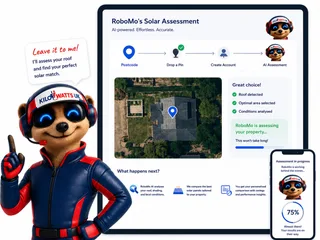
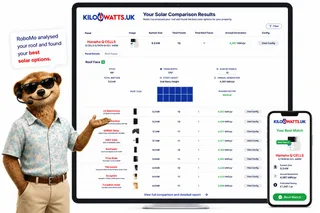
STEP 1
Choose Home, Business or Industrial
Enter your postcode to start your assessment.
STEP 2

Drop a pin on your roof
STEP 3

Create your free account
STEP 4

Sit back and watch RoboMo™ work
RoboMo™ analyses your roof and builds your personalised solar comparison.

Step 1
Enter your postcode
Start designing your wind energy system in seconds.
Are you an installer, distributor or renewable energy business?
Kilowatts UK is expanding the Flower Turbines partner network across the UK.
Become A Flower Turbines PartnerKilowatts UK is an authorised representative
Flower Turbines
Compact vertical-axis turbines built for real UK sites, not just open farmland.
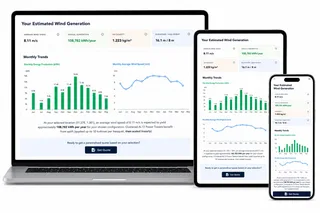
They start in light wind, sit in a small footprint, and are bird-safe by design. Cluster them as a bouquet and the group performs better together than the same turbines standing alone. Enter your postcode for a location-based generation estimate. Figures use area weather data and will differ if buildings, trees or hills sit in the way.
Starts in light UK wind
Built to generate in typical UK wind, not only open farmland.
Small rooftop or ground footprint
Compact towers for roofs, yards and tight sites.
Bird-safe slow rotation
Slow vertical-axis spin, bird-safe by design.
Bouquet clusters raise output
Grouped turbines outperform the same units standing alone.
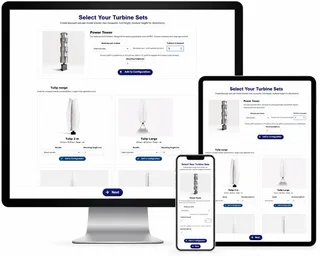
STEP 2

Choose a location
STEP 3

Place your cluster
Tap the map where you want the turbine cluster to go.
STEP 4

Instant generation forecasts
Compare different turbine layouts and see annual generation forecasts instantly.
STEP 5

No commitment required
Explore different configurations before deciding whether to request a quotation.
Related articles
Mo's Mission Nominations
FAQ
Need Help? RoboMo's Got Answers
What should I compare first when choosing a home EV charger?
Start with your property rather than the brand. Check where the car parks, the cable route, consumer unit condition, incoming supply, earthing arrangement and communications signal. A good charger on paper can be a poor choice if it is awkward to install or unreliable in your location.
Is a 7 kW charger enough for most UK homes?
A 7 kW class single-phase charger is a common domestic option where the property and vehicle allow it. It is often enough for overnight charging, but the right speed depends on your mileage, parking time and the car’s onboard AC charging capability. A 22 kW charger usually needs a suitable three-phase supply and a vehicle that can use it.
Should I choose a tethered or untethered home charger?
A tethered charger has a fixed cable, so it is quick and convenient for daily use. An untethered charger can look tidier and uses a separate Type 2 cable, but you need to handle and store the cable each time. Check cable length, charge-port position and how you park now and in future.
How important are smart charging and tariff features?
Smart features can help with scheduling, off-peak charging, usage records and manual control, but compatibility varies by charger, car and energy supplier. Confirm current tariff support before buying and ask what happens if you change supplier later. Also check that Wi-Fi, mobile signal or Ethernet will work at the charger position.
Do I need a solar-compatible charger?
A solar-compatible charger can be useful if you have, or plan to install, solar PV and want to divert surplus generation to the car. It will not mean fast free charging all year, because solar output depends on season, weather and household demand. If you have a home battery, ask how the charger will interact with both the battery and the grid.
What UK compliance checks should I ask about?
Ask the installer to confirm that the charger and installation are suitable for your property and current UK requirements. The installation should be designed around BS 7671, relevant EV charging guidance, the manufacturer’s instructions and applicable smart charge point rules. You should also be told whether DNO notification or an application is needed.
Why do quotes for similar chargers vary so much?
The charger unit is only part of the installed job. Cost and complexity can change because of cable length, consumer unit work, protective devices, wall type, groundwork, load management and connectivity. Compare quotes on what is included, what is provisional and what could trigger extra work.
Can I install a home charger if I park on the street or in a shared space?
Off-street parking on your own property is usually the simplest situation. If the cable would cross a pavement, shared area, rented space or leasehold parking bay, permissions and cable safety need checking before you assume a standard installation is possible. Discuss this with the installer before choosing a charger.