


Compare ev home chargers uk?
Published: 2026-08-09 13:08:12
Updated: 2026-08-10 15:00:04
4kW single-phase charger that suits your parking space, electrical supply, cable route, vehicle, Wi-Fi signal, and charging routine.
Compare EV home chargers in the UK: the short answer
The best EV home charger in the UK is usually a smart 7.4kW single-phase charger that suits your parking space, electrical supply, cable route, vehicle, Wi-Fi signal, and charging routine. The right choice is not simply the cheapest unit or the best-known brand. It is the charger that can be installed safely, certified correctly, and used easily every day.
For most homes with off-street parking, the first comparison is tethered versus untethered. After that, compare load balancing, solar compatibility, app quality, warranty support, Type 2 connector arrangements, and whether the installer has allowed for DNO handling, electrical protection, commissioning, and handover. If you are still narrowing the shortlist, it helps to understand what makes the right home charger fit a specific UK property.
A good comparison treats the charger and installation as one package. Two houses can use the same charger model but need very different work if one has a short cable route and spare consumer unit capacity while the other has limited space, poor Wi-Fi, a more complex earthing arrangement, or a detached garage.
How UK home EV chargers usually differ
Most modern UK home chargers are smart charge points designed for private off-street parking. They commonly use a Type 2 connection for modern UK and European EVs, although the vehicle, cable, and charger still need to be checked before ordering.
Many UK homes have a single-phase supply, so a 7.4kW charger is the common upper size for domestic use. That does not mean every property will always charge at that output. The installer may need to manage the load if the home has other high-demand equipment or if the supply arrangement needs a more cautious design.
The real differences between chargers are often practical rather than dramatic. A charger may look similar on a product page but behave very differently in daily use once app control, cable storage, scheduling, Wi-Fi reliability, solar integration, and installer support are considered.
Named EV charger examples commonly seen in UK quotes
Several charger brands are commonly quoted for UK homes, including myenergi zappi, Ohme Home Pro or Ohme ePod, Hypervolt Home, Pod Point Solo, Wallbox Pulsar Max, Andersen A2, and Simpson & Partners units. This is not a ranking, because specifications, app features, warranty terms, and installer availability change over time. Use named models as a shortlist, not as a final decision. Always check the current manufacturer datasheet, warranty document, installation requirements, and compatibility notes before ordering, especially if you want solar charging, tariff integration, load balancing, or a particular cable arrangement.
| Charger example or type | Typical strength | Best-fit household | Checks before choosing |
|---|---|---|---|
| myenergi zappi | Strong solar-aware charging focus | Homes with solar panels or planned solar | Metering setup, surplus charging behaviour, installation design |
| Ohme Home Pro or ePod | Tariff and schedule-focused smart charging | Drivers who want automated off-peak charging control | Vehicle compatibility, app setup, mobile signal or connectivity needs |
| Hypervolt Home | Tethered smart charging with a polished app experience | Driveways where cable convenience and app control matter | Wi-Fi strength, mounting position, cable reach |
| Pod Point Solo | Widely recognised domestic smart charger | Straightforward home charging with installer support | Current model specification, cable option, load management design |
| Wallbox Pulsar Max | Compact smart charger format | Homes wanting a smaller visible unit | Required protection, connectivity, installer familiarity |
| Andersen A2 | Premium appearance and cable concealment | Visible front elevations where aesthetics matter | Space, mounting surface, current specification, cost tolerance |
| Untethered smart charger | Flexible cable choice and cleaner appearance | Shared driveways or households wanting a tidier wall unit | Daily cable handling, storage, weather exposure |
Overview
Do not choose a charger purely because it appears in many quotes. A less glamorous unit that suits the cable route, electrical design, and your daily routine can be the better long-term choice.
Tethered or untethered for a UK driveway
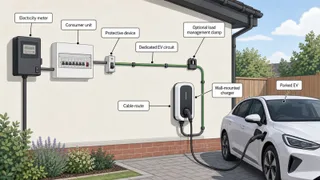
Tethered chargers have a permanently attached charging cable. Untethered chargers have a socket, so you plug in your own cable each time. Tethered is usually more convenient for daily home charging, while untethered can look tidier and gives more flexibility if different vehicles or cable lengths may be used. The practical test is simple. Stand where the charger will be mounted and where the car will actually park. Think about which side the car’s charge port is on, whether the cable will cross a path, how it will be stored in rain, and whether bins, gates, steps, or family foot traffic will interfere with the route.
| Charger type | Best for | Trade-off to consider |
|---|---|---|
| Tethered charger | Quick daily plug-in on a regular parking space | Cable is always visible and tied to that unit |
| Untethered charger | Tidier appearance and flexible cable choice | You need to get the cable out and put it away each time |
| Compact wall charger | Smaller visible installation on the front of a property | Cable storage may need more thought |
| Premium concealed-cable charger | Homes where appearance is a major factor | Usually needs more budget allowance and careful positioning |
Overview
A common mistake is choosing untethered because it looks neater in photographs, then finding that daily cable handling becomes annoying. Another is choosing tethered without checking whether the lead comfortably reaches the charge port when the car is parked nose-in, reversed, or slightly off-centre.
Smart features that are genuinely useful
Smart charging should reduce hassle, not create another system to manage. The most useful features are reliable scheduling, a simple boost function, clear charging records, load balancing where needed, and app controls that still make sense when plans change.
In Great Britain, smart charge point regulations affect many private charge points sold for domestic and workplace use. The practical point for buyers is that smart behaviour, security, scheduling, and user control are part of the buying decision, not optional extras to ignore.
App access
Lets you monitor or change settings without going outside.Boost mode
Allows a one-off charge when you need the car sooner than planned.Scheduling
Lets you set routine charge windows around your tariff or household routine.Load balancing
Adjusts charger demand when the home is using other large electrical loads.Charging records
Helps households track use or support reimbursement for business mileage.User permissions
Useful where more than one driver or vehicle uses the charger.
Before choosing based on an app screenshot, ask what happens if Wi-Fi or mobile signal is poor at the charger position. The charger must still be electrically safe, but smart functions, remote monitoring, firmware updates, and tariff-linked features may rely on a stable connection.
Solar-compatible chargers and when they make sense
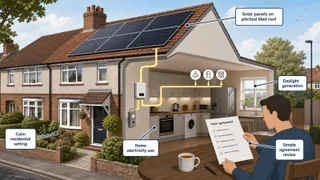
A solar-compatible EV charger can be a good choice if you already have solar panels or are planning them. It can help divert surplus solar generation into the car, but it does not guarantee free driving because solar output, home demand, weather, battery storage, export settings, and the car’s parking pattern all affect the result.
For many UK households, the car is away during the middle of the day when solar generation is strongest. Solar charging may still help at weekends, on work-from-home days, or when a second car is often parked at home, but it should not be oversold.
The most important design question is how the charger measures or receives information about surplus generation. If the charger cannot measure import and export accurately, solar modes can disappoint. If you plan to add solar later, ask whether the EV charger can be integrated without replacing the whole unit.
Manual timing
A basic schedule can help, but it is not the same as surplus-tracking solar charging.Daytime parking
Solar charging is more useful when the car is often at home during generation hours.Home battery storage
Decide whether surplus energy should fill the battery, charge the car, or follow a priority order.Planned solar panels
Consider the future location of inverter, meters, battery, and data cables.Existing solar panels
Check whether the charger can use accurate import and export monitoring.
A practical approach is to plan cable routes and equipment locations together, even if you install the EV charger before solar or battery storage. Avoiding awkward routing now can make a later upgrade cleaner and cheaper to design. If solar is part of the longer-term plan, compare the charger alongside your home solar options and any future home battery storage requirements.
Electrical protection, PEN fault protection and certification
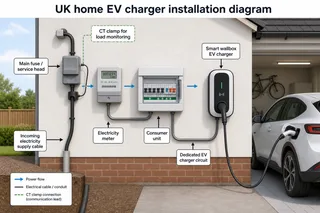
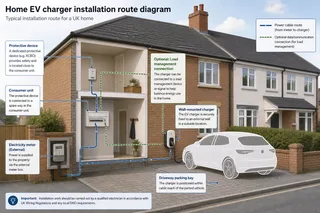
A home EV charger is a substantial electrical load, so it must be designed and installed by a competent electrician in line with the relevant requirements. In practice, this means considering BS 7671 IET Wiring Regulations, suitable circuit protection, earthing arrangement, isolation, testing, certification, and any building control requirements such as Part P where applicable.
Many EV chargers include built-in open PEN fault protection, while others may need a different design approach. This matters because some UK earthing arrangements require specific protection for EV charging equipment. Do not assume that every charger can simply be screwed to the wall and connected in the same way.
RCD protection also needs proper design. Depending on the charger and installation method, the solution may involve equipment with suitable DC leakage detection, a specific RCD type, or protection provided separately. The installer should explain the approach rather than hiding it inside vague wording such as “standard electrical works”. Good paperwork matters. You should expect appropriate electrical certification and a clear handover explaining the charger, isolation point, app settings, safe use, and what to do if the charger trips or reports a fault. If you are unsure how to judge competence, start with the basics of choosing a qualified electrician.
DNO checks and load balancing
The Distribution Network Operator is responsible for the local electricity network, and EV chargers can require notification or approval depending on the property, proposed load, and existing electrical demand. In many domestic jobs the installer deals with the process, but it should still be discussed before work starts.
This is not only administration. The DNO process helps confirm whether the local network and property supply can support the additional load. If the home also has an electric shower, induction hob, heat pump, battery system, or other significant load, the design needs careful thought.
Load balancing can reduce the charger output when the rest of the home is using more electricity. That can be a sensible way to avoid nuisance tripping or overloading, but it depends on suitable monitoring equipment and correct commissioning.
DNO handling
Ask who is responsible for notification or approval and what evidence you will receive.Existing demand
Large appliances and future plans can affect how the charger is specified.Incoming supply
The installer should assess the service head, meter area, main fuse information, and visible supply details.Charger settings
Output limits and schedules should be commissioned rather than guessed.Monitoring equipment
Load balancing needs the correct sensors or metering arrangement.
Be cautious with quotes that ignore supply checks. A charger with strong features can still be the wrong choice if it cannot be installed cleanly on your electrical system.
What affects EV charger cost in the UK
EV charger cost in the UK is affected by the charger model, installation complexity, cable length, protective devices, consumer unit condition, access, earthing arrangement, DNO requirements, connectivity, and whether solar or load balancing is included. The installed price is what matters, not the unit price in isolation.
Published prices and grant rules change, so it is safer to compare written quotes than rely on a fixed figure copied from a product page. If you are eligible for any OZEV support, check the current government rules before making a decision, because grants are not a universal discount for every homeowner with a driveway.
A quote can change after survey if the installer finds limited consumer unit space, an unsuitable cable route, weak Wi-Fi, supply constraints, or remedial electrical work. That does not automatically mean the installer is unreliable. It may mean the first estimate was based on incomplete information.
Cable route
Long, awkward, or highly visible routes usually need more labour and materials.Charger unit
Different models have different smart features, cable options, and finish levels.Connectivity
Poor Wi-Fi may require a better location or network improvement.Solar integration
Extra monitoring equipment or commissioning may be needed.Electrical protection
The design may need additional protective equipment or consumer unit work.Access and making good
Drilling, containment, wall type, and neat finishes can affect the job.
Avoid comparing quotes only by the headline price. A lower quote can become poor value if it excludes survey work, certification, DNO handling, cable containment, app setup, or obvious remedial electrical work. For a deeper breakdown, compare the main factors that affect installed charger costs.
How to compare installer quotes fairly
A fair quote comparison starts with giving every installer the same information. Tell them where the car parks, where the consumer unit and meter are, what vehicle you have, whether you want tethered or untethered, whether you have solar, and whether you expect to add a heat pump, battery, or second EV later.
A competent installer will usually ask for photographs before confirming the design. Useful photos include the consumer unit, meter position, service head, earthing label if visible, proposed charger wall, driveway, cable route, and any obstacles between the electrical intake and parking space.
Check the scope first. The quote should say what electrical work, materials, testing, certification, DNO handling, setup, and handover are included. It should also make clear what could change after inspection and how any changes would be agreed. The proposed charger should match your vehicle, parking layout, smart requirements, and cable route. The installer should explain how earthing, RCD protection, PEN fault protection, isolation, and commissioning will be handled, without relying on vague wording.
Handover
Confirm you will be shown how to use schedules, boost mode, the app, and the isolation point.Cable route
Make sure the proposed route is safe, tidy, weather-resistant, and acceptable visually.Warranty support
Check whether faults go through the installer, manufacturer, or both.
The installer should also explain limitations clearly. For example, the charger may need to run at a managed output, the Wi-Fi signal may need improving, or the neatest cable route may take longer than the shortest route.
When a home EV charger may not be suitable
A dedicated home charger is usually the best long-term option for regular EV ownership, but it is not suitable for every property. If you do not have off-street parking, cannot run a safe cable route, or need permission for external alterations, the project may need more planning before any charger is chosen.
Flats, rented homes, listed buildings, shared driveways, parking courts, and homes with no private parking can all add complications. Permission, metering, cable ownership, fire routes, lease conditions, and maintenance responsibilities may need to be resolved before installation. Before committing to hardware, check whether you may need permission to install a charger at your property.
Some drivers can manage with workplace charging, public charging, or destination charging, at least temporarily. That may be less convenient, but it can be sensible if a home installation would be compromised or if your parking situation is likely to change soon.
Do not buy a charger first and hope the property can accommodate it later. Gather the property details, confirm permissions, and let the electrical design guide the choice.
A practical EV charger decision framework
The most reliable way to compare EV home chargers is to start with the driver and property, then choose the hardware. Decide how often you charge, where the car parks, how tidy the installation needs to look, whether solar matters, and how much smart control you will actually use. If two chargers both meet the electrical and practical requirements, choose the one with the simpler daily routine and stronger support route. Home charging happens in rain, darkness, busy mornings, and last-minute changes of plan, so usability matters more than a long list of rarely used features.
| Decision area | Better choice if this matters most | What to check before ordering |
|---|---|---|
| Daily convenience | Tethered smart charger | Cable reach, storage, charge port position |
| Appearance | Untethered or concealed-cable unit | Cable handling, wall space, finish, visibility |
| Solar use | Solar-aware charger | Import and export monitoring, inverter and battery plans |
| Electrical capacity | Charger with suitable load balancing | Monitoring equipment, commissioning, supply assessment |
| Flexible tariffs | Charger with strong scheduling and app control | Vehicle compatibility, signal strength, override behaviour |
| Shared use | Untethered or access-controlled smart charger | User permissions, cable responsibility, parking layout |
Overview
For a typical UK driveway, a reliable smart tethered charger with a neat cable route is often the most convenient option. For visible front elevations, shared use, or future cable flexibility, untethered may be better. For homes with solar or planned solar, choose a charger that can integrate properly rather than relying only on manual timing.
Before accepting a quote, ask the installer to explain the cable route, electrical capacity, DNO handling, protective design, charger settings, certification, warranty process, and exclusions. That conversation will tell you more about the quality of the proposed installation than the charger name alone.
Plan, Compare & Buy Renewable Energy Solutions
AI does the thinking.
You get the perfect solar match.
Use RoboMo™ to assess your property, compare available technologies and connect with trusted UK installers, suppliers and manufacturers.
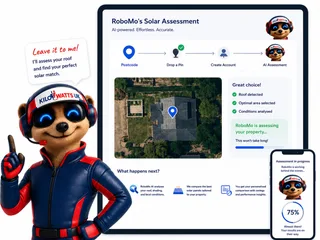
Simply enter your postcode, drop a pin on your roof, create your free account and let RoboMo™ analyse your property to find the best solar panels for your home.

You don't have to think
RoboMo™'s AI analyses your roof and does all the hard work.

Accurate & tailored
AI-powered assessment based on your roof, location, and conditions.

Best options, maximum savings
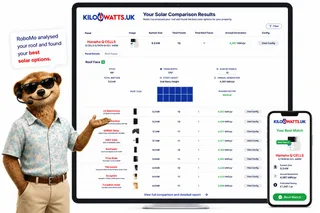
Compare top solar panels for the best performance and value.

Simple, fast & effortless
Provide a few details, sit back and watch your results unfold.
STEP 1
Choose Home, Business or Industrial
Enter your postcode to start your assessment.
STEP 2

Drop a pin on your roof
STEP 3

Create your free account
STEP 4

Sit back and watch RoboMo™ work
RoboMo™ analyses your roof and builds your personalised solar comparison.

Step 1
Enter your postcode
Start designing your wind energy system in seconds.
Are you an installer, distributor or renewable energy business?
Kilowatts UK is expanding the Flower Turbines partner network across the UK.
Become A Flower Turbines PartnerKilowatts UK is an authorised representative
Flower Turbines
Compact vertical-axis turbines built for real UK sites, not just open farmland.
They start in light wind, sit in a small footprint, and are bird-safe by design. Cluster them as a bouquet and the group performs better together than the same turbines standing alone. Enter your postcode for a location-based generation estimate. Figures use area weather data and will differ if buildings, trees or hills sit in the way.
Starts in light UK wind
Built to generate in typical UK wind, not only open farmland.
Small rooftop or ground footprint
Compact towers for roofs, yards and tight sites.
Bird-safe slow rotation
Slow vertical-axis spin, bird-safe by design.
Bouquet clusters raise output
Grouped turbines outperform the same units standing alone.
STEP 2

Choose a location
STEP 3

Place your cluster
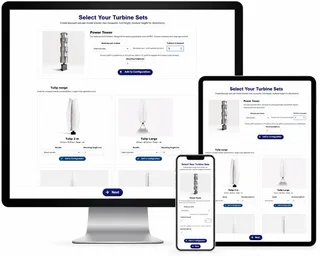
Tap the map where you want the turbine cluster to go.
STEP 4

Instant generation forecasts
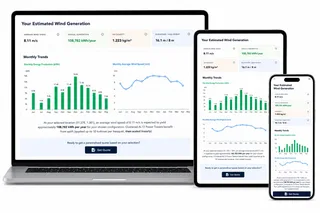
Compare different turbine layouts and see annual generation forecasts instantly.
STEP 5

No commitment required
Explore different configurations before deciding whether to request a quotation.
Related articles
Mo's Mission Nominations
FAQ
Need Help? RoboMo's Got Answers
What is the best EV home charger for most UK homes?
For many UK homes with off-street parking, a smart 7.4kW single-phase charger is the usual starting point. The best choice depends on your electrical supply, parking position, cable route, vehicle, Wi-Fi signal and charging routine. A good installer should assess the property before recommending a model.
Should I choose a tethered or untethered EV charger?
A tethered charger is usually more convenient because the cable is already attached and ready to plug in. An untethered charger can look tidier and lets you use a separate cable, but it is less convenient for daily charging. Check where the car will park, which side the charge port is on, and whether the cable will cross a path.
Do I need a 7kW charger or a faster charger at home?
Most UK homes have a single-phase supply, so around 7.4kW is commonly the practical upper limit for domestic charging. Faster charging may not be available or suitable without a different supply arrangement. Your vehicle’s onboard charger and the property’s electrical capacity also affect the real charging speed.
Can an EV charger work with solar panels?
Some EV chargers can use surplus solar generation, but results depend on your solar output, home electricity demand, weather and when the car is parked at home. Solar charging works best when the charger can accurately measure import and export. If you plan to add solar later, ask whether the charger and cable routes can be set up for future integration.
What smart EV charger features are worth comparing?
Useful smart features include reliable scheduling, a boost button, charging records, load balancing and simple app control. Check what happens if Wi-Fi or mobile signal is weak where the charger will be installed. A smart charger should make charging easier, not leave you dependent on an unreliable app.
Will my installer need to contact the DNO?
EV charger installations can require notification to, or approval from, the Distribution Network Operator depending on the property and proposed electrical load. In many domestic installations, the installer handles this process. Ask before work starts who is responsible and what confirmation or paperwork you will receive.
What affects the installed cost of an EV home charger in the UK?
The installed cost depends on the charger model, cable route, electrical protection, consumer unit condition, earthing arrangement, load balancing, connectivity and any remedial work. The unit price alone can be misleading because two homes may need very different installation work. Compare written quotes that clearly state what is included.
What paperwork should I receive after an EV charger installation?
You should receive appropriate electrical certification and a handover explaining how to use the charger safely. The installer should also explain isolation, app setup, load balancing settings if fitted, and what to do if the charger trips or shows a fault. Keep the paperwork with your home electrical records.