


How to choose a qualified electrician
Published: 2024-11-15 08:00:00
Updated: 2026-07-30 11:00:21
Practical UK guide: How to choose a qualified electrician. Clear answers for homeowners and businesses.
How to choose a qualified electrician in the UK
Choose a qualified electrician by checking that they are competent for the exact work, properly insured, able to test and certify the job, and clear about any Building Regulations notification. Do not choose on price alone. The right electrician depends on the job type, property condition, UK jurisdiction, access, future energy plans, and whether the work is higher risk or notifiable.
For simple repairs, you may only need a competent electrician for domestic electrical work with suitable test equipment and insurance. For consumer unit changes, rewires, solar PV, battery storage, EV charging, heat pumps or three-phase work, you need someone with relevant experience in that specific area, not just a general electrical background.
Electrical work is not an area where vague assurances are enough. A good electrician should be comfortable explaining what standard they work to, what they will test, what certificate or report you will receive, and how defects or limitations will be handled before work begins.
Quick homeowner checklist before you hire
Before you agree to electrical work, ask a few direct questions. A competent electrician should not be offended by sensible checks. Clear answers at this stage are often a good sign that the work will be planned, tested and documented properly.
Use the checklist to compare electricians on competence and process, not just availability or a headline price. For anything beyond a very small repair, ask for the answers in writing or make sure they are reflected in the quotation.
Testing
Ask what inspection and testing will be completed before the work is energised or handed over.Insurance
Ask for confirmation of suitable public liability insurance, and whether their cover reflects the type of work they are undertaking.Paperwork
Ask whether you will receive an Electrical Installation Certificate, Minor Electrical Installation Works Certificate, Electrical Installation Condition Report, or other evidence.Current standards
Ask whether the work will be designed, installed, inspected and tested in line with BS 7671, the IET Wiring Regulations.Building Regulations
Ask whether the work is notifiable and, if it is, who will handle notification or compliance evidence.Competence for the exact job
Ask whether they regularly do this type of work, not just whether they are “qualified”.
If the electrician cannot answer these points clearly, pause before committing. A cheaper quote is not good value if it leaves uncertainty over safety, compliance or documentation. Similar experience — Ask for examples of comparable work, especially for consumer units, solar PV, batteries, EV charging, heat pumps, outbuildings or three-phase supplies. Aftercare — Ask what happens if a fault appears after completion or if you need replacement paperwork later.
Start with the exact type of work you need
Not all electrical jobs require the same skill set. Replacing a damaged socket, fault-finding a tripping circuit, installing outdoor supplies, upgrading a consumer unit, wiring a heat pump and integrating solar battery equipment are different tasks with different risks and design decisions.
Before asking for quotes, describe the work clearly and include photos where safe to do so. Mention whether the property is occupied, whether there have been previous DIY alterations, whether you have older wiring, and whether you are planning future technologies such as solar panel installation, battery storage, an EV charger or a heat pump.
A clear brief helps you avoid hiring someone who is technically qualified but not well matched to the project. For repairs and fault-finding, look for someone who can test methodically rather than guess at replacements. For consumer unit work, ask how they will assess existing circuits before changing protective devices. For renewable-energy connections, check their experience with the specific technology and how it interacts with existing circuits. Small repairs and additions: Check that testing and any necessary minor works paperwork are included. Consumer unit work: Ask how existing circuits, earthing, bonding and labelling will be assessed before replacement. Landlord or property reports: Confirm they regularly carry out inspection and testing, not just installation work. Outdoor electrics: Ask about weather protection, cable routing, earthing arrangements and future maintenance. Renewable-energy preparation: Ask whether cable routes, consumer unit capacity and future loads have been considered. The more complex the work, the more important it is to choose on competence, documentation and design judgement rather than speed or headline price.
Understand UK electrical rules and recognised guidance
In the UK, electrical work is normally expected to follow BS 7671, commonly known as the IET Wiring Regulations. BS 7671 is not simply a marketing phrase; it is the key technical standard used by competent electricians for the design, installation, inspection and testing of electrical installations. The IET’s electrical guidance is a useful starting point if you want to understand the framework behind modern electrical work.
Building Regulations are separate from BS 7671. In England and Wales, Part P of the Building Regulations covers electrical safety in dwellings and some domestic electrical work is notifiable. The Planning Portal guidance on Part P explains the general position for householders, while competent person scheme routes can allow registered electricians to self-certify certain notifiable work.
Rules and processes are not identical across the UK. Scotland and Northern Ireland have different building standards and control systems, so the electrician should understand the requirements that apply where your property is located. If you are a landlord, additional electrical-safety duties may apply, including requirements for inspection reports in the private rented sector.
BS 7671
The technical standard commonly used for safe electrical design, installation, inspection and testing.Landlord duties
Private rented homes may need periodic inspection and written reports, with rules depending on the nation and tenancy type.Competent person schemes
Registration can allow electricians to notify certain domestic work through an approved scheme where applicable.Part P in England and Wales
Building Regulations requirements for electrical safety in dwellings, with some work requiring notification.Scotland and Northern Ireland
Requirements differ, so local building standards or building control processes should be checked.
For independent homeowner safety guidance, Electrical Safety First is a recognised UK charity. To check scheme registration, use official scheme or register websites rather than relying only on a badge shown in an advert.
Check competence, insurance and registration
A qualified electrician should be able to show evidence that they are competent for the work you are asking them to carry out. This is not only about having completed a course. It is about current practical ability, safe working practices, proper testing, and understanding the relevant requirements for the property. For domestic work in England and Wales, ask whether they are registered with an appropriate competent person scheme where notifiable work may be involved. Common names you may see include NICEIC and NAPIT, but do not rely on logos alone; check the relevant register and make sure the registration covers the type of work being discussed. The official Electrical Competent Person register can help homeowners search for registered electricians in England and Wales. You should also ask about public liability insurance and, where design advice is involved, whether their insurance reflects the type of work they undertake. Insurance does not make poor work safe, but lack of suitable cover is a warning sign.
| What to check | Why it matters | Good sign |
|---|---|---|
| Relevant competence | Electrical work varies by task and complexity | They can explain similar jobs they regularly complete |
| Insurance | Protects both parties if something goes wrong | They provide clear insurance details on request |
| Certification | Confirms work has been inspected and tested | They state what certificate or report you will receive |
| Building Regulations process | Some domestic work may need notification | They explain whether notification applies and how it is handled |
| Testing approach | Safe electrical work must be verified, not assumed | They bring test equipment and document results |
| Scope clarity | Prevents disputes and missed work | Their quote separates labour, materials, testing and exclusions |
Understand certificates, reports and notification evidence
Electrical paperwork is often misunderstood. A certificate is not just an administrative form. It records that work has been inspected and tested and sets out what the electrician has taken responsibility for. The type of document depends on the work carried out. For existing installations, an Electrical Installation Condition Report is a report on the condition of the installation at the time of inspection. It is not the same as a certificate for new installation work. For new or altered work, the electrician should explain what document will be issued, what it covers, and whether any separate Building Regulations notification evidence will follow. Do not accept “it is all fine” as a substitute for documented test results where certification is expected. If you later sell the property, rent it out, add solar, install a battery or upgrade heating, missing paperwork can create delays and uncertainty.
| Document | What it usually means | When you may see it |
|---|---|---|
| Electrical Installation Certificate | Confirms new electrical installation work, such as a new circuit or major alteration, has been inspected and tested | New circuits, consumer unit changes, larger alterations or new installations |
| Minor Electrical Installation Works Certificate | Confirms a smaller alteration or addition to an existing circuit has been inspected and tested | Some socket, lighting or accessory additions where a full installation certificate is not required |
| Electrical Installation Condition Report | Records the condition of an existing installation and identifies observed defects or limitations | Landlord checks, pre-purchase checks, periodic inspections or concerns about older wiring |
| Building Regulations notification or compliance evidence | Shows that notifiable domestic electrical work has been notified or certified through the relevant route | Notifiable work in England and Wales, or equivalent local process where applicable |
Ask how they assess existing wiring
Many electrical problems are hidden until proper testing begins. A consumer unit may look modern while the circuits behind it are old, altered, overloaded or poorly labelled. Conversely, an older installation may be serviceable but need targeted improvements rather than full wiring and rewiring.
A careful electrician will not promise a major upgrade without considering the condition of existing circuits, earthing and bonding, cable routes, signs of overheating, outdoor supplies, previous DIY work and the likely load from appliances or renewable-energy systems.
This matters because some jobs uncover issues that must be corrected before the new work can be safely energised. A cheap quote that ignores investigation can become expensive later, or worse, leave defects hidden.
Defects
Ask how unexpected faults will be reported, priced and approved before extra work is carried out.Labelling
Ask whether the consumer unit and circuits will be clearly labelled after the work.Circuit condition
Ask how existing circuits will be tested before being connected to new protective devices.Earthing and bonding
Ask whether main earthing and protective bonding will be checked where relevant.Previous alterations
Tell the electrician about DIY work, old extensions, outbuildings or unexplained cables.
A good quote should make clear what is included, what is provisional, and what may change if testing reveals faults.
Be careful with renewable energy and high-load equipment
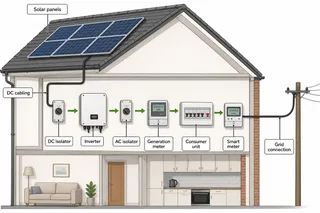
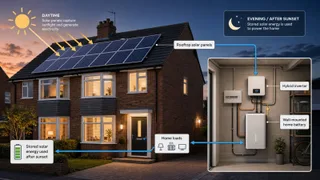
Renewable-energy and low-carbon technologies place extra demands on domestic electrical design. Solar PV, batteries, EV chargers, heat pumps and immersion diverters can all interact with the consumer unit, protective devices, existing loads, export arrangements and future upgrades.
This does not mean every electrician must be a renewable-energy specialist. It does mean that if the work affects or prepares for those systems, the electrician should understand the implications or work alongside a suitable specialist. For example, adding a new supply to a garage may seem simple until future EV charging, battery storage or solar inverter locations are considered.
Planning ahead can avoid duplicated work. Cable routes, spare capacity, labelling, safe isolation and consumer unit layout all become more important when a property is likely to add electrical generation, storage or high-demand equipment such as home battery systems. Solar PV: Ask how inverter supply arrangements, isolation, labelling and interaction with the consumer unit will be handled. Battery storage: Ask about location, isolation, circuit design, fire-safety considerations and coordination with existing equipment. EV charging: Ask whether the electrician has current experience with EV charge point installations and the relevant electrical design considerations. Heat pumps: Ask how the supply, protective devices and load implications will be assessed before installation. Future upgrades: Ask whether spare ways, cable routes and consumer unit layout will support likely future work. For solar, battery or heat pump projects, the electrical design should not be treated as an afterthought. The installation has to work safely as a complete system, not as a collection of individual products.
Compare quotes on scope, not just price
The cheapest quote may exclude testing, certification, making good, access equipment, remedial work, better-quality accessories, or time needed to trace circuits properly. A more expensive quote may be better value if it includes a clearer survey, safer design and complete documentation.
Ask each electrician to set out what is included and what is not. For larger jobs, a vague one-line price is not enough. You need enough detail to compare like with like, especially where the work could uncover hidden defects.
Do not pressure a competent electrician to match a low quote if the scopes are different. Instead, ask what assumptions they have made. A professional answer will usually reveal whether the price is based on proper understanding or guesswork. If budget is a concern, compare the scope carefully rather than looking only for affordable electrical services.
Access
Any need for loft access, lifting boards, working outdoors or arranging safe isolation.Labour
The time allowed for installation, testing, labelling and handover.Materials
The quality and suitability of protective devices, cable, enclosures and accessories.Paperwork
The certificates, reports and notifications included after completion.Remedials
How existing faults or unsafe findings will be priced and approved.Making good
Whether decoration, plastering, floorboards or disturbed finishes are included or excluded.
A fair quote should protect both sides by reducing ambiguity before work starts. Aftercare — How defects, call-backs and missing documents will be handled after payment.
Watch for warning signs before you agree
Most problems can be avoided by spotting weak signals early. Poor communication before the job often becomes poor communication during the job. If someone cannot explain the basics of the work, avoids written quotes, or dismisses testing as unnecessary, it is sensible to pause.
Availability alone is not proof of competence. A good electrician may be busy, but they should still be able to provide a clear scope, answer reasonable questions, and explain risks without using scare tactics.
Be especially cautious if the electrician proposes shortcuts around safety, wants full payment upfront for ordinary domestic work, or says certification costs extra only after the work has started. No written quote for anything beyond a very small task. Reluctance to discuss insurance, scheme registration or competence. No clear answer on testing and certification. No explanation of whether Building Regulations notification applies. Pressure to decide immediately without inspection. Very low pricing with vague exclusions. Trust is important, but it should be supported by evidence, process and documentation. Dismissive attitude to previous electrical-safety concerns. Claims that paperwork is unnecessary for work that should clearly be inspected and tested.
Prepare your property for the visit
A little preparation helps the electrician work safely and quote accurately. Clear access to the consumer unit, meter area, loft hatch, garage, outbuildings and likely cable routes can save time. If you have previous certificates, reports, warranties, appliance manuals or renewable-energy documents, have them ready.
Tell the electrician about known problems, even if they seem minor. Intermittent tripping, flickering lights, warm accessories, buzzing sounds, water leaks near electrics and DIY additions are all relevant. Do not cover up issues because you fear the quote will increase. Hidden defects are exactly what electrical-safety work is meant to identify.
If you are planning future improvements, say so early. The best time to think about EV charging, solar, batteries or heat pump supplies is often before walls, floors or consumer units are disturbed. Clear access: Move stored items away from the consumer unit, meter cupboard, loft hatch and likely work areas. Gather documents: Find old certificates, EICRs, manuals, guarantees and any renewable-energy paperwork. List symptoms: Note when faults happen, which circuits trip, and whether weather or appliances seem to affect the issue. Mention plans: Tell the electrician about future solar, batteries, EV charging, heat pumps, extensions or outbuildings. Keep safety in mind: Do not remove covers, expose wiring or attempt electrical investigation yourself. Better information leads to a better survey, a more accurate quote and fewer surprises once work begins.
Make the final decision with safety and future plans in mind
The right electrician is the one who is competent for your specific job, communicates clearly, prices the scope honestly, tests properly and leaves you with the correct paperwork. For minor work, that may be a straightforward local domestic electrician. For renewable-energy systems, major upgrades or complex faults, you may need more specialist experience.
A good choice reduces risk now and makes future upgrades easier. A poor choice can leave hidden defects, missing certificates, nuisance tripping, unsafe loading, or expensive rework when you later add solar panels, a battery, EV charger or heat pump. If solar is part of your next step, it can also help to compare home solar options before committing to related electrical upgrades.
If two quotes are close, choose the electrician who gives the clearest explanation of safety, scope, testing, certification and aftercare. Electrical work is rarely the place to reward the lowest unclear price.
Plan, Compare & Buy Renewable Energy Solutions
AI does the thinking.
You get the perfect solar match.
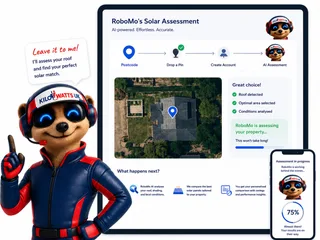
Use RoboMo™ to assess your property, compare available technologies and connect with trusted UK installers, suppliers and manufacturers.
Simply enter your postcode, drop a pin on your roof, create your free account and let RoboMo™ analyse your property to find the best solar panels for your home.

You don't have to think
RoboMo™'s AI analyses your roof and does all the hard work.

Accurate & tailored
AI-powered assessment based on your roof, location, and conditions.

Best options, maximum savings
Compare top solar panels for the best performance and value.

Simple, fast & effortless
Provide a few details, sit back and watch your results unfold.

STEP 1
Choose Home, Business or Industrial
Enter your postcode to start your assessment.
STEP 2

Drop a pin on your roof
STEP 3

Create your free account
STEP 4

Sit back and watch RoboMo™ work
RoboMo™ analyses your roof and builds your personalised solar comparison.

Step 1
Enter your postcode
Start designing your wind energy system in seconds.
Are you an installer, distributor or renewable energy business?
Kilowatts UK is expanding the Flower Turbines partner network across the UK.
Become A Flower Turbines PartnerKilowatts UK is an authorised representative
Flower Turbines
Compact vertical-axis turbines built for real UK sites, not just open farmland.
They start in light wind, sit in a small footprint, and are bird-safe by design. Cluster them as a bouquet and the group performs better together than the same turbines standing alone. Enter your postcode for a location-based generation estimate. Figures use area weather data and will differ if buildings, trees or hills sit in the way.
Starts in light UK wind
Built to generate in typical UK wind, not only open farmland.
Small rooftop or ground footprint
Compact towers for roofs, yards and tight sites.
Bird-safe slow rotation
Slow vertical-axis spin, bird-safe by design.
Bouquet clusters raise output
Grouped turbines outperform the same units standing alone.


STEP 2

Choose a location
STEP 3

Place your cluster
Tap the map where you want the turbine cluster to go.
STEP 4

Instant generation forecasts
Compare different turbine layouts and see annual generation forecasts instantly.
STEP 5

No commitment required
Explore different configurations before deciding whether to request a quotation.
Related articles
Mo's Mission Nominations
FAQ
Need Help? RoboMo's Got Answers
What qualifications should a UK electrician have?
Look for formal electrical training, such as an apprenticeship or relevant Level 3 qualification, plus current knowledge of BS 7671, often called the IET Wiring Regulations. Qualifications alone are not enough; the electrician should be competent for the exact work you need. For complex jobs, ask about inspection and testing competence, relevant experience and any manufacturer or technology-specific training.
How can I check whether an electrician is properly registered?
Do not rely only on a logo on a van, website or quote. Check the electrician or business on the relevant public register, such as Registered Competent Person Electrical, NICEIC or NAPIT. Make sure the trading name and details broadly match the person quoting and that the registration is relevant to the work being offered.
What is Part P and does it apply everywhere in the UK?
Part P is the part of the Building Regulations covering electrical safety in homes in England and Wales. Some domestic electrical work is notifiable, and a registered electrician may be able to self-certify it through a competent person scheme. Scotland and Northern Ireland use different building standards and control processes, so check the local route if the property is outside England or Wales.
What certificates should I receive after electrical work?
For new circuits or significant installation work, you would normally expect an Electrical Installation Certificate. For smaller additions or alterations, a Minor Electrical Installation Works Certificate may be appropriate. An Electrical Installation Condition Report is different; it reports on the condition of an existing installation rather than certifying new work.
What should be included in an electrician’s written quote?
A good quote should describe the scope of work, materials, timescale, assumptions and any exclusions. It should also say whether inspection, testing, certification and any required building control notification are included. Be cautious if a quote is much cheaper because paperwork, testing, access work or remedial work may have been left out.
Should an electrician have insurance?
Yes, a professional electrician should be able to show suitable public liability insurance. This helps protect you if property damage or injury occurs during the work. For work involving design responsibility or more complex systems, it is reasonable to ask whether they hold appropriate additional cover.
Do I need a specialist electrician for solar panels, batteries, EV chargers or heat pumps?
Often, yes. These installations can affect load, earthing, protective devices, cable sizing and the existing consumer unit, so general domestic experience may not be enough. Ask for examples of similar work, how commissioning will be handled, and what handover documents, manuals and test records you will receive.
What are warning signs when choosing an electrician?
Be wary of anyone who avoids written quotes, refuses to provide registration or insurance details, or says paperwork is unnecessary without a clear explanation. Other warning signs include pressure to start immediately, vague answers about testing, and no clear plan for notifiable work. A competent electrician should be willing to explain the process in plain language before you agree to the job.