


How to get a mcs certificate?
Published: 2026-08-09 13:12:48
Updated: 2026-08-10 19:00:04
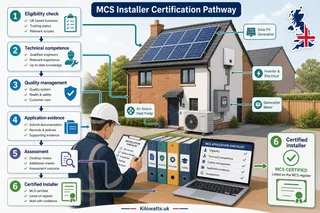
To get an MCS certificate in the UK, you normally need your renewable energy system installed and commissioned by an installer certified under.
How to get an MCS certificate in the UK
To get an MCS certificate in the UK, you normally need your renewable energy system installed and commissioned by an installer certified under the Microgeneration Certification Scheme for that technology. The installer registers the finished installation, and the certificate is issued for that specific property and system. You cannot usually buy a genuine MCS certificate later for an installation that was not carried out under the scheme.
If you have not installed yet, confirm MCS certification before signing a contract. If you are still at the quote stage, it is sensible to compare home solar quotes before committing to an installer. If the system is already installed, first check whether the original installer was MCS certified at the time and whether the installation was registered correctly.
For homeowners, an MCS certificate is often requested for Smart Export Guarantee applications, property sales, warranties, finance checks or future system work. It is useful evidence, but it is only one part of the installation record. Keep it with commissioning documents, electrical paperwork, product warranties and any grid connection correspondence.
What an MCS certificate actually proves
An MCS certificate confirms that a specific small-scale renewable energy installation has been registered under the Microgeneration Certification Scheme by a certified contractor. It is linked to the property, the technology, the installer and the commissioning of the system. It is not a general certificate that belongs to the homeowner separately from the installation.
MCS covers eligible technologies such as solar PV, heat pumps, solar thermal, biomass and small wind, but certification is technology-specific. A company certified for solar PV is not automatically certified for heat pumps. A sales company displaying a logo is not enough on its own. The key question is which certified legal entity will be responsible for the installed system and certificate, so it helps to understand the basics of MCS certification before accepting paperwork at face value.
The certificate is not the same as planning permission, Distribution Network Operator paperwork, an electrical installation certificate, building control evidence or a manufacturer warranty. Those documents can all matter, but they prove different things. A good handover pack should make those distinctions clear rather than expecting one document to cover every purpose.
The normal route from quote to certificate
The cleanest way to get an MCS certificate is to make it a requirement of the job from the beginning. Before accepting a quote, ask the installer to confirm in writing that the installation will be carried out under their MCS certification for the relevant technology. Also ask them to confirm that the certificate will be provided after commissioning if the completed system meets the required scheme requirements.
During survey and design, the installer should check whether the system can be specified and commissioned properly. For solar PV, that includes roof condition, shading, inverter location, consumer unit access, cable routes and grid connection requirements. If you are new to the process, a solar installation overview can help you understand what should happen before the certificate stage. For a heat pump, it includes heat loss assessment, emitter suitability, hot water design, outdoor unit location, noise considerations and controls.
After installation, the contractor commissions the system, completes the required records and registers the installation through the MCS process. The certificate should then be made available to you with the rest of the handover pack.
Handover pack
The homeowner receives the certificate plus operating instructions, warranties, commissioning records and other relevant paperwork.Survey and design
The installer checks whether the proposed system is suitable for the property and can be installed under the relevant scheme requirements.Installation and commissioning
The system is fitted, tested and commissioned so there is evidence of what was installed and how it was set up.Registration and certificate issue
The certified installer registers the completed installation, after which the MCS certificate is issued for that property and system.
How to verify the installer and the certificate
Do not rely only on a logo in a brochure, a van sign or a verbal assurance from a salesperson. Identify the exact company that will register the installation, then verify that company through the official MCS Installer Search or contractor search on the MCS website. Check the technology category as well as the company name.
If the installation has already been completed, ask the installer for the MCS certificate number and the name under which the installation was registered. Where MCS provides certificate checking or certificate database tools, use the official MCS website to verify the details. If you believe the installation should have been registered but no certificate was received, contact the installer first. If the issue is not resolved, contact MCS.
Keep written evidence at each stage. This is especially important where the business that sold the system is different from the business that installed and registered it.
Company name
Confirm the certified business that will appear on the MCS record, not just the trading name used in marketing.Complaints route
Check which consumer code or complaints process applies if paperwork is not supplied.Technology scope
Check that the company is certified for the specific technology being installed.Handover evidence
Keep the quote, contract, invoice, commissioning documents and all emails about certification.Certificate number
Ask for the certificate number once the installation has been registered.
Paperwork that is often confused with an MCS certificate
MCS paperwork is only one part of a renewable energy installation. Confusion is common because solar PV, batteries and heat pumps can involve several organisations. These may include the installer, manufacturer, electricity supplier, Distribution Network Operator and, later on, a buyer’s solicitor or surveyor. For grid-connected solar PV and battery work, DNO requirements are a frequent source of delay. G98 notification or G99 application may be relevant depending on the design and export arrangement, but DNO paperwork does not replace MCS registration. Ofgem’s Smart Export Guarantee guidance is also worth checking because SEG suppliers set their own application evidence requirements within the scheme rules.
| Paperwork | What it proves | Why it matters |
|---|---|---|
| MCS certificate | The installation was registered under MCS by a certified installer for that technology | Often requested for SEG applications, property records and future verification |
| DNO notification or approval | The local network operator has been notified or has accepted the grid connection where required | Important for grid-connected solar PV, batteries and export arrangements |
| Electrical certificate | Electrical work has been inspected, tested and recorded by a competent person | Supports safety, compliance, maintenance and future alterations |
| Product warranties | Manufacturer warranty terms for panels, inverter, battery, heat pump or other equipment | Helps with future claims but does not prove MCS registration |
| Commissioning records | The system was set up, tested and handed over with operating information | Helps diagnose faults and understand how the system was designed to perform |
Overview
Good installers are used to explaining these documents. If a contractor is vague about who handles MCS registration, who deals with the DNO, or what will be included in the handover pack, clarify it before paying a deposit.
Can you get an MCS certificate after installation?
If your installation was completed by a MCS-certified installer but you never received the certificate, start with the installer. It may be an administration issue, an incorrect email address, a missing handover step or a registration detail that needs correcting. Provide the invoice, installation date, property address, commissioning paperwork and any contract documents so the installer can trace the job.
If the original installer was not MCS certified, the position is much harder. An MCS certificate is not normally a retrospective add-on for work that was installed outside the scheme. Another installer may be able to inspect, repair, recommission or upgrade the system, but that does not automatically allow them to issue an MCS certificate for someone else’s original work.
For older systems, inherited paperwork gaps or property purchases, focus on what can be verified. Gather the documents you have, check whether the installer still trades, search official MCS records where possible and ask the organisation requesting evidence what alternatives they will consider. Alternative evidence may help for some purposes, but it does not turn a non-MCS installation into an MCS-certified one.
Lost certificates, installer insolvency and house purchases
A lost certificate is different from a certificate that was never issued. If the installation was registered, the starting point is to ask the original installer for the certificate number or a copy of the handover record. If the installer cannot help, use official MCS routes to check what can be confirmed from the installation details you hold.
Installer insolvency can make the process slower, but it does not automatically mean the certificate never existed. Your invoice, contract, commissioning sheets, serial numbers and completion date can help establish what happened. If there is no evidence of registration, MCS or a suitably qualified installer can advise what can and cannot be verified, but they should not promise a certificate without proper grounds.
When buying a property with solar panels, a heat pump or another renewable system, ask for the MCS certificate early rather than at the end of conveyancing. If the seller does not have it, ask for the original installer details, handover pack, warranties, electrical certificates and DNO correspondence. A surveyor, solicitor, SEG supplier or lender may each have different evidence requirements, so do not assume one missing document has the same consequence in every case.
Batteries, SEG and other edge cases
Battery storage often causes confusion because it may be installed with solar PV, added later, or configured in a way that affects export. The key point is that an MCS certificate for a generation technology such as solar PV is not the same as DNO paperwork for a battery. Adding a battery does not make an uncertified PV installation retrospectively MCS certified, so check the implications before adding a battery to an existing system.
If your reason for needing the certificate is a Smart Export Guarantee application, check the export supplier’s current evidence requirements before making assumptions. Ofgem provides SEG guidance, but individual SEG licensees handle their own application processes and may ask for specific documents. Some may also ask about export metering, DNO status or system details.
Non-MCS evidence may still be useful for other purposes, such as maintenance, insurance queries, property information forms or fault investigation. Electrical certificates, commissioning records, invoices, photographs and manufacturer documents can help prove what exists on site, but they should not be described as an MCS certificate if no MCS registration exists.
Common mistakes that delay the certificate
Most delays happen because certification is treated as an afterthought. The certificate depends on the installation being properly specified, installed, commissioned and registered. A quote that leaves paperwork unclear can create problems later, even if the equipment itself is good.
Another common issue is assuming that a sales company, subcontractor and certified installer are interchangeable. They are not. Different parties can be involved, but your contract and handover documents should make clear who is responsible for MCS registration, DNO handling, commissioning records and aftercare.
Avoid shortcuts that sound convenient but do not stand up to scrutiny. A contractor promising to “sort the certificate later” for a system they are not installing under MCS should be challenged before work starts.
Logo checking only
A logo in sales material does not prove the installing company is certified for your technology.DNO and MCS confusion
Grid notification or approval is separate from MCS registration.Missing handover pack
A certificate alone is not enough for future operation, maintenance or sale.Unclear subcontracting
If one company sells and another installs, responsibility must be stated clearly.Late paperwork discussions
Leaving certification until after installation makes disputes harder to resolve.
What a good handover pack should include
A complete handover pack gives you more than a single certificate. It should help you operate the system safely, prove what was installed and give future electricians, heating engineers, surveyors or buyers enough information to understand the design.
For solar PV, useful records usually include the MCS certificate, electrical test certificate, inverter and panel details, warranties, user instructions, generation meter information where relevant, and DNO correspondence. For a heat pump, expect commissioning records, controller instructions, warranty details and evidence of the design assumptions used for the property. If electrical work is separate from the renewable installer’s scope, take care when choosing a qualified electrician for related checks or remedial work.
Keep digital and paper copies together. If you later apply for an export tariff, sell the property, change inverter settings, add a battery or investigate a fault, those documents can save time and reduce the risk of incorrect assumptions.
Practical next steps if you need a certificate
If you are planning a new installation, ask the MCS question before comparing quotes in detail. Confirm the certified company name, the technology scope, who registers the installation, when the certificate is expected and what documents will be supplied at handover.
If the system already exists, work backwards. Identify who installed it, when it was commissioned, what paperwork was issued and whether the installer was certified for that technology at the time. Then use official MCS routes, the installer’s records and your own documents to verify whether a certificate exists.
If your purpose is SEG, property sale, warranty support or finance, ask the organisation requesting the certificate exactly what evidence they need. That prevents wasted time chasing the wrong document and helps you understand whether alternative records are useful, even where they cannot replace an MCS certificate.
Plan, Compare & Buy Renewable Energy Solutions
AI does the thinking.
You get the perfect solar match.
Use RoboMo™ to assess your property, compare available technologies and connect with trusted UK installers, suppliers and manufacturers.
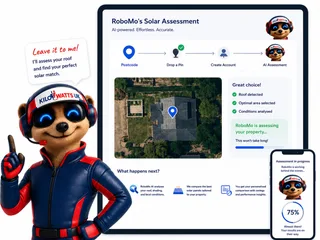
Simply enter your postcode, drop a pin on your roof, create your free account and let RoboMo™ analyse your property to find the best solar panels for your home.

You don't have to think
RoboMo™'s AI analyses your roof and does all the hard work.

Accurate & tailored
AI-powered assessment based on your roof, location, and conditions.

Best options, maximum savings
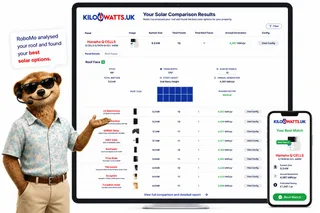
Compare top solar panels for the best performance and value.

Simple, fast & effortless
Provide a few details, sit back and watch your results unfold.
STEP 1
Choose Home, Business or Industrial
Enter your postcode to start your assessment.
STEP 2
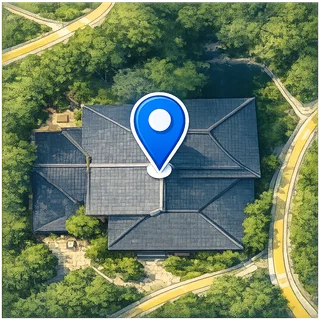
Drop a pin on your roof
STEP 3

Create your free account
STEP 4

Sit back and watch RoboMo™ work
RoboMo™ analyses your roof and builds your personalised solar comparison.

Step 1
Enter your postcode
Start designing your wind energy system in seconds.
Are you an installer, distributor or renewable energy business?
Kilowatts UK is expanding the Flower Turbines partner network across the UK.
Become A Flower Turbines PartnerKilowatts UK is an authorised representative
Flower Turbines
Compact vertical-axis turbines built for real UK sites, not just open farmland.
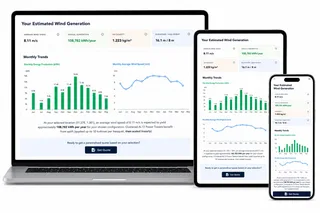
They start in light wind, sit in a small footprint, and are bird-safe by design. Cluster them as a bouquet and the group performs better together than the same turbines standing alone. Enter your postcode for a location-based generation estimate. Figures use area weather data and will differ if buildings, trees or hills sit in the way.
Starts in light UK wind
Built to generate in typical UK wind, not only open farmland.
Small rooftop or ground footprint
Compact towers for roofs, yards and tight sites.
Bird-safe slow rotation
Slow vertical-axis spin, bird-safe by design.
Bouquet clusters raise output
Grouped turbines outperform the same units standing alone.
STEP 2

Choose a location
STEP 3
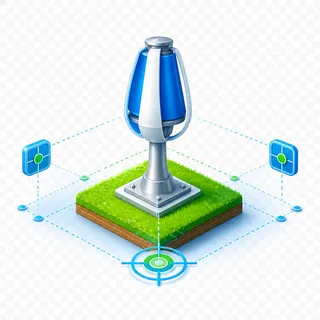
Place your cluster
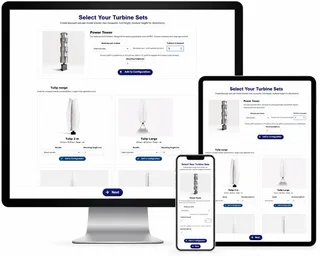
Tap the map where you want the turbine cluster to go.
STEP 4

Instant generation forecasts
Compare different turbine layouts and see annual generation forecasts instantly.
STEP 5
No commitment required
Explore different configurations before deciding whether to request a quotation.
Related articles

Mo's Mission Nominations
FAQ
Need Help? RoboMo's Got Answers
How do I get an MCS certificate for a new renewable energy installation?
Choose an installer who is MCS certified for the specific technology being installed, such as solar PV or a heat pump. Ask them to confirm in writing that the job will be installed, commissioned and registered under MCS. After completion, the installer should register the installation and provide the certificate with your handover documents.
Can I get an MCS certificate after the system has already been installed?
If the original installer was MCS certified and the job should have been registered, contact them first with your invoice, installation date and property details. It may be an administrative issue or missing handover step. If the system was installed outside MCS, you usually cannot simply buy a genuine certificate later for that past work.
How can I check whether my installer is really MCS certified?
Use the official MCS installer search and check the exact company name, not just a logo on a quote or website. Make sure the company is certified for the relevant technology, because certification is not automatically the same for solar PV, heat pumps, biomass or other systems. If a sales company and installer are different, ask which legal entity will register the installation.
What should I do if I have lost my MCS certificate?
Start by asking the original installer for the certificate number or a copy of the handover record. If they cannot help, use the official MCS routes to check what can be confirmed from your address, installation date and installer details. A lost certificate is different from a certificate that was never issued.
Is an MCS certificate the same as DNO approval or an electrical certificate?
No, these documents prove different things. An MCS certificate confirms registration under the Microgeneration Certification Scheme, while DNO paperwork relates to the grid connection and electrical certificates relate to inspection and testing of electrical work. Keep all of them, as buyers, suppliers or engineers may ask for different evidence.
Do I need an MCS certificate for the Smart Export Guarantee?
Many Smart Export Guarantee suppliers ask for an MCS certificate or equivalent evidence, but each supplier manages its own application process within the scheme rules. Check the supplier’s current requirements before applying. They may also ask for export meter details, DNO evidence or system information.
What should I ask for when buying a house with solar panels or a heat pump?
Ask for the MCS certificate early in the conveyancing process, along with the installer details and handover pack. Also request warranties, commissioning records, electrical certificates and any DNO correspondence where relevant. If the seller cannot provide the certificate, ask what alternative evidence is available and check what your solicitor, lender or supplier requires.
Does adding a battery create an MCS certificate for my existing solar panels?
No, adding a battery does not make an older or non-MCS solar PV installation retrospectively MCS certified. Battery storage can also involve separate DNO and export considerations, depending on how it is connected and configured. Before adding a battery, check what paperwork you already have and what evidence you may need later.