
Need help right now?
Talk to RoboMo™ and get instant answers.


4 local comparisons · County Durham
Across County Durham, solar installations reflect a mix of property types and regional conditions. At a broader level, variation in housing density and roof characteristics are important factors when assessing solar potential.
This creates variation in system sizing, performance, and design approaches depending on location within the county.
Savings in County Durham depend on how well system size matches energy usage. Homes with higher daytime consumption typically see stronger returns, while others benefit from battery storage.
Based on real comparison data, households typically see savings ranging from £519 to £2363, with most systems delivering around £1281 annually.
Across County Durham, different towns present different solar installation conditions, from dense housing layouts to more open properties.
This variation means system design must be adapted based on location within the county.
Energy generation in County Durham depends on roof orientation, shading, and system size. South-facing roofs generally achieve the highest output, while east-west systems provide more balanced generation.
Typical systems generate around 5821 per year, with higher-performing setups reaching 10742. Most installations include approximately 17 panels.
Typical yearly generation
5821 kWh
What a usual system here is modelled to produce
Typical yearly saving
£1281
From £519 to £2363
Usual system
17 panels
Mostly 400W
Best result in the data
10742 kWh
Highest modelled yearly output
Enter a postcode. RoboMo™ uses it to see how many panels of each type fit that roof.
Enter your postcode to start your assessment.
RoboMo™ analyses your roof and builds your personalised solar comparison.
Properties here are typically modelled at 5821 kWh a year, from systems of about 17 panels. The score mixes that output with how many people are comparing solar in the area.
Solar panels are usually installed under permitted development in County Durham, but some properties may require planning permission depending on location and visibility.
Checking local guidance is recommended for properties in restricted zones.
Installations across County Durham reflect a mix of urban and rural energy usage patterns, influencing system sizing and design.
Properties with more available space typically achieve higher output and flexibility in system configuration.
What we're seeing locally: Installation conditions across County Durham vary depending on property layout and exposure, which can impact both system size and performance.
Local score
out of 100
Yearly output
kWh, best 10742
Yearly saving
up to £2363
South-facing roofs
of modelled systems
Average system
panels, scale to 40
Common panel class
scale to 600W
Best modelled year
kWh peak in the data
Roof direction
South 60%
East/west 40%
Mixed 0%
Flat 0%
Figures come from real residential comparisons for local homes. They show the system sizes people compare and the generation those sizes reach.
| Panel type | Typical setup | Average yearly generation |
|---|---|---|
| 25 panel system High-efficiency panel | 25 panels | 10742 kWh |
| 15 panel system High-efficiency panel | 15 panels | 5973 kWh |
| 20 panel system High-efficiency panel | 20 panels | 4209 kWh |
| 6 panel system High-efficiency panel | 6 panels | 2360 kWh |
Clavering House, Clavering Pl, Newcastle upon Tyne NE1 3NG, UK NE1 3NG

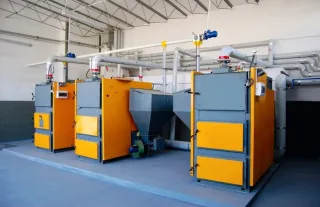
Maryholme, Hallbankgate, Brampton CA8 2NE, United Kingdom CA8 2NE

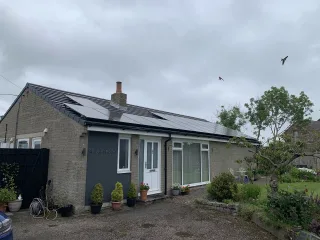
14 Holstead Cl, Carlisle CA2 5FY, UK CA2 5FY
Most homes here are modelled around 5821 kWh a year, with typical savings of £1281.
Compare installers and prices for solar in County Durham.
Get solar quotes in County DurhamFAQ
Live Chat: