


Solar Inverters Explained: DC to AC in UK Homes
Published: 2026-08-21 12:12:16
Updated: 2026-10-06 12:54:15
Why solar panels make DC, how the inverter converts it to AC at 50 Hz, and why your system shuts down in a power cut unless you have battery backup.
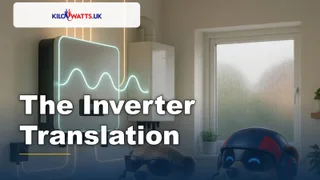
Solar Inverters Explained - DC to AC in UK Homes
Why solar panels make DC, how the inverter converts it to AC at 50 Hz, and why your system shuts down in a power cut unless you have battery backup.
What an inverter actually does between your roof and your sockets
Each solar cell on your roof produces DC when daylight hits it. Strung together into panels and then into arrays, that DC arrives at the inverter as a fairly high-voltage one-way flow. The inverter's core job is to switch that flow rapidly and precisely so that what leaves the other side is a smooth alternating waveform your consumer unit can accept and distribute. From there it behaves exactly like any other electricity in the house: it runs the kettle, the fridge, the router, the EV charger if one is calling for power, and anything left over is exported. Nothing in your home knows or cares that the electrons started life on a roof. This is why the inverter is often called the brain of the system, even though the panels get all the visual credit. Panels are largely passive glass and silicon with no moving parts and very long service expectations. The inverter is doing high-speed electronic work every single daylight second, which is why it is the component most people should understand before buying.
Why a small fraction is always lost as heat
No conversion is free. Every inverter loses a small share of the incoming energy as heat, which is why the units are designed with heatsinks, ventilation and sometimes fans, and why installers care about where they mount them. A cool, dry, well-ventilated space with a bit of air around the casing is kinder to an inverter than a cramped cupboard behind stored boxes. Every reputable manufacturer publishes an efficiency figure on the product datasheet, and a good installer will show it to you rather than talk around it. The honest framing is the one RoboMo gives: a small fraction becomes heat, and the rest reaches your sockets as usable AC. Anyone promising you a lossless system is either misusing the word or hoping you will not ask. Heat matters elsewhere in the system too, which brings us to one of the more counter-intuitive truths of solar in Britain: panels generate more efficiently in cold weather than in hot weather. A bright, crisp February morning can be a genuinely good generating condition, because photovoltaic cells lose efficiency as their temperature rises. Sunshine helps; heat does not.
Fifty hertz, in phase: why the inverter has to follow the grid
An inverter cannot simply produce any convenient waveform and push it into your house. If your system is connected to the network — and almost every UK domestic system is — the AC it produces has to match the grid it is joining. That means the correct frequency, 50 hertz, and it means being in phase: peaks aligned with peaks, troughs with troughs. Two alternating supplies that are out of step with each other do not politely share a wire; they fight, and the results are bad for equipment and worse for safety. So a grid-connected inverter constantly measures what the network is doing and locks itself to that rhythm. If the voltage or frequency it sees drifts outside the permitted window, the inverter's protection settings tell it to stop exporting and disconnect. This is standard, engineered behaviour rather than a fault, and it is one of the reasons connecting solar to the network involves notifying your distribution network operator. Your installer should handle that paperwork as part of the job.
The power cut question everyone asks — and the honest answer
This is the single most common misunderstanding about home solar, and it is worth being blunt about it. If the grid goes down on a sunny afternoon, a standard grid-tied solar system does not keep your house running. The inverter detects that the network has gone and shuts itself down. That behaviour is deliberate. If inverters kept pushing power into a dead network, they could energise cables that engineers reasonably believe are dead, and that is a risk nobody in the industry is willing to take. The technical name for the protection is anti-islanding, and it is a requirement, not a design shortcoming. What can keep some of your home alive is a battery system with a dedicated backup circuit. In that arrangement, the property disconnects from the network and a defined set of circuits — often lighting, sockets in key rooms, the fridge, the router — is fed from the battery. It is a designed subset of your house, not the whole house, and it needs to be specified deliberately at quote stage. If backup during power cuts matters to you, say so early. It changes the equipment, the wiring and the price, and retro-fitting it later is rarely as neat.
Where the inverter sits in the wider system
In most UK installations, the inverter lives indoors — a utility room, garage, loft or plant cupboard — with DC cabling coming down from the roof and AC cabling running to the consumer unit and generation meter. Some systems use one central string inverter for the whole array. Some use a hybrid inverter that also manages battery charging and discharging in the same box. Some use small module-level electronics on the roof itself. Each approach has genuine engineering trade-offs around shading, monitoring granularity, siting, noise and future expansion, and the right answer depends on your roof, your shading, whether you want storage now or later, and how much space you have. The useful takeaway is that the inverter decision shapes what your system can do in five years' time, not just what it generates next Tuesday. If you think you may add a battery or an EV charger later, tell the surveyor at the start so the inverter chosen does not quietly close that door.
A practical checklist before you sign a solar quote
Work through these with any installer. None of them are awkward questions; a good surveyor will welcome them. 1) Which inverter model is quoted, and can I see the manufacturer's datasheet including the efficiency figure? 2) Where exactly will it be mounted, and is that location ventilated and accessible for future servicing? 3) Is it a standard grid-tied inverter or a hybrid that can accept a battery later? 4) If I add storage in future, does this inverter support it, or would it need replacing? 5) What happens in a power cut with the system as quoted — and what would a backup circuit involve? 6) Which circuits would that backup cover, and what is realistically excluded? 7) Who notifies the distribution network operator, and is that included in the price? 8) What is the inverter warranty term, and how does it compare with the panel warranty? 9) How will I monitor performance, and will I be able to see if the inverter has stopped? 10) Does the inverter make any audible noise, and does that matter given where it is going? Write the answers down. The pattern of a good installation is usually visible in how specific those answers are.
Follow-up questions people ask next
Does the inverter run at night? It effectively stands down when there is no meaningful generation, and hybrid inverters continue managing the battery. Will I hear it? Many units emit a faint hum or fan noise under load, which is why mounting location is a real conversation and not an afterthought. Does the inverter wear out before the panels? It is the working electronic component of the system, and it is normal for inverter warranty terms to differ from panel warranty terms — ask for both in writing. Does cloud stop it working? No. UK homes still generate useful solar power on overcast days; output is lower than in full sun, but the inverter carries on translating whatever the roof produces. Can I use my solar directly as DC to avoid conversion losses? Household wiring, sockets and appliances are built around AC, so in practice the conversion is what makes the energy usable. Does an EV charger change the inverter specification? It can influence the overall system design and whether a hybrid inverter makes sense, so mention any EV plans at survey stage rather than after installation.
Video transcript
Mo: Panels make electricity. The house just uses it? RoboMo: No. Panels make DC. The inverter converts it to AC. Mo: So nothing is lost in translation? RoboMo: A small fraction becomes heat. The rest reaches your sockets as usable AC. Mo: So it just makes any wave it likes? RoboMo: No. It must match the grid. Fifty hertz, in phase, or it disconnects. Mo: So if the grid fails, my roof keeps the house alive? RoboMo: No. The inverter disconnects. Safety. Only a battery backup circuit stays live. Mo: Panels make electricity. The house just uses it? RoboMo: No. Panels make DC. The inverter converts it to AC. / Mo: So nothing is lost in translation? RoboMo: A small fraction becomes heat. The rest reaches your sockets as usable AC. / Mo: So it just makes any wave it likes? RoboMo: No. It must match the grid. Fifty hertz, in phase, or it disconnects. / Mo: So if the grid fails, my roof keeps the house alive? RoboMo: No. The inverter disconnects. Safety. Only a battery backup circuit stays live.
Wrapping up
The inverter is the least glamorous box in a solar installation and the one that decides most of what your system can actually do. It translates DC from the roof into AC for your sockets, gives up a small fraction of that energy as heat, keeps itself locked to the grid's 50 hertz rhythm, and takes itself offline in a power cut so that nobody working on the network is put at risk. Understanding those four behaviours is enough to make you a far better-informed buyer than most, because it lets you tell the difference between a quote that has been engineered for your house and one that has been printed for anyone's. Ask where it is going, ask what it supports later, and ask exactly what happens when the lights go out on your street. The answers will tell you a great deal about the people quoting.
Next step
If you would like to see what a properly specified inverter and array would look like on your own roof, our team can walk you through the options at your own pace — no pressure, no scripts. Start with a look at how residential solar is designed, compare approaches, or book a survey when you are ready.
Plan, Compare & Buy Renewable Energy Solutions
AI does the thinking.
You get the perfect solar match.
Use RoboMo™ to assess your property, compare available technologies and connect with trusted UK installers, suppliers and manufacturers.
Simply enter your postcode, drop a pin on your roof, create your free account and let RoboMo™ analyse your property to find the best solar panels for your home.
You don't have to think
RoboMo™'s AI analyses your roof and does all the hard work.

Accurate & tailored
AI-powered assessment based on your roof, location, and conditions.

Best options, maximum savings
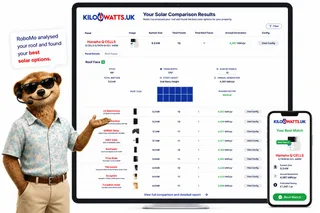
Compare top solar panels for the best performance and value.

Simple, fast & effortless
Provide a few details, sit back and watch your results unfold.
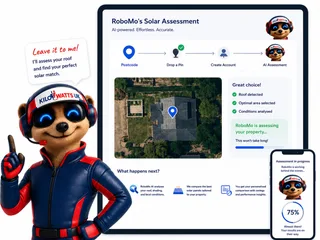
STEP 1
Choose Home, Business or Industrial
Enter your postcode to start your assessment.
STEP 2
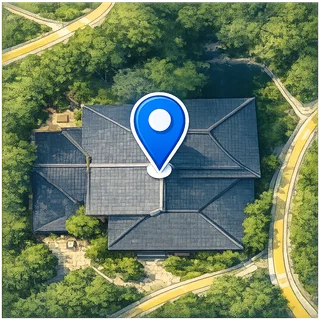
Drop a pin on your roof
STEP 3

Create your free account
STEP 4

Sit back and watch RoboMo™ work
RoboMo™ analyses your roof and builds your personalised solar comparison.

Step 1
Enter your postcode
Start designing your wind energy system in seconds.
Are you an installer, distributor or renewable energy business?
Kilowatts UK is expanding the Flower Turbines partner network across the UK.
Become A Flower Turbines PartnerKilowatts UK is an authorised representative
Flower Turbines
Compact vertical-axis turbines built for real UK sites, not just open farmland.
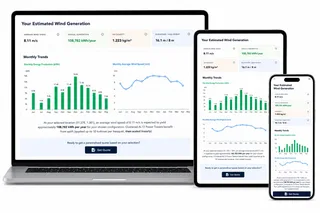
They start in light wind, sit in a small footprint, and are bird-safe by design. Cluster them as a bouquet and the group performs better together than the same turbines standing alone. Enter your postcode for a location-based generation estimate. Figures use area weather data and will differ if buildings, trees or hills sit in the way.
Starts in light UK wind
Built to generate in typical UK wind, not only open farmland.
Small rooftop or ground footprint
Compact towers for roofs, yards and tight sites.
Bird-safe slow rotation
Slow vertical-axis spin, bird-safe by design.
Bouquet clusters raise output
Grouped turbines outperform the same units standing alone.

STEP 2

Choose a location
STEP 3
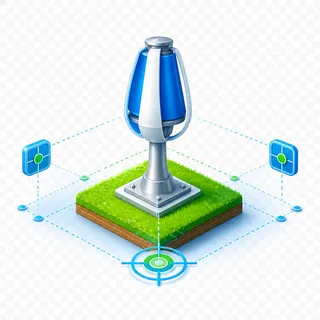
Place your cluster
Tap the map where you want the turbine cluster to go.
STEP 4

Instant generation forecasts
Compare different turbine layouts and see annual generation forecasts instantly.
STEP 5
No commitment required
Explore different configurations before deciding whether to request a quotation.
FAQ
Need Help? RoboMo's Got Answers
What does a solar inverter do in a UK home?
Solar panels produce direct current, or DC, while UK homes and the grid use alternating current, or AC, at 50 hertz. The inverter converts the electricity from your panels into a form your sockets, appliances and consumer unit can use. It also synchronises with the grid and monitors safety conditions.
Does an inverter waste any of the electricity my panels produce?
Yes, a small amount of energy is lost as heat during conversion from DC to AC. This is normal for all inverters, and manufacturers publish efficiency figures on their datasheets. A well-ventilated, accessible location helps the inverter manage heat properly.
Will my solar panels work during a power cut?
A standard grid-tied solar system will usually shut down during a power cut, even if the sun is shining. This anti-islanding protection helps prevent electricity being sent into cables that engineers may be working on. If you want backup power, you need a suitable battery system and a dedicated backup circuit designed for that purpose.
Do I need a battery to have a solar inverter?
No, many solar installations use a grid-tied inverter without a battery. If you may add storage later, ask whether the quoted inverter is battery-ready or whether a different hybrid inverter would be needed. It is easier to discuss this at survey stage than after installation.
Where should a solar inverter be installed?
Common locations include a garage, utility room, loft or plant cupboard, depending on access, ventilation, cable routes and manufacturer guidance. The space should not be cramped or blocked by stored items, because the inverter needs to shed heat. Ask your installer exactly where it will go and whether you are likely to hear any hum or fan noise.
What is the difference between a string inverter, hybrid inverter and microinverters?
A string inverter normally manages a group of panels together from one central unit. A hybrid inverter can also manage a battery, depending on the model and system design. Microinverters or module-level electronics work at panel level and may help with monitoring or shading issues, but the best option depends on your roof, budget and future plans.
Does my solar inverter need to be connected to the grid?
Most UK home solar systems are grid-connected, so the inverter must match the grid frequency and operate within required safety limits. If the grid voltage or frequency is outside its permitted range, the inverter may disconnect until conditions return to normal. Your installer should explain the connection process and handle the relevant distribution network operator notification or application where required.
How can I tell if my solar inverter is working properly?
Most modern systems include an app, online portal or display showing generation and inverter status. It is worth checking this occasionally so you notice if generation has stopped or fallen unexpectedly. If you see a persistent fault message, contact your installer rather than opening or adjusting electrical equipment yourself.