LinkedIn profile for David Coleman David Coleman
Founder & Renewable Energy Author, kilowatts.uk


LinkedIn profile for David Coleman David Coleman
Founder & Renewable Energy Author, kilowatts.uk
Article
Luthmore One combines electric heating and battery storage. Understand the manufacturer figures, reported funding and why cheap-rate charging is not heat-pump efficiency.
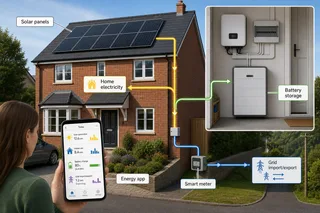
Illustration of a home energy system; it does not depict a product or installation announced in this article.
Published 5 November 2026. Product information below is from the manufacturer's dated brochure; current quotation specifications must be checked separately.
Luthmore's battery-enabled electric combi boiler is receiving renewed attention following reported funding of GBP4.5 million. The appeal is a heating system that can store electricity for later use, particularly where fitting a heat pump is difficult.
A battery changes when electricity is bought. It does not give direct electric heating the same heat-transfer process as a heat pump. That distinction belongs at the centre of a running-cost comparison.
Installer Online's coverage dated 3 November reports the GBP4.5 million funding round. That is reported financing, not independent evidence of heating performance or household savings.
For the technical figures, the primary source is Luthmore's brochure and data sheet, carrying a 2025 copyright date. It describes model Luthmore One L01 with 5.88 kWh electrical energy capacity, 10 kW central-heating maximum and up to 30 kW hot-water power. Those are different quantities and operating modes.
Capacity in kWh describes an amount of stored energy. A kW rating describes the rate of power delivery or demand. A high hot-water output does not establish how long that output lasts on stored energy.
The brochure describes different battery and mains operating modes. Ask the installer to explain the actual supply requirement and what changes when storage is depleted. Do not compare only the largest number on the front of a brochure.
Start with the property's heat demand, hot-water pattern and available tariff periods. Include how much energy can be bought off-peak, losses, the price of any peak-rate electricity and the effect of a cold day that needs more heat.
Compare alternatives on the same comfort and demand assumptions. A lower unit price at one time of day does not by itself prove a lower annual heating bill. Battery ageing, maintenance and replacement assumptions also belong in the comparison.
A compact boiler format may be useful, but the electrical supply, mounting, system compatibility and battery siting need assessment at the property. A claim that an appliance fits an existing space does not confirm that every installation requirement is met there.
Our home battery rules guide sets out questions about enclosure capacity and fire-safety placement to raise with the designer.
Request the current model data sheet, a site-specific heating assessment, an annual cost calculation with tariff assumptions, and written support terms. Treat funding and rollout news as business milestones, while judging the equipment on evidence and a complete installed quotation.
Solar comparison
Enter your postcode to assess your roof, compare solar options and get quotes from UK installers.
Choose home, business or industrial, then enter your postcode. RoboMo maps the roof and ranks panel brands by fit.
1. Postcode Start the assessment for your property.
2. Pin the roof Mark the array on the map.
3. Compare RoboMo™ builds your options.
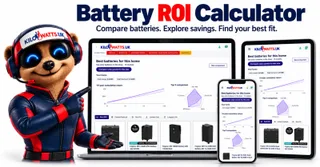
Battery ROI tool
Enter the day rate, off-peak rate and export rate. The calculator ranks batteries in the Kilowatts shop over 10 years. Home batteries also suit offices and small commercial sites.
Reading
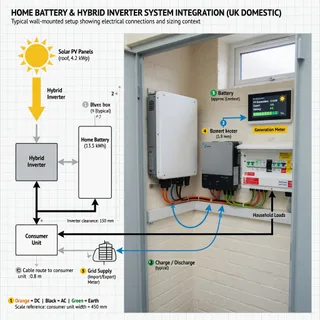
What battery do I need depends on usable kilowatt-hours you can shift, inverter power, and whether the charge window and connection can fill it.
Read article

Discover the UK Warm Homes Plan 2026. Learn about £15 billion in grants and low-interest loans for solar panels, heat pumps, insulation and batteries.
Read article
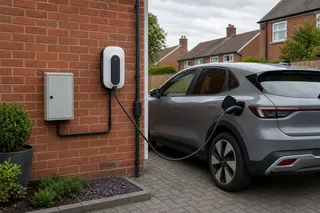
4kW single-phase charger that suits your parking space, electrical supply, cable route, vehicle, Wi-Fi signal, and charging routine.
Read article
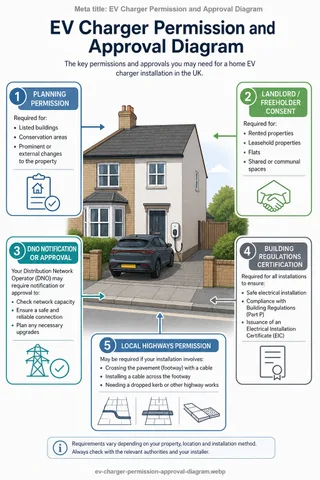
However, 'no planning permission' does not mean 'no checks, approvals or paperwork'.
Read article
Write for Kilowatts.uk
Write it here under your own name. Sign in, put a profile up, and start a guide. Pay only if you want more links from your articles out to your own site.
Create a Kilowatts.uk account, or sign in if you already have one.
Put your name, photo and experience on a public author page.
Write a guide or a blog. Free authors can put one followed link to their own site in articles each month.
FAQ
Live help
Talk to RoboMo™ and get instant answers.
Live chat