


How much do commercial solar panels cost and are they worth
Published: 2026-09-22 20:10:58
Updated: 2026-09-23 05:00:42
Commercial solar panels in the UK can be worth it for businesses with suitable roof or land, long-term site control and strong daytime electricity use.
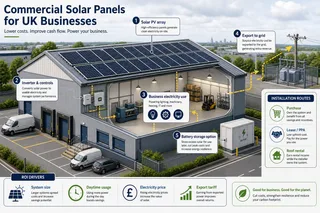
Commercial Solar Panels UK - Costs, ROI and Installation Options for Businesses
Find out commercial solar panels in the UK, including costs, what affects price, and how to choose an installer.
How much do commercial solar panels cost and are they worth it?
Commercial solar panels in the UK can be worth it for businesses with suitable roof or land, long-term site control and strong daytime electricity use. As an indicative planning range, commercial solar installation costs are often around £700 to £1,500 per kWp. The real figure depends on roof condition, access, electrical works, grid connection, system size and design quality.
A 50 kWp system might be roughly £40,000 to £75,000. A 100 kWp system might be roughly £70,000 to £140,000. These are broad early-stage estimates, not quotes. Use them to decide whether a full survey, grid review and financial model are worthwhile.
Those ranges are indicative as of 2026 and can move with equipment costs, labour availability, scaffolding, electrical materials, exchange rates and site-specific risk. Treat any generic price range as a starting point only. A simple metal-roof warehouse and a constrained older building can have very different installed costs, even at the same kWp size. Solar is usually most attractive where the site can use a large share of generation as it is produced. Export income may help, but for many businesses the main value is reducing imported electricity during working hours. A warehouse, factory, school, office, farm, cold store, leisure centre or depot with regular daytime demand will usually have a stronger case than premises that are mostly inactive during daylight hours. If the early figures look promising, businesses can compare solar options before moving to a full site assessment.
What affects the commercial solar cost?
Commercial solar cost varies because every building has different roof, access, electrical and grid conditions. The panel and inverter package is only part of the project. The final price may also include design, structural checks, scaffolding, cable routes, switchgear, metering, export controls, commissioning, monitoring and documentation for the wider solar installation scope. A proper proposal should be based on real site information, not a roof-area estimate alone. Half-hourly electricity data is especially useful because it shows whether the business can use solar generation during the day. That usually has a much stronger financial impact than exporting surplus power.
Overview
A low headline price is not always the cheapest whole-life option. It may exclude structural input, roof remedial work, scaffolding, DNO-related changes, monitoring, maintenance access, fire and insurance requirements, or future inverter replacement. The best comparison is a like-for-like scope that makes provisional items clear.
How commercial solar return on investment is calculated
Commercial solar ROI is usually built from avoided import electricity, export value, maintenance costs, finance costs, tax treatment and expected generation over time. The key variable is self-consumption. This means the proportion of solar electricity used directly by the business rather than exported or curtailed.
Annual generation in the UK is often modelled around 850 to 1,100 kWh per kWp per year, depending on location, pitch, orientation, shading and system losses. This is a planning assumption, not a guarantee. A credible proposal should show its generation assumptions, degradation allowance, export assumptions and sensitivity to electricity prices.
A simplified 100 kWp example shows how the calculation works. If a system generates 95,000 kWh a year, the site uses 75% on site, the imported electricity avoided is valued at 24p per kWh, exported electricity is valued at 8p per kWh, and annual maintenance is allowed at £1,000, the first-year gross benefit is calculated from avoided imports plus export income, less maintenance. For more detail on the calculation method, see this guide to commercial solar ROI.
This example is transparent rather than universal. It excludes finance costs, tax effects, insurance changes, downtime, inverter replacement and any roof works. It also assumes the business can use most generation directly. A different tariff, export arrangement or operating pattern can materially change the result.
Worked example assumptions to challenge before investing
A worked ROI model is only useful if the assumptions are tested against the actual site. Be wary of proposals that show a single payback figure without explaining how import price, export price, self-consumption and degradation have been treated.
The strongest models use half-hourly electricity data, roof-specific generation modelling and a clear export position. They should also explain whether savings are based on today’s tariff, a forecast tariff, or blended energy and non-energy charges. Not every element of a bill is avoided by generating electricity on site, so the calculation needs care.
A good return does not require every assumption to be perfect, but it does require the downside case to remain acceptable. If the project only works under the most optimistic tariff and export assumptions, it deserves closer scrutiny.
Which businesses are best suited to solar panels?
Business solar panels are usually most suitable for organisations that own, or have long-term control of, their premises and use significant electricity during daylight hours. Strong candidates often have predictable loads such as refrigeration, machinery, pumps, ventilation, lighting, IT equipment, process loads or daytime EV charging.
Solar can be less suitable where the business may move soon, the lease is short or unclear, the roof is due for replacement, shading is heavy, or the building’s daytime demand is low. Multi-occupancy buildings can be more complicated because the roof owner, tenant and electricity bill payer may not be the same party.
A site does not need to be perfect, but the weak points should be known before committing. If the roof needs replacement within a few years, it is usually better to coordinate reroofing and solar design rather than install panels and remove them shortly afterwards. Large logistics and storage sites may also benefit from a more specific look at solar for warehouses.
How long do commercial solar panels last?
Commercial solar panels commonly have a working life of 25 to 30 years or more, although output gradually reduces over time. Inverters usually have a shorter service life than panels, so the financial model should allow for future replacement rather than treating the system as maintenance-free.
Lifespan matters because the upfront cost is recovered over many years of avoided electricity purchases. A business that expects to stay in the building and maintain daytime demand is better placed to benefit from later years of generation after the initial investment has been recovered.
Panels are relatively low maintenance, but they still need attention. Monitoring should be used to spot underperformance, inverter faults or string issues quickly. Roof access, safe walkways, isolator positions and maintenance routes should be designed in from the start. A system that is hard to inspect is more likely to lose performance unnoticed.
What happens during a commercial solar installation?
A commercial solar installation normally starts with a desktop review, then moves into site survey, design, grid assessment, proposal, permissions and installation planning. The roof, electrical system and business operations all need to be considered together. For a straightforward roof-mounted system, installers will review roof drawings or survey information, structural suitability, asbestos records, shading, access, cable routes, distribution board space and metering. They should also consider how works can be scheduled around normal operations, deliveries, tenants, health and safety rules and roof warranty conditions. DNO involvement should be checked early, especially where the system may export to the grid or where the connection is more complex. Some projects can proceed only with a defined export limit. Others may need design changes if local network capacity is constrained. This can affect both the programme and the financial case.
Installation options for offices, factories and warehouses
Most commercial solar panels are installed on roofs because the building already provides secure space close to the electrical load. Warehouses and factories often have large roof areas, but the largest possible layout is not always the best commercial design.
Structural loading, rooflights, fire access, maintenance routes, roof plant, shading, roof warranty conditions and cable routes can all reduce usable space. On some buildings, the right answer is a smaller, cleaner system that is easier to maintain and better matched to the site’s load.
Ground-mounted solar may be relevant for farms, estates, utilities, depots or businesses with spare land. It brings different planning, fencing, security, ground condition and cable route considerations. Solar carports can work for some large car parks, particularly where EV charging is part of the wider plan, but they are usually more involved civil and structural projects than standard rooftop PV. Battery storage can also be useful, but it should be justified by the load profile rather than added automatically. It may help where generation is high during the day but useful demand occurs later, or where tariffs, peak charges and operating patterns support storage. Batteries add cost, have their own lifecycle considerations and do not improve every solar project, so review the case for battery storage separately.
Commercial solar finance and ownership options
The way a solar project is funded affects who owns the asset, who receives the savings, how risk is allocated and how much flexibility the business keeps. The best route depends on cash position, tax advice, balance sheet priorities, lease terms and the organisation’s appetite for long-term contracts. Outright purchase usually gives the business the greatest control over the asset and energy savings, but it needs capital upfront. Asset finance may spread the cost while allowing the business to benefit from generation. A power purchase agreement, often called a PPA, may reduce or remove upfront capital, but it introduces a long-term contract and means the savings are shared with the provider. These choices are covered in more depth in this guide to commercial solar finance.
Overview
Tax and accounting treatment should not be assumed from a solar proposal. Capital allowances, VAT treatment, lease accounting and finance structure can vary by organisation and change over time. Businesses should take advice from their accountant or tax adviser before relying on tax benefits in the ROI case.
What permissions and grid checks may be needed?
Permissions depend on the building, location, ownership and system design. Some commercial rooftop solar projects may fall under permitted development, but this should not be assumed. Listed buildings, conservation areas, visible elevations, unusual mounting heights, lease restrictions and landlord consent issues all need care.
The UK Government Planning Portal is a useful starting point for permitted development context, but site-specific planning advice may still be needed. Local planning authorities can take different views where heritage, visual impact or land use constraints are involved, so it is sensible to review planning permission checks before committing to a design.
The grid process is separate from planning. The Distribution Network Operator assesses safe connection to the local electricity network and the level of export the system may send back. Smaller generation connections may be considered in a G98 context, while many larger commercial systems are assessed under G99 arrangements. The correct route depends on the system and connection details, so it should be confirmed early rather than assumed. Businesses should also involve insurers, landlords, facilities managers and internal health and safety teams early. Fire access, labelling, isolation, roof penetrations, cable routes, emergency procedures and maintenance arrangements can all affect approval. Sorting these points before final design helps avoid late changes that increase cost or delay the installation.
Standards, evidence and documentation to expect
A commercial solar proposal should provide enough evidence for a business to understand the technical design and financial assumptions. It should not rely only on a headline kWp size, a payback figure and a product brochure.
Relevant references may include the Planning Portal for permitted development context, the local DNO’s connection requirements, Energy Networks Association connection guidance, manufacturer installation instructions and competent electrical design practice. Larger commercial projects may also involve structural engineers, fire risk assessors, insurers, landlords and facilities teams.
The aim is not to collect paperwork for its own sake. Documentation protects the business if there is a future fault, insurance query, roof issue, sale of the building or change of facilities team.
Common mistakes that weaken the business case
The biggest mistake is sizing the system around available roof area alone. A high-output array that frequently exports or curtails electricity may deliver a weaker return than a better-matched system that the business can use directly.
Another common issue is comparing quotes without checking scope. One proposal may include monitoring, export limitation, scaffolding, structural input and commissioning support, while another may leave several items provisional. The cheapest number can become expensive if key parts of the project are added later.
Businesses also underestimate roof condition. If a roof is nearing replacement, has fragile sheets, contains asbestos or has warranty restrictions, the solar design may need to change. In some cases, the right decision is to deal with the roof first and install solar afterwards as part of a planned programme.
The strongest projects identify these issues early, then design around them. Late surprises are what turn apparently simple commercial solar schemes into difficult ones.
How to choose a commercial solar installer
Choosing a commercial solar installer should be based on design quality, site understanding and transparency, not only price. A competent proposal should explain system size, expected generation, self-consumption assumptions, export approach, equipment, roof fixing method, monitoring, maintenance and exclusions.
Ask for evidence that the installer has considered the building as a working site rather than a blank roof. For factories and warehouses, that means understanding access, production schedules, delivery routes, rooflights, plant, asbestos information, structural loading and electrical shutdown constraints.
Good questions to ask before appointing an installer include whether the quote is fixed or provisional, what DNO assumptions have been made, what happens if export is limited, how the roof warranty is protected, and how performance will be monitored after handover. The answers should be specific to your premises, not generic promises.
A credible installer should also be willing to explain when solar may not be suitable. That honesty is important because some sites need roof works, lease clarification, electrical upgrades or demand-side changes before solar becomes a strong investment.
How to decide if commercial solar is right for your business
The quickest way to judge suitability is to gather electricity bills, half-hourly data if available, roof information, lease details, asbestos records and any known plans for reroofing, expansion or relocation. With those inputs, an installer can model a system that reflects actual usage rather than relying on broad assumptions.
Commercial solar panels are most compelling when they reduce a meaningful amount of imported electricity over a long period on a building the business expects to keep using. They are less compelling when site tenure is short, the roof is unsuitable, export is heavily constrained or the business cannot use much electricity during daylight hours.
If the early signs are positive, the next step is a site-specific assessment and comparable quotes. Treat indicative costs as a starting point, not a buying decision, and make sure the proposal shows the assumptions behind the return.
Plan, Compare & Buy Renewable Energy Solutions
AI does the thinking.
You get the perfect solar match.
Use RoboMo™ to assess your property, compare available technologies and connect with trusted UK installers, suppliers and manufacturers.
Simply enter your postcode, drop a pin on your roof, create your free account and let RoboMo™ analyse your property to find the best solar panels for your home.

You don't have to think
RoboMo™'s AI analyses your roof and does all the hard work.

Accurate & tailored
AI-powered assessment based on your roof, location, and conditions.

Best options, maximum savings
Compare top solar panels for the best performance and value.

Simple, fast & effortless
Provide a few details, sit back and watch your results unfold.
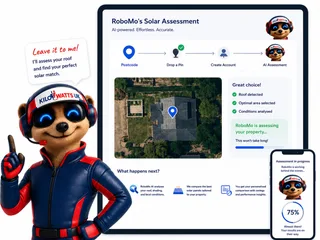
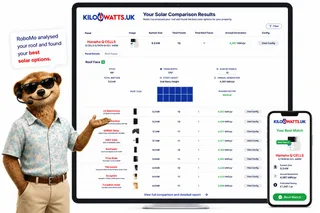
STEP 1
Choose Home, Business or Industrial
Enter your postcode to start your assessment.
STEP 2
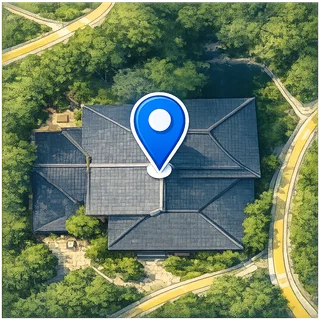
Drop a pin on your roof
STEP 3

Create your free account
STEP 4

Sit back and watch RoboMo™ work
RoboMo™ analyses your roof and builds your personalised solar comparison.

Kilowatts UK is an authorised representative
Flower Turbines
Compact vertical-axis turbines built for real UK sites, not just open farmland.
They start in light wind, sit in a small footprint, and are bird-safe by design. Cluster them as a bouquet and the group performs better together than the same turbines standing alone. Enter your postcode for a location-based generation estimate. Figures use area weather data and will differ if buildings, trees or hills sit in the way.
Starts in light UK wind
Built to generate in typical UK wind, not only open farmland.
Small rooftop or ground footprint
Compact towers for roofs, yards and tight sites.
Bird-safe slow rotation
Slow vertical-axis spin, bird-safe by design.
Bouquet clusters raise output
Grouped turbines outperform the same units standing alone.
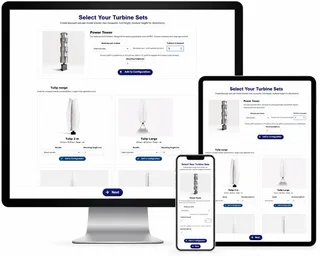
Step 1
Enter your postcode
Start designing your wind energy system in seconds.
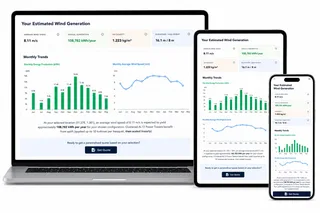
STEP 2

Choose a location
STEP 3

Place your cluster
Tap the map where you want the turbine cluster to go.
STEP 4

Instant generation forecasts
Compare different turbine layouts and see annual generation forecasts instantly.
STEP 5

No commitment required
Explore different configurations before deciding whether to request a quotation.
Related articles

Mo's Mission Nominations
FAQ
Need Help? RoboMo's Got Answers
How much do commercial solar panels cost in the UK?
As an early planning range, commercial solar installations are often around £700 to £1,500 per kWp. A 50 kWp system might be roughly £40,000 to £75,000, while a 100 kWp system might be roughly £70,000 to £140,000. The final cost depends on the roof, access, electrical works, grid connection, system size and design quality, so a site survey is needed for a reliable quote.
Are commercial solar panels worth it for a business?
Commercial solar can be worth it where a business has suitable roof or land, long-term control of the premises and strong daytime electricity use. The biggest value usually comes from using solar power on site and buying less electricity from the grid. Export income can help, but it is often not the main driver of the return.
How is commercial solar ROI calculated?
ROI is usually based on avoided electricity imports, export income, maintenance costs, finance costs, tax treatment and expected generation over time. Self-consumption is a key factor because electricity used directly by the business is usually more valuable than electricity exported. A good model should use half-hourly electricity data, realistic generation assumptions and clear export assumptions.
Which businesses are best suited to commercial solar panels?
Solar is often a good fit for warehouses, factories, farms, schools, offices, cold stores, leisure centres and depots with regular daytime demand. It is also better suited to businesses that own their premises or have a long, secure lease. Sites with ageing roofs, heavy shading, short leases or low daytime use may need extra caution before investing.
Do commercial solar panels need planning permission or DNO approval?
Some commercial solar projects may fall under permitted development, but this depends on the building, location and project details, so planning should be checked early. The local Distribution Network Operator may also need to be notified or consulted, especially where export to the grid is expected. Grid limits or export restrictions can affect the system design, programme and financial case.
How long do commercial solar panels last?
Commercial solar panels commonly have a working life of 25 to 30 years or more, although output gradually reduces over time. Inverters usually have a shorter life than panels and may need replacing during the system’s lifetime. Monitoring and planned maintenance help protect long-term performance.
Can a business add battery storage to commercial solar?
Yes, but battery storage should be assessed against the site’s actual load profile rather than added automatically. It may help where solar generation is high during the day but useful demand occurs later, or where tariffs and peak charges support storage. Batteries add cost and have their own lifecycle considerations, so they do not improve every solar project.
What installation options are available for commercial solar?
Most commercial solar systems are roof-mounted because the roof is close to the building’s electricity demand. Ground-mounted solar may suit farms, estates, depots or businesses with spare land, while solar carports can be considered for some large car parks. Each option has different structural, planning, access, security and grid connection considerations.