


Compare Solar Panels UK: 2026 Cost, Savings & Installer
Published: 2026-08-22 20:29:58
Updated: 2026-08-22 16:10:23
If you are ready to compare solar options but feel buried under conflicting prices, unfamiliar jargon, and the pressure to sign on the dotted line.
Compare Solar Panels UK - 2026 Cost, Savings & Installer
If you are ready to compare solar options but feel buried under conflicting prices, unfamiliar jargon, and the pressure to sign on the dotted line.
Overview
If you are ready to compare solar options but feel buried under conflicting prices, unfamiliar jargon, and the pressure to sign on the dotted line, you are in the right place. The UK solar market in 2026 is busier than ever, and while that means more choice, it also means more noise. This guide strips things back to what actually matters: real cost benchmarks, honest savings estimates, and the installer trust signals that separate a sound investment from an expensive mistake. By the time you finish reading, you will know exactly which questions to ask and how to spot a fair quote, not just a cheap one.
Why Comparing Solar Panels Matters More Than Ever in 2026
Energy price volatility remains the single biggest reason UK households are turning to solar. Uswitch research shows three million households plan to install panels within the next five years, with two-fifths pointing directly to unstable energy bills as the trigger. That surge in demand has attracted a flood of installers, comparison platforms, and lead-generation sites, all promising the best deal. Yet quotes for identical systems can differ by more than £1,000. One Compare Solar NI user found a £1,400 price range, from £4,800 to £6,200, for exactly the same setup.
Comparing is not just about the headline price. It is about warranty terms, installer reliability, equipment quality, and whether the system design actually suits your roof rather than a generic postcode average. The 0% VAT relief on domestic solar installations, running until March 2027, makes this a genuinely attractive window to buy. That relief is worth roughly £1,200 to £1,600 on a typical system, so locking in a quote before the deadline matters. Our AI-powered solar assessment, RoboMo, gives you a personalised starting point before you ever speak to a salesperson, so you walk into conversations knowing what a fair price looks like for your property.
How Much Do Solar Panels Cost in the UK? (2026 Price Benchmarks)
Understanding the numbers before you pick up the phone puts you in control. Based on Uswitch data and the Energy Saving Trust average of roughly £7,000 installed, here is what you should expect to pay for a system without battery storage in 2026.
A 2kW system typically costs between £4,600 and £5,800. A 4kW system, which suits most three-bedroom homes, runs from £5,000 to £7,000. A larger 6kW system, ideal for bigger households or those with an electric vehicle, ranges from £6,000 to £8,000. Northern Ireland figures sit slightly higher at the top end, with 3kW to 6kW-plus systems costing £5,000 to £12,000, and a 4kW setup landing between £6,000 and £8,000.
A proper quote should include the panels, inverter, mounting hardware, installation labour, and the Distribution Network Operator paperwork that notifies your grid provider. Some installers, like New Dawn Solar, explicitly include DNO paperwork; others leave it as a grey area, so ask. What comparison sites rarely mention are the hidden costs further down the line. Inverters typically need replacing every 10 to 15 years at a cost of £800 to £1,500. Scaffolding charges can creep in if your roof access is tricky. And if your installer goes out of business, a 25-year warranty becomes worthless overnight. Our solar panel comparison tool factors in your roof characteristics to give you a more accurate baseline than national averages, helping you spot quotes that look too good to be true.
Solar Panel Savings and Payback Periods: What You Will Actually Get Back
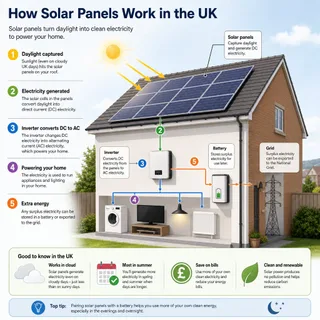
Most households see a 50 to 70 percent reduction in their electricity bills after installing solar, according to MoneySuperMarket. In pounds, that translates to annual savings of £350 to £500 for a 3kW system, £500 to £700 for 4kW, and £700 to £1,000 for 6kW, depending on your usage and where you live.
Payback periods sit between 9 and 15 years based on Energy Saving Trust estimates, with Compare Solar NI narrowing that to 8 to 12 years for well-sized systems. With panels lasting 25 years or more, you are looking at over a decade of near-free electricity once the system has paid for itself. Real-world generation data helps bring this to life. A 4kW system in Belfast generates roughly 13.9 kWh per day, worth about £4.65 at a 33.5p per kWh tariff. A 6kW system produces around 20.8 kWh daily, worth roughly £6.98.
Adding battery storage can roughly double your savings by storing midday generation for peak evening use, but batteries add £2,000 to £5,000 to your upfront cost. Weigh that payback carefully. On top of bill savings, the Smart Export Guarantee lets you sell excess electricity back to the grid. Rates vary by supplier, typically 4p to 6p per kWh in Northern Ireland, with more competitive rates available in Great Britain. Comparing export tariffs separately is worth the effort, as the difference can add up over a system's lifetime.
What to Compare When Choosing Solar Panels (Beyond Price)
Panel Efficiency and Real-World Performance
Panel efficiency ratings tell you how much sunlight a panel converts into electricity, but the temperature coefficient matters just as much. Panels lose output as they heat up, and UK summer rooftops get surprisingly hot. Look for degradation rates in the manufacturer's datasheet. Quality panels from brands like JA Solar, Longi, and SunPower typically retain 85 to 92 percent of their original output after 25 years. Cheaper panels degrade faster, eating into your long-term savings. If your roof has plenty of unshaded space, do not chase the highest-efficiency panel. A larger array of mid-tier panels often delivers better value than a smaller array of premium ones.
Inverter Types: String vs. Microinverters vs. Optimisers
String inverters are the budget standard. They connect all your panels in series, which means the whole array performs at the level of the weakest panel. Shade on one panel affects everything. Microinverters and power optimisers cost more upfront but maximise output when panels are partially shaded or spread across multiple roof faces. If your roof catches shade from a chimney, tree, or neighbouring property for part of the day, the extra investment in module-level electronics usually pays off. Remember that inverters last 10 to 15 years, so factor a replacement into your long-term cost calculations regardless of which type you choose.
Warranty Terms and Installer Trust Signals
MCS certification is non-negotiable. It is required for Smart Export Guarantee payments and for most financing options, so any installer without it should be crossed off your list immediately. Check Trustpilot scores and, crucially, review volume. Uswitch holds a 4.7 out of 5 rating from 39,653 reviews, while MoneySuperMarket sits at 4.8 out of 5 from 58,475 reviews. Those volumes give you a more reliable picture than a handful of glowing testimonials. Look for insurance-backed warranties covering 10 to 25 years, and ask directly what happens if the installer ceases trading. The installation model also matters. Some companies, like Hometree, use in-house teams only, while others subcontract. In-house teams generally offer clearer accountability and more consistent aftercare.
Regional Differences: Scotland, Wales, England, and Northern Ireland
Where you live in the UK affects your incentives, your grid operator, and sometimes your planning rules. Scotland offers a significant advantage through Home Energy Scotland, which provides interest-free loans for solar panels and battery storage. That scheme can dramatically improve your upfront affordability compared to the rest of Great Britain. Northern Ireland operates under a different grid operator, NIE Networks, with separate export payment structures of roughly 4p to 6p per kWh and no access to GB-only schemes like the Warm Homes Plan.
Wales and English regions do not have equivalent nationwide loan schemes, but local councils occasionally run group-buying initiatives that reduce costs through collective purchasing power. Checking your council's website is a quick win. Planning permission is rarely needed for domestic solar under permitted development rules, but listed buildings, conservation areas, and flats follow different rules. If you are in a rural area with poor roof orientation, our small wind turbine assessment can help you explore whether wind power is a better fit for your energy independence goals.
How to Compare Solar Quotes Like a Pro (Step-by-Step)
Start by getting at least three quotes from MCS-certified installers. Never settle for the first one, no matter how convincing the salesperson sounds. When the quotes arrive, compare like-for-like. The same panel brand, the same inverter type, the same warranty terms. A cheaper quote with inferior components is not cheaper over 25 years.
Ask every installer the same set of questions. What is the estimated annual generation for my specific roof? What happens if a panel fails in year 12? Do you handle the DNO paperwork, and is that included in the price? Write down the answers and compare them side by side. Check the installer's financial stability. A 25-year warranty is meaningless if the company goes bust in year three. Companies House records and credit checks are public and worth a few minutes of your time.
Use the quotes as leverage. Some installers, like Glow Green, pledge to beat like-for-like quotes by £100, so do not be shy about negotiating. Throughout this process, our featured installer directory and AI-powered assessment can help you shortlist vetted partners who match your property profile. Our free solar and battery assessment connects you directly with trusted installers in your area, cutting out the guesswork.
Common Solar Panel Questions, Answered
Do solar panels work in cloudy UK weather? Yes, and more effectively than many people assume. Panels generate electricity from diffuse light, not just direct sunlight. The UK receives 950 to 1,000 kWh per kilowatt of capacity annually, which is more than enough to make a system worthwhile.
Are solar panels worth it in 2026? For most homes with a south-, east-, or west-facing roof, the answer is a clear yes. With 0% VAT, rising energy prices, and payback periods of 8 to 15 years, you are left with 10 to 17 years of free electricity after breaking even.
What size system do I need? A typical three-bedroom home suits a 3kW to 4kW system. Larger homes or those with electric vehicles benefit from 4kW to 5kW or more. Your annual electricity usage in kilowatt-hours is the best guide, and any reputable installer will size the system to match it. Can I get grants for solar panels? The 0% VAT relief until March 2027 is the main incentive in Great Britain. Scotland offers interest-free loans through Home Energy Scotland. Northern Ireland has no equivalent grant scheme at present. What is the Smart Export Guarantee? It is a scheme requiring licensed electricity suppliers to pay you for excess power you export to the grid. Rates vary by supplier, so comparing export tariffs is just as important as comparing installation quotes.
Final Verdict: Is Comparing Solar Panels Worth It?
The evidence is clear and consistent. Identical systems can differ by more than £1,000 between installers, and comparison platforms save users £800 to £950 on average. The best approach combines independent research, a clear understanding of your own energy usage, and at least three like-for-like quotes from vetted installers.
Do not be pressured by limited-time offers or door-to-door sales tactics. A legitimate installer will give you the space to compare, verify, and decide on your own timeline. Remember that the cheapest quote is rarely the best value. Warranty terms, installer reputation, and equipment quality matter just as much as the headline price. Whether you are a homeowner, a business, or a landowner, the principle stays the same: compare thoroughly, verify everything, and only commit when you are genuinely confident.
Plan, Compare & Buy Renewable Energy Solutions
AI does the thinking.
You get the perfect solar match.
Use RoboMo™ to assess your property, compare available technologies and connect with trusted UK installers, suppliers and manufacturers.
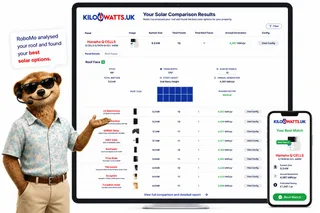
Simply enter your postcode, drop a pin on your roof, create your free account and let RoboMo™ analyse your property to find the best solar panels for your home.

You don't have to think
RoboMo™'s AI analyses your roof and does all the hard work.

Accurate & tailored
AI-powered assessment based on your roof, location, and conditions.

Best options, maximum savings
Compare top solar panels for the best performance and value.

Simple, fast & effortless
Provide a few details, sit back and watch your results unfold.
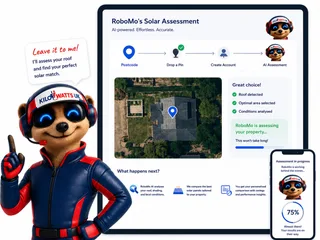
STEP 1
Choose Home, Business or Industrial
Enter your postcode to start your assessment.
STEP 2

Drop a pin on your roof
STEP 3

Create your free account
STEP 4

Sit back and watch RoboMo™ work
RoboMo™ analyses your roof and builds your personalised solar comparison.
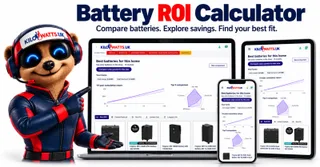
BATTERY ROI TOOL
See what a battery saves on your bill
Enter the day rate, off-peak rate and export rate. The calculator ranks batteries in the Kilowatts shop over 10 years.
Home batteries also suit offices and small commercial sites. Industrial batteries are listed on their own calculator.

Step 1
Enter your postcode
Start designing your wind energy system in seconds.
Are you an installer, distributor or renewable energy business?
Kilowatts UK is expanding the Flower Turbines partner network across the UK.
Become A Flower Turbines PartnerKilowatts UK is an authorised representative
Flower Turbines
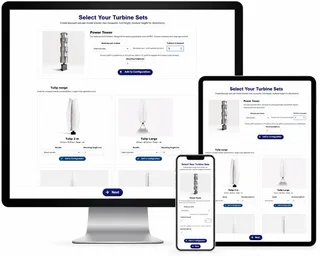
Compact vertical-axis turbines built for real UK sites, not just open farmland.
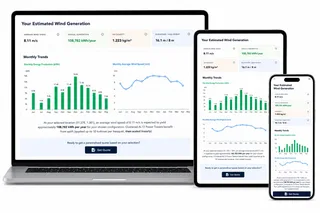
They start in light wind, sit in a small footprint, and are bird-safe by design. Cluster them as a bouquet and the group performs better together than the same turbines standing alone. Enter your postcode for a location-based generation estimate. Figures use area weather data and will differ if buildings, trees or hills sit in the way.
Starts in light UK wind
Built to generate in typical UK wind, not only open farmland.
Small rooftop or ground footprint
Compact towers for roofs, yards and tight sites.
Bird-safe slow rotation
Slow vertical-axis spin, bird-safe by design.
Bouquet clusters raise output
Grouped turbines outperform the same units standing alone.
STEP 2

Choose a location
STEP 3

Place your cluster
Tap the map where you want the turbine cluster to go.
STEP 4

Instant generation forecasts
Compare different turbine layouts and see annual generation forecasts instantly.
STEP 5

No commitment required
Explore different configurations before deciding whether to request a quotation.
Related articles
Mo's Mission Nominations
FAQ
Need Help? RoboMo's Got Answers
How much do solar panels cost in the UK in 2026?
The cost depends on system size, roof access, equipment quality, battery storage and whether extra electrical work is needed. A fair quote should clearly itemise panels, inverter, mounting kit, scaffolding, labour, monitoring, warranties and any grid notification work. Always compare at least three like-for-like quotes rather than choosing on headline price alone.
How much money can solar panels save on electricity bills?
Savings depend on how much electricity you use during daylight hours, your tariff, roof orientation and whether you add a battery. Homes that use more of their own solar power usually save more than homes that export most of it. Ask installers for an annual generation estimate based on your specific roof, not just a postcode average.
Do solar panels work in cloudy UK weather?
Yes, solar panels still generate electricity on cloudy days because they use daylight, not just direct sunshine. Output is lower in dull weather and higher in summer, so performance varies across the year. A well-designed UK system should take local shading, roof pitch and orientation into account.
What size solar panel system do I need?
The right size depends on your annual electricity use, available roof space and future plans such as an electric car or heat pump. Many homes are suited to a system sized around their daytime demand, but bigger is not always better if most excess power is exported at a low rate. A reputable installer should model your usage and explain the expected generation clearly.
Is a solar battery worth adding?
A battery can increase the amount of solar electricity you use at home by storing daytime generation for the evening. It also adds significant upfront cost, so the payback depends on your usage pattern, import tariff, export rate and battery warranty. It is worth comparing solar-only and solar-plus-battery quotes before deciding.
What should I compare in solar panel quotes?
Compare the panel brand, inverter type, estimated annual generation, workmanship warranty, product warranties, scaffolding costs and aftercare. Check whether the installer handles grid paperwork and whether this is included in the price. A cheaper quote may not be better if it uses lower-quality components or offers weak support after installation.
Do I need an MCS-certified installer?
Using an MCS-certified installer is strongly recommended and is usually needed if you want to access Smart Export Guarantee payments in Great Britain. It also gives you a recognised installation standard and clearer paperwork for future buyers or lenders. Ask for the installer’s certification details and check them before signing a contract.
Do I need planning permission for solar panels?
Most domestic rooftop solar installations in the UK fall under permitted development, but there are exceptions. Listed buildings, flats, conservation areas and some unusual roof layouts may need extra checks or consent. Your installer should flag planning concerns, but it is sensible to confirm the position with your local planning authority if your property is not straightforward.