


Solar Panel Battery Costs in the UK: A Comprehensive Guide
Published: 2026-07-18 15:34:21
Updated: 2026-07-26 18:35:13
The final price depends mainly on usable capacity, inverter type, whether it is installed with new solar panels or retrofitted, electrical work.
How much do solar panel batteries cost in the UK?
A typical UK solar panel battery costs about £3,000 to £10,000 installed, with smaller systems usually around £3,000 to £5,000 and larger or premium systems reaching £8,000 to £12,000 or more. The final price depends mainly on usable capacity, inverter type, whether it is installed with new solar panels or retrofitted, electrical work, backup requirements, location, warranty, and VAT treatment.
For many homes, the sensible question is not simply the cheapest battery price. It is whether the battery is correctly sized for the home’s electricity use, solar generation, evening demand, tariff, and installation constraints. A battery that is too small may not cover much evening use, while one that is too large may sit partly empty or lengthen the payback period.
As a quick guide, many UK homes looking at solar battery storage end up considering around 5 kWh to 10 kWh of usable storage. Low-use homes may need less, while larger homes, heat pump properties, or homes using more electricity overnight may need more careful modelling. A solar battery does not generate electricity by itself. Its value comes from storing electricity that would otherwise be exported, or from charging at cheaper times and discharging when grid electricity is more expensive. That means the real cost-benefit depends on the difference between your import rate, export rate, time-of-use tariff, battery efficiency, and how many times the battery cycles across the year.
Typical solar battery cost by size.
Installed domestic battery costs vary, but these are common UK market ranges for the battery element of a home system.
3 kWh to 5 kWh battery
Usually around £3,000 to £5,500 installed, often suitable for smaller homes or modest evening use.6 kWh to 8 kWh battery
Usually around £4,500 to £7,000 installed, often considered by average-use homes with regular evening consumption.9 kWh to 10 kWh battery
Usually around £5,500 to £8,500 installed, often used where there is more surplus solar or higher overnight demand.13 kWh to 15 kWh battery
Usually around £8,000 to £12,000 or more installed, usually for larger homes, premium systems, or more complex requirements.
These figures are installed price ranges rather than hardware-only prices. Battery hardware alone can look much cheaper, but it does not include cabling, isolators, protection devices, inverter changes, commissioning, certification, manufacturer registration, DNO paperwork, or any consumer unit upgrades. Installed domestic storage often works out at roughly £600 to £1,200 per usable kWh. Smaller systems often have a higher cost per usable kWh because the fixed costs of installation, commissioning, and electrical work are spread over fewer units of storage. A useful comparison is the installed cost per usable kWh, not the advertised nominal capacity. For example, a battery sold as 10 kWh may have around 9 kWh to 9.5 kWh usable depending on the manufacturer’s depth-of-discharge limits. If two batteries have similar headline sizes but different usable capacities, output limits, and warranty terms, the cheaper-looking option may not be the better long-term value.
What is included in an installed battery price?
A proper installed quote should cover the complete working system, not just the battery box. This matters because two quotes can look similar on headline capacity but be very different once inverter work, electrical protection, monitoring, and paperwork are included.
Battery unit. Inverter or hybrid inverter if required. Battery management system. Cables and isolators. Electrical protection devices. Mounting equipment.
Some costs may be excluded or listed as provisional. Common exclusions include consumer unit upgrades, earthing or bonding improvements, long cable runs, fire-rated backing boards, backup circuits, scaffolding where wider solar work is involved, old equipment removal, and monitoring signal improvements. VAT can also materially change the final figure. Many domestic battery installations can qualify for reduced or zero VAT when installed as qualifying energy-saving materials, but treatment can depend on location, property type, timing, and installation details. Northern Ireland rules can differ from Great Britain, so the quote should state VAT clearly rather than leaving it ambiguous. The quote should also make clear who is responsible for design, sign-off, and aftercare. A well-specified battery installation should include a site assessment, load assumptions, inverter compatibility checks, DNO process, manufacturer commissioning, app setup, warranty registration, and safe handover. These are not administrative extras; they are part of making sure the battery operates safely and delivers the savings expected. Installation labour. Commissioning and setup. Handover documents. Manufacturer registration. DNO notification or application where required.
Why retrofitting a battery can cost more.
Adding a battery at the same time as a new solar panel system is usually cheaper than retrofitting one later. With a new installation, the designer can specify a hybrid inverter, plan cable routes, choose compatible equipment, and commission the system as one package.
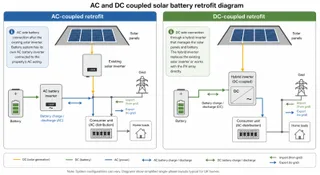
A retrofit is often more involved. If the existing solar inverter cannot work with a battery, the installer may need to add an AC-coupled battery system with its own inverter or replace the existing inverter. Older consumer units, limited meter cupboard space, long cable routes, and compatibility issues can all add cost.
The right choice usually depends on the existing system.
Existing solar system
Often uses an AC-coupled battery that can work alongside the current solar inverter.Future expansion plans
May require a modular battery system and compatible inverter from the outset.New solar and battery system
Often uses a hybrid inverter to manage solar generation and the battery together.Older or incompatible inverter
May need replacement or a separate battery inverter, which can increase the installed cost.
A retrofit can still be worthwhile, especially where a home exports a lot of solar electricity during the day and imports heavily in the evening. It just needs a more careful survey than a simple battery price comparison. As an example, a home that regularly exports 5 kWh during sunny weekdays and imports 5 kWh between 5pm and midnight may have a stronger case for storage than a home where someone is already at home using most solar generation during the day. The same 5 kWh battery can perform very differently in those two properties, even if the roof and hardware are similar.
What affects the price of a solar battery?
The biggest price driver is usable capacity, but it is not the only one. A 10 kWh battery with high output, strong warranty terms, good software, and backup capability may cost more than a basic system with the same headline storage size.
Usable capacity is especially important. A battery advertised as 10 kWh may not always provide the full 10 kWh for household use because part of the capacity can be reserved to protect battery health. Compare usable capacity rather than nominal capacity wherever possible.
Maximum power output also matters. Capacity tells you how much electricity the battery can store, while output tells you how quickly it can deliver it. A 5 kWh battery with a 3 kW output may help with lights, appliances, and general evening use, but it will not necessarily run several high-load appliances at once. Kettles, ovens, tumble dryers, electric showers, and EV chargers can exceed ordinary battery output limits. Other major cost factors include the brand, inverter type, battery chemistry, installation location, electrical upgrades, monitoring features, smart tariff compatibility, warranty length, and whether backup power is included. Backup is a common source of misunderstanding because many grid-tied solar battery systems do not power the home during a power cut by default. Battery efficiency should also be checked. Typical round-trip efficiency is often around 85% to 95%, meaning that if 10 kWh goes into the battery, roughly 8.5 kWh to 9.5 kWh may be available again after charging and discharging losses. This is still efficient compared with many forms of storing energy indirectly, but it is not loss-free. It also means the battery should be used where it genuinely offsets expensive grid imports or improves solar self-consumption, rather than simply cycling for no financial benefit. Warranty quality can be as important as purchase price. Look at the number of years, cycle limit, throughput limit, retained capacity guarantee, installation requirements, software updates, and whether labour is covered if a fault develops. A battery with a longer, clearer warranty and proven manufacturer support may be better value than a cheaper system with limited aftercare.
How much does solar and battery storage cost together?
A UK solar panel system with a battery commonly costs around £9,000 to £18,000, although smaller combined systems may be closer to £8,000 to £12,000 and larger systems may reach £14,000 to £20,000 or more. The battery portion often adds around £3,000 to £8,000 to a solar installation.
The cheapest combined quote is not always the best. It may use a battery that is too small, an inverter with limited output, weaker software, a shorter warranty, or exclusions for electrical upgrades. Equally, a high quote may include premium components, backup circuits, or more complex installation work that another quote has not allowed for.
When comparing solar-plus-battery packages, look at the system as a whole. Roof orientation, shading, array size, inverter capacity, battery size, export settings, and household consumption all affect the result. A small or shaded solar array may not generate enough surplus to fill a large battery regularly, especially in winter. For a typical UK home, adding a battery can increase the proportion of solar electricity used on site. Without a battery, many households may self-consume roughly 30% to 50% of their solar generation, depending on daytime usage. With a suitably sized battery, that can sometimes rise to around 60% to 80% or more. These figures are not guaranteed, but they show why household usage patterns matter. A battery is most useful when there is a clear gap between when the panels generate and when the home uses electricity. Compared with relying entirely on grid electricity, solar-plus-battery storage can reduce peak-rate imports and improve resilience against future tariff changes. Compared with solar panels alone, it can reduce exported surplus and make better use of generation in the evening. However, because exported electricity has value under export tariffs, the battery’s saving is usually the difference between the avoided import cost and the export income you give up, adjusted for battery losses.
Will a solar battery save enough money to pay for itself?
Solar battery payback in the UK is often around 8 to 15 years or more, but it varies heavily. Payback can be shorter where electricity import prices are high, the home uses a lot of electricity in the evening, and a smart tariff allows cheap overnight charging. It can be longer if the battery is oversized, the home has low evening demand, or export payments are attractive.
A battery increases the amount of solar electricity used in the home. Without a battery, unused daytime solar electricity is usually exported to the grid. With a battery, more of that generation can be used later in the evening or overnight.
The financial calculation is not as simple as treating stored solar electricity as free. Exported electricity may have value under the Smart Export Guarantee, and battery losses mean not every kWh charged into the battery comes back out. Typical round-trip efficiency is often around 85% to 95%, so some energy is lost during charging and discharging. Seasonality is also important in the UK. In summer, a battery may fill early and still leave spare solar electricity for export. In winter, the same battery may not fully charge from solar on many days. Annual modelling is more useful than a sunny-day example. A simple worked example shows how the savings can change.
- If a household stores 1,500 kWh of surplus solar per year instead of exporting it, the gross value depends on the import and export rates.
- If grid import costs 28p/kWh and export would have earned 15p/kWh, the before-loss benefit is 13p/kWh.
- At 90% round-trip efficiency, 1,500 kWh charged might return about 1,350 kWh for use.
- The approximate annual benefit in this example is around £303: 1,350 kWh avoided import at 28p is £378, minus 1,500 kWh export income foregone at 15p is £225.
- If the same home only receives 5p/kWh for export, the annual benefit would be higher. If it receives a strong export rate close to its import rate, the benefit would be lower.
This is only an illustration, not a quote or guarantee. Tariffs change, standing charges are separate, export availability depends on supplier terms, and real savings depend on the household’s actual half-hourly consumption and generation. Another example is a home on a time-of-use tariff. If a battery charges from the grid overnight at 8p/kWh and discharges during a 28p/kWh peak period, the headline spread is 20p/kWh. After battery losses, the practical saving may be closer to 17p to 18p per delivered kWh before considering any tariff rules, capacity limits, or degradation. This can improve the case for a battery, especially in winter when there is less solar surplus, but it depends on choosing compatible equipment and a tariff that allows automated charging. From an energy-efficiency perspective, a battery is best seen as a load-shifting device. It does not reduce the energy an appliance needs in the way insulation, efficient lighting, or appliance upgrades can. Instead, it helps use lower-carbon or lower-cost electricity at a better time. Solar electricity used directly in the home is usually the most efficient route because it avoids battery losses. Battery-stored solar is usually the next step when direct daytime use is not possible.
What size solar battery do you need?
The right size depends on electricity use, solar generation, evening and overnight demand, and tariff. It should not be chosen only from the size of the solar panel system.
A home using around 6 kWh overnight may not need a 13 kWh battery unless it also plans to charge from cheap-rate grid electricity. A home exporting 8 kWh on sunny summer days may still not benefit from a very large battery in winter if solar generation is low. A typical 4 kWp solar array is often paired with about 5 kWh to 10 kWh of storage, but the correct answer depends on real usage data.
Half-hourly smart meter data is very useful because it shows when electricity is actually used. This helps identify how much demand could realistically be moved from peak-rate grid electricity to stored solar or off-peak grid-charged electricity. Low-use homes may only need a small battery. Medium-use homes often look at mid-sized storage. High-use homes may need larger or modular systems. Homes with heat pumps need careful seasonal modelling. Homes with EVs should avoid assuming the home battery will regularly charge the car. Homes on time-of-use tariffs should check charge and discharge rates. Oversizing is one of the most common mistakes. Bigger batteries cost more, do not always improve savings, and may increase the time it takes to recover the upfront cost. A practical sizing approach is to compare three numbers: average surplus solar generation, evening and overnight consumption, and battery usable capacity. If a home normally uses 4 kWh after sunset, a 10 kWh battery may not cycle fully unless it is also used for tariff charging. If a home often has 8 kWh of evening demand but only 3 kWh of surplus solar, a larger battery may still be under-filled outside summer unless cheap overnight charging is part of the plan. Homes with high export should compare export income against storage savings.
When is a solar battery a good fit?
A solar battery is most likely to make sense when a home has or is planning solar panels, exports useful daytime generation, and imports electricity in the evening or overnight. It can also be helpful where the household is on a time-of-use tariff and the battery can charge cheaply overnight before supplying the home during higher-price periods.
Good candidates often include homes with steady evening use, working households that generate solar while nobody is home, and properties where future electrification is planned. A battery may also suit homes with heat pumps if the heating controls, tariff, and battery output are considered together.
A weaker fit would be a very low-use home, a property where most electricity is already used during sunny hours, a home with a very small or shaded solar array, or a household planning to move soon. It may also be a poor fit if the homeowner expects whole-house backup during power cuts without paying for additional equipment and dedicated backup circuits. A standard home battery does not make a property off-grid. Most UK homes will still need the grid, especially in winter. True off-grid design needs much larger storage, careful load management, and usually backup generation. A battery can also have a carbon benefit when it helps a household use more solar electricity locally or shift demand away from higher-carbon peak periods. However, carbon savings vary with grid mix, tariff behaviour, manufacturing impact, and how the battery is cycled. The strongest environmental case is usually a well-sized system that avoids unnecessary oversizing and maximises useful solar consumption over many years.
Installation details that affect the final quote.
Battery location can change the cost and practicality of the job. Garages and utility rooms are often convenient because access is good and the battery can be placed away from main living spaces. Loft installations can be awkward because of heat, access, weight, and fire considerations. Outdoor installations need suitable equipment and protection from weather, flooding risk, and excessive heat.
Domestic batteries can be heavy, and larger systems can weigh over 100 kg in total. Wall strength, mounting method, clearances, ventilation, and safe access all need checking before installation. A neat location on paper is not always suitable once the installer checks the structure, cable route, and manufacturer instructions.
Electrical work is another major variable. Some homes need consumer unit upgrades, earthing or bonding improvements, additional protection devices, or longer cable runs between the battery, inverter, meter, and consumer unit. Meter cupboard space can also be a practical constraint. The installer should also handle the correct DNO process. Battery inverters can count as generation equipment for grid connection purposes, and some systems fall under G98 while larger or more complex systems may need G99. Incorrect paperwork can cause problems later when changing tariff, arranging export payments, or selling the property. This is where installer expertise and evidence matter. A competent installer should be able to explain the design assumptions, show that the equipment is compatible, follow manufacturer instructions, apply the relevant wiring regulations, and provide the correct certification and handover pack. For solar installations, MCS certification is commonly important for quality assurance and export tariff eligibility. For the electrical work, homeowners should look for appropriately qualified and registered electricians, clear insurance, documented commissioning, and a realistic workmanship warranty. Trustworthy battery quotes should be based on the property, not just a generic price list. Photos, a remote survey, or a site visit should confirm the consumer unit, meter position, earthing, existing inverter, cable routes, Wi-Fi or monitoring signal, and proposed battery location. If a quote does not ask for this information, it may be missing costs that appear later.
How to compare solar battery quotes.
Compare quotes on total installed value, not just battery size or unit price. A cheaper battery with limited output, poor compatibility, weak warranty cover, or missing electrical work may not be cheaper once the full installation is complete.
Backup power
Confirm whether backup is included, excluded, or only possible with extra hardware.Warranty terms
Look at years, cycles, throughput limits, retained capacity, labour cover, and transferability.Usable capacity
Compare the kWh you can actually use, not just the headline battery size.Inverter arrangement
Confirm whether the quote includes a hybrid inverter, AC-coupled inverter, or replacement inverter.Charge and discharge rate
Check whether the battery can meet normal household loads without constant grid top-up.Installed price including VAT
Check whether all labour, electrical work, commissioning, and paperwork are included.
Before accepting a quote, provide photos of the consumer unit, meter area, existing inverter, and proposed battery location. This helps avoid provisional pricing and reduces the chance of unexpected extras on installation day. The most useful quotes will show an estimated annual benefit, but that estimate should be transparent. A reliable proposal should not promise a fixed saving without explaining the assumptions. It should make clear whether savings come from storing surplus solar, charging from cheap-rate grid electricity, reducing peak imports, or a mixture of all three. Smart tariff support — Check whether the system can automate charging around time-of-use tariffs. Installation location — Make sure the quote is based on the actual proposed battery position and cable route. DNO paperwork — Confirm who handles notification or approval and whether export limiting is required. Expansion options — Check whether extra modules can be added later and whether they must match the original system. Savings assumptions — Ask what import rate, export rate, battery efficiency, annual solar generation, and annual battery cycles have been used. Installer credentials — Check relevant electrical qualifications, solar experience, manufacturer training, insurance, reviews, and aftercare process.
Key mistakes to avoid.
Many battery problems start at the specification stage rather than during installation. The technology is mature, but the design still needs to match the home.
Buying on nominal capacity instead of usable capacity. Assuming a battery will run every appliance. Expecting backup power without specifying backup circuits. Oversizing the battery because bigger sounds better. Ignoring the value of export payments. Comparing hardware-only prices with installed quotes.
A well-designed battery should have a clear purpose. That might be storing surplus solar, reducing peak-rate imports, supporting a smart tariff, or adding limited backup capability. If the quote does not explain what the battery is expected to do, the system may not be properly specified. It is also worth remembering that direct energy-efficiency improvements may deliver better returns before or alongside a battery. LED lighting, efficient appliances, better heating controls, insulation, and load-shifting habits can all reduce demand. A battery then works with a lower, better-understood load, which can make sizing more accurate and avoid paying for unnecessary capacity. Forgetting inverter compatibility on retrofit projects. Placing the battery somewhere awkward, hot, damp, or hard to access. Not checking warranty conditions and registration. Ignoring DNO paperwork and commissioning documents. Treating battery-stored solar as completely free electricity. Forgetting round-trip efficiency losses. Assuming summer performance will apply all year. Choosing an installer without checking qualifications, evidence, and aftercare.
Bottom line on solar battery costs.
Most UK homeowners should expect a solar panel battery to cost roughly £3,000 to £10,000 installed, with larger or premium systems costing more. A solar-plus-battery package commonly falls around £9,000 to £18,000, depending on solar array size, battery capacity, inverter choice, installation complexity, VAT, and any electrical upgrades.
The best value battery is not always the biggest or cheapest one. It is the battery that fits the property’s solar generation, evening use, tariff, available installation space, and long-term plans.
For buyer intent, the key checks are simple: compare usable kWh, confirm inverter compatibility, ask for savings assumptions, check the import and export tariff used in the modelling, understand battery efficiency losses, and make sure the installer is qualified to design, commission, document, and support the system. A good battery installation should be technically sound, financially realistic, and sized around how the home actually uses electricity.
Plan, Compare & Buy Renewable Energy Solutions
AI does the thinking.
You get the perfect solar match.
Use RoboMo™ to assess your property, compare available technologies and connect with trusted UK installers, suppliers and manufacturers.
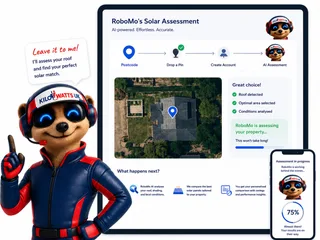
Simply enter your postcode, drop a pin on your roof, create your free account and let RoboMo™ analyse your property to find the best solar panels for your home.

You don't have to think
RoboMo™'s AI analyses your roof and does all the hard work.

Accurate & tailored
AI-powered assessment based on your roof, location, and conditions.

Best options, maximum savings
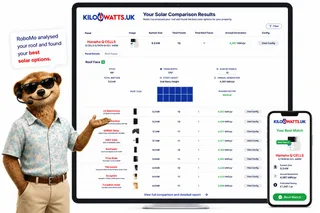
Compare top solar panels for the best performance and value.

Simple, fast & effortless
Provide a few details, sit back and watch your results unfold.
STEP 1
Choose Home, Business or Industrial
Enter your postcode to start your assessment.
STEP 2

Drop a pin on your roof
STEP 3

Create your free account
STEP 4

Sit back and watch RoboMo™ work
RoboMo™ analyses your roof and builds your personalised solar comparison.

Step 1
Enter your postcode
Start designing your wind energy system in seconds.
Are you an installer, distributor or renewable energy business?
Kilowatts UK is expanding the Flower Turbines partner network across the UK.
Become A Flower Turbines PartnerKilowatts UK is an authorised representative
Flower Turbines
Compact vertical-axis turbines built for real UK sites, not just open farmland.
They start in light wind, sit in a small footprint, and are bird-safe by design. Cluster them as a bouquet and the group performs better together than the same turbines standing alone. Enter your postcode for a location-based generation estimate. Figures use area weather data and will differ if buildings, trees or hills sit in the way.
Starts in light UK wind
Built to generate in typical UK wind, not only open farmland.
Small rooftop or ground footprint
Compact towers for roofs, yards and tight sites.
Bird-safe slow rotation
Slow vertical-axis spin, bird-safe by design.
Bouquet clusters raise output
Grouped turbines outperform the same units standing alone.
STEP 2

Choose a location
STEP 3

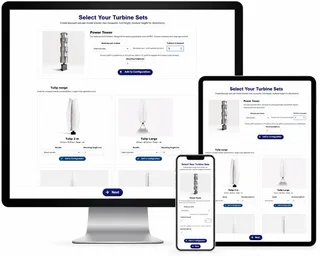
Place your cluster
Tap the map where you want the turbine cluster to go.
STEP 4

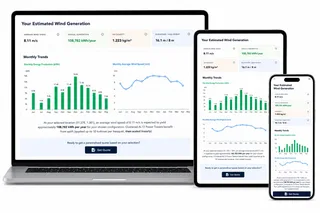
Instant generation forecasts
Compare different turbine layouts and see annual generation forecasts instantly.
STEP 5

No commitment required
Explore different configurations before deciding whether to request a quotation.
Related articles


Mo's Mission Nominations
FAQ
Need Help? RoboMo's Got Answers
How much does a solar panel battery cost in the UK?
A typical home solar battery in the UK costs around £3,000 to £10,000 installed. Smaller batteries are often around £3,000 to £5,000, while larger or premium systems can cost £8,000 to £12,000 or more. The final price depends on usable storage capacity, inverter type, installation complexity, whether it is fitted with new solar panels or retrofitted later, VAT treatment, warranty, and any electrical upgrades needed.
How much does a solar battery cost by size?
As a guide, a 3 kWh to 5 kWh battery often costs around £3,000 to £5,500 installed, a 6 kWh to 8 kWh battery around £4,500 to £7,000, and a 9 kWh to 10 kWh battery around £5,500 to £8,500. Larger 13 kWh to 15 kWh systems can cost around £8,000 to £12,000 or more. Installed costs are usually more useful than hardware-only prices because they include labour, electrical protection, commissioning, and paperwork.
What is included in an installed solar battery price?
A proper installed battery quote should usually include the battery unit, inverter or hybrid inverter if required, battery management system, cabling, isolators, protection devices, mounting equipment, labour, commissioning, monitoring setup, manufacturer registration, handover documents, and DNO notification or application where needed. It should also state clearly whether VAT, consumer unit upgrades, earthing improvements, backup circuits, long cable runs, and old equipment removal are included or excluded.
Is it cheaper to install a battery with new solar panels?
Yes, it is often cheaper to install a battery at the same time as a new solar panel system. The installer can design the panels, battery, inverter, cable routes, and monitoring as one system, often using a hybrid inverter. Retrofitting a battery later can cost more because the existing inverter may not be compatible, additional electrical work may be needed, and the battery may need its own AC-coupled inverter.
How much does solar and battery storage cost together?
A combined solar panel and battery storage system in the UK commonly costs around £9,000 to £18,000. Smaller packages may be closer to £8,000 to £12,000, while larger systems or more complex installations can reach £14,000 to £20,000 or more. The battery element often adds around £3,000 to £8,000 to the cost of a solar installation, depending on the battery size and inverter setup.
What affects the cost of a solar battery?
The biggest cost factor is usable battery capacity, but price is also affected by brand, inverter type, battery chemistry, maximum output, installation location, warranty length, monitoring features, smart tariff compatibility, and whether backup power is included. Electrical upgrades, long cable routes, limited meter space, consumer unit work, and DNO requirements can also increase the final installed cost.
What is the difference between usable capacity and nominal capacity?
Nominal capacity is the headline battery size, while usable capacity is the amount of energy the battery can normally provide to the home. For example, a battery advertised as 10 kWh may provide around 9 kWh to 9.5 kWh of usable storage depending on the manufacturer’s depth-of-discharge limits. When comparing quotes, usable capacity is more important than the advertised headline size.
What size solar battery do I need?
Many UK homes with solar panels consider around 5 kWh to 10 kWh of usable battery storage, but the right size depends on your electricity use, solar generation, evening demand, overnight demand, and tariff. A low-use home may need less, while a larger home, a heat pump property, or a home using a time-of-use tariff may need more careful modelling. The best approach is to compare your surplus solar generation, evening consumption, and smart meter data before choosing a battery size.
Will a solar battery pay for itself?
A solar battery may pay for itself over time, but UK payback is often around 8 to 15 years or more depending on the system cost, electricity tariff, export rate, household demand, and battery usage. Payback is usually stronger where a home exports surplus solar during the day and imports electricity in the evening, or where a smart tariff allows cheap overnight charging. It can be weaker if the battery is oversized, evening demand is low, or export payments are attractive.
How does a solar battery save money?
A solar battery saves money by storing electricity for use later. This may be surplus solar electricity that would otherwise be exported, or cheaper off-peak grid electricity that can be used during more expensive peak periods. The saving is not simply the full import price, because exported solar may have value and batteries have charging and discharging losses. Typical round-trip efficiency is often around 85% to 95%.
Can a solar battery charge from the grid?
Many modern home batteries can charge from the grid if the system and tariff support it. This can be useful on time-of-use tariffs, where the battery charges overnight at a cheaper rate and discharges during peak-rate periods. Not every setup is configured for this automatically, so it is important to check inverter compatibility, app controls, tariff rules, and whether the installer has set the system up for smart charging.
Will a solar battery work during a power cut?
Not always. Many grid-tied solar battery systems shut down during a power cut unless they have specific backup equipment and dedicated backup circuits. If you want power cut protection, this must be designed into the system from the start. Whole-house backup is more complex and expensive than limited critical circuit backup, and standard solar battery storage should not be assumed to make a home off-grid.
Is a solar battery worth it without solar panels?
A battery can still be useful without solar panels if it is charged using cheap off-peak electricity and discharged during expensive peak periods. However, the financial case depends heavily on the tariff, battery efficiency, daily usage, and system cost. Most domestic batteries are strongest when paired with solar panels because they can store surplus generation that would otherwise be exported.
Is retrofitting a battery to existing solar panels worthwhile?
Retrofitting a battery can be worthwhile if your existing solar system exports a lot during the day and your home imports electricity in the evening or overnight. The installer will need to check your current inverter, consumer unit, meter position, cable routes, monitoring, and available space. Some retrofits can use an AC-coupled battery, while others may need an inverter replacement or additional electrical work.
Do solar batteries qualify for reduced or zero VAT?
Many domestic solar battery installations can qualify for reduced or zero VAT when installed as qualifying energy-saving materials, but the rules can depend on location, property type, timing, and installation details. VAT treatment can also differ between Great Britain and Northern Ireland. A quote should show the VAT position clearly so you can compare total installed prices fairly.
What should I check when comparing solar battery quotes?
Compare the total installed price, usable capacity, charge and discharge rate, inverter type, warranty terms, backup capability, smart tariff support, installation location, DNO paperwork, expansion options, and savings assumptions. A reliable quote should explain the import rate, export rate, expected battery cycles, battery efficiency, and annual benefit used in the calculation. It should also confirm who handles commissioning, certification, warranty registration, and aftercare.
Can a solar battery run high-power appliances?
A solar battery can run many normal household loads, but it may not run several high-power appliances at once. Capacity tells you how much energy the battery stores, while power output tells you how quickly it can deliver that energy. Kettles, ovens, tumble dryers, electric showers, and EV chargers can exceed the output of many domestic batteries, meaning the home may still draw from the grid during high-demand moments.
Can a solar battery charge an electric car?
A home battery can technically contribute electricity to an EV charger, but it is usually not sized to charge an electric car regularly. EV batteries are much larger than most home batteries, so charging a car can quickly drain the storage intended for household use. If you have or plan to buy an EV, the battery, solar array, inverter, charger, and tariff should be modelled together.
Where can a solar battery be installed?
Solar batteries are commonly installed in garages, utility rooms, or suitable outdoor locations. The location must meet manufacturer requirements for temperature, ventilation, clearances, weather protection, access, and structural support. Loft installations can be more difficult because of heat, weight, access, and fire considerations. The best location is one that is safe, accessible, compliant, and practical for cable routes.
What mistakes should I avoid when buying a solar battery?
Common mistakes include buying on nominal capacity instead of usable capacity, oversizing the battery, ignoring export payments, assuming backup power is included, comparing hardware-only prices with installed quotes, overlooking inverter compatibility, choosing a poor installation location, and not checking warranty conditions. A good battery should have a clear purpose, such as storing surplus solar, reducing peak-rate imports, supporting a smart tariff, or providing limited backup power.