


Adding a Battery to Your Existing Solar System: A Guide
Published: 2026-06-29 12:47:02
Updated: 2026-07-26 17:12:33
Discover how you can add a battery to your existing solar system in the UK, including benefits, costs, and factors to consider.
Can you add a battery to an existing solar system?
Technical review: Kilowatts UK solar PV, battery storage and domestic electrical installation specialists Last updated: June 2026 UK scope: This guide is written for UK homeowners with an existing domestic solar PV system. Network, metering, tariff and installation requirements can vary by property and Distribution Network Operator.
Yes, most UK homes with existing solar panels can add a battery. The right retrofit design depends on your current inverter, system age, electricity use, export levels, tariff, installation location, consumer unit, backup requirements and DNO requirements.
For many existing solar PV systems, an AC-coupled battery is the simplest retrofit route because it can often be added without replacing the existing solar inverter. In other cases, especially where the solar inverter is old or due for replacement, a DC-coupled battery with a hybrid inverter may be more suitable. The main reason to add a battery is to store solar electricity that would otherwise be exported during the day, then use it later in the evening or overnight. A battery can also help with time-of-use tariffs if it can charge cheaply from the grid and discharge when electricity is more expensive. A retrofit battery is not automatically worthwhile for every solar household. If you already use most of your solar during the day, have low electricity use, receive a high export rate, or have very little surplus generation, the financial case may be weaker. A reliable quote should be based on real import, export and consumption data rather than panel size alone. If you already know you want a battery assessment, you can book a free home energy survey and ask for a retrofit battery design based on your current solar system and electricity use.
Short summary for UK solar owners.
A battery retrofit can be a good upgrade when your existing solar PV system exports a lot of electricity during the day and your home imports electricity later. It is usually most attractive for households with high evening use, electric heating, heat pumps, EV charging, or access to a suitable time-of-use tariff. Typical UK retrofit battery sizes range from about 3 kWh to 15 kWh usable capacity. Many homes fall around 5 kWh to 10 kWh, while smaller homes may need less and higher-use homes may need more. A battery that is too small fills early and still leaves surplus solar to export, while a battery that is too large may not cycle enough to justify its extra cost. Typical installed retrofit costs in the UK are often around £4,000 to £10,000, with smaller systems sometimes around £3,000 to £5,500 and larger systems exceeding £10,000. The final price depends on battery size, inverter requirements, electrical work, backup capability, location, monitoring and installer design.
| Retrofit question | Plain-English answer |
|---|---|
| Can I add a battery to old solar panels? | Usually yes, but the inverter, wiring, metering and DNO position need checking. |
| Do I need to replace my solar inverter? | Not always. AC-coupled batteries often work alongside the existing inverter. |
| Will it work in a power cut? | Only if backup/EPS equipment and circuits are specifically designed for it. |
| Will it save money? | It can, but savings depend on import prices, export payments, tariff settings and battery use. |
| Is a bigger battery always better? | No. Oversizing can increase cost without enough extra benefit. |
| Who handles DNO paperwork? | A competent installer should manage notification or approval and give you evidence. |
AC-coupled or DC-coupled retrofit.
There are two main ways to add a battery to an existing solar PV system. The first is AC coupling, where the battery has its own inverter and connects to the home’s AC electrical system. The second is DC coupling, where the battery connects through a hybrid inverter on the DC side of the solar system.
In simple terms:
- AC electricity is the electricity used by your home and the grid.
- DC electricity is produced by solar panels and stored inside batteries.
- An inverter converts electricity between DC and AC.
- A hybrid inverter can manage solar panels and a battery through one inverter.
AC-coupled batteries are common for UK retrofits because they often leave the existing solar inverter in place. This can be a practical choice when the solar system is working well, the inverter still has warranty remaining, and the homeowner wants to avoid unnecessary changes to the PV array wiring. DC-coupled retrofits usually involve replacing the existing solar inverter with a hybrid inverter that manages both the panels and the battery. This can be sensible if the old inverter is near the end of its life, if the homeowner wants a neater single-inverter system, or if the design benefits from fewer energy conversions.
Comparison table
| Retrofit route | Usually best when | Main caution |
|---|---|---|
| AC-coupled battery | Existing solar inverter is working well and you want a lower-disruption retrofit. | You may have two inverters and sometimes two monitoring apps. |
| DC-coupled battery | Existing inverter is old, faulty, out of warranty or due for replacement. | More changes to the solar system may be needed. |
| Hybrid inverter replacement | You want one inverter to manage solar and battery together. | It can affect cost, warranties, metering and installation complexity. |
| Backup-capable battery | You want selected circuits to run during a power cut. | Backup is not automatic and must be designed into the installation. |
Section heading
The following points are worth checking carefully.
AC-coupled battery
Often the least disruptive retrofit route because it can usually work alongside the existing solar inverter.DC-coupled battery
Often requires a hybrid inverter and can be more suitable when the existing inverter is old or due for replacement.Monitoring integration
Some retrofits use more than one app, especially when the solar inverter and battery are from different manufacturers.Hybrid inverter replacement
Can reduce duplicated equipment but may add cost and may affect existing warranties or metering arrangements.
The best route is not always the most technically elegant one. In real projects, installers often balance efficiency, cost, warranty risk, disruption, existing cabling, consumer unit condition and DNO requirements.
How much does it cost to add a battery to solar in the UK?
A typical UK retrofit battery installation often costs around £4,000 to £10,000. Smaller retrofit batteries may be around £3,000 to £5,500 installed, mid-sized systems often sit around £5,000 to £8,000, and larger battery systems can exceed £10,000 depending on specification.
These figures are broad market ranges, not fixed prices. A proper quote should be based on a survey, the existing solar equipment, the proposed battery, the consumer unit, cable routes, DNO requirements and whether backup power is included.
Cost is affected by more than battery capacity. A simple AC-coupled installation near the consumer unit is usually different from a project that needs a new hybrid inverter, extra protection devices, long cable routes, backup circuits or consumer unit upgrades. Battery usable capacity: Larger usable capacity usually increases equipment cost, but oversizing can reduce value if the battery does not cycle regularly. Inverter work: Keeping the existing inverter may reduce disruption, while replacing it with a hybrid inverter can add cost but may be sensible if the old inverter is ageing. Backup power: Emergency power supply or whole-home backup requires compatible equipment, isolation and circuit design, so it is not the same as a standard battery installation. Electrical upgrades: Older consumer units, limited space, earthing issues, surge protection and RCD selection can all affect the final quote. Installation location: A nearby garage or utility room may be straightforward, while long cable runs or difficult mounting surfaces can add labour. Monitoring and controls: Some homes need extra meters, current transformer clamps, communications equipment or configuration time. Domestic battery storage may qualify for 0% VAT where the current conditions are met, but VAT rules can change. Your installer should confirm the VAT treatment at quotation stage rather than assuming it applies automatically. For a wider cost breakdown, see this guide to how much a home battery costs in the UK. A good quotation should clearly separate the battery, inverter, electrical materials, labour, monitoring, backup work, DNO paperwork and any consumer unit upgrades. If a quote is unusually cheap, check what is excluded. DNO requirements — Export limitation or a G99 application can add design and commissioning work.
What size battery do you need?
The right battery size depends more on your electricity use and export pattern than on the size of the solar array alone. A useful design looks at when your solar is generated, when your home uses electricity, and how much surplus solar is available to store. A smaller home may only need around 3 kWh to 6 kWh of usable capacity. Many common UK home systems are around 5 kWh to 10 kWh. Higher-use homes, especially those with heat pumps or regular EV charging, may consider around 8 kWh to 13.5 kWh or more if the data supports it.
| Household pattern | Possible battery range | Why |
|---|---|---|
| Low-use home, modest solar export | 3 kWh to 5 kWh | Enough to shift some daytime solar into evening use. |
| Typical family home with evening demand | 5 kWh to 10 kWh | Often a practical balance of capacity and cost. |
| High-use home, heat pump or regular EV charging | 8 kWh to 13.5 kWh+ | Higher demand can justify more storage if surplus or cheap off-peak charging is available. |
| Home with high export tariff and low evening use | Smaller battery or none | Storing solar may be less valuable than exporting it. |
Key points to consider
Good sizing should use evidence, not guesswork. A year of electricity bills, smart meter data, export readings and solar generation history can show whether the battery is likely to charge and discharge often enough. If you are unsure where to start, Kilowatts UK can help you book a free home energy survey based on your property and usage.
- Daily electricity use.
- Evening and overnight demand.
- Existing solar export.
- Smart tariff options.
- Heat pump or EV charging patterns.
- Battery discharge power.
Discharge power is easy to overlook. A battery may have enough capacity in kWh but still be unable to cover several appliances at once if its output in kW is limited. When demand exceeds the battery’s output, the grid simply tops up the difference. For example, a battery with 5 kWh of storage but a 3 kW output can store a useful amount of energy, but it may not cover a kettle, oven and other loads at the same time. That does not mean the battery is faulty; it means the battery output is lower than the home’s momentary demand. For more detail, read Kilowatts UK’s guide to what size battery you need for your home. Winter electricity demand. Whether the battery will charge from the grid. Whether backup reserve is required. Expected battery losses and degradation.
Will a battery work with your existing solar inverter?
Some existing solar inverters can work alongside a retrofit battery with little change, especially where an AC-coupled battery is used. Others may be old, incompatible with direct battery connection, out of warranty, or worth replacing with a hybrid inverter as part of the upgrade.
If your current inverter is fairly new and performing well, keeping it may make sense. If it is close to end of life, a hybrid replacement can sometimes be a cleaner long-term option, even if it increases the initial cost.
Older Feed-in Tariff systems need particular care. The generation meter and scheme paperwork should not be disturbed without understanding how the retrofit affects metering, export measurement and documentation. A competent installer should check this before proposing changes. Monitoring is another practical issue. A retrofit battery may not integrate neatly with the existing solar monitoring platform. Some systems require a separate app, internet connection and current transformer clamps to measure import and export accurately. A current transformer clamp, often called a CT clamp, is a small measuring device fitted around a cable. It tells the battery system whether the home is importing from or exporting to the grid. Incorrect CT clamp positioning is a common cause of poor battery behaviour, including charging at the wrong time or discharging when it should not. Before agreeing to a retrofit, the installer should check: The make, model, age and warranty status of the existing solar inverter. Whether the solar inverter is still performing correctly. Whether the system is single-phase or three-phase. The generation meter and export metering arrangement. The consumer unit and protective devices. Space for new battery equipment. Internet or communications requirements. Whether the battery app and solar app can be integrated or will remain separate. Whether any changes could affect existing warranties or supplier paperwork.
DNO approval, certification and paperwork.
Battery installations normally require DNO notification or approval, even when the battery is mainly intended for self-consumption. The DNO is the Distribution Network Operator responsible for the local electricity network.
Many smaller domestic systems may fall under G98 if they are within the relevant limits, while larger or combined systems may need a G99 application before installation. The combined output of the solar inverter and battery inverter can matter, so a project can trigger G99 even when each individual device looks modest.
Export limitation may be used where grid capacity is restricted, but it must be designed, configured and documented properly. The installer should handle the DNO process and provide evidence of notification or approval after commissioning. MCS certification may also matter, especially where Smart Export Guarantee payments are involved. Battery-only retrofits may not always need MCS for the equipment to work, but some energy suppliers may ask for suitable documentation before accepting export arrangements. A professionally designed installation should also follow current electrical and manufacturer requirements. This may include BS 7671 wiring rules, manufacturer installation instructions, appropriate earthing and protection arrangements, and current domestic battery safety guidance such as PAS 63100 where applicable. After installation, you should expect clear paperwork. This may include:
- Electrical installation certificate or minor works certificate, as appropriate.
- Commissioning documents.
- Battery and inverter datasheets.
- Warranty details.
- User instructions.
- DNO notification or approval evidence.
Do not treat paperwork as an afterthought. It can affect warranty claims, future house sales, tariff applications, insurance questions and fault diagnosis. Export limitation settings where relevant. Monitoring login details. MCS documents where applicable. Building control or competent person scheme documentation where relevant. Emergency shutdown or isolation instructions.
Where can a retrofit battery be installed?
Common battery locations include a garage, utility room, plant room or suitable external wall. The location must follow the manufacturer’s guidance, have suitable access, adequate clearance, appropriate temperature conditions and safe cable routes. Lofts are often less suitable because of access, temperature variation, structural issues and fire safety considerations. Some manufacturers do not permit loft installation at all. Outdoor batteries need equipment rated for that environment and should be protected from weather and impact. A good survey should check wall strength, floor condition, cable routes, consumer unit location, meter position, internet connectivity and safe isolation. Meter cupboards are often too cramped for all the additional equipment needed. If your consumer unit is old or lacks space, the quote may include related work such as residential fuse box upgrades. Fire safety should be treated practically rather than dramatically. Batteries should not block escape routes, sit next to heat sources, or be installed where they are likely to be damaged. Some homeowners may also need to inform their insurer, especially where the insurer asks for evidence of professional installation.
| Possible location | Typical suitability | Points to check |
|---|---|---|
| Garage | Often suitable | Temperature, wall strength, impact protection and cable route. |
| Utility room | Sometimes suitable | Clearance, ventilation, noise, access and manufacturer rules. |
| Plant room | Often suitable if space allows | Access, heat sources and electrical layout. |
| External wall | Suitable for some battery models | Weather rating, sunlight, impact risk and security. |
| Loft | Often not preferred | Heat, cold, access, structure and manufacturer restrictions. |
| Meter cupboard | Usually limited | Space, clearances and safe working access. |
Will a battery provide backup power in a power cut?
A standard solar battery does not automatically provide backup power. Most solar PV systems shut down during a power cut for safety, and a battery will only support backup if the inverter, wiring and isolation equipment are designed for it.
Backup capability may be described as EPS, meaning emergency power supply. In many domestic installations, this supports selected circuits rather than the whole house. Whole-home backup is more complex and more expensive, and it may not support high-load appliances such as electric showers, ovens or EV chargers.
If backup matters to you, ask the installer to specify exactly which circuits will remain live, how much power is available, whether solar can recharge the battery during an outage, and what happens when the battery reaches its reserve level. Backup reserve also reduces the battery capacity available for bill savings. For example, a backup circuit might support lighting, broadband, a fridge-freezer and a few sockets. That is very different from backing up an electric shower, induction hob, heat pump or EV charger. Before paying for backup, make sure the proposal states: Whether backup is included or excluded. Whether it is whole-home backup or selected-circuit backup. The maximum backup output in kW. Whether the battery can recharge from solar during a power cut. Which appliances should not be used during backup operation. How the system changes over during an outage. For a fuller explanation, see whether a home battery can work during a power cut. What reserve level is kept for emergencies. Whether extra consumer unit or sub-board work is included.
How tariffs and export payments affect payback.
The financial case for adding a battery depends on the gap between what you pay for imported electricity and what you earn for exported electricity. If import prices are much higher than export rates, storing solar for later use can be attractive. If you receive a strong export tariff, the benefit of storing that electricity may be lower.
A proper estimate should account for avoided import, lost export income, battery losses, degradation, tariff assumptions and control settings. It should not treat every stored unit as a full saving, because exported solar may already have some value through the Smart Export Guarantee.
Time-of-use tariffs can improve the case where the battery is able to charge cheaply overnight and discharge during more expensive periods. This is particularly useful in winter, when solar generation is lower. Not every battery works well with every smart tariff, so compatibility and software control matter. Poor settings can reduce savings. In summer, the system may need to preserve capacity for daytime solar. In winter, it may be more useful to charge from cheap off-peak electricity. Some batteries support dynamic tariff optimisation or weather-based charging, but this should be confirmed rather than assumed. A realistic payback estimate should include: Your current import tariff. Your current export tariff. Any standing charges, without claiming the battery will remove them. Expected solar export available for storage. Battery round-trip losses. Battery degradation over time. The key calculation is not simply “battery capacity multiplied by electricity price”. A better estimate asks how many extra units the battery will actually shift from export or cheap-rate import into useful household consumption. Whether the battery will charge from the grid. Seasonal differences between summer and winter. Any loss of export income. Future tariff uncertainty.
When adding a battery may not be worth it.
A retrofit battery is not the right choice for every solar owner. The strongest warning sign is a quote based only on the size of the PV array, with no review of electricity use or export data.
A battery may be less suitable if the home has very low electricity use, limited surplus solar, heavy shading, weak winter generation, a poor installation location, or a high export rate that reduces the value of storing energy. It may also be harder to justify if you plan to move soon and payback is your main reason for buying.
Common misconceptions can also lead to disappointment. A battery will not make most homes fully independent from the grid, it will not store summer electricity for winter, and it will not remove standing charges. It is designed for daily cycling and smarter energy use, not seasonal storage or guaranteed off-grid operation. Be cautious if: The proposed battery is much larger than your typical daily surplus. The quote does not mention usable capacity. There is no discussion of export tariff or lost export income. The installer does not ask for bills, smart meter data or solar generation data. Backup power is implied but not specified in writing. DNO paperwork is not mentioned. A battery can still be a good lifestyle or resilience upgrade even where the payback is longer. The important point is that you should understand the trade-off before you buy. The proposed location conflicts with manufacturer guidance. The payback estimate assumes perfect cycling every day of the year. The system relies on a smart tariff that the battery cannot properly control.
Questions to ask before accepting a quote.
Before choosing a battery installer, ask for a design that is specific to your home. A good proposal should explain the battery size, usable capacity, power rating, coupling method, DNO route, monitoring, backup limits and expected savings assumptions. You can also review Kilowatts UK’s residential solar battery storage service to understand the kind of installation factors that matter.
What usable capacity is being quoted? What is the battery power rating? Will the battery be AC-coupled or DC-coupled? Will the existing solar inverter be kept or replaced? Is DNO approval needed before installation? Will the system use G98 or G99?
The installer should also confirm warranty terms, battery degradation assumptions, end-of-warranty capacity, documentation, installer accreditation and whether the battery brand requires approved installer registration. If you want a practical next step, gather your latest electricity bills, smart meter data if available, export statements, solar generation figures and photos of your inverter, consumer unit and meter area. That information helps an installer assess the retrofit properly and avoids a quote based on guesswork. Is export limitation included? Will the battery charge from the grid? Will SEG payments be affected? Is backup power included? Which circuits will be backed up? Is the proposed location approved by the manufacturer? What electrical upgrades are included? Is the payback estimate net of lost export income? What assumptions are used for battery losses and degradation? What warranty applies to the battery, inverter and workmanship? What is the expected end-of-warranty battery capacity? Will I need one monitoring app or more than one? Who is responsible for DNO paperwork? What documents will I receive after installation? Are any consumer unit upgrades or earthing works excluded from the quote?
The practical verdict.
You can usually add a battery to an existing solar system in the UK, but the best design depends on the existing inverter, real household demand, export levels, tariff options, DNO requirements and installation location. For many retrofits, AC coupling is the simplest route, while a hybrid inverter replacement can be sensible when the current inverter is ageing.
The key commercial question is not whether a battery can be fitted, but whether it will cycle often enough to justify its cost. A well-designed retrofit should be based on evidence: your import, export, generation, evening demand, tariff options, backup needs and installation constraints.
The safest next step is to get a survey-led design rather than a battery-size guess. You can book a free home energy survey or compare home solar panel options based on real consumption and export data, with clear assumptions about tariffs, backup, paperwork and long-term battery performance.
Plan, Compare & Buy Renewable Energy Solutions
AI does the thinking.
You get the perfect solar match.
Use RoboMo™ to assess your property, compare available technologies and connect with trusted UK installers, suppliers and manufacturers.
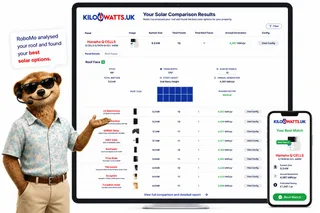
Simply enter your postcode, drop a pin on your roof, create your free account and let RoboMo™ analyse your property to find the best solar panels for your home.

You don't have to think
RoboMo™'s AI analyses your roof and does all the hard work.

Accurate & tailored
AI-powered assessment based on your roof, location, and conditions.

Best options, maximum savings
Compare top solar panels for the best performance and value.

Simple, fast & effortless
Provide a few details, sit back and watch your results unfold.
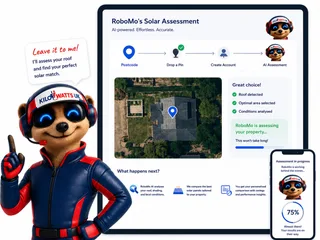
STEP 1
Choose Home, Business or Industrial
Enter your postcode to start your assessment.
STEP 2

Drop a pin on your roof
STEP 3

Create your free account
STEP 4

Sit back and watch RoboMo™ work
RoboMo™ analyses your roof and builds your personalised solar comparison.

Step 1
Enter your postcode
Start designing your wind energy system in seconds.
Are you an installer, distributor or renewable energy business?
Kilowatts UK is expanding the Flower Turbines partner network across the UK.
Become A Flower Turbines PartnerKilowatts UK is an authorised representative
Flower Turbines
Compact vertical-axis turbines built for real UK sites, not just open farmland.
They start in light wind, sit in a small footprint, and are bird-safe by design. Cluster them as a bouquet and the group performs better together than the same turbines standing alone. Enter your postcode for a location-based generation estimate. Figures use area weather data and will differ if buildings, trees or hills sit in the way.
Starts in light UK wind
Built to generate in typical UK wind, not only open farmland.
Small rooftop or ground footprint
Compact towers for roofs, yards and tight sites.
Bird-safe slow rotation
Slow vertical-axis spin, bird-safe by design.
Bouquet clusters raise output
Grouped turbines outperform the same units standing alone.
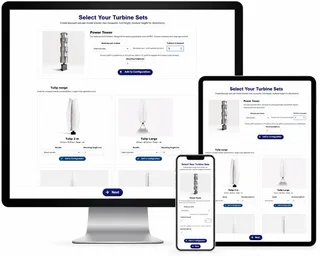
STEP 2

Choose a location
STEP 3

Place your cluster
Tap the map where you want the turbine cluster to go.
STEP 4

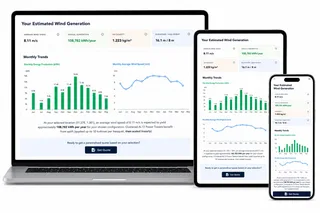
Instant generation forecasts
Compare different turbine layouts and see annual generation forecasts instantly.
STEP 5

No commitment required
Explore different configurations before deciding whether to request a quotation.
Related articles
Mo's Mission Nominations
FAQ
Need Help? RoboMo's Got Answers
Can you add a battery to an existing solar system?
Yes, most UK homes with existing solar panels can add a battery. The best retrofit design depends on your current inverter, system age, electricity use, export levels, tariff, installation location, consumer unit, backup requirements and DNO rules. Many retrofits use an AC-coupled battery because it can often work alongside the existing solar inverter, while some homes are better suited to a hybrid inverter replacement if the existing inverter is old or due for replacement.
Do I need to replace my existing solar inverter to add a battery?
Not always. If your existing solar inverter is working well, an AC-coupled battery can often be installed without replacing it. If the inverter is old, out of warranty, faulty or incompatible with your preferred battery setup, replacing it with a hybrid inverter may be more sensible. An installer should check the inverter make, model, age, performance, warranty status and metering arrangement before recommending a route.
What is the difference between an AC-coupled and DC-coupled battery?
An AC-coupled battery has its own battery inverter and connects to the home’s AC electrical system, so it is often a practical retrofit option for existing solar PV systems. A DC-coupled battery connects through a hybrid inverter on the DC side of the solar system, usually requiring the existing solar inverter to be replaced. AC coupling is often lower disruption, while DC coupling can be neater if the inverter is already due for replacement.
How much does it cost to add a battery to solar panels in the UK?
A typical UK retrofit battery installation often costs around £4,000 to £10,000, depending on battery size, inverter requirements, electrical work, monitoring, cable routes, installation location and whether backup power is included. Smaller systems may be around £3,000 to £5,500 installed, while larger or more complex systems can exceed £10,000. A reliable quote should clearly show what is included, including the battery, inverter, labour, electrical materials, DNO paperwork and any consumer unit upgrades.
What size battery do I need for an existing solar system?
The right battery size depends on your electricity use, evening and overnight demand, surplus solar export, tariff and whether you plan to charge from the grid. Many UK homes use batteries around 5 kWh to 10 kWh, while smaller homes may only need 3 kWh to 6 kWh and higher-use homes may need 8 kWh to 13.5 kWh or more. Bigger is not always better, because an oversized battery may not cycle often enough to justify the extra cost.
Will a solar battery work during a power cut?
Only if backup power has been specifically designed into the system. A standard solar battery installation does not automatically keep the house running during a power cut, and most solar PV systems shut down for safety when the grid fails. Backup may be provided through an EPS arrangement for selected circuits, such as lighting, broadband, a fridge-freezer and some sockets, but whole-home backup is more complex and may not support high-load appliances.
Will adding a battery save money?
It can save money if the battery stores solar electricity that would otherwise be exported and lets you use it later instead of buying electricity from the grid. The savings depend on your import tariff, export tariff, solar surplus, battery losses, battery size, settings and whether you can use cheap off-peak electricity. A good payback estimate should account for lost export income and should not assume the battery cycles perfectly every day.
Can a battery charge from the grid as well as from solar?
Many modern home batteries can charge from the grid, but this depends on the battery, inverter, tariff compatibility and system settings. Grid charging can be useful on time-of-use tariffs, especially in winter when solar generation is lower. The installer should confirm whether grid charging is supported, how it is controlled, whether it works with your chosen tariff and whether any export or metering rules apply.
Will adding a battery affect my export payments or Smart Export Guarantee tariff?
It can affect export arrangements, so this should be checked before installation. If you are paid for exported solar electricity, storing more of it in a battery may reduce export income, even though it may reduce imports. Some suppliers may also ask for suitable documentation before accepting or continuing export payments. Older Feed-in Tariff systems need particular care because generation meters and scheme paperwork should not be disturbed without proper checks.
Do I need DNO approval to add a battery?
Battery installations normally require DNO notification or approval because the DNO manages the local electricity network. Smaller systems may fall under G98, while larger or combined solar and battery inverter systems may need a G99 application before installation. The combined output of your solar inverter and battery inverter can matter, so the installer should handle the DNO process and provide evidence of notification or approval after commissioning.
Where can a retrofit solar battery be installed?
Common locations include a garage, utility room, plant room or suitable external wall, depending on the battery model and manufacturer instructions. The location needs suitable access, safe cable routes, adequate clearance, appropriate temperature conditions and protection from impact or weather where relevant. Lofts are often less suitable because of heat, cold, access, structure and fire safety considerations, and some manufacturers do not allow loft installation.
Is a loft suitable for a solar battery?
A loft is often not the preferred location for a retrofit battery. Temperature extremes, difficult access, structural limitations and fire safety considerations can all make loft installations less suitable. Some battery manufacturers do not permit loft installation at all, so the installer should check the manufacturer’s rules before proposing it.
Can I add a battery to an old solar panel system?
Usually yes, but older systems need careful assessment. The installer should check the inverter, generation meter, export metering, consumer unit, wiring, warranties and DNO position. If the existing inverter is near the end of its life, a hybrid inverter replacement may be more sensible than adding a separate AC-coupled battery.
Is adding a battery worth it if I already have a good export tariff?
It may be less financially attractive if your export tariff is high, because exported electricity already has value. The battery only creates a benefit if the value of using stored electricity later is greater than the export income you give up, after allowing for battery losses and degradation. A good quote should compare avoided import costs with lost export payments rather than treating stored solar as a full saving.
What paperwork should I receive after a battery retrofit?
You should expect appropriate electrical certification, commissioning documents, battery and inverter datasheets, warranty details, user instructions, monitoring login details and DNO notification or approval evidence. Where relevant, you may also receive export limitation settings, MCS documents, competent person scheme documentation and emergency isolation instructions. This paperwork can be important for warranties, insurance, future house sales, export tariffs and fault diagnosis.
What should I ask before accepting a battery quote?
Ask what usable capacity is being quoted, whether the battery is AC-coupled or DC-coupled, whether the existing inverter will be kept, whether DNO approval is needed, whether backup power is included, which circuits are backed up, whether grid charging is supported, how export payments are treated and what documents you will receive after installation. You should also ask for the savings assumptions, including import tariff, export tariff, battery losses, degradation and expected cycling.