


Home Batteries UK: 2026 Costs, Savings & Sizing Guide
Published: 2026-09-01 12:06:56
Updated: 2026-09-01 19:40:41
If you are weighing up whether home batteries make sense for your property in 2026, you are in the right place. This guide cuts through the noise.
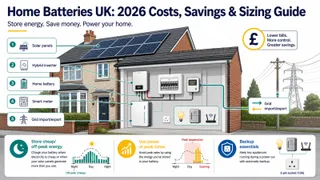
Table of Contents
If you are weighing up whether home batteries make sense for your property in 2026, you are in the right place. This guide cuts through the noise.
Overview
If you are weighing up whether home batteries make sense for your property in 2026, you are in the right place. This guide cuts through the noise. By the end, you will know exactly what a home battery does, what it costs, what size you need, and how to avoid paying more than you should.
What Is a Home Battery and How Does It Work?
A home battery stores electricity so you can use it later. Think of it as a thermos for power. You fill it when energy is cheap or plentiful, then pour from it when the grid gets expensive or your solar panels stop generating. If you want the basics first, it helps to understand how a home battery works before comparing products.
If you already have solar panels, the setup is straightforward. During daylight hours, your panels often produce more electricity than your home uses. Instead of exporting that surplus to the grid for a modest payment, a battery captures it. You then use that stored energy in the evening and early morning, when solar output drops but your kettle, oven, and lights still need power.
You do not need solar panels to benefit from a home battery. Battery-only installations work by charging from the grid during off-peak hours, typically overnight, then discharging during peak-price periods. This strategy pairs well with smart tariffs that offer dramatically cheaper rates at certain times. Every battery system needs an inverter. This device converts the direct current stored in the battery into alternating current your appliances can use. The inverter matters as much as the battery itself, so pay attention to its quality and warranty when comparing options. Modern batteries also come with apps that monitor your usage and automatically shift your energy draw to the cheapest windows of the day.
Are Home Batteries Worth It in 2026?
The honest answer is that it depends on three things: how much electricity you use, which tariff you are on, and whether you already own solar panels.
If you have solar panels, a battery usually makes financial sense. Without storage, you might export half your generation for a few pence per kilowatt-hour, then buy it back from the grid at three or four times that price after sunset. Storing and using your own power closes that gap. Most solar owners see a faster payback with a battery than without one.
Battery-only setups can also work well, but they rely heavily on smart tariff optimisation. Some manufacturers claim bill reductions of up to 77.6 percent with intelligent charging. Treat that figure with caution. It assumes a specific tariff, a large battery, and consistent daily cycling. Your results will vary. A fair sceptic's view comes from real users on forums like r/SolarUK. The average UK household consumes around 17 kWh per day. An entry-level 5 kWh battery will not cover a full day's usage. It will, however, cover your evening peak, which is where the most expensive electricity tends to be consumed. Sizing correctly matters more than buying the biggest unit available. Beyond the numbers, home batteries offer non-financial benefits. You gain energy independence, protection against future price rises, and the satisfaction of relying less on fossil-fuel generation. For many buyers, that peace of mind carries real value.
How Much Do Home Batteries Cost in the UK?
Home battery prices in 2026 span a wide range, and the market has become more competitive than ever. Before comparing quotes, it is worth checking what usually affects battery prices so you can separate equipment cost from installation cost.
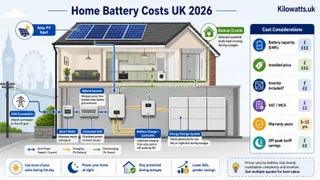
Entry-level batteries now start at around £600 to £700. A 5.12 kWh unit from Fogstar costs £699.99, while a 4.8 kW Ritar rackmount battery is available for £599.98. These are bare-bones prices for the battery unit alone. You will also need an inverter, cabling, and installation.
Mid-range systems offer more capacity. A 9.6 kWh Ritar unit costs around £1,300, which is a significant step up in usable storage. Larger 32 kWh systems come in at roughly £3,500. If you need even more, modular setups from brands like EcoFlow and Fogstar can scale to 60 kWh or beyond, with some commercial-scale options reaching into the hundreds of kilowatt-hours. Installation typically adds £500 to £1,500 depending on complexity. If you already have solar panels, your installer may need to replace or upgrade your inverter to work with the new battery. That can push costs higher, so ask for a full quote before committing. One major financial incentive remains in place. Home battery installations are exempt from VAT until 31 March 2027, and this includes standalone batteries without solar panels. That is a 20 percent saving on both equipment and labour. If you are considering a battery, the VAT window gives you a clear reason to act before spring 2027. Many retailers also offer 0 percent instalment plans through providers like Klarna, spreading the upfront cost over several months without interest.
What Size Home Battery Do You Need?
Start with your actual usage. The average UK household uses around 17 kWh per day, but your own bills or smart meter data will give you a more accurate picture. Do not guess.
A useful rule of thumb is to size your battery to cover 80 to 100 percent of your evening and overnight usage, not your entire daily consumption. Most homes use the bulk of their electricity between 4pm and midnight. A battery that covers that window delivers most of the financial benefit without requiring a massive upfront investment.
Modular systems make this easier. You can start with 5 kWh and add capacity later as your budget allows. Both Fogstar and EcoFlow offer stackable designs that grow with your needs. This approach reduces risk and lets you learn your real usage patterns before committing to a larger system. If you have solar panels, size your battery based on winter generation, not summer surplus. A battery that fills completely on a sunny June afternoon may barely charge during a grey December day. Matching your battery to your lowest generation season ensures you use it consistently year-round. For a more precise recommendation, you can model your roof's generation and match it to the right battery capacity using an AI-powered solar assessment. This gives you data-driven sizing without a sales call or pressure to commit.
Home Battery Brands Compared: What's on the Market?
The UK market in 2026 offers more choice than ever, and several brands consistently appear in independent comparisons.
Tesla Powerwall 3 remains a popular premium option, known for its sleek design and strong software integration. Sunsynk, Fox ESS, and Myenergi are well-regarded mid-range choices, each with loyal followings among UK installers. SigEnergy and EcoFlow have also gained traction, particularly for modular and scalable systems.
If you are budget-conscious, comparison sites like Solargridcheck rank systems by cost per kilowatt-hour. That metric helps you see past marketing and focus on value. A battery with a lower headline price may actually cost more per unit of storage once you factor in capacity and lifespan. Chemistry matters. Lithium iron phosphate, known as LiFePO4 or LFP, is now the dominant chemistry across all major brands. It offers 10,000 or more charge cycles, better thermal stability, and a longer lifespan than older lithium-ion chemistries. Most reputable UK batteries now use LFP as standard. Warranty length varies. Ritar offers 5 years, while BSLBatt and Fogstar provide 10-year warranties. Treat warranty length as a signal of manufacturer confidence. A longer warranty usually indicates a more durable product. Some brands engineer specifically for British conditions. If your battery will live in an unheated garage or outside, look for integrated heating and fire suppression. These features prevent performance drops in cold weather and add an extra layer of safety. Product choice is easier when you know how to choose a battery for your property rather than chasing the biggest capacity.
Smart Tariffs and Home Batteries: How to Maximise Savings
The real savings from home batteries come from pairing them with a smart tariff. The strategy is simple: charge when electricity is cheap, discharge when it is expensive.
Several UK tariffs reward battery owners. Octopus Flux offers generous export rates during peak evening hours, encouraging you to store solar power during the day and sell it back when the grid needs it most. Octopus Agile changes price every half hour based on wholesale costs, allowing batteries to charge during negative or near-zero price periods. Octopus Go provides a long overnight window of cheap electricity, ideal for battery-only setups that charge while you sleep.
Storing your solar energy and using it yourself often beats selling back to the grid. Export rates have improved, but they rarely match the cost of buying electricity back later. A battery lets you avoid that buy-back entirely. Modern battery apps handle the optimisation for you. Once configured, they automatically shift your charging and discharging to the cheapest windows. You set your preferences once and let the software manage the rest. Your actual savings depend on your tariff, battery size, and usage patterns. Before committing, model your own numbers. Look at your smart meter data, compare tariffs, and calculate what a battery would realistically save you each month.
Installation, Safety, and Practical Considerations
Your installer will handle most of the technical requirements, but it helps to know what to expect.
Distribution Network Operator notification is usually required for home batteries. Most domestic installations under 16 amps per phase do not need prior approval, but your installer should confirm this and submit the necessary paperwork. Do not skip this step; it keeps your installation compliant and safe.
Planning permission is rarely needed for home batteries. Exceptions apply if you live in a listed building or conservation area, so check with your local planning authority if you are unsure. Safety features should be high on your checklist. Look for LFP chemistry, a battery management system, aerosol fire suppression, and IP66 weather resistance if the unit will sit outdoors. These features reduce fire risk and protect against the UK's damp climate. If this is a concern, read more about battery safety before choosing an indoor, garage, or outdoor location. If you already have solar panels, most batteries can be retrofitted. The key question is inverter compatibility. Some batteries work with any inverter, while others require a specific brand or model. Your installer can assess this quickly. Finding a trusted installer matters more than any spec sheet. A vetted professional will assess your home honestly, recommend the right size, and avoid pushy sales tactics. The right installer makes the process straightforward and transparent.
Frequently Asked Questions About Home Batteries
Can I charge a home battery from the grid without solar? Yes, and with smart tariffs, this is often the most cost-effective approach for homes without panels.
How long do home batteries last? Most LFP batteries offer 10,000 or more cycles, which translates to roughly 10 to 15 years of daily use. Warranties typically range from 5 to 10 years. You can also compare typical battery lifespan expectations before budgeting for replacement.
Are home batteries VAT exempt in the UK? Yes, until 31 March 2027, including standalone installations without solar panels. What happens when my battery reaches end of life? Capacity degrades gradually over time. Recycling options are improving, but factor replacement costs into your long-term calculations. Will a home battery keep my lights on during a power cut? Only if you choose a model with backup capability. Not all batteries offer this feature, so check before buying if it matters to you. Backup behaviour varies by system, so check how power cut backup works before assuming your whole house will stay live.
The Bottom Line: Should You Buy a Home Battery in 2026?
The decision comes down to your circumstances. Solar owners on smart tariffs will likely benefit. Battery-only setups on a good smart tariff can also work well. If you use very little electricity or are on a flat-rate tariff, you may be better off waiting.
The VAT exemption until March 2027 gives you a financial reason to act sooner rather than later. A 20 percent saving on equipment and installation is significant.
Start with data, not sales pressure. Model your own usage, compare tariffs, and use independent tools to assess your options before talking to installers. If you are considering solar alongside storage, you can compare home solar options first and then match the battery to your expected generation. Energy independence is a journey, and you are already ahead by doing the research.
Plan, Compare & Buy Renewable Energy Solutions
AI does the thinking.
You get the perfect solar match.
Use RoboMo™ to assess your property, compare available technologies and connect with trusted UK installers, suppliers and manufacturers.
Simply enter your postcode, drop a pin on your roof, create your free account and let RoboMo™ analyse your property to find the best solar panels for your home.

You don't have to think
RoboMo™'s AI analyses your roof and does all the hard work.

Accurate & tailored
AI-powered assessment based on your roof, location, and conditions.

Best options, maximum savings
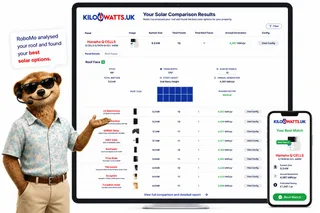
Compare top solar panels for the best performance and value.

Simple, fast & effortless
Provide a few details, sit back and watch your results unfold.
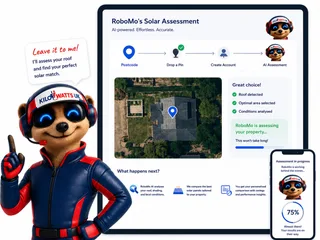
STEP 1
Choose Home, Business or Industrial
Enter your postcode to start your assessment.
STEP 2

Drop a pin on your roof
STEP 3

Create your free account
STEP 4

Sit back and watch RoboMo™ work
RoboMo™ analyses your roof and builds your personalised solar comparison.

Kilowatts UK is an authorised representative
Flower Turbines
Compact vertical-axis turbines built for real UK sites, not just open farmland.
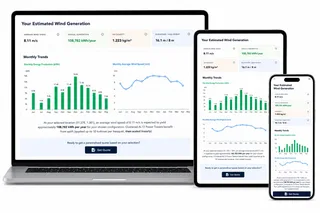
They start in light wind, sit in a small footprint, and are bird-safe by design. Cluster them as a bouquet and the group performs better together than the same turbines standing alone. Enter your postcode for a location-based generation estimate. Figures use area weather data and will differ if buildings, trees or hills sit in the way.
Starts in light UK wind
Built to generate in typical UK wind, not only open farmland.
Small rooftop or ground footprint
Compact towers for roofs, yards and tight sites.
Bird-safe slow rotation
Slow vertical-axis spin, bird-safe by design.
Bouquet clusters raise output
Grouped turbines outperform the same units standing alone.
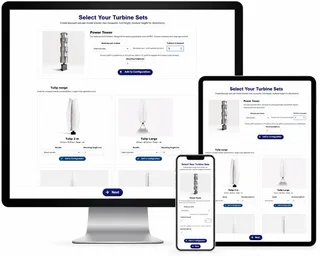
Step 1
Enter your postcode
Start designing your wind energy system in seconds.
STEP 2

Choose a location
STEP 3

Place your cluster
Tap the map where you want the turbine cluster to go.
STEP 4

Instant generation forecasts
Compare different turbine layouts and see annual generation forecasts instantly.
STEP 5

No commitment required
Explore different configurations before deciding whether to request a quotation.
Related articles

Mo's Mission Nominations
FAQ
Need Help? RoboMo's Got Answers
Are home batteries worth it in the UK in 2026?
They can be worth it if you use enough electricity, have solar panels, or can access a smart tariff with cheaper off-peak rates. The best returns usually come from storing solar power for evening use or charging cheaply overnight and using it during peak periods. Your savings depend on your usage, tariff, battery size and installation cost.
How much does a home battery cost in the UK?
The total cost depends on the battery capacity, inverter, installation complexity and whether it is added to an existing solar system. Always compare the installed price, not just the battery unit price, because cabling, electrical work and inverter changes can add to the bill. Ask for quotes that show usable capacity, warranty length and VAT treatment clearly.
Do I need solar panels to have a home battery?
No, you can install a standalone home battery without solar panels. It can charge from the grid when electricity is cheaper, then power your home when rates are higher. This works best with a suitable smart tariff and enough daily electricity use to cycle the battery regularly.
What size home battery do I need?
Start with your smart meter data or electricity bills rather than guessing. Many homes size a battery to cover evening and overnight use, not the whole day. A smaller modular battery can be a sensible starting point if you want the option to expand later.
How long does a home battery last?
Most modern home batteries degrade gradually rather than failing suddenly. Lifespan varies by brand, chemistry, usage, temperature and warranty terms. Compare the usable capacity, cycle rating and warranty before buying, and allow for eventual replacement in your long-term calculations.
Will a home battery work during a power cut?
Not every home battery provides backup power automatically. You usually need a system designed for backup or emergency power, with the right wiring and changeover equipment installed. If power cuts are a priority, tell your installer before you choose a battery or inverter.
Are home batteries VAT-free in the UK?
Domestic battery installations in Great Britain are currently included in the zero-rate VAT relief for energy-saving materials, including standalone batteries, until 31 March 2027. VAT rules can change and may differ by location, so check the current position before ordering. Your quote should show the VAT treatment clearly.
Do I need permission to install a home battery?
Many domestic battery installations do not need planning permission, but listed buildings, conservation areas and unusual locations may need extra checks. Your installer should also deal with the relevant Distribution Network Operator notification or application where required. Ask for this to be confirmed in writing as part of the quote.