


X smart home batteries
Published: 2026-09-03 11:12:26
Updated: 2026-09-05 19:38:00
If you have been searching for "X smart home batteries" and ended up more confused than when you started, you are not alone.

X Smart Home Batteries - Are They Worth It in 2026?
X smart home batteries explained for UK homes. Real costs, savings, and payback in 2026. Find out if a smart battery is worth it for you.
Overview
If you have been searching for "X smart home batteries" and ended up more confused than when you started, you are not alone. The term "X Smart Home" pulls up video doorbells, a device management app with mixed reviews, and home solar battery storage systems, often on the same results page. This article cuts through that noise. We are focusing specifically on what UK homeowners need to know about home solar battery storage systems in the energy storage sense: how they work, what they cost, what they can genuinely save you, and whether they are the right fit for your home in 2026. By the end, you will have a clear picture of whether an X smart home battery deserves a place on your wall.
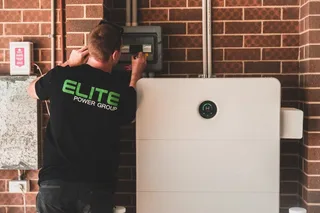
What Exactly Is an "X Smart Home" Battery?
The naming confusion around "X Smart Home" is real. In the energy storage context, the term refers to smart battery systems from brands like Anker SOLIX and Moixa that integrate with home solar setups. These are not the same as X Smart Home video doorbells or the X Smart Home app used to manage smart devices. If you are researching batteries, make sure you are looking at the right product category before you go any further.
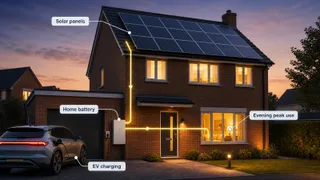
At its core, an X Smart Home battery stores excess electricity generated by your solar panels during daylight hours. That stored power then runs your home in the evening, when solar generation drops to zero and grid electricity is at its most expensive. Without a battery, all that free daytime solar energy simply flows back to the grid, often for a fraction of what you pay to buy it back later.
The "smart" part matters too. These batteries learn your household's consumption patterns and optimise charging around time-of-use tariffs. They know when electricity is cheap, when you typically use the most power, and when to hold charge rather than release it. Modular design is another common thread. The Anker SOLIX X1, for example, scales from 5kWh all the way to 180kWh, so you can start with a smaller system and add capacity later as your needs change.
How Do Smart Home Batteries Actually Work?
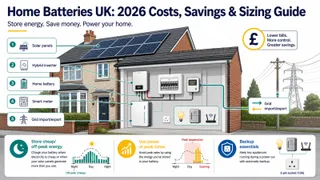
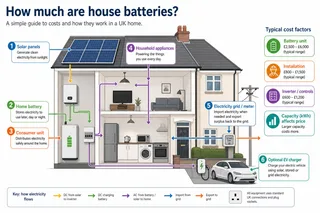
The daily cycle is straightforward. Your solar panels generate electricity during daylight hours. Your home uses what it needs immediately. Any excess flows into the battery rather than back to the grid. When the sun goes down, the battery discharges and powers your lights, fridge, television, and other evening loads. You draw less from the grid, sometimes nothing at all.
The intelligence sits in the software. Smart battery systems use weather forecasts and your historical usage patterns to decide when to charge and when to release power. If the forecast shows a cloudy day ahead, the battery might hold more charge overnight. If you typically run the washing machine at 7pm, the system learns that and ensures enough stored power is available.
Time-of-use tariff integration changes the game further. Even without solar panels, a smart battery can charge during cheap overnight rates, often around 7p per kWh, and discharge during peak evening hours when electricity costs 30p or more. That kind of smart energy management can deliver meaningful savings. One technical feature worth understanding is what Anker calls "Barrel Effect" elimination. In traditional battery systems, the weakest module limits the performance of the entire pack. The Anker SOLIX X1 allows each battery module to charge and discharge independently, so one depleted module does not drag down the whole system. It is a small engineering detail with real-world performance benefits. Whole-home backup is another capability to consider. During a power cut, a properly configured battery system can keep your essential circuits running. Lights, fridge, internet router, and even your boiler can continue operating while the grid is down. Not all systems offer this by default, so check before you buy.

What Can an X Smart Home Battery Save You in 2026?
Let us talk about the headline figures honestly. Anker claims UK households could save up to £770 per year with their home battery system. Moixa claims their solar panel and battery packages can cut energy bills by up to 50%. Both are best-case scenarios, not guarantees.
Your real-world savings depend on several variables. The size of your solar array matters. Your household consumption patterns matter. Your energy tariff matters enormously. Whether you are on a time-of-use rate changes the maths completely.
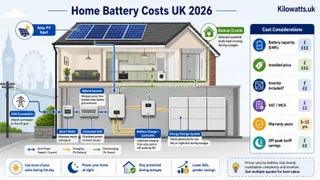
Long-term reviews offer a useful reality check. Six-month trials of smart home batteries typically show actual savings landing below marketing claims, though still meaningful for most homes. A household with a 4kW solar array and a 5kWh battery might realistically save £400 to £600 per year, depending on their tariff and usage habits. The payback calculation is simple enough. A typical 5 to 10kWh home battery costs between £4,000 and £8,000 installed. At £500 to £700 annual savings, your payback period runs roughly 5 to 8 years. That is not instant, but it is improving. Battery prices have fallen steadily, and 2026 energy prices make storage more attractive than it was even two years ago. If you want to sense-check the figures, start with a guide to home battery costs before comparing quotes.
Key Features to Compare Before You Buy
Capacity and Scalability
Capacity is measured in kilowatt-hours, and it tells you how much energy the battery can store. A 5kWh battery roughly covers an average UK home's evening usage. Larger homes, or those with electric vehicles, should consider 10kWh or more. Check your smart meter data to see how much electricity you actually use between sunset and bedtime. That figure is your starting point.
Modular systems offer flexibility. The Anker SOLIX X1 spans 5kWh to 180kWh, meaning you can start small and expand later. This matters if you plan to add an EV charger or heat pump in the coming years. For a more practical sizing approach, read about what size battery a UK home may need.
Power Output and Backup Capability
Capacity and power output are different things. Capacity is how much energy is stored. Power output is how much can be delivered at once. If you want to run the kettle, oven, and EV charger simultaneously, you need sufficient output rating.
The Anker SOLIX X1 offers 3 to 36kW output, scalable to 72kW in specific configurations. That covers most UK homes comfortably. Consider whether whole-home backup matters to you, or whether keeping essential circuits running during an outage is sufficient. If resilience is a priority, check whether the battery can work during a power cut before committing.
Cold Weather Performance
UK winters are cold and damp, and most lithium batteries lose efficiency in low temperatures. The Anker SOLIX X1 operates down to -20°C, comfortably beyond anything British weather will throw at it. This matters for garage or external installations where temperatures can drop significantly. Standard systems handle UK winters adequately, but cold-rated options offer extra peace of mind if your battery will live in an unheated space.
Smart Features That Make a Difference Day to Day
The app is how you will interact with your battery daily, so it deserves serious attention. Good apps let you track generation, consumption, and battery status from your phone. You can see exactly how much energy you have stored and how long it will last.
AI-driven charging schedules adapt to your routine and the weather forecast. Moixa offers both prediction-based models, which learn your habits, and static plans, which follow a fixed schedule. Different homes suit different approaches, and having both options is genuinely useful.
Firmware updates and ongoing software support matter too. A battery is a long-term purchase, and the software should improve over time, not stagnate. Check the specific battery brand's app ratings before committing. Some smart home apps in the broader market have poor user reviews, with complaints about connectivity and notification delays. The interface is not a minor detail. It is how you will monitor and control your system every single day.
Installation and Compatibility Considerations
Most X Smart Home battery systems are AC-coupled, which means they can retrofit to existing solar panel installations without replacing your inverter. That is good news if you already have panels and are adding storage later.
Physical requirements deserve attention. Wall-mounted units need adequate space, ventilation, and a suitable load-bearing wall. Some systems are outdoor-rated, while others require indoor or garage installation. Check the specifications before you buy, not after delivery.
Certified installation is non-negotiable. Battery systems involve high-voltage DC electricity and must comply with UK building regulations and Distribution Network Operator notification requirements. Reputable installers handle G99 and G100 grid connection applications on your behalf. Do not attempt a DIY installation, and do not accept quotes from installers who suggest skipping the paperwork.
X Smart Home Battery vs. the Alternatives
X Smart Home battery systems sit within a competitive UK market alongside established names like Tesla Powerwall, GivEnergy, and Huawei Luna. Each has strengths and trade-offs.
Anker SOLIX systems often offer competitive pricing and modular flexibility. Moixa brings intelligent tariff optimisation. Tesla Powerwall has a long track record and strong brand recognition. Newer brands may have shorter histories than established players, which matters when you are making a 10-year commitment.
Warranty terms are a useful comparison point. Look for 10-year warranties with guaranteed capacity retention, typically around 70% after a decade. That means your battery should still hold 70% of its original capacity after 10 years of use. The best choice depends on your specific home, usage patterns, and budget. There is no universal winner. Compare at least three quotes from MCS-accredited installers before deciding.
Common Questions About X Smart Home Batteries
Is an X Smart Home battery worth it without solar panels? Yes, if you are on a time-of-use tariff. You can charge cheaply overnight and use stored power during peak hours.
How long do smart home batteries last? Most are rated for 10 years or 6,000 cycles, whichever comes first.
Can I take my battery with me if I move house? Technically yes, but removal and reinstallation costs often make it impractical. Many homeowners factor the battery into the sale price instead. Will a battery work during a power cut? Only if your system has backup capability and is installed with a transfer switch. Not all systems offer this by default. Do I need to notify my energy supplier? You should inform your Distribution Network Operator, but your installer typically handles this as part of the installation process.
Is an X Smart Home Battery Right for You?
The ideal candidate is a UK homeowner with solar panels, or one on a time-of-use tariff, who uses significant energy in the evening and wants protection against rising energy prices. If that sounds like you, a battery probably makes sense. If you are also reviewing panels, it can help to compare solar options alongside battery storage rather than treating them separately.
Low-energy users, those on flat-rate tariffs without solar, or homes unlikely to stay put for five or more years should think carefully. The payback period may not work in your favour.
Rather than guessing, get a personalised assessment. An AI-powered solar and battery assessment can model your specific roof, location, and usage patterns to give you accurate projections. Connecting with vetted, trusted UK installers is the safest path to accurate pricing and professional installation. You can book a free survey to understand your options and take control of your energy future.
Final Thoughts
X Smart Home batteries offer genuine savings potential, but real-world results depend on your home, your usage, and your tariff. Treat marketing claims as starting points, not guarantees. With the right system and installer, you can reduce your bills and increase your energy independence. Explore further resources on Kilowatts.uk for independent guidance and installer connections.
Plan, Compare & Buy Renewable Energy Solutions
AI does the thinking.
You get the perfect solar match.
Use RoboMo™ to assess your property, compare available technologies and connect with trusted UK installers, suppliers and manufacturers.
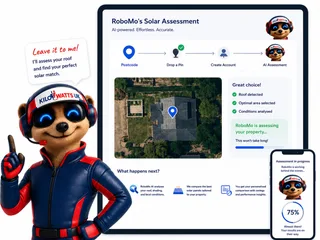
Simply enter your postcode, drop a pin on your roof, create your free account and let RoboMo™ analyse your property to find the best solar panels for your home.

You don't have to think
RoboMo™'s AI analyses your roof and does all the hard work.

Accurate & tailored
AI-powered assessment based on your roof, location, and conditions.

Best options, maximum savings
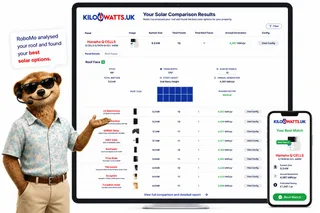
Compare top solar panels for the best performance and value.

Simple, fast & effortless
Provide a few details, sit back and watch your results unfold.
STEP 1
Choose Home, Business or Industrial
Enter your postcode to start your assessment.
STEP 2

Drop a pin on your roof
STEP 3

Create your free account
STEP 4

Sit back and watch RoboMo™ work
RoboMo™ analyses your roof and builds your personalised solar comparison.
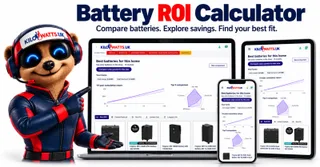
BATTERY ROI TOOL
See what a battery saves on your bill
Enter the day rate, off-peak rate and export rate. The calculator ranks batteries in the Kilowatts shop over 10 years.
Home batteries also suit offices and small commercial sites. Industrial batteries are listed on their own calculator.

Step 1
Enter your postcode
Start designing your wind energy system in seconds.
Are you an installer, distributor or renewable energy business?
Kilowatts UK is expanding the Flower Turbines partner network across the UK.
Become A Flower Turbines PartnerKilowatts UK is an authorised representative
Flower Turbines
Compact vertical-axis turbines built for real UK sites, not just open farmland.
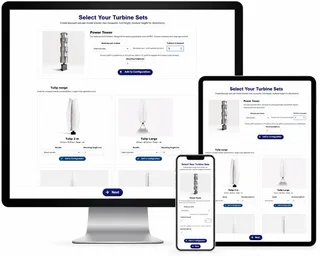
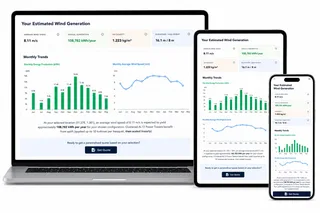
They start in light wind, sit in a small footprint, and are bird-safe by design. Cluster them as a bouquet and the group performs better together than the same turbines standing alone. Enter your postcode for a location-based generation estimate. Figures use area weather data and will differ if buildings, trees or hills sit in the way.
Starts in light UK wind
Built to generate in typical UK wind, not only open farmland.
Small rooftop or ground footprint
Compact towers for roofs, yards and tight sites.
Bird-safe slow rotation
Slow vertical-axis spin, bird-safe by design.
Bouquet clusters raise output
Grouped turbines outperform the same units standing alone.
STEP 2

Choose a location
STEP 3

Place your cluster
Tap the map where you want the turbine cluster to go.
STEP 4

Instant generation forecasts
Compare different turbine layouts and see annual generation forecasts instantly.
STEP 5

No commitment required
Explore different configurations before deciding whether to request a quotation.
Related articles
Mo's Mission Nominations
FAQ
Need Help? RoboMo's Got Answers
What is an X Smart Home battery?
In this context, it means a smart home battery used for energy storage, not a doorbell, camera or general smart-home app. It stores electricity from solar panels or from the grid and releases it when your home needs it. The smart features usually help decide when to charge and discharge based on your usage, tariff and sometimes the weather forecast.
Are smart home batteries worth it for UK homes in 2026?
They can be worth it if you have solar panels, high evening electricity use, or a time-of-use tariff with cheaper off-peak rates. The best results usually come from using more of your own solar power and buying less electricity at peak times. Savings vary a lot, so ask installers to model payback using your smart meter data rather than relying on headline claims.
Can I use a smart battery without solar panels?
Yes, some batteries can be charged from the grid during cheaper off-peak periods and used later when electricity is more expensive. This works best if your tariff has a clear price difference between night and peak rates. Without solar, the savings case depends heavily on your tariff, battery efficiency and daily usage pattern.
What size battery do I need for my home?
A good starting point is your electricity use from late afternoon to the following morning, because that is when stored energy is most useful. Smaller households may only need a modest battery, while homes with an EV, heat pump or high evening demand may need more capacity. Oversizing can increase costs without adding much benefit, so sizing should be based on real consumption data.
Will a home battery keep my house running during a power cut?
Only if the battery system is designed and installed with backup capability. Many standard installations shut down during a power cut for safety, even if the battery is full. If backup is important, ask whether it will cover the whole home or only essential circuits such as lights, fridge, boiler controls and broadband.
Can I add a smart battery to existing solar panels?
Often, yes. Many batteries are suitable for retrofit installations, but compatibility depends on your current inverter, consumer unit, available space and grid connection arrangements. A qualified installer should check the existing system before recommending a battery.
What should I check before choosing a battery installer?
Ask for a proper site survey, clear specification, warranty details and a savings estimate based on your usage. The installer should explain any Distribution Network Operator notification or application process needed for your property. It is also sensible to compare several quotes and check experience with the specific battery brand being proposed.
How long do smart home batteries last?
Most home batteries are designed as long-term products, commonly backed by warranties measured in years and/or charge cycles. Their usable capacity gradually reduces over time, so check the warranty for the guaranteed remaining capacity at the end of the term. Also consider software support, app reliability and aftercare, because these affect day-to-day use as much as the hardware.