


Solar panel installation in Sittingbourne
Published: 2026-10-06 01:38:32
Updated: 2026-10-05 18:39:11
Solar panel installation in Sittingbourne depends on the roof, Swale planning and UK Power Networks, not the postcode. A survey sets the design.
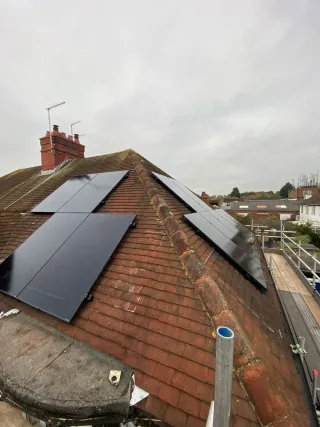
Solar panel installation in Sittingbourne
Solar panel installation in Sittingbourne from Kilowatts.uk in Broadstairs. Costs, roofs, planning and what to do next then compare a local system.
Solar panel installation in Sittingbourne
Sittingbourne has older centre streets, post-war housing and newer estates, and those roofs install differently. A clear south, south-east or south-west pitch on a sound covering is a stronger start than a flat, heavily shaded or structurally tired roof. East-west splits are common and can still make sense when household use matches daytime generation. An estuary or coastal setting does not by itself raise output. Cloud, roof direction and shade still dominate. Homes elsewhere in Kent solar installation face the same constraints, even when the street looks similar.
This is a domestic electrical and roofing job with paperwork. It is not a battery by default, not solar thermal hot water, and not a commercial array. Owner-occupiers who can alter the roof are the usual decision-makers. Renters, and anyone who cannot get consent to fix into the covering, generally are not.
What the installation actually includes
A proper install runs from survey and design through scaffolding, roof fixings, electrical work, metering and handover. The survey should record covering type, pitch, orientation, shading from chimneys, dormers and trees, and how the array will be fixed. Sittingbourne stock includes concrete tile, slate and some flat or low-pitch roofs. Hooks, trays and weatherproofing are not interchangeable across those coverings. A weak covering can veto a good orientation. Understanding how solar panels work helps when you read the equipment list, but it does not replace the roof survey.
Electrical design covers cable routes, isolation, labelling, and whether the consumer unit and earthing need work before the inverter is connected. A generation meter, the smart meter’s export reading, and any battery operating mode are separate functions. Inverters need ventilation. A newer-home loft can be both hot and cramped, which sometimes moves the inverter to a more suitable wall rather than forcing it into the roof space.
Scaffolding, party-wall access and narrow streets often set the programme more than the panel count. A tight terrace can take longer to access than a newer estate with a simple pitch, even when the newer roof is not a better generator. Access difficulty and annual output are different questions. Both should be written into the proposal before scaffold dates are treated as fixed.
How long the job takes and what handover should contain
There is no reliable town-wide duration. A straightforward estate roof can move from survey to commissioning in a matter of weeks once the planning route and the network route are both clear. Listed-building or conservation-area consent, a leasehold licence, a consumer-unit upgrade, or an export-limit application can add months. Treat any programme as provisional until those gates are closed. Do not book scaffolding against an assumed permitted-development outcome.
In practice the sequence is survey and design, then the consent check and the UK Power Networks route in parallel where that is possible, then scaffold and roof works, electrical remedial work, commissioning, and handover. Export limitation, if the network sets one, has to be designed in before the scaffold goes up. Changing the inverter, adding a hybrid battery, or altering the export cap after approval can make the network operator treat the job as a different proposal.
The handover pack should show what was actually built, not a brochure kit. Expect an equipment list with serial numbers, an array layout, shutdown and isolation instructions, inverter and monitoring access, product warranties, and the insurance-backed workmanship warranty with the underwriter named. It should also include the electrical certificate, evidence of who notified building control or the competent-person scheme where that applies, and the distribution network operator reference for the G98 notification or G99 application. If an MCS certificate is part of the agreed scope, it belongs in that pack, because export-payment applications often ask for it.
Roofs that are worth surveying in Swale
Orientation, pitch, usable area and shade matter more than living in north Kent. A south-facing label on a listing does not guarantee a straightforward job if the covering is failing, the structure is weak, or access is poor. Newer estates with simple pitched roofs are often easier to scaffold than Victorian terraces. Ease of access is not the same as better generation. Panel placement choices should follow the unshaded area, not a preferred brand. A clear but modest east-west roof with steady daytime use can be a more rational design than a larger array that is shaded for much of the day. Flat roofs and low pitches need a fixing and drainage method that suits that build-up. They should not be forced into a pitched-roof detail. Check the covering warranty before penetrations are specified. If the only usable slopes are shaded, or the roof needs major repair first, solar should wait. One shaded module can cut a whole string, which is why shade on a string belongs in the design conversation. A battery will not make a shaded roof productive. Households with very low electricity use may see less value from a large array even when the roof is clear, because self-use during the day usually matters more than headline array size. Output per kilowatt-peak moves with orientation, pitch, shading and inverter limits, so a street anecdote is not a design. A realistic view of how many panels a home needs starts from measured use, not from the neighbour’s array.
Does a Sittingbourne home need planning permission?
Many domestic roof arrays in England can proceed under permitted development if the conditions in the current rules are met. That is not a promise that every Sittingbourne house qualifies. Planning permission, a quality scheme and network approval are three different gates. An install that looks simple in a brochure can still stop if consent is unlikely or the lease forbids roof alterations.
The usual permitted-development conditions for roof-mounted solar on a house include limits on how far the equipment projects from the roof plane, a rule that it must not sit higher than the highest part of the roof excluding the chimney, and extra limits on designated land. In a conservation area, panels on a roof slope or wall that fronts a highway are a common reason a job cannot rely on permitted development. Listed buildings and scheduled monuments are outside that route and need the relevant consent. Article 4 directions, where they exist, can remove permitted-development rights on particular streets. None of that should be assumed from the postcode.
Swale Borough Council is the local planning authority. Check the current GOV.UK guidance on permitted development for solar panels, then check Swale’s planning pages and any conservation-area or listed-building constraints for the address. Also read the title and the lease. Flats, maisonettes and many leasehold houses need the freeholder’s consent even when planning would otherwise allow the work. Ask for the planning route in writing before scaffolding is booked. Permitted development, a householder application, or listed-building consent each change the programme. An online postcode check is not a decision.
UK Power Networks and export limits
Grid connection is separate from planning. UK Power Networks is the distribution network operator for much of the South East, including Kent. Smaller domestic systems are often notified under G98. Larger systems, or sites where the network sets an export limit, may need a G99 application before installation. Sittingbourne network capacity is not uniform and can change by feeder. A desktop postcode view is not a substitute for the installer’s formal process against current UK Power Networks connection guidance.
Export limitation can be specified even when the roof could hold more modules. That limit belongs in the design, not as a surprise after the scaffold is up. The usual aim is not to export everything you generate. Daytime self-use, then a considered export or storage choice, is the more useful frame. Exact equipment, protection settings and any export cap are site-specific.
If the inverter, a hybrid battery, or the export limit changes after approval, the network operator may treat it as a different proposal. Ask to see the equipment list that will be submitted, the proposed export limit if any, and who completes the notification or application. Electrical work in a dwelling is usually notified through a competent-person scheme. The handover should name that route rather than leaving building-control notification as an optional extra.
MCS, consumer codes, warranties and VAT
An MCS certificate is not planning consent and it is not UK Power Networks approval. It is the usual quality-scheme route for a domestic installation, and it matters for payments. Ofgem’s Smart Export Guarantee is the normal framework for export payments on newer domestic systems. Eligibility generally requires an MCS-certified installation, or another route the scheme rules expressly accept. Confirm the current Ofgem rules and your supplier’s terms at the time you apply. Supplier rates change and are not quoted here. Do not rely on old Feed-in Tariff assumptions.
At quote stage, ask which consumer code the installer belongs to. For renewable work that is commonly the Renewable Energy Consumer Code or the Home Insulation and Energy Systems Quality Assured Contractors Scheme. Membership is a complaints and contract-protection route, not a promise of a particular annual output. Also ask for the insurance-backed workmanship warranty, who underwrites it, what defects it covers, and how long it runs. Product warranties cover what the manufacturer states. They do not guarantee roof condition.
Qualifying installations of solar panels on residential properties have in recent years generally been zero-rated for VAT. The rate, and what counts as a qualifying supply, can change, and not every related item is treated the same way. Before you compare quotes, ask the installer to show the VAT treatment line by line and check the current HMRC position. A quote that looks cheaper because VAT has been omitted, or applied inconsistently, is not a like-for-like price. Grants and local funding also change and are not stated here. Check live scheme rules rather than a forum post.
Batteries, tariffs and whether backup covers a power cut
A battery is optional. Size should follow measured evening use, not a default package sold with the panels. It does not fix shade, and it does not automatically keep the house running in a power cut. A standard grid-tied inverter is required to shut down when the network fails. That is a safety feature, not a fault. Whole-house or dedicated-circuit backup needs extra equipment, a defined set of circuits, and often a changeover or islanding arrangement. If that outcome matters, specify it at survey so it is not redesigned after the network application.
Export payments and any grant or local funding change and are not stated here. Check Ofgem’s Smart Export Guarantee rules and your supplier’s current tariff before you treat export income as part of the decision. Off-grid design is not the normal brief for a Sittingbourne street property already on the public network. Solar also does not remove the need for a competent electrical installation. The existing consumer unit still has to be assessed. A battery does not repair an undersized or unsafe board.
Storage can still be a rational add-on where evening use is material and the roof can produce a useful surplus. It is a poor add-on where the array is small, heavily shaded, or the household is out all day and the real constraint is consent or a weak roof. Say at survey whether you want self-use shifting only, or power-cut operation as well. Those are different designs. A Kent example of a solar battery system shows why the battery has to follow the household, not a package deal.
What a Sittingbourne quote should itemise
Sittingbourne-specific install prices, payback and annual yield are not reliable as town averages, so they should not be used to judge a quote. National figures per kilowatt are a poor substitute for a surveyed roof. What usually moves cost and programme is roof condition, covering type, scaffold and access, electrical remedial work, any export cap, and consent. A sound simple pitch with a straightforward cable route is a different job from a listed terrace, a failing flat roof, or a loft that cannot take the inverter. It helps to compare home solar options on scope, not on a headline kilowatt price.
A useful quote is specific enough that another competent installer could see what is included and what is excluded. Vague allowances for “electrical works” or “DNO” are a common reason the programme slips after deposit. The proposal should also state what happens if the consumer unit needs upgrading, who pays for a return visit if the network caps export, and whether scaffold includes restricted-street permits.
Paperwork should also show the VAT treatment and whether an MCS certificate and a named consumer code are included. If those items are absent, ask before you compare the figure with another proposal. A lower price that drops the warranty, the network application, or making-good of the covering is not a saving.
What to do next in Sittingbourne
Measure how you use electricity across a day and an evening before you fix an array size. Note roof age, leaks, and any planned re-covering. Check whether the house is listed, in a conservation area, or leasehold, and read the current GOV.UK permitted-development guidance alongside Swale Borough Council’s planning information for that address. Those facts change the first conversation more than a preferred panel brand.
A useful survey records shading, structure and fixing method, then a UK Power Networks route that matches the equipment. If you want storage or backup, say so at survey stage. If the roof needs repair, do that first. Confirm MCS certification if you expect to claim Smart Export Guarantee payments, confirm membership of a consumer code such as RECC or HIES, and confirm the insurance-backed workmanship warranty and the current VAT treatment on the quote. You can book a free survey once those facts are to hand.
For a Sittingbourne residential survey and a system designed around the property rather than a generic kit, start from the local installation page and compare the proposal against the checks above: Sittingbourne solar installation.
Plan, Compare & Buy Renewable Energy Solutions
AI does the thinking.
You get the perfect solar match.
Use RoboMo™ to assess your property, compare available technologies and connect with trusted UK installers, suppliers and manufacturers.
Simply enter your postcode, drop a pin on your roof, create your free account and let RoboMo™ analyse your property to find the best solar panels for your home.

You don't have to think
RoboMo™'s AI analyses your roof and does all the hard work.

Accurate & tailored
AI-powered assessment based on your roof, location, and conditions.

Best options, maximum savings
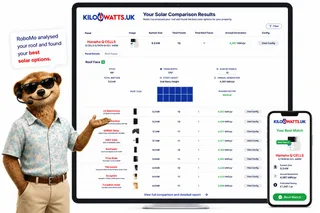
Compare top solar panels for the best performance and value.

Simple, fast & effortless
Provide a few details, sit back and watch your results unfold.
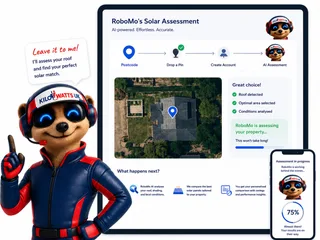
STEP 1
Choose Home, Business or Industrial
Enter your postcode to start your assessment.
STEP 2
Drop a pin on your roof
STEP 3

Create your free account
STEP 4

Sit back and watch RoboMo™ work
RoboMo™ analyses your roof and builds your personalised solar comparison.

Step 1
Enter your postcode
Start designing your wind energy system in seconds.
Are you an installer, distributor or renewable energy business?
Kilowatts UK is expanding the Flower Turbines partner network across the UK.
Become A Flower Turbines PartnerKilowatts UK is an authorised representative
Flower Turbines
Compact vertical-axis turbines built for real UK sites, not just open farmland.
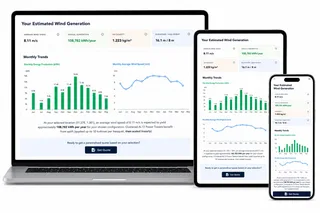
They start in light wind, sit in a small footprint, and are bird-safe by design. Cluster them as a bouquet and the group performs better together than the same turbines standing alone. Enter your postcode for a location-based generation estimate. Figures use area weather data and will differ if buildings, trees or hills sit in the way.
Starts in light UK wind
Built to generate in typical UK wind, not only open farmland.
Small rooftop or ground footprint
Compact towers for roofs, yards and tight sites.
Bird-safe slow rotation
Slow vertical-axis spin, bird-safe by design.
Bouquet clusters raise output
Grouped turbines outperform the same units standing alone.
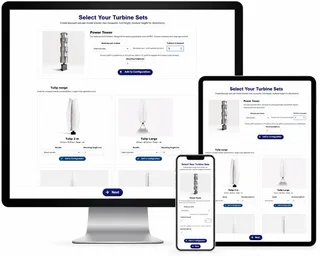
STEP 2

Choose a location
STEP 3

Place your cluster
Tap the map where you want the turbine cluster to go.
STEP 4

Instant generation forecasts
Compare different turbine layouts and see annual generation forecasts instantly.
STEP 5

No commitment required
Explore different configurations before deciding whether to request a quotation.
Related articles

FAQ
Need Help? RoboMo's Got Answers
Is solar panel installation in Sittingbourne worth it for a typical house?
It depends on the particular roof, not the postcode. Usable unshaded area, covering condition, orientation, daytime electricity use, planning or leasehold constraints, and the connection route all matter. A clear south, south-east or south-west pitch is a stronger start than a shaded, flat or structurally tired roof, but an east-west split can still make sense if household use matches daytime generation. A street anecdote or a south-facing listing is not a design.
What does a proper Sittingbourne solar installation include?
A proper job runs from survey and design through scaffolding, roof fixings, electrical work, metering and handover. The survey should record covering type, pitch, orientation, shading and how the array will be fixed, because concrete tile, slate and flat or low-pitch roofs need different details. Electrical design covers cable routes, isolation, labelling and whether the consumer unit and earthing need work before the inverter is connected. Scaffolding and access often set the programme as much as the panel count.
How long does solar panel installation take in Sittingbourne?
There is no reliable town-wide duration. A straightforward estate roof can move from survey to commissioning in a matter of weeks once the planning route and the UK Power Networks route are both clear. Listed-building or conservation-area consent, a leasehold licence, a consumer-unit upgrade or an export-limit application can add months. Treat any programme as provisional until those gates are closed, and do not book scaffolding against an assumed permitted-development outcome.
Do Sittingbourne homes need planning permission for roof solar panels?
Many domestic roof arrays in England can proceed under permitted development if the current conditions are met, but that is not a promise for every Sittingbourne house. Conservation areas, listed buildings, scheduled monuments and any Article 4 direction can take a job outside that route. Swale Borough Council is the local planning authority, so check current GOV.UK guidance and Swale’s planning pages for the address. Flats, maisonettes and many leasehold houses also need freeholder consent even when planning would otherwise allow the work.
How does the UK Power Networks connection work?
Grid connection is separate from planning permission. UK Power Networks is the distribution network operator for much of the South East, including Kent. Smaller domestic systems are often notified under G98, while larger systems or sites with an export limit may need a G99 application before installation. Capacity is not uniform across Sittingbourne and can change by feeder, so a desktop postcode view is not a substitute for the installer’s formal process. Any export limit should be designed in before scaffolding goes up.
What should the handover pack contain?
The pack should describe what was actually built, not a brochure kit. Expect an equipment list with serial numbers, an array layout, shutdown and isolation instructions, inverter and monitoring access, product warranties, and an insurance-backed workmanship warranty with the underwriter named. It should also include the electrical certificate, evidence of building-control or competent-person notification where that applies, and the distribution network operator reference for the G98 notification or G99 application. If an MCS certificate is part of the agreed scope, it belongs in that pack because export-payment applications often ask for it.
Is an MCS certificate the same as planning consent or grid approval?
No. An MCS certificate is the usual quality-scheme route for a domestic installation, and it matters for payments, but it is not planning consent and it is not UK Power Networks approval. Ofgem’s Smart Export Guarantee is the normal framework for export payments on newer domestic systems, and eligibility generally requires an MCS-certified installation or another route the scheme rules expressly accept. Confirm current Ofgem rules and your supplier’s terms when you apply, because supplier rates change. Also ask which consumer code the installer belongs to, as that is a complaints and contract-protection route rather than a yield guarantee.
Will a battery keep the lights on in a power cut?
Not by default. A battery is optional and should be sized from measured evening use, not sold as a standard package with the panels. A standard grid-tied inverter must shut down when the network fails, which is a safety feature. Whole-house or dedicated-circuit backup needs extra equipment, a defined set of circuits and often a changeover or islanding arrangement, so specify that outcome at survey if it matters. A battery will not make a shaded or weak roof productive.