


Why Two Identical Houses Can Need Different Systems
Published: 2026-08-17 22:29:48
Updated: 2026-10-06 13:02:00
The same building can need a different solar-and-battery design when its electricity demand occurs at different times.
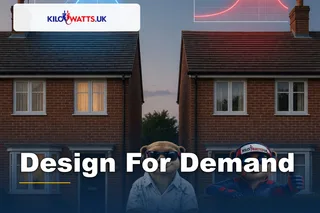
Why Two Identical Houses Can Need Different Systems
The same building can need a different solar-and-battery design when its electricity demand occurs at different times.
Why Two Identical Houses Can Need Different Systems
The same building can need a different solar-and-battery design when its electricity demand occurs at different times. This short Kilowatts UK film is a companion to a real design question, not a sales pitch. The page below restates what the film teaches, then puts it in practical UK-home context so the article still stands if you cannot play the video.
What the film is asking
The episode title is “Why Two Identical Houses Can Need Different Systems”. The premise is simple: The same building can need a different solar-and-battery design when its electricity demand occurs at different times. On screen: House A electricity demand rises during daylight. House B demand rises sharply after sunset. That is the whole point of the film. Two homes can look identical and still need different solar and storage designs if they use electricity at different times of day.
What Mo and RoboMo actually say
The spoken script is short on purpose. Each line is a design point, not filler. Same house. Same solar system? Not necessarily. How you use electricity changes the design. So which house actually needs the battery? The evening house. Daytime demand uses solar directly. Evening demand needs storage. And if the evening house charges an electric car? Same roof. Bigger battery. Or charge overnight on cheaper off-peak electricity. So how do I know which house I am? Your half-hourly smart meter data. Design follows measured demand, not roof size. Same house. Same solar system? Not necessarily. How you use electricity changes the design. So which house actually needs the battery? The evening house. Daytime demand uses solar directly. Evening demand needs storage. And if the evening house charges an electric car? Same roof. Bigger battery. Or charge overnight on cheaper off-peak electricity. So how do I know which house I am? Your half-hourly smart meter data. Design follows measured demand, not roof size. Read those lines as engineering, not marketing. The film is teaching you to size the system around measured demand rather than around how the house looks from the street.
Why identical houses can need different systems
A household load profile affects useful array size, battery sizing and expected self-consumption. Solar on the roof makes electricity when there is daylight. A home that uses most of its power while the sun is up can consume a lot of that generation directly. A home that stays quiet all day and then loads the evening - cooking, heating, an EV - needs somewhere to put surplus daylight energy, or it exports it and buys it back later. So the same roof, the same panels and even the same installer quote can still be the wrong design if the demand curve is different. The battery is not a fashion extra. It is how you move daytime generation to the hours when that particular house actually uses power. If you are still working out the array before the battery, this guide explains how many panels a UK home may need.
How to tell which house you are
You do not guess this from kerb appeal or from a neighbour’s system. In Britain the honest source is your own half-hourly smart meter data: when the house draws power, and how that lines up with daylight. If demand rises with the sun, a larger useful fraction of generation can be used on site. If demand spikes after sunset, storage or a timed overnight charge matters more than adding more panels for their own sake. An EV on the evening house is the same rule again. The roof may stay the same size. The battery, or the decision to charge off-peak, is what changes. Design follows measured demand, not roof size.
A short checklist before you size anything
Pull a year of half-hourly import data if you can, not a single sunny afternoon. Mark when cooking, heating, laundry and any EV charging actually happen. Note whether those hours sit in daylight or after dark. Ask what happens to surplus midday generation: used in the house, stored, or exported. Ask what the house still buys after sunset. Those two numbers tell you more than a brochure array size. Then look at solar, battery and timed charging as one design, not three separate products. The film’s point is that the right mix depends on your load profile. A survey should start there. If evening demand is the issue, compare the role of home battery storage in the whole system.
Questions the film is answering
Can two identical houses need different solar systems? Yes, if they use electricity at different times. Does an evening-heavy house need a battery more than a daytime-heavy house? Usually yes, because it cannot consume as much generation live. Does adding an EV change the roof? Not necessarily - it more often changes storage or when you charge. How do you know which pattern you have? Your smart meter, not the look of the house. None of that invents a grant, a price or a saving. It is the same teaching as the film: measure the home, then design around that demand. For wider context, Kilowatts UK also explains whether a home battery is worth it when the solar side is not the only question.
Video transcript
Mo: Same house. Same solar system? RoboMo: Not necessarily. How you use electricity changes the design.
Mo: So which house actually needs the battery? RoboMo: The evening house. Daytime demand uses solar directly. Evening demand needs storage.
Mo: And if the evening house charges an electric car? RoboMo: Same roof. Bigger battery. Or charge overnight on cheaper off-peak electricity. Mo: So how do I know which house I am? RoboMo: Your half-hourly smart meter data. Design follows measured demand, not roof size. Mo: Same house. Same solar system? RoboMo: Not necessarily. How you use electricity changes the design. / Mo: So which house actually needs the battery? RoboMo: The evening house. Daytime demand uses solar directly. Evening demand needs storage. / Mo: And if the evening house charges an electric car? RoboMo: Same roof. Bigger battery. Or charge overnight on cheaper off-peak electricity. / Mo: So how do I know which house I am? RoboMo: Your half-hourly smart meter data. Design follows measured demand, not roof size. Watch the short, then look at your own half-hourly data before you treat two similar roofs as the same job. The film is a design lesson, not a product push. If the terms are still new, start with this plain-English solar installation introduction before comparing designs. If you want a second pair of eyes on that data, book a friendly Kilowatts UK survey - no pressure.
Plan, Compare & Buy Renewable Energy Solutions
AI does the thinking.
You get the perfect solar match.
Use RoboMo™ to assess your property, compare available technologies and connect with trusted UK installers, suppliers and manufacturers.
Simply enter your postcode, drop a pin on your roof, create your free account and let RoboMo™ analyse your property to find the best solar panels for your home.

You don't have to think
RoboMo™'s AI analyses your roof and does all the hard work.

Accurate & tailored
AI-powered assessment based on your roof, location, and conditions.

Best options, maximum savings
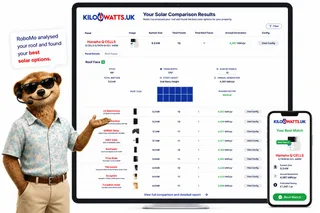
Compare top solar panels for the best performance and value.

Simple, fast & effortless
Provide a few details, sit back and watch your results unfold.
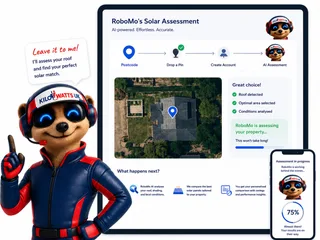
STEP 1
Choose Home, Business or Industrial
Enter your postcode to start your assessment.
STEP 2
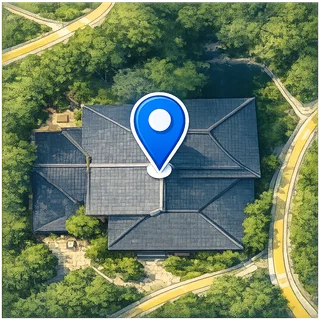
Drop a pin on your roof
STEP 3

Create your free account
STEP 4

Sit back and watch RoboMo™ work
RoboMo™ analyses your roof and builds your personalised solar comparison.

Kilowatts UK is an authorised representative
Flower Turbines
Compact vertical-axis turbines built for real UK sites, not just open farmland.
They start in light wind, sit in a small footprint, and are bird-safe by design. Cluster them as a bouquet and the group performs better together than the same turbines standing alone. Enter your postcode for a location-based generation estimate. Figures use area weather data and will differ if buildings, trees or hills sit in the way.
Starts in light UK wind
Built to generate in typical UK wind, not only open farmland.
Small rooftop or ground footprint
Compact towers for roofs, yards and tight sites.
Bird-safe slow rotation
Slow vertical-axis spin, bird-safe by design.
Bouquet clusters raise output
Grouped turbines outperform the same units standing alone.
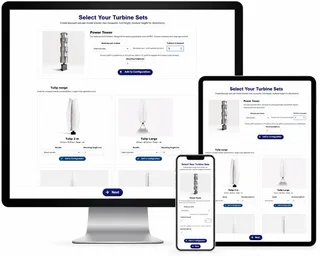
Step 1
Enter your postcode
Start designing your wind energy system in seconds.
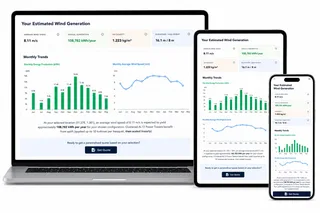
STEP 2

Choose a location
STEP 3
Place your cluster
Tap the map where you want the turbine cluster to go.
STEP 4

Instant generation forecasts
Compare different turbine layouts and see annual generation forecasts instantly.
STEP 5

No commitment required
Explore different configurations before deciding whether to request a quotation.
FAQ
Need Help? RoboMo's Got Answers
Can two identical houses really need different solar and battery systems?
Yes. The roof may be the same, but the electricity demand can be very different. A home that uses power during daylight may use more solar directly, while an evening-heavy home may need storage or timed charging to make the system work well.
Which type of home is more likely to benefit from a battery?
A battery is usually more useful where demand is high after sunset. It can store surplus daytime solar for evening use. A home with strong daytime demand may use much of its solar generation live and may need less storage.
How do I know whether my home is daytime-heavy or evening-heavy?
The best starting point is your half-hourly smart meter data. It shows when your home imports electricity and how that pattern changes across the year. A proper design should use measured demand rather than assumptions based on the house size or roof.
Does an electric car mean I need a bigger solar system?
Not necessarily. An EV changes when and how much electricity the household uses, but the roof space may not change. Depending on when you charge, the better answer could be battery storage, daytime charging, or overnight charging on a suitable off-peak tariff.
Should I copy my neighbour’s solar and battery setup if our houses are the same?
No, not without checking your own usage. Your neighbour may work from home, charge an EV at different times, or use heating and appliances differently. Similar houses can have very different load profiles, so the right design may not be the same.
What happens to solar electricity I do not use during the day?
It can be used immediately in the home, stored in a battery if fitted, or exported to the grid. The right design looks at how much surplus you are likely to have and when you would otherwise buy electricity back. This is why timing matters as much as total annual usage.
Can I still plan a system if I do not have half-hourly smart meter data?
You can still start, but the design will rely more on estimates and questions about your routine. Bills, appliance use, working patterns, EV charging habits and heating times can all help. Half-hourly data gives a clearer picture and reduces guesswork.
Is a bigger battery always better for an evening-heavy home?
No. A battery should be sized around realistic surplus generation, evening demand and charging strategy. Too small may not cover much evening use, while too large may sit underused for parts of the year. The aim is a balanced design, not simply the biggest product available.