


How to Compare Electricity Tariffs for Your UK Home
Published: 2026-08-09 13:55:32
Updated: 2026-08-12 12:00:30
To compare electricity tariffs properly, calculate the annual cost from your own kWh use, the unit rate, the standing charge, and when you use electricity.
How to compare electricity tariffs in the UK
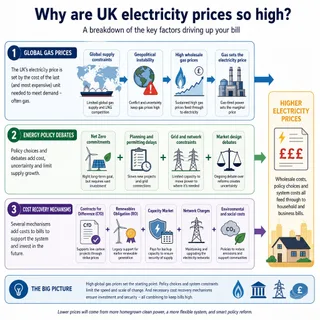
To compare electricity tariffs properly, calculate the annual cost from your own kWh use, the unit rate, the standing charge, and when you use electricity. The best tariff is not always the one with the lowest headline unit rate. It depends on your region, meter type, usage timing, contract terms, and whether you have solar panels, battery storage, an EV charger, or electric heating. It also helps to understand why electricity prices are high.
For most households, the calculation is simple: annual tariff cost equals annual kWh multiplied by the unit rate, plus 365 days multiplied by the daily standing charge. If the tariff has different day, night, peak, or off-peak prices, split your kWh into those periods before adding the standing charge.
Use actual annual consumption from a bill, annual statement, supplier account, or smart meter data. Monthly direct debit amounts are not reliable for tariff comparison because they can include account credit, debt recovery, estimated usage, or seasonal smoothing. A lower direct debit can still sit on a more expensive tariff.
The quick comparison checklist
Before looking at new deals, collect the information that lets you compare like for like. This usually takes longer than reading the tariff headline, but it avoids common switching mistakes.
You need both consumption and timing. A household using electricity evenly through the day has a different tariff profile from one that can charge an EV overnight or run a battery around cheap periods.
Annual kWh
Use a full year of electricity consumption rather than one high or low month.Meter setup
Check whether you have a single-rate meter, Economy 7, a smart meter in smart mode, prepayment, or export metering.Usage timing
Identify large loads such as EV charging, immersion heating, storage heaters, cooking, laundry, heat pumps and battery charging.Current rates
Record your unit rate, standing charge, contract end date and any exit fees.Whole-home impact
Compare import and export together if you have solar PV or battery storage.Tariff eligibility
Read supplier conditions because smart, EV, export and time-of-use tariffs may depend on meter, location, equipment or account setup.
If your home is about to change, run the comparison twice. A tariff that suits today’s low electricity use may not suit the same property after adding an EV, heat pump, hot water diverter or home battery.
What affects the cost of an electricity tariff
An electricity tariff normally combines a unit rate, a daily standing charge and contract terms. The unit rate is the price for each kWh used. The standing charge is the daily fixed amount paid for being connected, regardless of how much electricity you use.
Low-use homes are more sensitive to standing charges because the fixed charge is spread over fewer kWh. High-use homes are more sensitive to unit rates, especially where there is an EV, heat pump, immersion heater, electric shower, electric cooking, workshop equipment or all-electric heating.
Regional rates also matter. Electricity network costs vary across Great Britain, so the same supplier may quote different rates in different areas. Payment method, meter type and tariff availability can also change the comparison.
Use the annual cost formula, not the monthly payment
The simplest domestic comparison uses your annual kWh and the tariff’s standing charge. For a single-rate tariff, use this structure: annual cost equals annual kWh multiplied by unit rate, plus 365 multiplied by daily standing charge.
For a time-of-use tariff, split your annual kWh into the relevant rate periods first. That might mean day and night for Economy 7, peak and off-peak for a smart tariff, or a dedicated overnight window for EV charging. Then add the annual standing charge.
A useful worksheet can be built from four lines: annual peak kWh multiplied by peak unit rate, annual off-peak kWh multiplied by off-peak unit rate, any other tariff periods multiplied by their rates, and 365 multiplied by the standing charge. Add those together, then compare the total against your current tariff.
Worked comparison layouts for different homes
Worked examples are most useful when they use your real rates, because UK electricity prices change often and vary by region, supplier and tariff type. The layouts below show how to structure the comparison without relying on made-up prices. For more background on how bills are structured, see these electricity price basics. For each home, fill in the annual kWh, the relevant unit rates and the daily standing charge from the supplier’s current tariff information. If comparing a smart tariff, use smart meter data where possible rather than guessing how much demand can move into cheaper periods.
| Household profile | Calculation to run | What often changes the result |
|---|---|---|
| Low-use flat | Annual kWh at unit rate plus 365 days of standing charge | Standing charge can have a large effect because total consumption is low |
| Typical single-rate home | Annual kWh at unit rate plus 365 days of standing charge | Unit rate and standing charge both matter, so compare the annual total rather than either figure alone |
| Economy 7 home | Day kWh at day rate plus night kWh at night rate plus standing charge | The night rate helps only if enough use genuinely happens overnight |
| EV household | Normal household kWh at relevant rates plus scheduled EV charging kWh at cheap-window rate | Cheap overnight charging can be offset by high peak prices if daytime and evening use is high |
| Solar PV home | Import cost minus export value, using actual or estimated export volumes | A high export rate may matter less if most solar generation is used on site |
| Battery home | Import split by charge windows and household demand, with export terms checked separately | Battery size, inverter power, control settings and peak-period avoidance affect the outcome |
| Heat pump home | Seasonal electricity demand split by likely operating times | Winter evening demand may be less flexible than EV charging or laundry loads |
Overview
If you are comparing for a low-use property, do not ignore a high standing charge just because the unit rate looks attractive. If you are comparing for a high-use property, a small difference in unit rate can matter because it applies to more kWh.
Main electricity tariff types and when they suit you
Most domestic customers compare standard variable, fixed, Economy 7 and smart time-of-use tariffs. Some households also need EV tariffs, export tariffs or arrangements linked to solar and batteries. None is automatically best. A fixed tariff can give price certainty, but it is not guaranteed to be the cheapest outcome over the full term. A variable tariff can move with market and regulatory changes. A time-of-use tariff can work well, but only where the household can shift enough demand away from expensive periods.
| Tariff type | Usually suits | Main thing to check |
|---|---|---|
| Standard variable | Households wanting flexibility without a fixed-term commitment | Current unit rate, standing charge and how it compares with fixed offers |
| Fixed-rate tariff | Homes wanting price certainty for a defined period | Exit fees, contract length and whether both unit rate and standing charge are fixed |
| Time-of-use tariff | Homes able to shift meaningful usage into cheaper windows | Peak prices, cheap periods, smart meter compatibility and real usage timing |
| Economy 7 | Homes with suitable storage heaters or regular overnight loads | Day rate, night rate and the share of electricity used overnight |
| EV tariff | Electric vehicle owners who can charge at scheduled times | Charger compatibility, cheap charging window and the normal household peak rate |
| Export tariff | Homes exporting solar PV or battery electricity | Export rate, import tariff restrictions and supplier metering requirements |
Overview
The biggest mistake is choosing a tariff because one line looks good in isolation. A very low overnight rate may not help if most electricity is used during an expensive evening window. A high export rate may not be decisive if the home exports very little.
Price cap, switching and complaints guidance to keep in mind
For domestic customers, Ofgem’s energy price cap is a useful reference point, but it is often misunderstood. It is not a cap on your total annual bill. It limits certain default or standard variable tariff rates, with differences by region, meter type and payment method, and your final bill still depends on how many kWh you use.
Citizens Advice guidance is useful when checking switching rights, billing issues and practical steps before changing supplier. If a supplier dispute cannot be resolved through the supplier’s own complaints process, the Energy Ombudsman may be relevant for eligible complaints.
Smart Export Guarantee arrangements are separate from a normal import tariff. If you export electricity from solar PV or another eligible low-carbon system, check the current export tariff, metering requirements and whether you must also take an import tariff from the same supplier. Suppliers can change export offers, so check the live terms before switching.
How to use smart meter and usage data
Smart meter data is valuable because it shows when you use electricity, not just how much you use over a year. This is especially important for smart time-of-use tariffs, EV tariffs, batteries and homes with electric heating.
If your supplier account provides half-hourly data, review a few typical weeks as well as seasonal differences. Winter evening demand, summer solar generation, weekday routines and weekend EV charging can all affect the result.
Peak use
Look for regular electricity use during expensive periods, especially cooking, heating, hot water, laundry and EV charging.Data gaps
Be cautious if your smart meter is not communicating reliably or if the supplier data is incomplete.Fixed use
Treat essential evening heating, cooking and medical or accessibility-related electricity use as less flexible.Flexible use
Identify loads that can realistically move, such as EV charging, dishwasher cycles, washing machine use or battery charging.Seasonal use
Check winter and summer separately because heat pumps, solar generation and lighting demand change through the year.
If you do not have half-hourly data, you can still compare tariffs, but be conservative. Avoid assuming that a large share of usage will move into cheap periods unless your household routine and equipment controls make that realistic.
Why solar panels and batteries change the comparison
Solar panels reduce imported electricity when generation and household demand overlap. Battery storage can shift solar electricity into the evening or charge from the grid at cheaper times, depending on the system, tariff and control settings.
For a solar-only home, export value matters, but so does self-consumption. If most solar generation is used in the home, import unit rates may dominate the comparison. If the property exports a large share, export terms need more attention. It is also worth understanding how much solar can generate before comparing import and export outcomes.
Battery homes need a more careful model. The tariff must provide useful charging opportunities without leaving the household exposed to unavoidable expensive periods. Usable battery capacity, inverter power, reserve settings, household demand, weather variation and round-trip losses all affect how much grid electricity can realistically be shifted. If you are new to storage, start with how a home battery works.
EV chargers, heat pumps and other flexible loads
EV charging is often one of the easiest loads to move into cheaper overnight windows, provided the charger, vehicle and household routine support scheduled charging. The comparison should still include the rest of the home, because a cheap EV rate can come with a less attractive peak import rate. If you are planning the hardware as well as the tariff, read what to know before installing an EV charger.
Heat pumps need a different approach. Some heat pump electricity use can be scheduled or softened with good controls and thermal storage, but heat demand is linked to weather and comfort. A tariff that relies on avoiding winter evening use may not suit every heat pump home.
Other flexible loads can help, but they are usually smaller than EV charging or space heating. Dishwashers, washing machines, immersion heaters and battery charging can improve time-of-use suitability, but only if the timings are practical and safe for the household.
Common mistakes when comparing tariffs
Poor tariff decisions usually come from comparing the wrong figures. Monthly payments, headline rates and supplier example households can all mislead if they do not match your real consumption.
The safest approach is to compare annual cost, tariff eligibility and practical fit. This is especially important where the home has more than one meter register, export payments, a prepayment meter, smart controls or several large electrical loads.
Comparing direct debits
Monthly payments may reflect estimates, account balance or seasonal smoothing rather than the true tariff cost.Forgetting export terms
Solar homes should compare import and export together, not as separate decisions.Ignoring standing charges
A low unit rate can be undermined by a high daily fixed charge, particularly for low-use homes.Missing eligibility rules
Smart, EV and export tariffs may require specific meters, communication status, equipment or supplier conditions.Overestimating flexibility
Not every household can move cooking, heating, hot water or EV charging away from peak periods.Assuming today’s tariff will last
Tariffs can change, be withdrawn or become less suitable as household demand changes.
A tariff comparison is not a one-off decision for homes that are electrifying. Revisit it after adding solar panels, a battery, an EV charger, a heat pump or any significant change in occupancy.
What to check before you switch supplier or tariff
Before switching, confirm that the tariff is available for your region, meter setup and payment method. Check whether your current tariff has exit fees and whether any fixed term is close to ending.
If you have solar export payments, confirm what happens to the export arrangement when you change import supplier. Some households have import and export with different suppliers, while others choose combined arrangements. Check the live supplier terms rather than assuming every export tariff works the same way.
Complaint route
Keep records of quotes, contract terms and meter readings in case a billing issue needs to be challenged.Meter information
Note whether you have single-rate, multi-rate, Economy 7, smart, prepayment or export metering.Current annual kWh
Use a full-year figure from bills, statements or smart meter data.Export arrangements
Confirm export rate, metering requirements and whether import supply changes affect payments.Supplier conditions
Check eligibility, payment method, smart meter requirements and any equipment restrictions.Current tariff details
Record unit rate, standing charge, tariff name, end date and exit fees.
Take dated screenshots or copies of tariff quotes before switching. Rates and eligibility can change, and a clear record is useful if the first bill does not match what you expected.
When a cheaper tariff may not be the best option
The cheapest annual estimate may still be a poor fit if it depends on behaviour the household cannot maintain. A tariff with a low overnight rate and high peak rate can suit a well-controlled EV or battery setup, but it may penalise a home with unavoidable evening use.
Price certainty also has value. A fixed tariff may not produce the lowest possible bill, but it can make budgeting easier. A variable tariff may preserve flexibility, but future rates can change. The right decision is not only about the lowest theoretical cost; it is about the best fit for the property’s real usage.
This is where judgement matters. A household with medical equipment, caring responsibilities, young children, shift work or limited ability to move demand should be cautious about tariffs that rely heavily on avoiding specific periods. Practical comfort and reliability can outweigh a small estimated saving.
Business electricity needs a separate comparison
Small businesses should not assume domestic switching rules and tariff structures apply in the same way. Business electricity contracts can involve different renewal processes, contract lengths, credit checks, payment terms and out-of-contract rates.
For commercial sites, half-hourly data is especially useful because demand patterns are often linked to opening hours, machinery, refrigeration, catering, offices, workshops or EV charging. Solar and battery decisions also depend on daytime load, weekend operation and export arrangements, so tariff modelling may sit alongside commercial solar finance decisions.
If a business is close to renewal, start the comparison early. Pay attention to contract end dates, notice periods, pass-through charges, standing charges, unit rates, metering and whether the site’s future electricity demand is likely to change. A site adding EV charging, electrified heating or new equipment may need to compare tariffs against future load rather than historic bills alone.
How an installer can help if you are upgrading your home
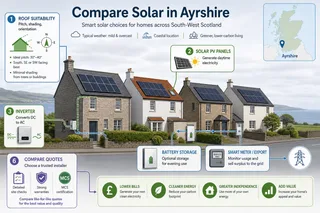
If you are comparing tariffs because you are planning solar panels, battery storage, an EV charger or a heat pump, involve the installer early enough for the design to reflect real usage. Tariff choice should not drive the whole design, but it can affect controls, battery strategy and expected operating behaviour. If solar is part of the plan, you can compare home solar options before modelling tariff scenarios.
A good design discussion should include annual consumption, meter type, consumer unit capacity, major loads, household routine and whether export or connection arrangements may affect the project. The installer should avoid promising tariff savings that depend on a specific deal remaining available.
For solar and battery projects, ask how the system would operate on a flat tariff and on a time-of-use tariff. For EV chargers and heat pumps, ask how load management, scheduling and controls will work in practice. Hardware can only benefit from a smart tariff if it can reliably operate at the right times.
A practical way to make the final decision
Start with your current annual kWh, unit rate, standing charge and contract end date. Then calculate the annual cost of each shortlisted tariff using the same consumption assumptions. If a tariff has multiple rates, split your usage into the relevant periods and be conservative about how much can genuinely move.
For a simple household with predictable use, a straightforward fixed versus variable comparison may be enough. For a home with solar panels, battery storage, EV charging or a heat pump, compare import timing, export terms, metering, equipment controls and household routine together.
The best electricity tariff is the one that fits the property’s actual behaviour. Use authoritative guidance for consumer rights, check live supplier terms before switching, and rerun the comparison whenever your electricity use changes materially.
Plan, Compare & Buy Renewable Energy Solutions
AI does the thinking.
You get the perfect solar match.
Use RoboMo™ to assess your property, compare available technologies and connect with trusted UK installers, suppliers and manufacturers.
Simply enter your postcode, drop a pin on your roof, create your free account and let RoboMo™ analyse your property to find the best solar panels for your home.

You don't have to think
RoboMo™'s AI analyses your roof and does all the hard work.

Accurate & tailored
AI-powered assessment based on your roof, location, and conditions.

Best options, maximum savings
Compare top solar panels for the best performance and value.

Simple, fast & effortless
Provide a few details, sit back and watch your results unfold.

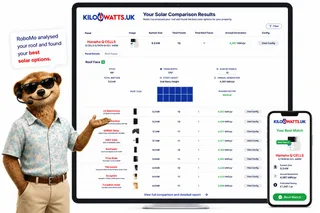
STEP 1
Choose Home, Business or Industrial
Enter your postcode to start your assessment.
STEP 2

Drop a pin on your roof
STEP 3

Create your free account
STEP 4

Sit back and watch RoboMo™ work
RoboMo™ analyses your roof and builds your personalised solar comparison.

Kilowatts UK is an authorised representative
Flower Turbines
Compact vertical-axis turbines built for real UK sites, not just open farmland.
They start in light wind, sit in a small footprint, and are bird-safe by design. Cluster them as a bouquet and the group performs better together than the same turbines standing alone. Enter your postcode for a location-based generation estimate. Figures use area weather data and will differ if buildings, trees or hills sit in the way.
Starts in light UK wind
Built to generate in typical UK wind, not only open farmland.
Small rooftop or ground footprint
Compact towers for roofs, yards and tight sites.
Bird-safe slow rotation
Slow vertical-axis spin, bird-safe by design.
Bouquet clusters raise output
Grouped turbines outperform the same units standing alone.
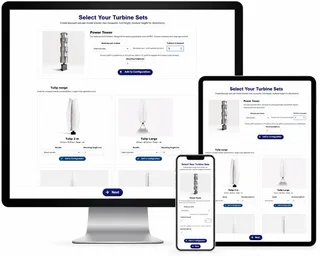
Step 1
Enter your postcode
Start designing your wind energy system in seconds.
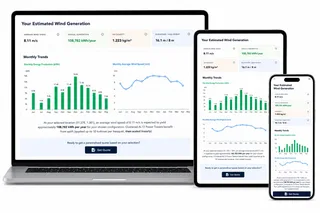
STEP 2

Choose a location
STEP 3

Place your cluster
Tap the map where you want the turbine cluster to go.
STEP 4

Instant generation forecasts
Compare different turbine layouts and see annual generation forecasts instantly.
STEP 5

No commitment required
Explore different configurations before deciding whether to request a quotation.
Related articles
Mo's Mission Nominations
FAQ
Need Help? RoboMo's Got Answers
What is the best way to compare electricity tariffs?
Compare the estimated annual cost, not just the headline unit rate or monthly direct debit. Use your annual kWh, the tariff unit rate, the daily standing charge and any peak or off-peak periods. If a tariff has more than one rate, split your usage into the relevant time periods before adding the standing charge.
Why is the standing charge important when comparing tariffs?
The standing charge is paid every day regardless of how much electricity you use. It can make a big difference for low-use homes because the fixed cost is spread across fewer kWh. High-use homes are usually more affected by the unit rate, but the standing charge should still be included in the annual total.
Should I use my monthly direct debit to compare electricity deals?
No, monthly direct debit is not a reliable comparison figure. It may include account credit, debt recovery, estimated readings or seasonal smoothing. Use actual annual electricity consumption from a bill, annual statement, supplier account or smart meter data where possible.
Are time-of-use or EV tariffs always cheaper?
Not always. They can work well if you can move a meaningful amount of use, such as EV charging or battery charging, into cheaper periods. Check the peak rate too, because expensive daytime or evening electricity can offset savings from a low overnight rate.
How do solar panels or batteries change tariff comparisons?
Solar panels and batteries mean you need to compare import costs and export income together. A high export rate may not matter much if you use most of your solar electricity at home. For batteries, consider usable capacity, charge times, inverter limits, control settings and any losses when estimating savings.
Does the Ofgem price cap limit my total electricity bill?
No, the price cap is not a cap on your total annual bill. It limits certain default or standard variable tariff rates, with differences by region, meter type and payment method. Your bill still depends on how many kWh you use and when you use them.
What should I check before switching electricity tariff?
Check the unit rate, standing charge, contract length, exit fees and whether the tariff suits your meter type. For smart, EV, Economy 7, export or battery tariffs, read the eligibility rules carefully. If your household is about to add an EV, heat pump or solar battery, compare based on expected future use as well as current use.
Is Economy 7 worth it for my home?
Economy 7 can be worthwhile if enough of your electricity is genuinely used overnight, such as with suitable storage heaters or regular scheduled loads. It may be less suitable if most electricity is used during the higher day-rate period. Compare your day and night kWh separately before deciding.