


Compare solar panel quotes in the UK
Published: 2026-08-09 13:02:58
Updated: 2026-08-22 10:04:16
Compare solar panel quotes and options properly in the UK
How to compare solar panel quotes in the UK
To compare solar panel quotes properly in the UK, look at the full system and installation scope, not just the panel wattage or the lowest headline price. The best quote should explain roof suitability, system size, inverter design, expected generation, export assumptions, DNO handling, credentials, paperwork, warranties and aftercare.
Two quotes can look similar on the first page but differ once you check scaffolding, roof mounting, cable routes, inverter type, battery readiness, monitoring, commissioning documents and who deals with the Distribution Network Operator. A useful comparison shows what is included, what is excluded and why the design fits your property and electricity use.
For most homes, the right system is not simply the one with the most panels. It is the one that can be installed safely, generates well on the available roof, matches your usage pattern as far as practical and leaves you with clear documentation for maintenance, export tariff applications and future changes.
Compare the whole solar system, not just the panels
Solar panels are only one part of a working PV installation. The inverter, mounting system, roof layout, shading, electrical connection, monitoring and commissioning all affect performance and reliability. If you want the basics before reviewing quotes, start with how solar works. A high-output panel on a poor layout can be a weaker choice than a sensible panel installed on a well-surveyed roof with an appropriate inverter.
In a real quote review, the strongest proposals usually make the practical design visible. They show which roof faces are being used, how shading has been considered, where the inverter will go, how cables will be routed, what access is needed and whether the consumer unit or earthing arrangements need attention.
Panel wattage is also easy to overvalue. A panel’s rated output is measured under test conditions, not as a promise of everyday generation on a UK roof. Annual output depends on roof orientation, pitch, shading, local conditions, inverter design and whether you can use electricity when the system produces it.
What changes the cost of a solar panel quote
Solar panel quote prices vary because properties vary. Roof access, scaffold requirements, roof covering, number of roof faces, cable runs, inverter type, battery inclusion, consumer unit work and DNO requirements can all affect the final specification. A low headline price may leave out work that another installer has included properly.
A straightforward pitched roof with good access is usually simpler to price than a property with fragile tiles, several roof planes, awkward access, dormers, chimneys or heavy shading. If the electrical installation needs remedial work, if the cable route is difficult or if export limiting is needed, the final design may change after survey.
When comparing quotes, separate equipment cost from installation quality. Mounting hardware, waterproofing method, scaffold safety, electrical workmanship and documentation are not always obvious in a sales proposal, but they are central to long-term value. If price is your starting point, use it alongside a wider view of solar installation costs rather than treating the cheapest quote as the automatic winner. Check whether scaffolding, roof work, consumer unit changes, isolators, cable routes, labelling, monitoring and handover guidance are included or listed separately.
Roof work
Ask how the mounting system suits your roof covering and whether any tile replacement or roof repairs are excluded.Monitoring
Confirm whether monitoring hardware, app access and handover guidance are included.Scaffolding
Check whether all access equipment is included and whether any extra scaffold may be charged after survey.Administration
Ask who handles DNO notification or application, certification, warranty registration and handover documents.Electrical work
Check whether consumer unit changes, isolators, cable routes and labelling are included or listed separately.
A cheaper quote is not automatically poor, and a more expensive quote is not automatically better. The key question is whether both proposals are pricing the same job to the same standard.
Solar panel comparison checklist for UK quotes
A good comparison table helps you move beyond sales language. The aim is not to choose from one line of information, but to see whether each installer has answered the same practical questions clearly. If a quote is vague, ask for clarification before comparing it with a more detailed proposal. Use the checklist below when reviewing proposals. It is especially helpful for spotting quotes that are not genuinely like-for-like.
| Decision area | Why it matters | What to check before choosing |
|---|---|---|
| Roof survey | The roof determines what can be installed safely and effectively. | Roof condition, covering type, orientation, pitch, shading, access and any repair concerns. |
| System size | More panels are not always better if export or self-use is limited. | Proposed kWp, panel count, expected annual generation, usable roof space and household demand. |
| Inverter design | The inverter affects performance, monitoring and future battery options. | String inverter, hybrid inverter, microinverters, optimisers, MPPT arrangement and location. |
| Battery readiness | A battery can improve self-use but adds cost and design complexity. | Whether a battery is included, optional later, AC-coupled, DC-coupled or not planned. |
| Grid connection | Export may require DNO notification or approval depending on the design. | G98 or G99 route, export limits, application responsibility and likely sequencing. |
| Savings assumptions | Payback depends on usage, import prices, export income and self-consumption. | Generation estimate, self-use assumptions, export tariff assumptions and battery modelling. |
| Credentials | Consumer protection and export routes often depend on recognised standards. | MCS status, consumer code membership such as RECC or equivalent, insurance and workmanship cover. |
| Paperwork | Future maintenance, property sale and export tariff applications need records. | Commissioning documents, electrical certification, handover pack, datasheets and warranty registration. |
| Aftercare | Fault response matters after the scaffolding has gone. | Monitoring support, callout process, warranty handling and who remains responsible. |
Overview
If one quote includes scaffolding, DNO handling, monitoring and a full handover while another treats them as extras, they are not directly comparable. Ask each installer to confirm inclusions in writing before deciding.
How to compare expected generation and savings
Estimated savings are often the weakest part of a solar quote because they depend on assumptions that may not match your home. A credible proposal should show expected annual generation and explain the basis for the estimate, including roof orientation, pitch, shading and system size. For a sense check, compare the proposal against what affects solar electricity generation in UK conditions. It should not rely only on a broad postcode figure or a generic sales calculator.
The saving calculation should separate electricity you use directly, electricity you export and any battery behaviour assumed. Self-consumption matters because electricity used in the home avoids buying from the grid, while exported electricity depends on the export tariff available to you. These are different values, so they should not be blurred into one optimistic figure.
Payback should be treated as an estimate rather than a guarantee. Electricity prices, export tariff rates, household behaviour, battery use and equipment performance can all change over time. Ask how annual generation was calculated, what proportion of solar electricity the quote assumes you will use on site, and which export tariff assumption has been used.
Behaviour
Consider whether your actual daytime use, working pattern, EV charging and seasonal demand match the model.Degradation
Check whether long-term panel performance assumptions are explained rather than hidden.Export income
Ask which export tariff assumption has been used and whether it is available from your chosen supplier.Self-consumption
Check what proportion of solar electricity the quote assumes you will use on site.Annual generation
Ask how the figure was calculated and whether shading, orientation and roof pitch were included.Battery modelling
If a battery is included, ask what usage pattern, tariff and usable capacity have been assumed.
A practical sanity check is to compare the quote’s generation estimate with the proposed layout. If two installers quote a similar system size on the same roof but one predicts much higher savings, ask what assumption is different. The answer may be legitimate, but it should be clear.
How to judge panel and inverter specifications
Panel specifications matter, but they should be read in context. Look for a clear datasheet, product warranty information, performance warranty wording, panel dimensions, panel weight, efficiency and whether the chosen module physically suits your roof layout. Larger or higher-output panels can help where roof space is tight, but they do not remove the need for sound design.
Inverter choice is often more important than homeowners expect. A string inverter can be efficient and cost-effective on a simple, mostly unshaded roof. Optimisers or microinverters may be considered where shading, multiple orientations or complex roof faces make the design harder. Hybrid inverters are relevant when a battery is part of the plan, but they should be sized around the actual system and use case.
Do not assume every extra device improves the installation. Optimisers, microinverters, batteries and backup components can be useful, but they add cost, equipment and future maintenance considerations. A good installer should explain what each component solves on your property, including the real factors behind panel efficiency.
Inverter sizing
Ask why the inverter size and type have been chosen for the panel layout.Panel datasheet
Check the exact make and model rather than accepting a generic panel description.Shading response
Check whether shading has been designed around or simply mentioned.Warranty wording
Read who provides the product warranty and what is required to make a claim.Monitoring detail
Confirm what you will be able to see after installation and who can diagnose faults.Future compatibility
Ask whether a later battery, EV charger or heat pump has influenced the design.
The best specification is usually the one that fits the site conditions cleanly. A more complex system can be justified, but complexity should have a clear purpose.
Credentials, standards and paperwork to check
A strong solar quote should make credentials and paperwork easy to verify. In the UK, MCS certification is commonly important for consumer confidence and may be needed for some export tariff routes, depending on the supplier’s requirements. If you are unsure what it means in practice, review MCS for solar before accepting a proposal. Consumer code membership, such as RECC or an equivalent scheme, can also matter because it sets expectations for sales conduct, contracts and dispute handling.
Grid connection handling is another key trust signal. The installer should explain whether the project is being handled through the relevant G98 or G99 process and who is responsible for submitting information to the DNO. Do not assume this is included unless the quote says so.
At handover, you should expect clear records for the installed system. These documents help with monitoring, maintenance, warranty claims, export tariff applications and future property sale enquiries. Ask for panel datasheets, inverter details, system layout, serial numbers and user guidance, and confirm who registers warranties.
DNO process
Ask whether the installer will notify or apply to the DNO and what export assumption is being made.MCS details
Ask for the installer’s MCS certification status and ensure the named business matches the quote.Consumer code
Check whether the installer belongs to RECC or another relevant consumer protection scheme.Commissioning pack
Ask for panel datasheets, inverter details, system layout, serial numbers and user guidance.Warranty registration
Check who registers warranties and what evidence you receive after installation.Electrical certification
Confirm what electrical certification and test documentation will be provided.
This is not paperwork for its own sake. If a fault appears later, if you want to claim an export tariff or if you sell the property, vague documentation can become a real problem.
Worked example of two similar-looking solar quotes
Two solar quotes may both describe a similar system size and use reputable equipment, yet one may be much stronger when the detail is reviewed. The difference is often not the panel brand. It is the survey quality, installation scope, assumptions and aftercare. Imagine two proposals for the same pitched-roof home. Quote A has a lower headline price and lists panels, inverter and installation in broad terms. Quote B costs more but includes a roof layout drawing, scaffold allowance, cable route notes, DNO responsibility, monitoring setup, warranty registration and a handover pack. Without checking the detail, Quote A may look better. After review, Quote B may be the safer comparison point because fewer assumptions are hidden. The right answer still depends on the property and the final survey. The point is to identify missing information before you sign, not to reward the longest document.
| Quote detail | Quote A concern | Quote B advantage |
|---|---|---|
| Roof layout | Panel positions are described generally. | Layout drawing shows roof faces, panel count and shading considerations. |
| Scaffolding | Access is not clearly itemised. | Scaffold scope is included or clearly stated. |
| Inverter | Brand is named but design reason is unclear. | Inverter type is linked to roof orientation, shading and battery plans. |
| DNO handling | Responsibility is not stated. | Installer confirms whether they handle the relevant DNO process. |
| Savings estimate | Payback is presented without assumptions. | Generation, self-use and export assumptions are shown separately. |
| Handover | Paperwork is described vaguely. | Commissioning, certificates, warranties and monitoring setup are listed. |
| Aftercare | Fault support is not explained. | Contact route and warranty handling process are stated. |
Overview
A good quote does not need to be overcomplicated, but it should answer the practical questions that affect performance, safety and long-term support.
Choosing a solar installation company
The solar installation company matters because design judgement and workmanship turn equipment into a working system. A good installer will not push a final design before checking the roof, electrics, access and your electricity usage pattern. They should also explain what happens if the survey changes the design.
Ask who carries out the survey, who installs the system, who signs off the electrical work and who you contact if monitoring shows a fault later. Subcontracting is not automatically a problem, but responsibility should be clear. You should not be left guessing who owns the handover, warranty claim or DNO paperwork.
Installer comparison should also include communication quality. A credible quote explains assumptions, exclusions and practical constraints. If a proposal promises unusually high savings without showing generation, self-consumption and export assumptions, treat it cautiously.
Responsibility
You should know who handles installation, certification, DNO paperwork, monitoring and aftercare.Support process
The quote should explain who to contact for faults, warranty issues and monitoring problems.Survey approach
A proper survey should check roof condition, access, shading, cable routes and electrical constraints.Contract clarity
The proposal should state what is included, what is excluded and what may change after survey.Design explanation
The installer should be able to explain why the selected panels, inverter and layout suit your home.
The best installers tend to be comfortable discussing limitations. If a roof is marginal, a battery is questionable or export assumptions are uncertain, you should hear that before you commit.
When solar panels may not be suitable
Solar is not right for every property. A heavily shaded roof, poor roof condition, limited suitable space, planned roof replacement, awkward access or very low daytime electricity use can weaken the case. Solar can still work in some of these situations, but the design needs more care and the payback depends heavily on actual use and export arrangements.
For flats, rented properties, listed buildings, conservation areas and shared roofs, permissions and ownership arrangements can become more complex. Do not assume an installer can solve these issues after the sale. Check property restrictions, roof rights and planning considerations before committing.
It is also worth being honest about disruption. Most domestic solar installations are relatively contained, but there may still be scaffolding, internal cable routes, inverter placement decisions, consumer unit work and short power interruptions. These details should be discussed before installation day, not discovered during it.
Heavy shading
Persistent shade from trees, chimneys or nearby buildings can reduce generation and complicate inverter design.Poor usage match
Very low daytime demand can make savings more dependent on export income or battery assumptions.Unclear permissions
Shared roofs, leasehold arrangements and protected properties need checks before signing a contract.Weak roof condition
If the roof may need replacement soon, installing solar first can create avoidable removal and reinstatement costs.Limited usable roof area
Small or awkward roof sections may not support a system large enough to justify the work.
A trustworthy quote should say when the case is marginal. Solar can be a strong investment for many homes, but it is not a universal answer.
How batteries, EV chargers and heat pumps change the comparison
A battery can change both the economics and the design of solar because it stores surplus generation for later use. It may suit homes with evening demand, time-of-use tariffs or future electrification plans, but it is not automatically the right choice for every household. Before accepting a bundle, compare the system quote with typical solar battery costs and the assumptions used for payback. Usable capacity, charge and discharge power, round-trip efficiency, location, warranty terms and backup expectations all need checking.
EV chargers and heat pumps can increase electricity demand, but timing matters. If a car is usually away during sunny hours, solar may not directly charge it without a battery or smart scheduling. A heat pump uses more energy in colder months when solar output is lower, so the design should be based on realistic seasonal behaviour rather than a simple annual total.
If you may add a battery, EV charger or heat pump later, tell the installer early. It can affect inverter selection, consumer unit planning, cable routes and where equipment is mounted. Designing for future changes is often easier before the first installation than retrofitting around a finished system.
Battery location
Check ventilation, access, manufacturer requirements and whether the proposed position is practical.Tariff interaction
Time-of-use tariffs can change how a battery is used, but assumptions should be shown clearly.Backup expectations
Ask whether the battery provides backup power, and if so, what circuits are covered.EV charging pattern
Consider whether the car is at home during solar generation hours.Future cable routes
Ask whether the installation leaves sensible routes for later equipment.Heat pump seasonality
Check that the quote does not assume summer solar generation will fully offset winter heating demand.
A combined solar, battery, EV and heat pump plan can work well, but the design needs to be joined up. Treat each technology as part of the same electrical system, not as separate add-ons.
What to ask before accepting a solar quote
Before accepting a quote, ask for a written design summary rather than relying on a sales conversation. It should show the proposed system size, panel layout, inverter type, expected generation method, battery details if included, shading assumptions and what is included in the installation price.
You should also ask how export is handled. The installer should explain whether the system is expected to follow the relevant G98 or G99 process, who submits DNO paperwork and whether any export limit has been assumed. This is not just administration. It can affect design, timescale and how the system operates.
Finally, compare aftercare as carefully as the upfront proposal. Monitoring access, fault response, warranty handling and documentation all matter after the scaffolding comes down. If two quotes are close, the clearer handover and support process may be the better long-term choice.
A good solar comparison is not about finding the most impressive headline claim. It is about choosing a system that is suitable for the property, properly documented, realistically modelled and supported by an installer who can explain the design clearly.
Plan, Compare & Buy Renewable Energy Solutions
AI does the thinking.
You get the perfect solar match.
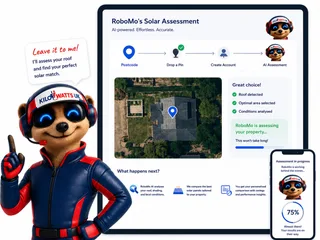
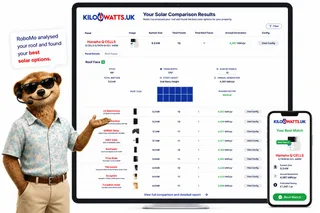
Use RoboMo™ to assess your property, compare available technologies and connect with trusted UK installers, suppliers and manufacturers.
Simply enter your postcode, drop a pin on your roof, create your free account and let RoboMo™ analyse your property to find the best solar panels for your home.

You don't have to think
RoboMo™'s AI analyses your roof and does all the hard work.

Accurate & tailored
AI-powered assessment based on your roof, location, and conditions.

Best options, maximum savings
Compare top solar panels for the best performance and value.

Simple, fast & effortless
Provide a few details, sit back and watch your results unfold.
STEP 1
Choose Home, Business or Industrial
Enter your postcode to start your assessment.
STEP 2

Drop a pin on your roof
STEP 3

Create your free account
STEP 4

Sit back and watch RoboMo™ work
RoboMo™ analyses your roof and builds your personalised solar comparison.

Step 1
Enter your postcode
Start designing your wind energy system in seconds.
Are you an installer, distributor or renewable energy business?
Kilowatts UK is expanding the Flower Turbines partner network across the UK.
Become A Flower Turbines PartnerKilowatts UK is an authorised representative
Flower Turbines
Compact vertical-axis turbines built for real UK sites, not just open farmland.
They start in light wind, sit in a small footprint, and are bird-safe by design. Cluster them as a bouquet and the group performs better together than the same turbines standing alone. Enter your postcode for a location-based generation estimate. Figures use area weather data and will differ if buildings, trees or hills sit in the way.
Starts in light UK wind
Built to generate in typical UK wind, not only open farmland.
Small rooftop or ground footprint
Compact towers for roofs, yards and tight sites.
Bird-safe slow rotation
Slow vertical-axis spin, bird-safe by design.
Bouquet clusters raise output
Grouped turbines outperform the same units standing alone.
STEP 2

Choose a location
STEP 3

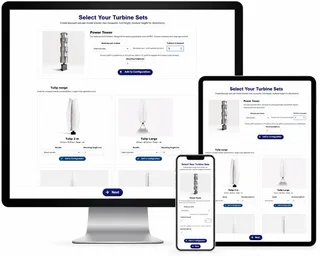
Place your cluster
Tap the map where you want the turbine cluster to go.
STEP 4

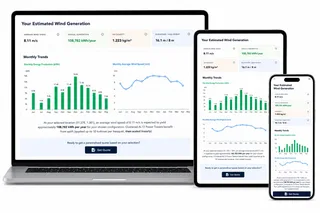
Instant generation forecasts
Compare different turbine layouts and see annual generation forecasts instantly.
STEP 5

No commitment required
Explore different configurations before deciding whether to request a quotation.
Related articles

Mo's Mission Nominations
FAQ
Need Help? RoboMo's Got Answers
What should I compare first when looking at solar panel quotes?
Start by checking the full system design, not just the number of panels or the headline price. A good quote should explain the roof layout, inverter choice, expected generation, scaffolding, cable routes, DNO handling, warranties and handover documents. If these details are missing, ask for them before comparing quotes.
Is the cheapest solar panel quote usually the best choice?
Not necessarily. A lower price may exclude scaffolding, electrical work, monitoring, DNO administration or proper handover paperwork. Compare what is included and excluded so you know whether the quotes are genuinely like-for-like.
How do I know whether the expected solar savings are realistic?
Ask how the installer calculated annual generation and what assumptions they used for self-consumption, export income and electricity prices. Savings are estimates, not guarantees, because your usage, tariffs and future energy prices can change. Be cautious if a quote shows much higher savings than another without explaining why.
Should I choose the highest wattage solar panels?
Higher wattage panels can help where roof space is limited, but they are not automatically the best option. Roof orientation, shading, inverter design, panel layout and installation quality all affect real-world performance. A well-designed system with suitable panels can be better than a larger system fitted poorly.
What inverter details should a solar quote include?
The quote should state the inverter make, model, size and type, and explain why it suits your roof and panel layout. It should also say whether the system uses a string inverter, hybrid inverter, optimisers or microinverters. If a battery may be added later, ask whether the inverter choice supports that plan.
Do I need to check MCS and DNO details before accepting a quote?
Yes, it is sensible to check them. MCS certification is commonly important in the UK and may be required by some suppliers for export tariff applications. The installer should also explain whether they will handle the relevant DNO notification or application and what export limit or process is assumed.
What paperwork should I receive after a solar installation?
You should receive clear handover documents showing what has been installed and how to use it. Ask for electrical certification, commissioning information, panel and inverter details, datasheets, warranties, serial numbers, monitoring guidance and any DNO-related records. Good paperwork helps with export tariffs, maintenance, warranty claims and future property sale queries.
Should I include a battery when comparing solar panel quotes?
A battery can increase the amount of solar electricity you use at home, but it adds cost and design complexity. Compare quotes carefully to see whether the battery is included, optional later, or not part of the design. Ask what usage pattern, tariff assumptions and usable battery capacity have been used in any savings estimate.