


Kilowatts UK - 30kWh Battery
Published: 2026-09-10 14:28:28
Updated: 2026-09-10 13:59:12
For a UK domestic or light commercial 30kWh battery system, a cautious installed planning budget is around £15,000 to £35,000.
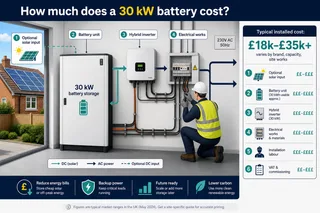
How much does a 30kw battery cost?
Find out how much does a 30kw battery cost in the UK, including costs, what affects price, and how to choose an installer.
How much does a 30kW battery cost in the UK?
If you are asking how much a 30kW battery costs, you probably mean a 30kWh battery. For a UK domestic or light commercial 30kWh battery system, a cautious installed planning budget is around £15,000 to £35,000, depending on usable capacity, inverter choice, electrical work, backup equipment, VAT treatment and site complexity. A true 30kW power-rated system cannot be priced sensibly without knowing its storage capacity in kWh.
That range is not a quote and should not be treated as a market guarantee. It is a broad budgeting guide for complete installed systems. The price is shaped by battery modules, inverter hardware, protection equipment, cabling, commissioning, DNO handling and the difficulty of the installation. Some quotes bundle these items together. Others list optional works separately. For a wider domestic benchmark, compare this against typical home battery costs before treating any single figure as representative.
A 30kWh battery is large for many homes, but it can be reasonable for high electricity users, properties with sizeable solar PV, heat pumps, regular EV charging or time-of-use tariff strategies. For a small business, the same capacity may be modest or excessive depending on operating hours, peak demand, solar surplus and the reason for installing storage.
Check whether you mean 30kW or 30kWh
The first pricing mistake is mixing up kW and kWh. kW is the rate at which a battery system can charge or discharge. kWh is the amount of energy the battery can store. A system with high kW but low kWh can deliver power quickly, but not for long. A system with high kWh but limited inverter output may store plenty of energy, but only discharge at a modest rate.
A 30kWh battery could store roughly 30 units of electricity before allowing for usable-capacity settings and conversion losses. A 30kW battery system, by contrast, describes power output rather than duration. A 30kW/30kWh installation, a 30kW/60kWh installation and a 30kW/120kWh installation would all be very different projects.
An installer should clarify this before quoting. They should ask about storage capacity, inverter output, existing solar PV, single-phase or three-phase supply, grid connection requirements and whether you want backup power during outages. If you are new to the technology, it is worth checking the battery basics before comparing specifications.
What the £15,000 to £35,000 budget usually includes
The wide price range is mainly caused by the difference between a basic storage installation and a more engineered system. A simple retrofit with accessible cabling, a compatible inverter arrangement and no backup requirement is not the same as a three-phase system with selected backup circuits, export controls, outdoor equipment and consumer unit alterations. The table below explains where the budget pressure usually comes from. It is not a line-by-line price list, because UK installers use different product bundles, labour structures and VAT assumptions. Individual site conditions can also change the work significantly.
Overview
A good quote should show what is included and what is excluded. If one installer includes DNO work, backup hardware and consumer unit changes while another excludes them, the cheaper headline price may not be the lower real cost.
Domestic and commercial pricing are not the same
Domestic battery pricing is usually shaped by household demand, solar self-consumption, tariff use, available wall or floor space and the condition of the existing electrical installation. A 30kWh domestic battery may need careful justification because many homes will not cycle that much storage consistently throughout the year.
Commercial pricing is often more dependent on load profile, three-phase supply, operating hours, peak demand, site access, fire-risk considerations, monitoring requirements and whether the battery is being used for solar storage, time shifting, resilience or peak management. A small business may also need clearer evidence that the battery will be used enough to justify the capital outlay.
VAT needs careful wording. HMRC guidance on energy-saving materials should be checked for domestic work, and treatment can differ between Great Britain and Northern Ireland, domestic and commercial premises, and mixed-use projects. A VAT-registered business may also look at VAT differently from a homeowner. The installer should state the VAT basis on the quote, and customers should take tax advice where the position is not straightforward.
When a 30kWh battery is worth considering
A 30kWh battery is worth considering only if the property can regularly charge and discharge it. The financial case depends on consumption pattern, solar generation, tariff spread, export value, inverter limits, battery degradation and how often the battery cycles. A large battery that sits full or empty for long periods is unlikely to be the best-value option.
For homes, this capacity is most likely to suit high-use properties. That might include a heat pump, regular EV charging, high evening demand, electric cooking, home working, or a solar PV system that often exports more electricity than the household can use at the time of generation. For businesses, the same capacity may suit sites with repeatable daily loads and useful solar surplus. It may be too small for heavy plant or too large for a low-demand office.
The aim is not to buy the biggest battery possible. The aim is to match usable capacity and inverter output to the way the property actually uses electricity. A separate battery size guide can help frame that decision before you ask for quotes.
Two realistic UK sizing scenarios
A worked scenario is more useful than a headline capacity. In real projects, the right answer usually comes from half-hourly consumption data, solar generation expectations and the customer’s reason for wanting a battery. Annual electricity use alone can hide whether the battery will cycle daily, seasonally or hardly at all.
For a high-use home with solar PV, a heat pump and EV charging, a 30kWh battery might be considered where there is regular evening demand and enough solar or off-peak charging opportunity to refill the battery. It may still be oversized if the EV is mainly charged away from home, the heat pump load is seasonal, or the occupants export little solar surplus.
For a small business, 30kWh may work where daytime solar surplus can be stored for late-afternoon or evening use, or where predictable operating hours allow tariff shifting. It may be a poor fit if the business has short, sharp power peaks that need higher inverter output rather than more storage capacity, or if the site closes before the stored energy can be used.
Backup power is not automatic
A large battery does not automatically mean whole-property backup. Many grid-tied battery systems are designed to reduce imports and increase solar self-consumption. They may shut down during a power cut unless backup equipment and safe islanding arrangements are specified.
Whole-home or whole-building backup may be impractical or expensive. High-load appliances such as electric showers, ovens, heat pumps, EV chargers, pumps and large motors can exceed the inverter’s output or drain the battery quickly. Many installations use selected backup circuits instead, covering essentials such as lighting, refrigeration, broadband, controls and a limited number of sockets.
If backup matters, it should be in the design brief from the start. Ask the installer to state whether the quote includes backup hardware, a changeover or gateway arrangement, protected circuits, suitable earthing design and commissioning checks. Do not assume that a 30kWh capacity figure means the property will operate normally for a fixed number of hours during an outage. For more detail, check whether a battery works in a power cut before specifying backup requirements.
Solar PV, tariffs, export limits and grid connection
A 30kWh battery is often considered alongside solar PV, but the solar array must be large enough and productive enough to make good use of it. In summer, a sizeable PV system may fill a battery more easily. In winter, the same battery may rely more on off-peak grid charging if the customer is using a time-of-use tariff. If you are comparing solar and storage together, start by reviewing home solar options rather than pricing the battery in isolation.
Tariffs can improve or weaken the case for storage. Off-peak charging, peak-time discharge and export payments all affect savings, but tariffs change and eligibility depends on the supplier, metering arrangement and customer behaviour. A payback estimate should therefore use cautious assumptions rather than assuming perfect daily cycling.
The grid connection also needs attention. Battery inverters interact with the local network, and the installer should identify whether the project falls under the relevant G98 or G99 process and whether export limitation is needed. Single-phase homes and three-phase commercial premises can have very different practical limits, even when the battery capacity is the same.
Guidance and standards to check
Authoritative checking matters because battery storage sits between product selection, electrical design, grid connection and consumer protection. A quote does not need to turn into a technical manual, but it should be clear enough for the customer to see that the installer understands the relevant framework.
Useful references include HMRC guidance for VAT treatment, the Energy Networks Association Engineering Recommendations G98 and G99 for generation connection processes, BS 7671 for electrical installation requirements, and the IET Code of Practice for Electrical Energy Storage Systems. These should be treated as source checks rather than a substitute for project-specific design.
Competence also matters. For domestic renewable projects, customers often look for appropriate electrical competence, scheme membership or certification relevant to the work being carried out. MCS may be relevant where solar PV or eligible microgeneration is part of the installation, while electrical contractors may be registered with bodies such as NICEIC or NAPIT. Do not assume every battery retrofit is covered by the same certification route. Ask the installer exactly what is certified and what paperwork you will receive.
What a quote for a 30kWh battery should include
A useful quote should make the specification clear enough to compare with another proposal. Two systems both described as 30kWh may have different usable capacity, inverter output, backup capability, warranty terms, mounting requirements and installation allowances.
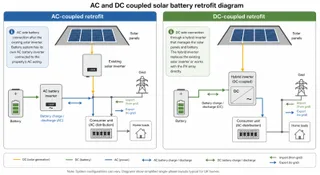
Look for clarity on the battery model, number of modules, nominal and usable capacity, inverter type, mounting location, cable route, isolation, metering, monitoring, commissioning and customer handover. If the battery is being retrofitted to existing solar PV, the quote should explain how it will interact with the current inverter, generation meter and export arrangement. The quote should also state the VAT treatment clearly rather than leaving it as an assumption.
Warranty details deserve careful reading. Many battery warranties include conditions around operating temperature, usable capacity retention, cycles, energy throughput and installation environment. Those terms can matter more than the headline warranty length if the battery will cycle heavily every day.
Common mistakes to avoid before buying
The most common mistake is buying on storage capacity alone. A large battery with the wrong inverter, poor tariff fit, limited charging opportunity or unclear export arrangement can disappoint even if the hardware itself is good. The system should be designed around real consumption, not a round number.
Another mistake is assuming the battery will save money in the same way all year. UK solar generation is seasonal, electricity use changes with heating and occupancy, and import or export tariffs may move. A sensible proposal should show what happens if assumptions change, not just a best-case result. A cautious payback calculation should test whether the battery is likely to cycle enough to justify the cost.
It is also worth avoiding quotes that blur optional features. Backup power, three-phase equipment, outdoor enclosures, additional metering, consumer unit upgrades and DNO work can materially affect cost. If one installer includes these and another does not, the lower price may simply be a less complete system.
Practical next steps before requesting quotes
Before asking for prices, gather enough information for installers to size the system properly. Recent electricity bills are useful, but half-hourly smart-meter data is better where available. For a business, load profiles, opening hours and seasonal patterns can reveal whether the battery should target solar self-consumption, peak management, time shifting or resilience.
Take clear photos of the consumer unit, meter area, existing solar inverter, proposed battery location and likely cable route. Note whether the property has single-phase or three-phase supply if you know, and be clear about whether backup power is required or whether the aim is bill reduction only.
A good installer should explain why the proposed capacity and inverter output match your usage. If the installer cannot explain the difference between 30kW and 30kWh, cannot state what is included in the installed price, or avoids questions about VAT, DNO handling and backup scope, keep looking. If you want site-specific advice, you can book a free home energy survey before committing to a system size.
Plan, Compare & Buy Renewable Energy Solutions
AI does the thinking.
You get the perfect solar match.
Use RoboMo™ to assess your property, compare available technologies and connect with trusted UK installers, suppliers and manufacturers.
Simply enter your postcode, drop a pin on your roof, create your free account and let RoboMo™ analyse your property to find the best solar panels for your home.

You don't have to think
RoboMo™'s AI analyses your roof and does all the hard work.

Accurate & tailored
AI-powered assessment based on your roof, location, and conditions.

Best options, maximum savings
Compare top solar panels for the best performance and value.

Simple, fast & effortless
Provide a few details, sit back and watch your results unfold.
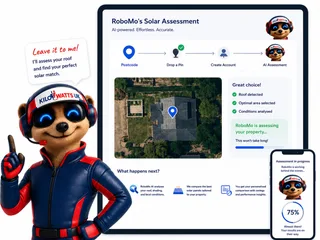
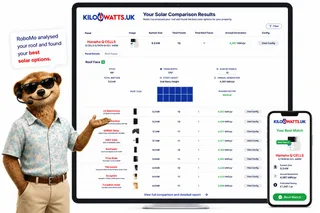
STEP 1
Choose Home, Business or Industrial
Enter your postcode to start your assessment.
STEP 2

Drop a pin on your roof
STEP 3

Create your free account
STEP 4

Sit back and watch RoboMo™ work
RoboMo™ analyses your roof and builds your personalised solar comparison.
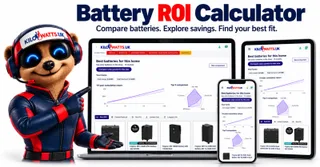
BATTERY ROI TOOL
See what a battery saves on your bill
Enter the day rate, off-peak rate and export rate. The calculator ranks batteries in the Kilowatts shop over 10 years.
Home batteries also suit offices and small commercial sites. Industrial batteries are listed on their own calculator.

Step 1
Enter your postcode
Start designing your wind energy system in seconds.
Are you an installer, distributor or renewable energy business?
Kilowatts UK is expanding the Flower Turbines partner network across the UK.
Become A Flower Turbines PartnerKilowatts UK is an authorised representative
Flower Turbines
Compact vertical-axis turbines built for real UK sites, not just open farmland.
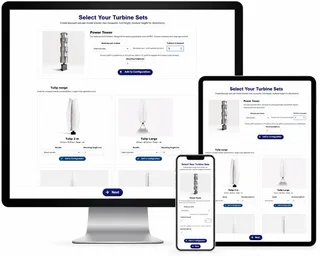
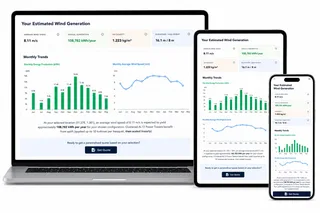
They start in light wind, sit in a small footprint, and are bird-safe by design. Cluster them as a bouquet and the group performs better together than the same turbines standing alone. Enter your postcode for a location-based generation estimate. Figures use area weather data and will differ if buildings, trees or hills sit in the way.
Starts in light UK wind
Built to generate in typical UK wind, not only open farmland.
Small rooftop or ground footprint
Compact towers for roofs, yards and tight sites.
Bird-safe slow rotation
Slow vertical-axis spin, bird-safe by design.
Bouquet clusters raise output
Grouped turbines outperform the same units standing alone.
STEP 2

Choose a location
STEP 3

Place your cluster
Tap the map where you want the turbine cluster to go.
STEP 4

Instant generation forecasts
Compare different turbine layouts and see annual generation forecasts instantly.
STEP 5

No commitment required
Explore different configurations before deciding whether to request a quotation.
Related articles

Mo's Mission Nominations
FAQ
Need Help? RoboMo's Got Answers
Does a 30kW battery mean the same as a 30kWh battery?
No. kW is the power rating, which affects how quickly the battery can charge or discharge. kWh is the storage capacity, which affects how much electricity it can hold. Most buyers asking about a “30kW battery” usually mean a 30kWh battery system.
How much should I budget for a 30kWh battery in the UK?
As a broad planning guide, a domestic or light commercial 30kWh battery system might be around £15,000 to £35,000 installed. The actual quote depends on the battery, inverter, electrical work, backup requirements, VAT treatment and site complexity. A true 30kW power-rated system cannot be priced properly without also knowing its kWh capacity.
Why do quotes for a 30kWh battery vary so much?
Quotes vary because some systems are simple grid-tied installations, while others need three-phase equipment, backup hardware, consumer unit changes or export controls. Cable routes, access, outdoor mounting, monitoring and commissioning can also affect the price. Always check what is included and excluded before comparing headline figures.
Is a 30kWh battery too big for a normal home?
For many UK homes, 30kWh is a large battery. It is more likely to suit high-use properties with sizeable solar PV, a heat pump, regular EV charging or strong evening demand. The best size depends on smart-meter data, solar generation and how often the battery will actually charge and discharge.
Will a 30kWh battery run my home during a power cut?
Not automatically. Many battery systems shut down during a power cut unless backup equipment and safe islanding arrangements are included. If backup matters, ask whether the quote covers whole-home backup or selected essential circuits only.
Do I need solar panels with a 30kWh battery?
You do not always need solar panels, because some batteries can be charged from the grid on a time-of-use tariff. However, solar PV often improves the case for storage if it regularly produces surplus electricity. The solar array must be large enough and productive enough to make good use of a 30kWh battery.
Will I need DNO approval for a 30kWh battery?
The installer should check the correct grid connection process, as battery inverters interact with the local electricity network. The relevant route may depend on inverter output, export settings, existing solar PV and whether the property is single-phase or three-phase. Do not assume that battery capacity alone determines the DNO requirements.
Are there grants or VAT savings for a 30kWh battery?
Do not assume a grant or reduced VAT applies without checking the current rules. VAT treatment can depend on the property, customer, location and scope of work, and commercial projects may be treated differently from domestic ones. Ask the installer to state the VAT basis clearly on the quote and take tax advice where needed.