


Is A Home Battery Worth It? How To Calculate The Payback
Published: 2026-07-19 16:23:54
Updated: 2026-07-26 18:34:30
A battery does not generate electricity. It shifts electricity from one time to another.
Is a home battery worth it in the UK?
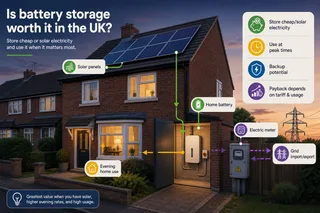
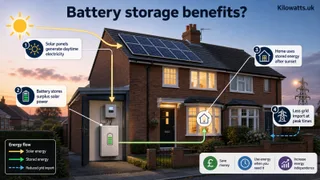
Yes, a home battery can be worth it in the UK, but only when it is used enough to recover its installed cost through real energy savings. A battery does not generate electricity. It shifts electricity from one time to another, usually from sunny daytime hours or cheaper off-peak periods into the evening, overnight, or other higher-cost periods.
The financial case is strongest when the battery regularly stores energy that would otherwise be exported or bought later at a higher price. It is weaker when the home has low electricity use, little evening demand, limited solar surplus, or no access to a tariff that creates a useful price difference.
The right question is not “how big is the battery?” but “how many useful kilowatt hours will pass through it each year, and what is each one worth after losses and export trade-offs?” That is the calculation that determines payback.
The short version for homeowners
A home battery saves money by reducing higher-cost grid imports. With solar panels, it can store surplus generation for later use. Without solar, it may charge from cheaper grid electricity and discharge when electricity would otherwise be more expensive. If you are new to the technology, start with how batteries work before judging payback claims.
Most households should base the decision on smart meter data, export assumptions, tariff options and a realistic view of how often the battery will cycle. A system that looks attractive on a sales illustration may perform very differently if the household cannot fill and empty it regularly.
Best fit
Homes with regular evening or overnight electricity use, meaningful solar surplus, or access to a suitable time-of-use tariff.Main risk
Oversizing the battery can increase payback time because unused capacity still has to be paid for.Weaker fit
Low-usage homes, homes already using most solar power during the day, or households unable to access a useful tariff spread.Best evidence
Half-hourly smart meter data and actual export readings are more useful than generic savings claims.Uncertain fit
Homes with changing future demand, such as planned EV charging, heat pump installation or new solar panels, where modelling should include the future load profile.
How home batteries save money
A battery creates value by changing when electricity is used. With solar PV, it can store electricity that would otherwise be exported and then discharge it later when the home would otherwise import from the grid. Without solar, it can charge during a cheaper tariff period and discharge during a more expensive period.
The saving is not equal to the full import price unless the alternative was definitely buying that unit from the grid. If the electricity would otherwise have been exported under a Smart Export Guarantee tariff, the export value you give up must be deducted. Battery losses also matter because you do not get every unit back after charging and discharging.
In plain terms, the useful saving per stored unit is the value of the import avoided, minus the value of the energy used to charge the battery, adjusted for efficiency and any export income lost.
The simple home battery payback formula
The basic payback calculation is simple, but the inputs need care. Use the installed cost of the battery system and divide it by the annual net saving. The result is the simple payback period before considering wider factors such as future tariff changes, battery degradation, finance costs or the value you place on backup capability.
Simple payback is not the same as a guarantee. It is a screening tool that helps you compare system sizes and decide whether the proposal is financially credible. If the payback only works under perfect assumptions, such as full daily cycling all year, no losses, no tariff changes and no export trade-off, it is probably too optimistic.
A useful formula is: Simple payback = installed battery cost ÷ annual net saving Annual net saving = value of avoided imports − cost of charging energy − lost export income − other relevant annual costs or allowances For a solar-charged battery, the key comparison is usually the import price avoided versus the export value given up, adjusted for battery losses. For a grid-charged battery, the key comparison is the peak or standard import price avoided versus the off-peak charging price, again adjusted for losses.
A reusable calculation template
Start with your own data rather than a headline savings claim. Half-hourly smart meter readings are especially useful because they show when you import electricity, not just how much you use across a year. If you already have solar, use inverter or export data to estimate when surplus generation is available.
The aim is to calculate realistic annual throughput. A battery may have a stated usable capacity, but it will not necessarily complete a full charge and discharge cycle every day. Winter solar generation, holidays, low-use days, full batteries and empty batteries all reduce real-world utilisation.
Step
Find your evening and overnight demand in kWh for typical days across the year.Step 2
Estimate how much surplus solar or off-peak electricity is genuinely available to charge the battery.Step 3
Limit the battery saving to the lower of available charge, usable capacity and later household demand.Step 4
Apply round-trip efficiency so the discharged energy is lower than the energy used to charge.Step 5
Deduct the export value you give up if solar electricity is stored instead of exported.Step 6
Multiply the realistic daily or monthly saving across the year, allowing for seasonal variation.
For example, use your own placeholders like this: if your battery discharges [useful kWh per year] into the home, and each discharged kWh avoids [import price] but gives up [export value or off-peak charging cost], then the gross value is based on the difference between those inputs after allowing for efficiency. Subtract any relevant annual costs or allowances, then divide [installed cost] by that annual net saving. This placeholder method is deliberately more useful than a generic worked example with made-up figures. It forces the calculation to reflect your tariff, your export arrangement, your usage timing and the specific battery you have been quoted. Step — Divide the installed cost by the annual net saving to estimate simple payback.
Solar battery payback
For a solar household, the battery is usually trying to increase self-consumption. Instead of exporting surplus generation in the day and buying electricity later, the battery stores some of that surplus and releases it when the home needs it.
The important trade-off is export value. Under the Smart Export Guarantee, eligible low-carbon generators can be paid for exported electricity by participating suppliers. Ofgem provides guidance on the SEG framework, and suppliers set their own export tariffs within the rules. That means stored solar energy is not “free” if you would otherwise have been paid to export it.
A solar battery is more likely to work financially when there is regular surplus generation and regular later demand. It is less convincing if most solar power is already used directly during the day, or if the home exports little electricity in the first place. Stronger case: The home exports meaningful solar generation and later imports electricity at a higher value than the export payment given up. Weaker case: Daytime self-consumption is already high, leaving little surplus for the battery to capture. Seasonal issue: Summer may create plenty of surplus, while winter may offer much less solar energy to store. Sizing issue: A battery sized for peak summer surplus may be underused for much of the year.
Battery payback without solar
A battery can work without solar if it charges from the grid during a cheaper period and discharges later when electricity would otherwise cost more. If you are comparing this route, review whether a battery without solar fits your usage before assuming solar is essential.
The economics depend heavily on the tariff spread. The difference between the charging price and the avoided import price must be wide enough to cover battery losses, battery wear, installation cost and any standing assumptions in the quote. A small tariff difference can disappear once efficiency losses are included.
Standalone batteries are usually most credible where the home has reliable demand during the expensive period and enough usable capacity to discharge into that demand. If the battery finishes the day still full, or cannot charge cheaply enough, the case weakens.
Change risk
Tariff structures can change, so avoid relying on a narrow price gap for a long payback period.Usage dependency
The battery must discharge into real household demand rather than simply remain charged.Tariff dependency
The calculation depends on the actual tariff available to the household, not just the idea of off-peak electricity.Smart meter dependency
Many time-of-use tariffs require suitable metering and supplier arrangements.
What affects the payback period most?
Utilisation is usually the biggest driver. A smaller battery that cycles usefully most days can deliver a better return than a larger battery that rarely fills or empties. Annual electricity use alone is not enough; the timing of that use is what matters.
Tariff structure is another major driver. A flat-rate tariff gives fewer opportunities for a standalone battery, unless the battery is storing solar electricity that would otherwise be exported. A time-of-use tariff can improve the case, but only if the home can reliably charge cheaply and discharge during higher-cost periods.
Battery efficiency, degradation and warranty conditions should also be included. Manufacturer warranties vary and may include conditions around installation, operating environment, usable capacity retention, cycle limits, throughput or system monitoring. The quoted saving should not assume the battery performs as new forever unless the warranty and degradation assumptions support that view. Installed cost: A higher fitted cost requires a higher annual saving to achieve the same payback. Usable capacity: The usable kWh matters more than the headline capacity. Cycle frequency: More useful cycles usually improve the financial case, provided they match warranty conditions. Tariff spread: Bigger differences between charging value and discharge value can improve returns. Export value: Higher export payments reduce the benefit of storing solar instead of exporting it. Round-trip efficiency: Losses reduce the amount of electricity available after storage. Degradation — Battery capacity and performance may reduce over time, depending on the product and use. Future demand — EVs, heat pumps and changes in occupancy can alter the calculation.
Common mistakes that make batteries less worthwhile
The most common mistake is treating capacity as the main measure of value. Capacity matters, but savings come from useful energy moved through the system. A large battery can look impressive while delivering weak returns if the home cannot use it well. Use your demand pattern to size the battery rather than choosing the biggest unit available.
Another mistake is ignoring the alternative value of the electricity. Solar electricity may have an export value. Grid electricity used for charging has a purchase cost. Both should be visible in the calculation.
Many weak payback estimates also assume ideal use every day of the year. In practice, the battery may be full, empty, constrained by the inverter, limited by tariff windows, or affected by seasonal solar variation.
Ignoring tariff risk
A calculation based on today’s tariff may change if supplier pricing changes.Oversizing the battery
Paying for capacity that is rarely used increases the payback period.Forgetting export income
Storing solar is only better than exporting if the later saving is worth more after losses.Ignoring household timing
Annual consumption does not show whether the battery will discharge when needed.Treating backup as standard
Not all battery systems provide usable backup during a power cut.Assuming solar surplus all year
UK winter generation may be much lower than summer generation.
Overlooking warranty limits — Usage patterns, installation conditions and operating settings may affect warranty cover.
UK checks before relying on a quote
A credible UK battery quote should make the assumptions clear. It should show how the proposed battery size was chosen, what electricity price assumptions were used, whether export income has been deducted, and how many cycles or kWh of annual throughput are expected.
For authority and compliance checks, use current UK sources rather than relying only on sales material. Ofgem publishes information on the Smart Export Guarantee. MCS provides standards and certification information for small-scale renewable installations. The Energy Saving Trust publishes consumer guidance on home energy technologies. DESNZ and GOV.UK are appropriate places to check current government energy policy, VAT treatment and any support schemes that may apply at the time.
Do not assume that a grant, VAT rule, export tariff or supplier product will be available unchanged throughout the battery’s life. These details can change, and eligibility may depend on the property, installer, technology combination and timing. SEG checks: Confirm the export tariff, eligibility requirements and metering arrangements with the chosen supplier. MCS checks: Ask whether the installation route affects export tariff eligibility, warranty support or handover documentation. DNO checks: Confirm that the installer will handle any required network notification or application process for the battery and inverter arrangement. Warranty checks: Read the manufacturer conditions for installation, environment, monitoring, throughput, cycles and capacity retention. Tariff checks: Use the actual import and export rates available to you, not generic examples. Safety and location checks: Confirm suitable siting, clearances, ventilation, access and electrical protection with a competent installer.
When a home battery may not be suitable
A home battery may not be the best investment for a low-use household with little evening or overnight demand. If most electricity is already consumed during daylight hours, solar panels alone may capture much of the available saving without the extra cost and complexity of storage.
It may also be unsuitable where the installation is awkward, the existing electrical setup needs significant work, or the proposed battery location is not appropriate. Sometimes the better advice is to reduce the battery size, delay the purchase, improve energy efficiency first, or focus on solar PV, heating controls or load shifting.
Homes buying a battery mainly for resilience should be especially careful. Some systems can support backup arrangements, but backup is not automatic and may not cover the whole home. It depends on inverter specification, wiring, battery reserve settings and which circuits need to operate during an outage. Check battery backup options before buying for power-cut protection. Likely unsuitable: The home has low electricity use and little demand outside daylight hours. Likely unsuitable: There is little solar export and no useful time-of-use tariff option. Likely unsuitable: The financial case depends on full daily cycling all year with no losses or degradation. Needs caution: The home is about to add an EV, heat pump or solar PV system and last year’s usage data no longer reflects future demand. Needs caution: The quote does not show export value, tariff assumptions or usable battery capacity.
What to ask before buying a battery
A good battery quote should be based on your home’s actual or expected energy profile. It should not rely only on generic annual savings or assume that every kWh stored creates the maximum possible saving.
Ask the installer to explain the operating strategy. A battery designed mainly for solar self-consumption may be configured differently from one designed around off-peak grid charging, backup reserve, or a combination of uses. If you have an EV, heat pump, immersion diverter or future solar plans, these should be considered together.
Sizing method: Ask what smart meter, solar generation or household demand data was used to choose the battery size. Usable capacity: Check the usable storage capacity rather than only the headline capacity. Annual throughput: Ask how many kWh per year the battery is expected to discharge usefully. Export assumption: Ask what export tariff or export value has been used in the calculation. Tariff assumption: Ask which import tariff is being modelled and whether you can actually access it. Efficiency assumption: Ask what round-trip efficiency has been assumed. Degradation assumption — Ask whether the savings model allows for performance changes over time. Inverter compatibility — Confirm whether the battery works with existing or planned solar equipment. Operating mode — Ask whether the system will prioritise solar charging, tariff charging, backup reserve or a mixture. Monitoring — Make sure you can see battery charge, discharge, solar generation, grid import and export clearly. Warranty conditions — Check what usage, installation and operating conditions affect the warranty.
How solar, heat pumps and EVs change the decision
The value of a battery can change when other technologies are added. Solar panels create daytime generation that may be stored for later. Heat pumps can increase electricity demand, often during colder periods when solar generation is lower. EVs add a large flexible load, but the car battery may be the most effective place to store cheap electricity for driving.
This means a home battery should not be assessed in isolation. The best design considers the whole property: roof generation, heating, hot water, vehicle charging, occupancy, tariffs and future electrification plans. If solar is part of the plan, compare the battery case alongside home solar options rather than treating storage as a separate purchase.
A battery might be useful alongside an EV if it supports household loads while the car charges separately on a suitable tariff. Using a small home battery mainly to fill a much larger EV battery is rarely the central financial case. Similarly, a heat pump may increase evening and overnight demand, but winter solar surplus may be limited, so the tariff strategy and household load pattern become more important.
Comparing smaller and larger battery options
The best battery size is usually the one that matches repeatable demand, not the one with the largest capacity. A smaller battery can produce a stronger return if it cycles more often and costs less to install. A larger battery may make sense where there is consistent surplus generation or a reliable off-peak charging opportunity, but it needs evidence.
When comparing quotes, ask for the same calculation across at least two battery sizes. The larger option should show enough extra annual saving to justify the extra installed cost. If it only adds a small amount of useful stored energy, the smaller system may be the better financial choice.
A practical verdict for your home
A home battery is more likely to be worth it when three conditions are met: there is enough cheap or surplus electricity to charge it, there is enough later demand to discharge it, and the value difference is large enough to cover losses, export trade-offs and installed cost.
The decision is uncertain when future electricity use is changing, tariff options are unclear, or the quote does not show the assumptions. In that situation, model more than one system size and avoid committing to a battery that only pays back under optimistic conditions.
A battery is less likely to be worth it when electricity use is low, solar export is minimal, daytime self-consumption is already high, or the system would rarely cycle. It is also less convincing where the main justification is backup power but the quoted system does not clearly provide the backup function needed. Likely worth investigating: Regular evening demand, solar export that can be used later, or a strong time-of-use tariff opportunity. Needs detailed modelling: Planned EV, heat pump or solar changes that will alter the household load profile. Unlikely to be compelling: Low demand, little export, no useful tariff spread, or a payback model based on perfect daily use. Best next step: Use smart meter data, export readings and real tariff options to compare solar only, battery only, solar plus battery and different battery sizes.
Final verdict
Home batteries can save money in the UK, but the payback is not automatic and should not be treated as a fixed number. It depends on installed cost, usable capacity, annual throughput, import tariffs, export value, round-trip efficiency, degradation, warranty conditions and how the household actually uses electricity.
The most reliable approach is to calculate annual net saving from your own data, then divide the installed cost by that saving. If the answer looks reasonable using cautious assumptions, the battery may be worth serious consideration. If it only works with perfect cycling, no export trade-off and no tariff risk, the financial case is weak.
Before buying, gather real usage data, compare more than one battery size and ask the installer to explain the savings assumptions in plain English. A well-specified battery can be a useful part of a lower-cost, lower-carbon home energy setup, but the best result comes from matching the equipment to the property rather than buying the biggest system available. If you want a property-specific starting point, you can book a free survey and review the options against your actual household demand.
Plan, Compare & Buy Renewable Energy Solutions
AI does the thinking.
You get the perfect solar match.
Use RoboMo™ to assess your property, compare available technologies and connect with trusted UK installers, suppliers and manufacturers.
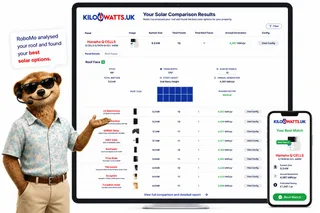
Simply enter your postcode, drop a pin on your roof, create your free account and let RoboMo™ analyse your property to find the best solar panels for your home.

You don't have to think
RoboMo™'s AI analyses your roof and does all the hard work.

Accurate & tailored
AI-powered assessment based on your roof, location, and conditions.

Best options, maximum savings
Compare top solar panels for the best performance and value.

Simple, fast & effortless
Provide a few details, sit back and watch your results unfold.

STEP 1
Choose Home, Business or Industrial
Enter your postcode to start your assessment.
STEP 2

Drop a pin on your roof
STEP 3

Create your free account
STEP 4

Sit back and watch RoboMo™ work
RoboMo™ analyses your roof and builds your personalised solar comparison.

Kilowatts UK is an authorised representative
Flower Turbines
Compact vertical-axis turbines built for real UK sites, not just open farmland.
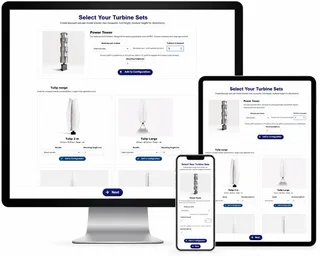
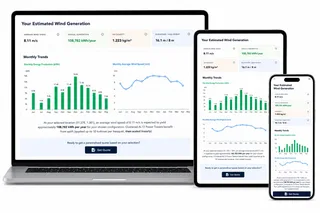
They start in light wind, sit in a small footprint, and are bird-safe by design. Cluster them as a bouquet and the group performs better together than the same turbines standing alone. Enter your postcode for a location-based generation estimate. Figures use area weather data and will differ if buildings, trees or hills sit in the way.
Starts in light UK wind
Built to generate in typical UK wind, not only open farmland.
Small rooftop or ground footprint
Compact towers for roofs, yards and tight sites.
Bird-safe slow rotation
Slow vertical-axis spin, bird-safe by design.
Bouquet clusters raise output
Grouped turbines outperform the same units standing alone.
Step 1
Enter your postcode
Start designing your wind energy system in seconds.
STEP 2

Choose a location
STEP 3

Place your cluster
Tap the map where you want the turbine cluster to go.
STEP 4

Instant generation forecasts
Compare different turbine layouts and see annual generation forecasts instantly.
STEP 5

No commitment required
Explore different configurations before deciding whether to request a quotation.
Related articles

Mo's Mission Nominations
FAQ
Need Help? RoboMo's Got Answers
Do home batteries save money in the UK?
Yes, home batteries can save money in the UK, but they are not guaranteed to pay for themselves. A battery saves money when the electricity it stores is cheaper, or has lower alternative value, than the electricity it later replaces. The strongest results usually come from homes with regular solar surplus, high evening or overnight electricity use, and access to a suitable time-of-use tariff. Savings are weaker where usage is low, export payments are high, the battery is oversized, the tariff gap is small, or the system is poorly configured.
How does a home battery reduce electricity bills?
A home battery reduces bills by storing electricity for later use. This electricity may come from surplus solar panels, cheap off-peak grid electricity, or a mix of both. The stored electricity is then used during more expensive periods, reducing the amount bought from the grid at higher unit rates. The saving depends on how many kWh the battery usefully shifts, the difference between charging and discharging value, and the energy lost through the battery cycle.
How do I calculate home battery payback?
A simple payback estimate is installed cost divided by annual saving. The difficult part is estimating the annual saving accurately. For solar charging, the value of stored electricity is usually the avoided import price minus the export payment you give up, with an allowance for battery losses. For grid charging, the value is the avoided peak or standard-rate electricity minus the off-peak charging cost, adjusted for efficiency. A realistic calculation should use usable battery capacity, expected annual discharge, import and export tariffs, degradation, warranty terms, finance costs, and any extra installation or electrical upgrade costs.
Is a solar battery better than a standalone battery?
A battery installed with solar panels is often easier to justify financially because it can store surplus solar electricity that might otherwise be exported at a lower rate. A standalone battery can still save money, but it relies more heavily on the gap between cheap off-peak import prices and higher peak or standard prices. If that tariff gap narrows, the financial return from a standalone battery can weaken. Some homes use both approaches, storing solar when available and charging from the grid during cheap-rate periods when solar generation is low.
What affects home battery payback?
Home battery payback depends on installed cost, usable capacity, daily discharge, import tariff, export tariff, battery efficiency, degradation, warranty terms, finance costs, and how often the battery is used. The timing of electricity use matters more than annual consumption alone. A battery that charges and discharges usefully most days will usually perform better financially than one that sits partly full, cannot fully charge during cheap-rate windows, or is held back by unsuitable settings.
How long does a home battery take to pay for itself?
Many UK home battery payback periods are around 8 to 15 years, but the range can be much wider. Payback may be shorter where the household has high evening demand, plenty of solar surplus, low export value, a strong off-peak tariff, and a competitive installed cost. It may be longer where electricity use is low, export payments are attractive, the battery is oversized, finance costs are high, or extra electrical work is needed. Any payback estimate should be compared with the warranty period and tested against less favourable tariff scenarios.
Does a home battery remove the electricity standing charge?
No, a home battery does not remove the electricity standing charge. Standing charges are fixed daily costs set by the electricity tariff and apply regardless of how much grid electricity you use. A battery can reduce unit-rate electricity costs by reducing imports at expensive times, but most homes will still keep a grid connection and still pay the standing charge.
What size home battery is best?
The best battery size depends on your usable solar surplus, evening and overnight electricity use, tariff, charge rate, discharge rate, inverter output, and whether you want to keep any backup reserve. Many UK homes choose batteries in the 5 kWh to 10 kWh usable capacity range, but bigger is not always better. A correctly sized battery should be large enough to cover regular demand but not so large that much of its capacity sits unused for long periods.
Should I choose the biggest battery I can afford?
Not necessarily. A large battery only makes financial sense if it can be charged and discharged regularly at a worthwhile price difference. If the battery is too large for your normal electricity use, solar generation, or cheap-rate charging window, the extra capacity may add cost without adding enough extra savings. It is usually better to size the battery around smart meter data, solar generation data, evening demand, and tariff assumptions rather than budget alone.
What is the difference between usable and nominal battery capacity?
Nominal capacity is the headline amount of energy a battery can store, while usable capacity is the amount normally available to the household. Manufacturers often limit usable capacity to protect battery life and maintain warranty conditions. For example, a battery advertised as 10 kWh may provide less than 10 kWh of usable energy in normal operation. Savings calculations should use usable capacity, not just the headline figure.
Why does inverter power matter for a home battery?
The inverter controls how quickly the battery can charge and discharge. For example, a 10 kWh battery with a 3 kW inverter cannot deliver more than about 3 kW at once. If the home’s demand is higher than the inverter output, the property may still import electricity from the grid even when there is energy stored in the battery. Inverter power also affects whether the battery can fully charge during a short off-peak tariff window and whether it can cover high-power appliances.
How do export tariffs affect battery savings?
Export tariffs are important because storing solar electricity usually means giving up the income you would have earned by exporting it. If your export rate is low and your import rate is high, storing solar can be valuable. If your export rate is high, the extra benefit of storing solar may be much smaller once lost export income and battery losses are included. Maximising self-consumption is not always the same as maximising savings.
Can I charge a home battery from the grid?
Yes, many home batteries can be charged from the grid, but the financial case depends on your tariff, battery settings, and supplier rules. Grid charging works best when you can buy electricity cheaply during off-peak periods and use it later when electricity is more expensive. You should check whether your tariff allows grid charging and whether any restrictions apply if you plan to export electricity that was originally imported from the grid.
Do home batteries work well with time-of-use tariffs?
Home batteries can work very well with time-of-use tariffs if the price difference between off-peak and peak electricity is large enough. The battery can charge when prices are low and discharge when prices are high. However, the savings depend on tariff availability, battery efficiency, charge rate, software settings, and whether the household uses enough electricity during expensive periods to make regular discharging worthwhile. Automation and correct tariff programming are especially important on dynamic tariffs.
Do I need a smart meter for a home battery?
A smart meter is not always required for a battery to operate, but it is usually important if you want to access smart time-of-use tariffs or export tariffs that depend on half-hourly metering. Smart meter data is also very useful for sizing the battery and estimating savings accurately because it shows when electricity is imported and exported. Without this data, savings estimates are more likely to rely on broad assumptions.
How much energy is lost when using a battery?
Some energy is lost when electricity is charged into and discharged from a battery. Round-trip efficiency is commonly around 85% to 95%, depending on the battery, inverter, temperature, operating conditions, and charge or discharge rate. This means that not every kWh stored will be available for use later. Realistic savings calculations should include these losses, especially when comparing the value of storing solar with exporting it.
Do home batteries degrade over time?
Yes, home batteries gradually lose usable capacity over time. Many warranties last around 10 years and may guarantee a percentage of the original capacity by the end of that period, often around 60% to 80%. Some warranties also include cycle limits or total throughput limits. A reliable savings estimate should include degradation rather than assuming the battery performs like new forever.
How long does a home battery last?
Many domestic home batteries are designed for around 10 to 15 years of service, although actual life depends on chemistry, installation quality, temperature, cycling, settings, and warranty conditions. A battery may continue working after its warranty period, but with reduced usable capacity. When comparing payback, it is sensible to check whether the expected payback falls comfortably within the warranty period and whether the warranty includes capacity, cycle, or throughput limits.
Can a home battery power my house during a power cut?
Not always. Many standard grid-connected battery systems shut down during a power cut unless backup equipment has been installed. Backup power may require extra wiring, a gateway, islanding protection, or dedicated backup circuits. Whole-home backup is usually more complex and expensive than backing up selected essentials such as lighting, broadband, a fridge, heating controls, and a few sockets.
Can solar panels recharge the battery during a power cut?
Only if the system has been specifically designed to allow it. Many standard grid-tied solar and battery systems shut down during a power cut for safety reasons, even if the sun is shining. If you want the battery to recharge from solar during an outage, the quote should clearly confirm that this function is included, explain any output limits, and state which circuits will be supplied.
Does keeping backup reserve reduce battery savings?
Yes, keeping part of the battery reserved for power cuts can reduce everyday savings. If a battery keeps 20% or 30% in reserve, that capacity is not normally available for daily tariff savings or solar storage. Backup reserve may still be worthwhile for resilience, but it should be included in the financial calculation rather than treated as a free extra.
Is a home battery a good way to charge an electric car?
Usually not as the main charging method. An EV battery is much larger than a typical home battery, so charging an EV can quickly empty a domestic battery. In many cases, it is better to charge the EV directly from a suitable off-peak tariff rather than cycling electricity through a smaller home battery first. A home battery may still help some households extend cheap-rate electricity into the day, but it should not be sized on the assumption that it will regularly fill an EV.
Can a home battery help with a heat pump?
A home battery can help with a heat pump in some homes, especially where there is a suitable off-peak tariff and the battery can support daytime or evening heating demand. However, heat pumps use the most electricity in winter, when solar generation is usually lower. A small battery may be emptied quickly by heating demand, so the battery size, charge rate, tariff, and heat pump operating pattern all need to be assessed together.
How much does a home battery cost in the UK?
Battery-only installations in the UK commonly cost several thousand pounds, often around £4,000 to £10,000 depending on capacity, inverter requirements, equipment, location, and installation complexity. Smaller add-on batteries may be cheaper, while larger systems or complex retrofits can cost more. A combined solar and battery installation for a typical home often costs around £9,000 to £15,000 or more. Adding a battery during a solar installation is often cheaper than retrofitting one later because some design, inverter, labour, and setup costs can be shared.
Does VAT affect the cost of a home battery?
Yes, VAT treatment can affect the installed cost. Under current rules, qualifying residential battery storage installations can be zero-rated for VAT as energy-saving materials in Great Britain until March 2027, but the correct VAT rate can depend on the installation type, location, and date. The quote should clearly state whether VAT is charged at 0%, 5%, or 20% and should not rely on outdated VAT assumptions.
Are there grants for home batteries in the UK?
There is no standard UK-wide grant that simply pays for a home battery for every household. Some local authority, supplier, or regional schemes may include battery storage in specific circumstances, but eligibility and funding change over time. Be cautious with any sales claim that implies a battery grant is automatically available. Always check the scheme rules, qualifying technology, property requirements, and deadlines before relying on any grant in your payback calculation.
What should be included in a home battery quote?
A good quote should show the usable battery capacity, nominal capacity, inverter rating, installed cost, VAT treatment, warranty terms, backup provision, electrical upgrades, monitoring setup, DNO paperwork, installation location, and aftercare. It should also explain the tariff assumptions used in the savings estimate, including import prices, export prices, off-peak prices, battery losses, degradation, and expected daily or annual discharge.
Do home batteries need DNO approval?
Grid-connected battery systems normally require DNO notification or approval because they can export electricity to the network. Smaller systems may fall under G98 rules, while larger or more complex systems may need G99 assessment before connection. Your installer should confirm the correct process, handle the paperwork, and explain any export limits that apply to your property.
Can DNO limits affect battery savings?
Yes, DNO limits can affect how a battery and solar system operate. Export limits, inverter size restrictions, or connection conditions may reduce how much electricity can be exported or how much generation capacity can be connected. These limits can influence battery sizing, inverter choice, solar design, and the value of export or self-consumption. Your installer should explain any DNO constraints before finalising the system design.
Can poor installation reduce battery savings?
Yes, installation quality can have a major effect on savings. Incorrect CT clamp placement, poor tariff settings, unsuitable reserve levels, weak internet connectivity, incorrect commissioning, or incompatible equipment can cause the battery to charge or discharge at the wrong times. This can reduce savings, increase grid imports, and make monitoring data misleading.
Where should a home battery be installed?
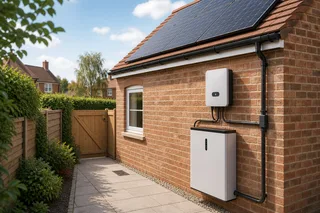
Home batteries are commonly installed in garages, utility rooms, suitable external locations, or other appropriate non-habitable spaces. The location must meet manufacturer requirements for temperature, ventilation, access, clearances, weather protection, weight support, and safety. Loft installations can be problematic because of heat, access, structural load, servicing difficulty, and fire considerations. Batteries should not block escape routes and should remain accessible for maintenance.
Are home batteries safe?
Modern home batteries are designed with safety systems, but they still need correct installation, commissioning, and location choice. The installer should follow manufacturer instructions, electrical regulations, DNO requirements, and appropriate fire-safety considerations. Batteries should not block escape routes, should have suitable clearances, and should be accessible for servicing. Homeowners should keep warranty documents, certificates, commissioning records, and user manuals, and should inform their home insurer after installation.
What are the most common mistakes when buying a home battery?
Common mistakes include buying too much capacity, ignoring lost export income, assuming backup power is included, using nominal capacity instead of usable capacity, and accepting a payback estimate without clear assumptions. Other mistakes include ignoring degradation, assuming all solar surplus is available year-round, overlooking finance costs, failing to check tariff eligibility, and not confirming whether the existing inverter, consumer unit, metering setup, and DNO position are suitable.
How can I tell if a battery savings estimate is realistic?
A realistic estimate should show the installed cost, usable capacity, expected annual battery discharge, tariff assumptions, export rate, round-trip efficiency, degradation, warranty terms, and any finance costs. For solar homes, it should also show how much electricity is expected to be used directly, stored, and exported. Be cautious with any estimate that promises a fixed payback without explaining the assumptions, using half-hourly data where available, or testing less favourable tariff scenarios.
What data should I gather before getting battery quotes?
Useful information includes annual electricity consumption, half-hourly smart meter data, your current import tariff, your export or SEG rate, solar generation data if you already have panels, export data where available, evening and overnight electricity use, and any plans for an EV, heat pump, or solar installation. You should also decide whether backup power is important and how long you expect to stay in the property. Better data usually leads to more accurate sizing and payback estimates.
Will adding a battery affect my Feed-in Tariff?
It can, so older Feed-in Tariff households should check before installing a battery. If export is deemed rather than metered, the effect may be different from a system with metered export. Adding a battery can also affect metering arrangements, export readings, and supplier requirements. You should confirm the position with your FiT licensee, export supplier, and installer before making changes.
Is a home battery worth it?
A home battery can be worth it if it is properly sized, well installed, and matched to the right tariff and usage pattern. It is most likely to make sense where there is regular solar surplus, high evening electricity use, low or modest export value, or a strong off-peak import rate. It may not be worth it if electricity use is low, export payments are high, tariff eligibility is uncertain, or the battery is oversized and rarely used. The best decision comes from modelling your actual household data rather than relying on headline savings claims.