


Battery Sizing for UK Homes: A Guide to Choosing the Right
Published: 2026-09-10 13:04:57
Updated: 2026-09-15 08:21:15
For most UK homes, the right battery size is the usable kWh needed to move electricity from one part of the day to another.
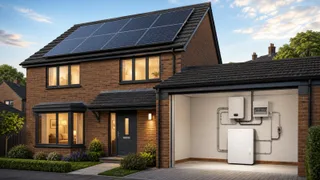
How big battery do i need for my house?
Understand how big battery do i need for my house in the UK, with clear explanations, examples, and practical next steps.
How big a battery do I need for my house?
For most UK homes, the right battery size is the usable kWh needed to move electricity from one part of the day to another. That usually means covering evening and overnight use with spare solar generation, cheap-rate charging, or a mix of both.
Battery size is not decided by bedrooms alone. A small house with high evening use can need more storage than a larger home where most electricity is used during the day. The best starting point is measured half-hourly consumption, not a generic property estimate.
A practical first estimate is to look at how much electricity you import from late afternoon until the following morning. Then check how much of that could be supplied from spare solar or a cheap tariff window. The final choice should be based on usable capacity, not only the battery’s headline size. If you are new to the topic, it helps to understand how home batteries work before comparing sizes.
Battery size means usable kWh, not just house size
Battery capacity is measured in kilowatt hours, or kWh. This describes how much energy the battery can store. It is different from kilowatts, or kW, which describes how quickly the battery inverter can charge or discharge.
The distinction matters in real homes. A battery may hold enough energy for the evening but still be unable to cover several high-demand appliances at once if the inverter discharge rating is lower than the household load. Kettles, ovens, showers, heat pumps, EV chargers and immersion heaters can all affect the power requirement.
Focus on usable capacity. Manufacturers normally reserve some capacity to protect the battery, and energy is lost when electricity is charged into the battery and discharged again.
A quote that only states the battery’s headline capacity is incomplete. Ask for usable capacity, charge and discharge power, and any operating limits that affect how the system will behave day to day.
Use a simple sizing calculation before you ask for quotes
A useful estimate starts with the electricity you can actually shift. For a solar battery, this is usually the smaller of your evening and overnight demand or your typical spare solar generation. For a tariff-led battery, it is the amount you can charge during the cheap period and use during the dearer period.
Estimate usable battery size from the average shiftable demand. Then allow for losses and the fact that not all headline capacity is usable. This does not replace a site design, but it gives you a sensible starting point and helps you spot vague recommendations. For a deeper sizing walkthrough, see this guide to home battery size.
Use several normal days rather than one unusual day. If you have a smart meter, supplier app, inverter app or home energy monitor, export the half-hourly data where possible and look for repeatable patterns.
For example, if your home has modest evening use but exports very little solar, a large solar battery may not fill regularly. If your home exports plenty of solar but uses little after sunset, a large battery may fill but not discharge fully. The useful size sits where both charging and discharging happen often enough to justify the installation.
Worked examples for different UK homes
Indicative examples are helpful, but they should not be treated as fixed recommendations. The same battery can perform very differently depending on roof orientation, shading, tariff, appliance use, household routine and whether the battery is charged from solar, the grid, or both. The examples below use broad sizing bands rather than invented savings figures. They show the logic an installer should be applying when turning consumption data into a specification.
Overview
A low-use home might only need enough storage to cover lighting, refrigeration, broadband, standby loads and some evening appliance use. If the home exports little solar or imports very little after sunset, a large battery may spend too much time partly full or partly unused.
A typical solar household often needs a balanced design. The aim is usually to capture regular surplus generation on decent days and discharge into the evening, without buying so much storage that winter performance or low-use days undermine the case.
A high-use home needs more care, not simply the largest available battery. EV charging is usually a large controllable load and may be better scheduled directly into cheap tariff periods. A heat pump can increase overnight electricity use in cold weather, but winter solar surplus may be limited, so tariff modelling and controls become more important.
Match the battery to your solar surplus
If you already have solar panels, battery sizing should be based on export patterns as well as consumption. A battery that is too large for the available surplus may only fill regularly in summer. A very small battery may fill early and still leave useful energy being exported. If your panels are already installed, the design questions are different from a new system, so read more about adding a battery. UK solar output is seasonal. Roof pitch, orientation, shading, array size and daytime household use all affect whether there is enough spare generation to charge a battery consistently. A battery that looks well matched in June may behave very differently in December. A common mistake is assuming a 4 kWp solar array automatically needs a 4 kWh battery. Solar array size and battery capacity are different measures. The right match depends on the timing of generation and household demand.
Overview
The better question is how many kWh you can charge and discharge usefully through the year. If a proposal does not discuss your export data or likely seasonal surplus, it is not giving the full sizing picture.
Smaller, mid-sized or larger battery?
A smaller battery can make sense where evening use is modest, solar surplus is limited, or the aim is to cover background loads rather than most household consumption. It may cycle more regularly, which can be better than paying for storage that is rarely filled.
A mid-sized battery is often considered where the home has regular evening demand and enough solar surplus on many days. It may also suit households that want a balance between solar self-consumption and tariff-based charging without committing to a very large system.
A larger battery is more relevant where there is a larger solar array, higher night-time use, suitable cheap-rate charging, or credible future loads such as an EV or heat pump. Even then, bigger is not automatically better. Unused capacity does not save money simply by being installed. Domestic battery systems in the UK are commonly discussed in broad bands from small systems of a few kWh through to larger home systems in the low double digits. Treat those bands as a starting point only. Your data should decide whether the next battery module up is genuinely useful or just extra capacity with no regular job.
What changes the battery size an installer recommends?
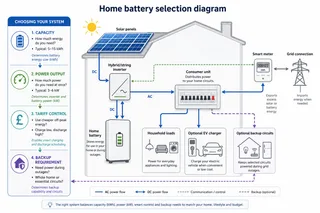
A proper battery recommendation depends on the whole electrical design, not just the battery box. Installers will look at the existing solar inverter, whether the battery is being fitted with new solar panels or retrofitted, the consumer unit, meter position, cable routes, installation location and network connection arrangements.
Retrofitting can lead to different choices from a new solar-plus-battery installation. An AC-coupled battery may suit some existing PV systems, while a hybrid inverter may be considered when panels and storage are designed together. Neither is automatically best in every home.
Practical details often change the final specification.
These checks are not just paperwork. They affect whether the proposed battery can be connected safely, controlled properly and operated within the equipment warranty conditions.
UK standards, DNO checks and installer evidence
In the UK, a battery installation should be designed and installed by competent professionals following the relevant electrical requirements, manufacturer instructions and current industry practice. Where solar PV is involved, many homeowners also expect the work to align with MCS requirements because this can affect consumer protection, documentation and compatibility with export arrangements. You can read more about MCS certification in the solar installation context.
Grid connection also matters. Installers should understand the ENA G98 and G99 processes and deal with the relevant DNO notification or application route for the proposed inverter and export arrangement. The exact route depends on the system design, so it should not be guessed from battery capacity alone.
Ask the installer what assumptions have been made and what documents will be provided after installation. A credible proposal should make the technical basis clear without burying you in jargon.
This is where E-E-A-T matters in practice. The right answer is not only a capacity number. It is a defensible design that matches your home, follows the correct connection process and leaves you with understandable documentation.
Solar battery, tariff battery or backup battery?
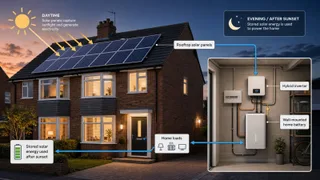
A solar battery is mainly sized to capture surplus daytime generation and use it later. This works best where the home exports a meaningful amount of electricity during the day and imports again in the evening or overnight.
A tariff-led battery is sized around charging from the grid at cheaper times and discharging when electricity would otherwise be more expensive. This can be useful for some households, but it depends on tariff availability, smart controls, battery efficiency, warranty terms and whether the household can shift enough consumption to justify the installation.
Backup power is a different requirement. Many standard grid-connected solar and battery systems do not keep the whole house running during a power cut unless backup hardware and dedicated wiring have been designed into the installation. If resilience is a priority, check what a battery can and cannot do during a power cut.
The clearest specification will state the main purpose of the battery. Trying to optimise equally for solar self-consumption, tariff arbitrage and whole-home backup can create compromises, especially where budget, space or inverter output is limited.
Financial factors that affect the right size
Battery economics are sensitive to usage pattern, tariff, export rate, installation cost, battery warranty and how much of the stored energy is actually used. A battery that looks attractive in a simple spreadsheet can perform less well if it rarely cycles, if tariffs change, or if export payments make exporting more reasonable than expected. For budget planning, compare the main factors behind home battery costs.
Round-trip losses also matter. Stored electricity is not returned perfectly, so the value of shifting energy depends on the difference between what you would otherwise pay, what you might receive for export, and the wear placed on the battery. Supplier tariffs and export arrangements can change, so avoid a design that only makes sense under one narrow tariff assumption.
Warranty terms deserve close reading. Some warranties are expressed through years, cycles, retained capacity, throughput limits or operating conditions. A larger battery may not be better value if the expected savings rely on heavy cycling that is not reflected properly in the warranty and degradation assumptions.
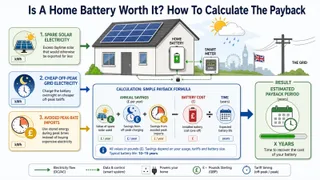
The financial question is not simply whether a bigger battery stores more energy. It is whether the extra usable capacity will be charged, discharged and valued often enough over the life of the system. A separate battery payback calculation can help test that before you commit.
When a bigger battery is not the better choice
A larger battery can look attractive because it promises more stored energy, but it only helps if you can fill it and then use that energy at the right time. Oversizing is common where homeowners focus on capacity rather than daily charging and discharging patterns.
If the solar array is small, shaded or already serving high daytime use, there may be little spare solar to store for much of the year. If the home has low evening demand, a large battery may remain partly unused, weakening the financial case.
Export rates and time-of-use tariffs also matter. In some situations, exporting surplus solar may be acceptable. In others, storing more energy for later use may be more valuable. Because tariffs can change, it is sensible to avoid a design that only works under one very specific tariff assumption. The same caution applies to future loads. Planning for an EV or heat pump can be sensible, but the battery should not be oversized purely on a vague possibility. If a major electrical change is likely, ask the installer to model a current-use design and a future-use design so the trade-off is clear.
What information should you gather before asking for quotes?
Before speaking to installers, gather enough information to make the sizing conversation specific. This reduces the chance of receiving a generic recommendation and makes it easier to compare quotes fairly.
Smart meter data is especially useful because it shows when electricity is used. If you already have solar, export and generation data will help show whether a battery will have enough spare energy to store.
The most useful information shows timing, not just total annual consumption. Recent electricity bills can show annual and monthly use, while half-hourly smart meter data can show the periods a battery might cover. If you already have solar, collect generation data from your inverter or monitoring app, plus export data if you have a smart export arrangement. It also helps to provide details of your solar array, inverter and any known shading. Photos of the consumer unit, meter area and possible battery location can help an installer assess the work. Be clear about plans for EV charging, heat pumps, electric hot water or major lifestyle changes, and say whether backup power is required. When comparing quotes, check usable capacity, inverter charge and discharge power, warranty conditions, monitoring, backup capability if required, and whether the installer has allowed for any electrical upgrades. A cheaper-looking quote is not necessarily comparable if it excludes important design work.
Quote checklist for choosing a battery size
A good quote should explain why the recommended battery size fits your home. It should not simply list a product, a capacity and a price without showing the assumptions behind the choice.
If two quotes recommend different sizes, ask each installer to explain the difference using your consumption, solar generation, tariff and future plans. Sometimes the larger option is justified. Sometimes it is just a sales-led upgrade.
Also check the proposed installation location, including access, clearances, temperature limits and manufacturer requirements. Ask how the monitoring controls handle tariff charging, reserve capacity and solar charging priorities. If future expansion matters, ask whether extra modules can be added later and what limitations apply. A transparent quote gives you the confidence to choose the battery size, not just the brand. It should make clear what the system will do on normal days, what it will not do, and what assumptions could change the outcome.
A practical way to choose the right size
The best way to choose a home battery is to work backwards from the use case. First estimate the electricity you can shift each day. Then check whether your solar surplus or tariff window can supply it, and confirm whether the inverter can deliver the loads you expect.
For a solar household, the right size usually sits where the battery can fill on many decent generation days and discharge usefully most evenings. For a tariff-led household, it sits where the battery can charge within the cheap period and cover enough peak-period use to matter, without relying on unrealistic assumptions.
If you are unsure, ask for a quote that explains the sizing logic in plain English. A credible proposal should show why that battery size fits your consumption, solar generation, inverter arrangement, tariff and plans, rather than simply recommending the largest unit that will fit. If you want a next step, you can book a free home energy survey.
Plan, Compare & Buy Renewable Energy Solutions
AI does the thinking.
You get the perfect solar match.
Use RoboMo™ to assess your property, compare available technologies and connect with trusted UK installers, suppliers and manufacturers.
Simply enter your postcode, drop a pin on your roof, create your free account and let RoboMo™ analyse your property to find the best solar panels for your home.

You don't have to think
RoboMo™'s AI analyses your roof and does all the hard work.

Accurate & tailored
AI-powered assessment based on your roof, location, and conditions.

Best options, maximum savings
Compare top solar panels for the best performance and value.

Simple, fast & effortless
Provide a few details, sit back and watch your results unfold.
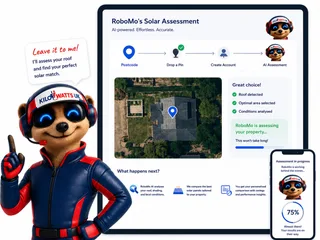
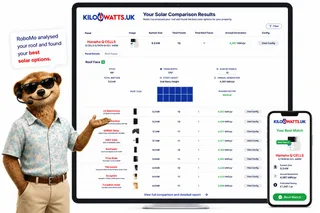
STEP 1
Choose Home, Business or Industrial
Enter your postcode to start your assessment.
STEP 2

Drop a pin on your roof
STEP 3

Create your free account
STEP 4

Sit back and watch RoboMo™ work
RoboMo™ analyses your roof and builds your personalised solar comparison.

Step 1
Enter your postcode
Start designing your wind energy system in seconds.
Are you an installer, distributor or renewable energy business?
Kilowatts UK is expanding the Flower Turbines partner network across the UK.
Become A Flower Turbines PartnerKilowatts UK is an authorised representative
Flower Turbines
Compact vertical-axis turbines built for real UK sites, not just open farmland.
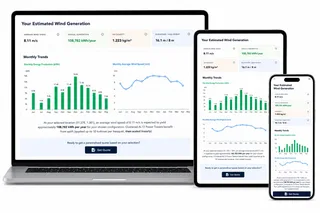
They start in light wind, sit in a small footprint, and are bird-safe by design. Cluster them as a bouquet and the group performs better together than the same turbines standing alone. Enter your postcode for a location-based generation estimate. Figures use area weather data and will differ if buildings, trees or hills sit in the way.
Starts in light UK wind
Built to generate in typical UK wind, not only open farmland.
Small rooftop or ground footprint
Compact towers for roofs, yards and tight sites.
Bird-safe slow rotation
Slow vertical-axis spin, bird-safe by design.
Bouquet clusters raise output
Grouped turbines outperform the same units standing alone.
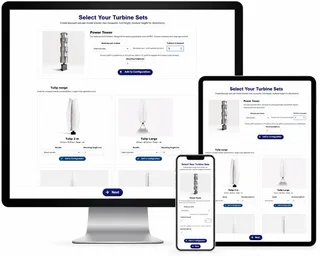
STEP 2

Choose a location
STEP 3

Place your cluster
Tap the map where you want the turbine cluster to go.
STEP 4

Instant generation forecasts
Compare different turbine layouts and see annual generation forecasts instantly.
STEP 5

No commitment required
Explore different configurations before deciding whether to request a quotation.
Related articles
Mo's Mission Nominations
FAQ
Need Help? RoboMo's Got Answers
What size home battery do I need in the UK?
Most homes should size a battery around the electricity they can usefully shift from one part of the day to another, usually evening and overnight demand. A good starting point is your half-hourly smart meter data, not the number of bedrooms. The right size is often the smaller of your spare solar generation, cheap-rate charging opportunity, and later household demand.
Should I choose battery size by usable kWh or headline capacity?
Use usable kWh when comparing batteries. The headline capacity may be higher than the amount the system normally lets you use, because some capacity is reserved to protect the battery. Also allow for round-trip losses when energy is charged and discharged.
How do I work out battery size if I already have solar panels?
Look at how much solar electricity you export on normal days and how much electricity you import after the sun goes down. A battery that is larger than your regular surplus may not fill often, especially outside summer. A battery that is too small may fill early and still leave useful solar energy being exported.
Do I need a bigger battery if I have an EV or heat pump?
Possibly, but it depends on when those loads run and how they are controlled. EV charging is often better scheduled directly into cheap tariff periods rather than routed through a home battery. Heat pumps can increase winter electricity use, but winter solar surplus may be limited, so tariff modelling and controls are important.
Is a bigger home battery always better?
No. Extra capacity only helps if you can charge it regularly and discharge it when it avoids more expensive imports or increases useful solar self-consumption. Oversized batteries can spend too much time partly unused, which may weaken the case for paying for more storage.
What is the difference between kWh and kW for a battery?
kWh is the amount of energy the battery can store. kW is the rate at which the battery inverter can charge or discharge. A battery may have enough energy for the evening but still not run several high-demand appliances at the same time if its discharge rating is limited.
Will a home battery keep my house running in a power cut?
Not automatically. Backup operation needs suitable equipment, correct wiring and a clear decision about which circuits should be supported. If backup matters to you, ask the installer to specify what will work during an outage and for how long under realistic loads.
What should I ask an installer before accepting a battery quote?
Ask for the usable capacity, charge and discharge power, assumed solar surplus or tariff charging window, and expected operating strategy. If solar PV is included, ask about MCS-related documentation and export arrangements. The installer should also explain the relevant DNO notification or application route for the proposed design.