


How Solar Panels Generate Electricity in Cold Weather
Published: 2026-07-25 16:09:42
Updated: 2026-07-31 19:00:37
Discover how solar panels work in winter, their benefits, and whether they're a good investment for your UK home.
Do solar panels work in winter in the UK?
Yes, solar panels do work in winter in the UK. They generate electricity from daylight, not heat, so cold weather does not stop them producing power. The main winter limits are shorter days, lower sun angles, more cloud, and increased shading from trees, chimneys or nearby buildings.
Winter output is lower than summer output, but it is not zero. A good UK solar design is judged across the whole year, not just December. Most domestic systems earn most of their generation during spring, summer and early autumn, while winter generation still helps offset daytime electricity use.
The practical answer is simple. Solar panels can be worthwhile in the UK despite weaker winter generation, provided the roof is suitable, shading is properly assessed, the system is sized sensibly, and the financial case is based on annual output rather than the darkest weeks alone.
Why cold weather does not stop solar generation
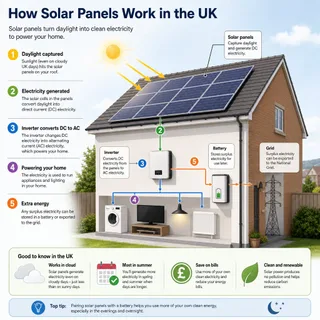
Solar photovoltaic panels respond to light. When photons from daylight hit the cells inside the panel, they create an electrical current. Heat is not the fuel source, which is why panels can still generate on a bright, cold day. For a fuller primer, read our guide to how solar works.
Cold conditions can slightly improve panel efficiency compared with very hot weather. Solar cells generally perform better when they are cooler, although that benefit is usually outweighed in winter by the reduced hours of daylight and the lower strength of sunlight.
This is where many UK homeowners get the wrong impression. A freezing but clear winter day can produce useful electricity, while a mild but heavily overcast day may produce less than expected. Temperature matters, but available daylight matters more.
What winter really changes for UK solar panels
Winter affects solar generation mainly because the UK receives fewer daylight hours and the sun sits lower in the sky. In December, many parts of the UK have only around seven to eight hours of daylight, compared with much longer days in summer. The useful generating window is also narrower because the early morning and late afternoon sun is weak and easily blocked.
The lower winter sun changes how light reaches the roof. Obstacles that barely matter in June can become significant in December. Long shadows from chimneys, trees, dormers, neighbouring houses and telegraph poles can cross the panels during the short generating window.
Cloud cover reduces output, but it does not switch the system off. Panels can generate from diffuse daylight through cloud, just at a reduced level. Rain is not always bad news either, as it can help wash dust and debris from the glass. Snow can block panels temporarily until it melts or slides off, while frost does not normally damage modern solar panels. For most UK homes, the key question is not whether winter generation exists, but whether the roof, design and household usage pattern make the annual system worthwhile.
What the figures in this guide are based on
Solar generation figures should be treated as estimates, not promises. Proper modelling uses location, orientation, pitch, shading and system size rather than a single national average. Recognised sources and frameworks used by UK installers and energy advisers include PVGIS solar irradiation modelling, MCS guidance and certification standards, SAP-style assumptions used in energy assessment, Energy Saving Trust consumer guidance, Ofgem Smart Export Guarantee information, and local Distribution Network Operator connection processes.
The numbers below are therefore best read as realistic planning ranges for an unshaded or lightly shaded domestic system, not as guaranteed output for any individual roof. A quote should always show the assumptions behind its forecast.
MCS
MCS certification is a key UK quality framework for small-scale renewable installations and is commonly required by export tariff providers.PVGIS
The European Commission’s PVGIS tool is commonly used to estimate monthly and annual solar generation from long-term solar irradiation data.DNO process
The local Distribution Network Operator must be notified or approached for approval depending on system size and export arrangement.Ofgem SEG guidance
Ofgem oversees the Smart Export Guarantee framework, but individual suppliers set their own export tariffs and eligibility processes.Energy Saving Trust
Consumer guidance from the Energy Saving Trust is useful for checking broad expectations on solar output, savings and suitability.
How much electricity do panels produce in winter?
UK solar panels usually generate much less in winter than in summer. As an illustrative PVGIS-style estimate, a 4 kWp domestic system on a reasonably well-orientated, largely unshaded roof in southern England may produce roughly 3,400 to 4,200 kWh over a year, with December often around 50 to 150 kWh. In northern Scotland, the same nominal system size may produce closer to roughly 2,700 to 3,200 kWh annually, with December sometimes below 50 kWh depending on location, pitch, orientation and shading. For more context on expected output, see our guide to solar generation figures. These ranges are deliberately broad because winter output is sensitive to roof-specific factors. A modest shadow across one string of panels, a shallow roof pitch, or an east-west layout can change the result. Conversely, a clear south-facing roof on a bright cold day can perform better than a homeowner might expect. Across many UK locations, PVGIS-style monthly profiles show that the brighter half of the year supplies the majority of annual solar output. April to September often accounts for around 70 to 80% of annual generation on a typical unshaded domestic array, while November to February may account for only around 15 to 25%. The exact split is location-specific, so a good quote should include a monthly estimate rather than only an annual total.
| UK solar factor | Typical winter effect | Practical meaning |
|---|---|---|
| Short days | Fewer generation hours | Less total electricity even if panels are working well |
| Low sun angle | More shading risk | Roof layout and nearby obstacles matter more |
| Cloud cover | Lower light intensity | Output drops but does not usually stop |
| Cold temperature | Can slightly improve panel efficiency | Helpful, but not enough to offset low winter daylight |
| Snow on panels | Temporary blockage | Tilted panels often clear as snow slides or melts |
| Regional location | Lower winter output further north | Estimates should be location-specific |
Does roof direction matter more in winter?
Roof direction matters throughout the year, but winter makes orientation and shading more noticeable. In the UK, a south-facing roof at roughly 30 to 40 degrees is generally the strongest all-round option because it captures more of the available daylight when the sun is lower. We explain this in more detail in our guide to panel direction.
East- and west-facing roofs can still work well, especially for households that use electricity in the morning or late afternoon. They typically generate less annually than a comparable south-facing system, but they may better match real household demand. A north-facing roof is usually less suitable for a standard domestic solar installation in the UK.
Shading is often the deciding factor. A roof that looks open in summer may be crossed by long winter shadows, and even partial shading can reduce output depending on the panel layout, inverter type and system design.
- South-facing roofs usually give the strongest year-round generation.
- East-facing roofs can suit homes with higher morning electricity use.
- West-facing roofs can suit homes with later afternoon demand.
- North-facing roofs are generally poor candidates for standard UK solar.
- Shaded roofs need careful assessment before any quote is accepted.
A proper site survey should look at more than roof direction. It should consider roof condition, tile type, available space, chimney positions, dormers, tree growth, cable routes, access for scaffolding and whether the roof structure is suitable for the proposed mounting system.
Will solar panels power a home through winter?
Solar panels can reduce winter grid electricity use, but they will not usually power a typical UK home entirely through winter on their own. Winter generation is lower while household demand is often higher because of lighting, cooking, appliances and, in some homes, electric heating.
A typical domestic solar system might cover a useful share of daytime electricity use in winter, but the percentage varies widely. Homes occupied during the day can often use more of the electricity as it is generated. Homes with very low daytime demand generally export more when generation exceeds demand, but in winter there may be little surplus to export because total generation is much lower.
If a home has a heat pump, electric vehicle, immersion heater or other high electrical demand, solar can still be useful, but it should not be presented as a complete winter energy solution. The system may make a strong annual contribution while still leaving the household dependent on the grid during dark, cold periods. The important distinction is between annual value and winter independence. A system can make financial and environmental sense over the year without removing winter electricity bills.
Do batteries help with winter solar generation?
A battery can help you use more of the electricity your panels generate, but it does not increase the amount of electricity the panels produce. This distinction matters. In winter, the limiting factor is often generation, not storage capacity.
Domestic batteries are commonly considered when a household uses more electricity in the evening than during the day, wants to reduce exports, or is using a time-of-use tariff. The right size depends on electricity demand, solar array size, tariff structure, backup requirements where relevant, budget and the installer’s design. Our guide to home battery storage explains how storage fits into a wider solar setup.
Tariff dependency
The value of a battery often depends on import rates, export rates and household behaviour.Less unused export
Storage can reduce the amount of electricity sent to the grid when household demand is low.No extra generation
A battery cannot make a dark winter day produce more solar electricity.Better self-consumption
A battery stores spare daytime solar electricity for use later in the evening.Added cost and complexity
Batteries add equipment, design decisions, warranties, monitoring and future replacement considerations.
For some homes, solar without a battery is the better first step. For others, especially homes with evening demand or flexible tariffs, battery storage may improve the overall usefulness of the system. The quote should show the battery case separately so you can see whether storage improves the payback or simply increases the upfront cost.
What about snow, frost and very cold weather?
Snow can stop generation if it covers the panels, because daylight cannot reach the solar cells properly. In much of the UK this is usually a temporary issue rather than a major annual performance problem. On tilted roofs, snow often slides off once it starts to thaw, particularly if the panels are mounted at a reasonable pitch.
Frost is different. A frosty morning does not normally damage modern solar panels, and once daylight reaches the panel surface the system can begin producing electricity. The main concern is not the cold itself, but whether the panels are blocked by snow, shaded, or receiving too little light.
Homeowners should not climb onto a roof to clear snow from panels. The safety risk is far greater than the likely generation benefit. If snow coverage is frequent and severe in a particular location, it should be discussed during the design stage rather than treated as a routine maintenance task.
How winter affects payback and investment decisions
Winter output alone should not decide whether solar is a good investment. Solar PV is a long-term asset, and the economics depend on annual generation, self-consumption, export payments, electricity prices, installation quality, maintenance, finance costs where applicable and how the household uses power across the year.
Be cautious with generic online price ranges because UK solar and battery costs change with equipment choice, roof complexity, scaffolding, region, electrical work and whether storage is included. The safest approach is to compare current, itemised quotes and cross-check the assumptions against recognised consumer guidance such as the Energy Saving Trust and MCS advice. You can also compare home solar options before deciding.
The UK Smart Export Guarantee allows eligible households to be paid for exported electricity, but rates vary by supplier and can change. Ofgem sets the SEG framework, while licensed suppliers choose their export tariffs and terms. Export volumes are usually lower in winter because generation is lower and households often use more electricity on site. A sensible solar quote should explain assumptions clearly. Be cautious with any proposal that focuses only on best-case summer figures, ignores shading, uses unrealistic electricity price inflation, or implies that panels will remove winter electricity bills entirely.
When solar panels may not be suitable
Solar panels are not right for every UK home. A roof can be technically possible but still poor value if it is heavily shaded, in poor condition, too small, awkwardly configured or facing the wrong way. The best projects start with an honest suitability assessment rather than a fixed system size.
Older roofs deserve particular care. Solar panels may last 25 years or more, while inverters and batteries may have shorter warranty and replacement cycles depending on the product. If the roof covering is likely to need major work soon, it may be better to deal with that before installing panels. Otherwise, removal and reinstallation costs can undermine the project.
Heavy shading
Long winter shadows can make output disappointing.Limited roof space
Small arrays may not generate enough to justify complexity.Poor roof condition
A roof near the end of its life should be addressed first.Planning constraints
Listed buildings and conservation areas may need extra checks.Unsuitable orientation
North-facing roofs are usually weak candidates in the UK.Unrealistic expectations
Solar reduces bills but does not usually eliminate winter grid use.
For many standard homes in England and Wales, planning permission is often not required if permitted development conditions are met, but exceptions can apply. Listed buildings, conservation areas, flats, ground-mounted arrays and unusual roof arrangements should be checked carefully before proceeding. See our guide to planning permission for more detail.
What a good installer should check before quoting
A reliable solar installation company should do more than count panels on a roof image. Winter performance depends on details that are easy to overlook during a quick desktop quote, especially shading, roof pitch, roof condition, cable routes, inverter location and household consumption patterns.
For UK installations, the installer should also explain grid connection requirements. Many small domestic systems are handled under Engineering Recommendation G98 when they are within the relevant export limit, commonly 3.68 kW per phase. Larger systems, multiple generators, or non-standard export arrangements may require a G99 application and approval before installation or commissioning. The installer should confirm the correct process for your property and your local Distribution Network Operator.
If export payments are part of the financial case, the installer should explain Smart Export Guarantee eligibility. In practice, suppliers commonly ask for evidence such as an MCS certificate or equivalent, a suitable meter capable of recording export, and confirmation that the installation meets their terms. Ofgem provides the SEG framework, but tariff rates and application processes vary by supplier. The quote should make the seasonal nature of solar clear. A trustworthy estimate will show that winter generation is lower, explain how the figures were calculated, and avoid promising the same output every month. It should also explain the installation process before work starts. MCS certification: Check whether the installer and proposed system are MCS certified, or whether an equivalent route is being used for export eligibility. DNO handling: Ask whether the job is G98 notification or G99 application, who submits the paperwork, and when approval is needed. Shading analysis: The proposal should consider trees, chimneys, dormers, neighbouring buildings and long winter shadows, not just a summer roof image. Generation estimate: Ask for annual and monthly kWh estimates, including the assumptions for pitch, orientation, location and shading. Self-consumption assumptions: The savings forecast should state how much electricity is expected to be used in the home versus exported. SEG assumptions: Export income should use a named tariff or clearly labelled assumption, with a warning that rates can change. Good monitoring is especially useful in the first year. If winter output is far below the estimate, it may indicate shading that was missed, an inverter issue, a string design problem, a metering or monitoring fault, or simply unusual weather that needs to be compared against longer-term expectations. Roof condition — The installer should check roof covering, structure, access, tile type and any repairs needed before fitting panels. Equipment specification — The quote should name the panels, inverter, battery where included, mounting system and monitoring platform. Warranties — Ask for product warranties, workmanship warranty, performance warranty terms and what is actually covered. Electrical documentation — Expect appropriate electrical certification, commissioning documents and handover information after installation. Scaffolding and access — The quote should state what access equipment is included and whether there are extra charges for difficult roofs. Aftercare — Monitoring, fault reporting and support arrangements should be clear before you sign.
Practical ways to get more value from winter solar
You cannot make winter days longer, but you can improve how well you use the electricity your system does produce. The most effective changes are usually about timing, visibility and avoiding avoidable losses.
Running flexible appliances during daylight can increase self-consumption. This might include washing machines, dishwashers, immersion heaters where suitable, or timed battery charging strategies. The right approach depends on the tariff, appliance type, household routine and whether battery storage is installed.
Keeping an eye on performance also helps. A monitoring app will show the normal seasonal pattern over time, making it easier to spot a genuine fault rather than worrying whenever a cloudy December week produces very little. Use flexible loads during daylight when practical. Keep trees trimmed where they legally and safely affect the array. Check monitoring data for unexpected drops. Compare winter output against monthly estimates, not summer performance. Schedule high-consumption devices sensibly. Review tariffs if battery storage or export payments are part of the plan. Small behaviour changes will not turn winter into summer, but they can improve the proportion of solar electricity used in the home rather than imported from the grid later. Keep handover documents so faults, warranties and SEG applications are easier to manage.
The bottom line for UK winter solar
Solar panels work in UK winter because they need daylight rather than heat. Output is lower because days are shorter, the sun is lower, cloud is common and shading is more significant, but a well-designed system still contributes useful electricity.
The decision should be based on annual generation, roof suitability, shading, household demand, installation quality, DNO requirements, export eligibility and whether battery storage makes sense. Winter performance matters, but it is only one part of the solar case.
If your roof is unshaded, structurally suitable and reasonably well orientated, solar can still be a strong long-term option in the UK. If the roof is shaded, north-facing, due for major repairs, or being sold with unrealistic winter savings claims, it is worth resolving those issues before relying on a quote.
Plan, Compare & Buy Renewable Energy Solutions
AI does the thinking.
You get the perfect solar match.
Use RoboMo™ to assess your property, compare available technologies and connect with trusted UK installers, suppliers and manufacturers.
Simply enter your postcode, drop a pin on your roof, create your free account and let RoboMo™ analyse your property to find the best solar panels for your home.

You don't have to think
RoboMo™'s AI analyses your roof and does all the hard work.

Accurate & tailored
AI-powered assessment based on your roof, location, and conditions.

Best options, maximum savings
Compare top solar panels for the best performance and value.

Simple, fast & effortless
Provide a few details, sit back and watch your results unfold.
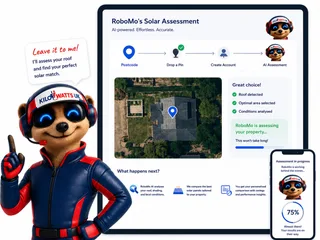
STEP 1
Choose Home, Business or Industrial
Enter your postcode to start your assessment.
STEP 2
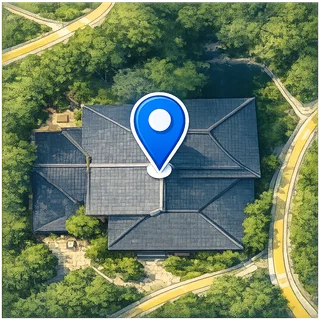
Drop a pin on your roof
STEP 3

Create your free account
STEP 4

Sit back and watch RoboMo™ work
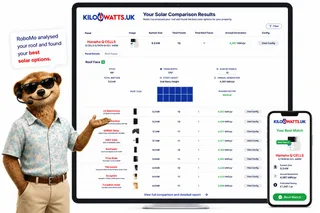
RoboMo™ analyses your roof and builds your personalised solar comparison.

Kilowatts UK is an authorised representative
Flower Turbines
Compact vertical-axis turbines built for real UK sites, not just open farmland.
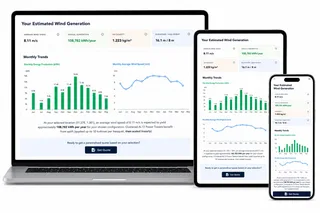
They start in light wind, sit in a small footprint, and are bird-safe by design. Cluster them as a bouquet and the group performs better together than the same turbines standing alone. Enter your postcode for a location-based generation estimate. Figures use area weather data and will differ if buildings, trees or hills sit in the way.
Starts in light UK wind
Built to generate in typical UK wind, not only open farmland.
Small rooftop or ground footprint
Compact towers for roofs, yards and tight sites.
Bird-safe slow rotation
Slow vertical-axis spin, bird-safe by design.
Bouquet clusters raise output
Grouped turbines outperform the same units standing alone.
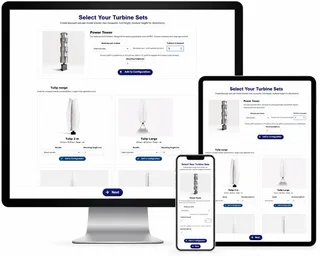
Step 1
Enter your postcode
Start designing your wind energy system in seconds.
STEP 2

Choose a location
STEP 3
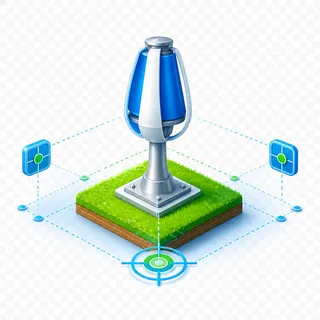
Place your cluster
Tap the map where you want the turbine cluster to go.
STEP 4

Instant generation forecasts
Compare different turbine layouts and see annual generation forecasts instantly.
STEP 5

No commitment required
Explore different configurations before deciding whether to request a quotation.
Related articles
Mo's Mission Nominations
FAQ
Need Help? RoboMo's Got Answers
Do Solar Panels Work in Winter?
Solar panels can generate electricity during the winter months as long as the sun is shining. While the amount of sunlight available decreases, the cooler temperatures can actually increase energy production by 2% to 3%, according to a study by the National Renewable Energy Laboratory (NREL). However, factors like solar panel installation angle and tilt, quality of the panels, and snowfall in your area can impact performance. Solar panels work by converting sunlight into electrical energy using photovoltaic cells. As long as the sun is shining, they can generate power. The NREL study found that solar panels produce more electricity during winter months due to cooler temperatures. However, it's possible for solar panels to be partially or completely covered in areas with heavy snowfall, reducing their ability to generate electricity. Additionally, cold temperatures can cause some solar panels to perform less efficiently. Despite these limitations, many people continue to use solar panels without issue during the winter months. If you're considering installing solar panels and are concerned about their performance in winter, book a free home energy survey with our experts.
Can You Still Get a Good Return on Investment from Solar Panels in Winter?
Yes, you can still get a good return on investment from solar panels even in winter. A study by the University of California, Berkeley found that solar panels can provide a good return on investment over their lifespan despite reduced energy production during winter months. This is because solar panels typically last for 25 years or more, so any initial reduction in energy production due to weather conditions will be made up as the system continues to generate electricity. Many utility companies offer special rate structures for homes with solar panels that can help offset any energy losses during the winter months. By taking advantage of these rates and considering a well-designed solar panel installation, you can enjoy the benefits of clean energy while also saving money on your energy bills.