


Geo Engineering in the UK: Impact on Solar Power and Future PV
Published: 2025-08-28 10:59:58
Updated: 2026-10-06 04:16:04
Discover how UK geo engineering research may affect solar output and why improved PV tech, batteries, and smart controls keep your system future-proof.
Geo Engineering in the UK: What It Means for Solar Power
The UK is investing in research often grouped under geo engineering. The aim is to cool the planet by reflecting a small amount of sunlight back into space. While this work stays firmly in the research phase, it raises a practical question for households and businesses: how do you keep solar investments performing strongly if available sunlight ever dips a little? Solar already underpins the UK clean power shift, with rooftop systems covering a meaningful share of demand on bright days. If you are new to the process, start with our plain English primer here: Solar Panel Installation: An Introduction.
What Government Research Is Exploring
Current UK work examines small, controlled studies and models of solar radiation modification. Examples include testing how tiny particles in the upper atmosphere might reflect sunlight, how brightening certain cloud layers could work, and how surface reflectivity affects local energy balance. These are not deployments. They are limited experiments with oversight and environmental checks. Even so, it is sensible to plan your energy setup so that a small reduction in direct sunlight would not derail performance. That mindset is the same one good installers already follow: design for UK weather, shade, and winter months, not just peak summer.
Managing the Solar Risk Sensibly
A cautious planning assumption is that broad sunlight at the surface could, in a future scenario, dip by a few percent. For typical rooftop PV, that might translate into a modest 2 to 5 percent output reduction. You can hedge that risk with better modules, smarter electronics, and batteries that capture and shift energy to when you need it. For a real world picture of how this works in practice, see our Kent case study: Smart Solar and Battery System , Kent Case Study.
Improve Yield With Modern PV Tech
Panel efficiency keeps climbing thanks to advances like TOPCon and heterojunction cells. Bifacial modules pull in extra light from reflections. Module level power electronics help each panel perform at its best when parts of the array see shade. Matching the right inverter, tilt, and mounting to your roof is equally important. The result is more energy from the same square metres. These steps do not just boost sunny day output; they protect performance when light conditions are less than perfect. If you are comparing kit and pricing, this page shows a strong value bundle: Solar and Battery installed for 7300 GBP.
Store More, Waste Less
Batteries lift self consumption and flatten your imports from the grid. On bright days you store surplus for the evening. On dull days you stretch what the array makes. Round trip efficiencies are high, and modern systems let you set reserves, time of use charging, and backup preferences. Adding storage is the single best way to protect value if sunlight dips slightly while also cutting bills today. For a quick overview, read: Home Battery Storage Systems: An Introduction.
Let Smart Controls Do the Heavy Lifting
A smart energy management system automates the plan. It prioritises self use when your array is active, shifts flexible loads, and makes the most of off peak tariffs if you have them. The system also coordinates EV charging, heat pumps, and immersion heaters so your own generation does more of the work. That intelligence makes a noticeable difference in winter and on cloudy runs. Learn the basics here: Smart Energy Management Systems: An Introduction.
Stay Clear Eyed About Claims
Solar has moved past the hype stage, but sales claims sometimes have not. Be wary of inflated forecasts or third party badges that add cost without adding protection. We explain one common pitfall here: Why EPVS Is Now the Solar Scam Badge You Can Skip. Use measured assumptions, ask for yield estimates tied to your roof and usage, and insist on seeing how the design performs across seasons, not just July.
Keep An Eye On What Is Next
R and D never stops. From new cell structures to materials that harvest diffuse light, the pipeline is busy. Some ideas are further out and should be treated as such, but they point to a steady trend: more energy from each square metre and better indoor or low light performance. If you like to track emerging tech, start here: Wavja PES: Future Tech , Or Is It?.
Action Plan
1) Audit your roof and usage. 2) Specify high efficiency modules and the right inverter topology. 3) Add a battery sized for your evening load and tariff. 4) Use smart controls to orchestrate appliances, EV, and heating. 5) Sanity check yield with winter as the baseline. If you follow those steps, a small change in sunlight will be a footnote, not a headache.
Ready To Upgrade Your Solar?
Talk to our team to design a system that performs in real UK conditions. We will help you compare modules, inverters, and batteries, and we will size everything to your roof, your tariff, and your habits. The goal is simple: more energy from the same roof, lower bills, and a setup that stays strong even if policy or weather shifts.
Plan, Compare & Buy Renewable Energy Solutions
AI does the thinking.
You get the perfect solar match.
Use RoboMo™ to assess your property, compare available technologies and connect with trusted UK installers, suppliers and manufacturers.
Simply enter your postcode, drop a pin on your roof, create your free account and let RoboMo™ analyse your property to find the best solar panels for your home.

You don't have to think
RoboMo™'s AI analyses your roof and does all the hard work.

Accurate & tailored
AI-powered assessment based on your roof, location, and conditions.

Best options, maximum savings
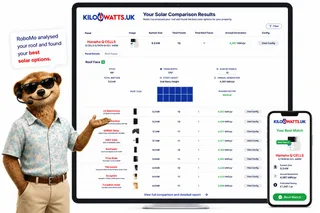
Compare top solar panels for the best performance and value.

Simple, fast & effortless
Provide a few details, sit back and watch your results unfold.
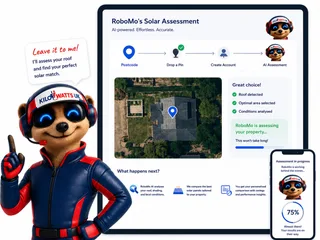
STEP 1
Choose Home, Business or Industrial
Enter your postcode to start your assessment.
STEP 2
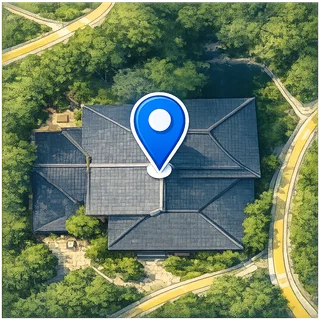
Drop a pin on your roof
STEP 3

Create your free account
STEP 4

Sit back and watch RoboMo™ work
RoboMo™ analyses your roof and builds your personalised solar comparison.

Step 1
Enter your postcode
Start designing your wind energy system in seconds.
Are you an installer, distributor or renewable energy business?
Kilowatts UK is expanding the Flower Turbines partner network across the UK.
Become A Flower Turbines PartnerKilowatts UK is an authorised representative
Flower Turbines
Compact vertical-axis turbines built for real UK sites, not just open farmland.
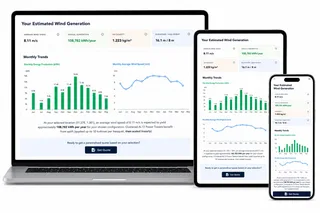
They start in light wind, sit in a small footprint, and are bird-safe by design. Cluster them as a bouquet and the group performs better together than the same turbines standing alone. Enter your postcode for a location-based generation estimate. Figures use area weather data and will differ if buildings, trees or hills sit in the way.
Starts in light UK wind
Built to generate in typical UK wind, not only open farmland.
Small rooftop or ground footprint
Compact towers for roofs, yards and tight sites.
Bird-safe slow rotation
Slow vertical-axis spin, bird-safe by design.
Bouquet clusters raise output
Grouped turbines outperform the same units standing alone.
STEP 2

Choose a location
STEP 3
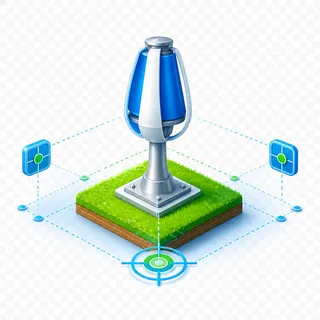
Place your cluster
Tap the map where you want the turbine cluster to go.
STEP 4

Instant generation forecasts
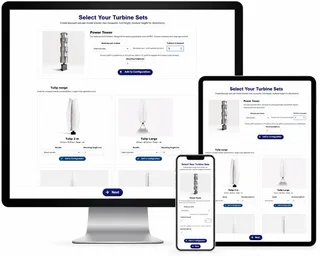
Compare different turbine layouts and see annual generation forecasts instantly.
STEP 5
No commitment required
Explore different configurations before deciding whether to request a quotation.
Related articles
Mo's Mission Nominations
FAQ
Need Help? RoboMo's Got Answers
What is geo engineering and is it happening in the UK?
Geo engineering refers to experimental techniques designed to cool the planet, such as adding reflective particles to the upper atmosphere or brightening clouds. In the UK it is still at the research stage only.
How much is the UK investing in geo engineering research?
The UK government has committed more than £60 million to study solar radiation modification and related projects. These remain small and controlled, with no plan for full deployment.
How could geo engineering affect my solar panels?
If sunlight at ground level was reduced by a few percent, solar PV output could dip by around 2 to 5 percent. This is only a reserved estimate and depends on the type of system installed.
Can new solar technology offset reduced sunlight?
Newer solar panels use designs like bifacial cells and improved coatings that capture more light, even when conditions are less than perfect. These upgrades help protect performance if sunlight levels change slightly.
Does adding a battery help reduce the risks?
Yes. Pairing solar with a home battery allows you to capture surplus generation and use it later in the day. This reduces imports and helps balance any seasonal or weather-driven dips.
What role do smart energy systems play?
A smart energy management system links your panels, battery, and appliances. It automates charging, shifting, and load control so your home makes the most of every unit of solar you generate.
What warranties do modern solar systems carry?
Panels today come with product warranties of 20 to 25 years, while many performance warranties stretch to 30 years. Inverters and batteries typically carry between 5 and 10 years cover.
What solar innovations are on the horizon?
Improved solar panels are being developed with higher efficiency cells, perovskite layering, and designs that work better in low light. These advances will help future-proof installations against any changes in climate or policy.
How much energy can I expect my system to generate?
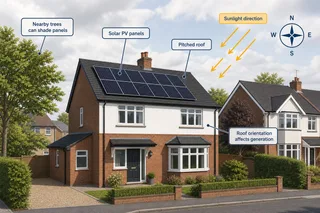
Annual generation depends on your roof pitch, orientation, and shading. A well-sited 4 kW array in the UK typically generates around 3,600 to 4,000 kWh per year.
How do I find the right system for my home?
Book a free survey or create a project request on our platform. We match you with vetted installers who design a plan for your roof, usage, and budget.