


UK Domestic Battery Energy Storage
Published: 2026-08-13 22:35:31
Updated: 2026-08-17 13:42:38
Battery storage installation means fitting a rechargeable battery system that stores electricity for later use.
Battery storage installation in the UK: costs, process, sizing and backup explained
Battery storage installation means fitting a rechargeable battery system that stores electricity for later use. In the UK, it is usually installed with solar PV, retrofitted to existing solar panels, or used without solar to charge from the grid on a suitable tariff. The right design depends on electricity use, usable battery capacity, inverter type, tariff, DNO requirements, installation location, safety requirements and whether you expect backup power.
A good installation is more than fixing a battery to a wall. The installer needs to check the consumer unit, earthing, supply capacity, existing solar equipment, cable routes, monitoring connection, fire and location considerations, and how the battery will be controlled each day. For businesses, the design also needs to account for peak demand, three-phase supply, resilience, energy management and site safety procedures.
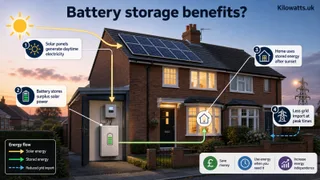
Battery storage can reduce imported electricity by storing surplus solar generation or cheaper grid electricity for later use. It does not generate electricity by itself, and it does not automatically make a property independent from the grid. The savings case should be modelled around real usage, not assumed from the battery size alone.
What is included in a battery storage system?
A domestic battery energy storage system normally includes battery modules, an inverter or hybrid inverter, protection devices, isolators, metering, cabling, communication equipment and monitoring software. The inverter is critical because it controls how electricity moves between the battery, solar panels, property loads and the grid.
There are two common arrangements. A hybrid inverter manages solar PV and battery storage through one unit, which can be efficient when solar and battery are installed together. An AC-coupled battery has its own battery inverter and is often considered when adding storage to an existing solar PV system, although compatibility, export behaviour and metering still need checking.
Capacity and power output are often confused. Capacity, measured in kWh, tells you how much energy the battery can store. Power output, measured in kW, tells you how quickly it can charge or discharge. A battery with useful storage capacity but limited power output may not cover larger loads. A high-power battery that is rarely filled may not give good value.
How battery storage installation usually works
A well-run battery installation starts with a survey rather than a headline quote. The installer should look at your electricity use, solar generation if you have it, tariff options, available mounting space, consumer unit condition, main supply arrangement and any plans for an EV charger, heat pump or future solar PV.
The design then sets out the inverter arrangement, usable battery capacity, operating mode and grid connection approach. For grid-connected systems, the installer should confirm whether the installation is handled under G98 notification or requires a G99 application, depending on the inverter capacity, export arrangement and site. This should be part of the electrical design from the start.
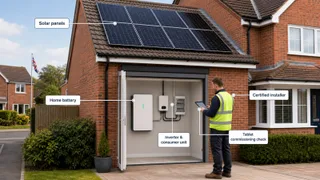
On site, a simple retrofit may only take a relatively short time, but the technical details still matter. Batteries are heavy, need suitable fixings or floor support, and must be installed in locations permitted by the manufacturer. CT clamps or meters also need to be installed in the correct position and orientation so the system can measure import, export and demand accurately.
Handover
The owner receives operating guidance, monitoring access, warranty information and a clear explanation of limitations.Commissioning
The system is configured for self-consumption, tariff charging, backup reserve or another agreed operating mode.Grid connection
The installer confirms the relevant DNO process and any export limits or application requirements.Survey and design
Usage data, solar compatibility, electrical condition and battery location are checked before the system is specified.Electrical installation
Battery, inverter, isolators, protection devices, metering and communication equipment are installed and tested.
Commissioning is where many good or poor outcomes are created. A battery set only to maximise solar self-consumption will behave differently from one scheduled around a smart tariff. A system preserving backup reserve will leave some energy unused for savings. These settings should match the reason you bought the battery.
UK compliance and safety checks
Battery storage is an electrical installation and should be designed and installed by competent people using the manufacturer’s instructions, the site conditions and relevant UK electrical requirements. The work may interact with BS 7671 wiring regulations, DNO connection processes, ENA guidance, IET guidance for electrical energy storage systems, product installation manuals and, where solar PV is part of the project, the installer’s MCS-related scope and documentation.
Fire and location decisions should be made before equipment is ordered. PAS 63100 is a useful reference point for domestic battery storage fire safety considerations, but it does not remove the need to follow the manufacturer’s rules and carry out a site-specific assessment. A battery that is acceptable in one garage, utility room or external wall position may be unsuitable in another property because of access, temperature, escape routes, damp conditions, clearances or fixing strength.
The handover should leave you with enough information to operate the system safely and prove what has been installed. If an installer cannot explain the connection process, protection arrangement, location choice or backup limitations in plain English, that is a warning sign.
Competence
The electrical work should be carried out by suitably competent installers who understand battery storage, inverters, isolation, protection and commissioning.DNO process
The installer should confirm whether G98 notification or a G99 application is needed and how any export limits will be managed.Documentation
Handover should include operating instructions, test records where applicable, warranty details, monitoring access and the agreed operating settings.Manufacturer rules
Location, clearances, temperature range, mounting method, firmware, commissioning and warranty conditions should follow the product documentation.Fire considerations
Battery position should consider escape routes, combustible surroundings, ventilation, access for emergency services and site-specific risk.Wiring and protection
The design should account for BS 7671, isolation, circuit protection, earthing and safe integration with the existing consumer unit or switchgear.
Safety is not a paperwork exercise. It affects where the battery can go, what it can power, how it behaves during a fault and whether the warranty remains valid.
Can you add a battery to existing solar panels?
Yes, a battery can often be added to existing solar panels, but it is not always a plug-in upgrade. The installer needs to check the existing inverter, generation meter, consumer unit, export arrangement, warranties, available space and whether an AC-coupled or hybrid setup is more suitable.
Retrofitting is common where a home exports solar during the day but imports electricity in the evening. In that case, battery storage can increase self-consumption by holding some surplus solar for later. The result depends on how much surplus solar you genuinely have, how often the battery fills, and whether your evening load is large enough to use what has been stored.
Older solar systems need extra care. Changing inverters or altering the generation setup can affect monitoring, warranties, export arrangements and the way the system was originally registered. If the original solar installation was notified to the DNO, the combined inverter capacity and export behaviour may need to be reviewed rather than treated as an unrelated appliance.
Is battery storage worth it without solar?
Battery storage without solar can work in some UK homes, but the case is more dependent on tariffs and control settings. The usual approach is to charge the battery during cheaper periods and discharge during more expensive periods, where the tariff, inverter and battery all support that behaviour.
This is not risk-free. Smart tariffs can change, standing charges and export rates may alter, and not every household uses enough electricity at the right times to justify the hardware. You also need to account for round-trip efficiency because not every unit of electricity charged into the battery is returned as usable electricity later.
A battery without solar is usually worth modelling only after you understand your actual half-hourly or daily consumption pattern. Homes with steady evening and morning demand may be more suitable than very low-use households. If you plan to add solar later, it is worth choosing a design route that does not restrict the future PV system.
What size battery do you need?
The right battery size is the one that cycles usefully without being wasted. Domestic batteries in the UK are commonly discussed in the broad range of around 3 kWh to 15 kWh usable capacity, but the correct size depends on actual usage, solar generation, tariff structure, inverter power and budget. A small battery may be enough for a modest home with limited evening use. A larger battery may suit a property with solar PV, electric cooking, home working, an EV charger or a heat pump, but only if the energy flow supports it. Oversizing can add cost without proportionate savings if the battery is not filled and emptied regularly. For businesses, battery sizing is much more site-specific. Commercial battery storage may be designed around peak demand reduction, solar self-consumption, time-of-use tariffs, EV charging load management or resilience. Industrial battery storage can also involve three-phase electrical design, planning considerations, fire strategy and more detailed grid connection work.
| Decision area | Why it matters | What to check early |
|---|---|---|
| Solar surplus | A battery needs energy to store if the aim is solar self-consumption | Export levels, daytime use and seasonal generation |
| Evening demand | Stored energy only saves money when it offsets later imports | Household load profile and high-use appliances |
| Inverter power | Power output affects what loads the battery can support at once | Battery inverter rating and combined inverter capacity |
| Tariff structure | Savings depend heavily on import and export prices | Smart tariff rules, export tariff value and charging windows |
| Installation constraints | Poor locations or electrical upgrades can change the economics | Wall strength, access, clearances, consumer unit and cable route |
| Backup expectation | Backup is not standard on many grid-connected installations | Backup hardware, essential circuits and operating limits |
Overview
A useful sizing exercise looks at usable capacity, not only the nominal battery size. It should also consider how many times the battery is likely to cycle, whether winter solar generation will fill it, and whether future loads such as EV charging or a heat pump will change the pattern.
Will a home battery work in a power cut?
A battery does not automatically provide backup during a power cut. Many standard grid-connected battery systems shut down when the grid fails because they must not energise the local network or create unsafe conditions for engineers.
Backup capability needs to be designed into the installation. That may mean extra hardware, a suitable inverter, an automatic or manual changeover arrangement, and a separate set of essential circuits. Whole-house backup is a different design challenge from keeping a router, lighting circuit or small appliance circuit live.
This is one of the most important questions to ask before accepting a quote. If resilience is a major reason for buying a battery, ask the installer exactly what will remain powered, how long it might operate under realistic loads, whether solar can recharge the battery during an outage, and what happens when the battery reaches its reserve level.
Reserve settings
Keeping energy back for outages can reduce the amount available for everyday savings.Whole-house backup
Needs more careful design because large loads can drain the battery quickly or exceed inverter limits.Solar during outages
Some systems can use solar to recharge during a power cut, but only if the inverter and backup design support it.Essential-circuit backup
Usually focuses on selected loads such as lighting, broadband, controls or small appliance circuits.
The key point is to define backup in writing. “Battery backup” can mean very different things depending on the equipment and wiring arrangement.
What affects battery storage installation cost?
Battery storage installation costs vary because equipment and site work vary. Capacity, battery chemistry and product range, inverter type, retrofit complexity, consumer unit condition, cable routing, backup requirements, mounting position and whether solar PV is installed at the same time can all change the quotation. Domestic systems are typically a significant investment, so live quotes based on a real survey are more useful than generic figures.
A battery installed alongside new solar PV may share some design and installation work with the solar project. A retrofit battery may need additional metering, new cable routes, inverter changes or more investigation into the existing PV and DNO position. A backup-capable system usually costs more than a non-backup system because it needs extra design, equipment and commissioning.
The cheapest quote is not always the best value if it leaves out safety, monitoring, handover, DNO work or realistic operating assumptions. A useful proposal should separate the main cost drivers clearly enough that you can see whether you are paying for more capacity, better backup capability, a more complex retrofit or necessary electrical upgrades.
Backup hardware
Essential-circuit or whole-house backup adds equipment, design time and commissioning complexity.Inverter choice
Hybrid and AC-coupled designs have different equipment and labour implications.Battery capacity
Larger usable capacity usually increases equipment cost, but bigger is not always better.Electrical upgrades
Consumer unit work, isolation, protection and switchgear changes can affect the final price.Location and access
Long cable routes, poor mounting surfaces and awkward working areas can increase labour.Retrofit complexity
Existing solar inverters, metering, warranties and cable routes can make the work simpler or harder.
Ask for a written quotation that states what is included and what is excluded. If backup, DNO applications, monitoring setup or electrical remedial work are not mentioned, clarify them before comparing prices.
What affects savings and payback?
Savings are site-specific. A battery may reduce grid imports, increase self-consumption of solar generation or allow charging during cheaper tariff periods. The financial result depends on import rates, export payments, tariff rules, battery efficiency, warranty terms, usable capacity and how consistently the system cycles.
Be cautious about simple payback claims. Exporting solar is not always poor value if your export tariff is strong. Charging from the grid is not automatically profitable if tariff gaps narrow or the battery cannot charge and discharge at the right times. A better installer will show the assumptions behind the savings estimate rather than giving a single guaranteed outcome.
Round-trip efficiency also matters. Some energy is lost when charging and discharging, so a tariff saving only works if the price difference is large enough after losses and any battery wear considerations. Monitoring data after installation is useful because it shows whether the battery is cycling as expected.
Where should a battery be installed?
Battery location affects safety, performance, access and warranty compliance. Many systems can be installed indoors or outdoors if the product is rated for the environment, but the manufacturer’s requirements matter more than convenience. Installers will consider temperature, moisture, ventilation, fixing strength, access, cable length and separation from unsuitable areas.
In practice, garages, utility spaces and suitable external walls are often considered before more awkward locations. Lofts can be problematic because of access, heat, weight, fire considerations and working conditions, although suitability depends on the product and property. Escape routes, cramped cupboards and damp areas may also be unsuitable.
The location should also work for maintenance and monitoring. If the battery needs a data connection, poor Wi-Fi can affect app visibility and tariff-linked operation. If the system uses clamps or meters near the consumer unit, long or awkward cable runs may add work and increase the chance of measurement errors if not installed carefully.
Battery storage for business and commercial sites
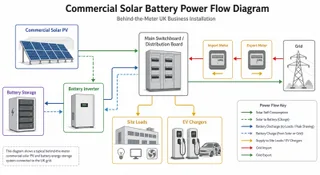
Battery storage for business is usually assessed around load profile rather than household-style self-consumption alone. A business may want to reduce peak demand, store on-site solar generation, manage EV charging loads, improve use of time-of-use tariffs or support resilience.
Commercial battery storage needs more design work because loads are larger and the consequences of poor design are greater. The installer may need half-hourly meter data, maximum demand information, site plans, switchgear details, three-phase supply information and a view of future electrification plans. If solar PV, EV charging or a heat pump system is also involved, the battery should be designed as part of the whole site energy strategy.
For industrial battery storage, grid connection and safety planning can become major parts of the project. The system may be tens of kWh, hundreds of kWh or larger, and the design may involve specialist controls, fire risk assessment, planning input and coordination with the DNO. A business should expect a feasibility stage before committing to equipment.
Load profile
Half-hourly data helps show whether the battery can reduce peaks or shift energy use effectively.Safety planning
Larger systems need proportionate fire, access and maintenance considerations.Site infrastructure
Switchgear, supply capacity, metering and space constraints can shape the design.Future electrification
EV charging, heat pumps and process changes can alter the value of the battery.Operational resilience
Backup expectations must be defined around critical loads and acceptable downtime.
Commercial batteries can be valuable, but they are rarely a one-size-fits-all product. The specification should be driven by measured site behaviour and business objectives.
Common mistakes to avoid before you accept a quote
The most common mistake is buying capacity before understanding usage. A battery that looks impressive on a specification sheet may not be the best match for a household that uses little evening electricity or a business whose demand peaks at times the battery cannot economically cover.
Another mistake is assuming that any battery will work with any solar system. The existing inverter, export limit, metering setup, monitoring platform and warranty position all matter. Retrofitting can be a strong option, but it should be designed rather than guessed.
It is also easy to overlook operating modes. A system set up to maximise solar self-consumption, charge from the grid, preserve backup reserve or respond to a tariff will behave differently. The handover should explain these settings in plain English. The best design can underperform if it is left in the wrong mode.
Also ask what warranty conditions apply to location and installation, and how the system will be commissioned for your tariff. Do not be rushed by a quote that only highlights battery size and app features. The design, safety checks, grid connection approach and operating mode are what determine whether the system works well in practice.
What should be in a written battery proposal?
A written proposal should be detailed enough for you to compare like with like. If two quotes use different assumptions about usable capacity, backup, inverter output or tariff operation, they are not really quoting for the same outcome.
The proposal should also make clear what happens if the survey uncovers electrical issues. Some homes need consumer unit work, improved isolation, cable route changes or additional metering before the battery can be installed cleanly. Businesses may need more detailed switchgear checks and grid connection work before the final design is fixed.
Site details
Proposed location, cable route, mounting method and access requirements should be described.System design
Battery model, usable capacity, inverter type, power output and operating mode should be stated clearly.Backup position
The installer should state whether backup is included, excluded or available as an option.Grid connection
The quote should explain the DNO route, export assumptions and any known limits.Savings assumptions
Any forecast should show tariff assumptions, expected cycling and how solar generation has been treated.Compliance documents
Handover should include relevant certificates, test information, manuals and warranty documents.
This level of detail protects both sides. It reduces misunderstandings and makes it easier to spot whether a cheaper quote is genuinely efficient or simply missing important work.
What to do next
Start with your electricity data. For a home, gather recent bills, smart meter information if available, details of any solar PV system and plans for EV charging or a heat pump. For a business, collect half-hourly data, maximum demand information, site operating hours and any plans for solar, EV charging or equipment upgrades.
Then ask installers to quote against the same brief. A useful proposal should state the battery’s usable capacity, inverter type, power output, installation location, DNO approach, backup position, monitoring setup, warranty assumptions and expected operating mode. If the quote relies on tariff savings, ask what happens if the tariff changes.
Battery storage installation can be a strong upgrade when it is matched to the property and usage pattern. It is less convincing when the design is based only on headline capacity or optimistic savings. Treat the battery as part of your wider energy system, not a standalone gadget, and the specification decisions become much clearer.
Plan, Compare & Buy Renewable Energy Solutions
AI does the thinking.
You get the perfect solar match.
Use RoboMo™ to assess your property, compare available technologies and connect with trusted UK installers, suppliers and manufacturers.
Simply enter your postcode, drop a pin on your roof, create your free account and let RoboMo™ analyse your property to find the best solar panels for your home.

You don't have to think
RoboMo™'s AI analyses your roof and does all the hard work.

Accurate & tailored
AI-powered assessment based on your roof, location, and conditions.

Best options, maximum savings
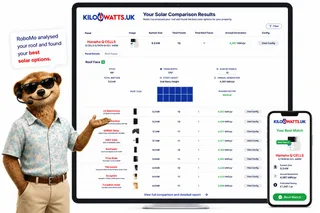
Compare top solar panels for the best performance and value.

Simple, fast & effortless
Provide a few details, sit back and watch your results unfold.
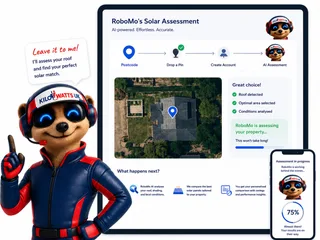
STEP 1
Choose Home, Business or Industrial
Enter your postcode to start your assessment.
STEP 2

Drop a pin on your roof
STEP 3

Create your free account
STEP 4

Sit back and watch RoboMo™ work
RoboMo™ analyses your roof and builds your personalised solar comparison.

Kilowatts UK is an authorised representative
Flower Turbines
Compact vertical-axis turbines built for real UK sites, not just open farmland.
They start in light wind, sit in a small footprint, and are bird-safe by design. Cluster them as a bouquet and the group performs better together than the same turbines standing alone. Enter your postcode for a location-based generation estimate. Figures use area weather data and will differ if buildings, trees or hills sit in the way.
Starts in light UK wind
Built to generate in typical UK wind, not only open farmland.
Small rooftop or ground footprint
Compact towers for roofs, yards and tight sites.
Bird-safe slow rotation
Slow vertical-axis spin, bird-safe by design.
Bouquet clusters raise output
Grouped turbines outperform the same units standing alone.
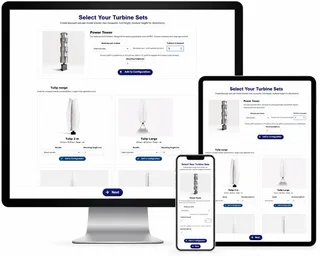
Step 1
Enter your postcode
Start designing your wind energy system in seconds.
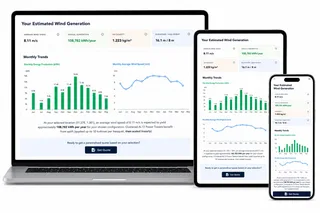
STEP 2

Choose a location
STEP 3

Place your cluster
Tap the map where you want the turbine cluster to go.
STEP 4

Instant generation forecasts
Compare different turbine layouts and see annual generation forecasts instantly.
STEP 5

No commitment required
Explore different configurations before deciding whether to request a quotation.
Related articles

Mo's Mission Nominations
FAQ
Need Help? RoboMo's Got Answers
Can I add a battery to my existing solar panels?
Yes, many UK solar PV systems can be retrofitted with battery storage, but it is not always a simple plug-in upgrade. An installer should check your existing inverter, generation meter, consumer unit, export arrangement, warranties and available space. They will usually recommend either an AC-coupled battery or changes to the inverter arrangement depending on the site.
What size home battery do I need?
The right size depends on your electricity use, solar generation, tariff, inverter power and how much of the battery you are likely to use each day. Usable capacity is more important than the headline battery size. Oversizing can reduce value if the battery is not regularly charged and discharged.
Will a home battery work during a power cut?
Not automatically. Many standard grid-connected batteries shut down during a power cut for safety reasons. Backup power needs to be designed into the system with suitable hardware, changeover arrangements and clearly defined essential circuits.
Can battery storage be worthwhile without solar panels?
It can be, but the case depends heavily on your electricity tariff and usage pattern. The usual approach is to charge from the grid during cheaper periods and use the battery during more expensive periods. Tariffs can change, and round-trip efficiency means you do not get back every unit you put into the battery.
What should be checked before a battery is installed?
A proper survey should look at your electricity use, consumer unit, earthing, main supply, cable routes, battery location, solar compatibility and future plans such as an EV charger or heat pump. The installer should also check manufacturer location rules, clearances, mounting strength and communication requirements. These checks affect safety, performance and warranty conditions.
Does a battery installation need DNO approval?
The installer should confirm the correct DNO process before the system is installed. Some grid-connected systems may be handled through G98 notification, while others may need a G99 application depending on inverter capacity, export behaviour and the site. This should be part of the electrical design, not an afterthought.
Where can a home battery be installed?
The location must suit the manufacturer’s instructions and the property conditions. Factors include temperature range, damp, ventilation, access, escape routes, fire considerations, wall strength or floor support, and required clearances. A position that works in one garage, utility room or external wall area may not be suitable in another home.
What should I receive after the installation is complete?
You should receive operating guidance, monitoring access, warranty information and details of the agreed settings. Where applicable, the handover should also include electrical test records, product documentation and confirmation of the DNO process. Ask the installer to explain backup limits, tariff settings and safe isolation in plain English.