


What Does MCS Certification Mean for UK Solar Installations?
Published: 2026-06-29 10:17:42
Updated: 2026-09-20 10:06:51
For homeowners, MCS matters because it helps prove that the installer, products, design process.
What MCS certification means for UK solar
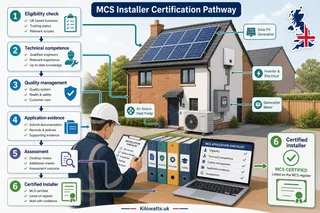
MCS certification is a UK quality assurance scheme for small-scale renewable energy systems, including domestic solar PV. For homeowners, MCS matters because it helps prove that the installer, products, design process, commissioning and handover paperwork meet recognised standards.
MCS stands for Microgeneration Certification Scheme. In practice, it covers two connected things:
- The installation company can be certified for the relevant technology, such as solar PV or battery storage.
- The products used in the system can be listed as certified products where MCS product certification applies.
- Smart Export Guarantee eligibility
- Future property sale enquiries
- Finance or mortgage-related checks
- Warranty evidence
It is not just a logo on a quotation. An MCS-certified solar installation should follow scheme rules for design, workmanship, commissioning, documentation, performance estimates, consumer protection and complaints handling. For most UK homeowners, MCS certification matters because it can affect: That does not mean every MCS-certified quote is automatically good. It means you have a clearer standard to check against. Thinking about solar? A good first step is to get a property-specific survey and quote, rather than relying on generic savings claims. You can book a solar survey or use the solar CTA at the end of this guide. Insurance or solicitor questions Complaints handling if something goes wrong Confidence that the system has been installed under a recognised framework
MCS at a glance
A simple way to understand the process is:
Survey → design → certified products → installation → commissioning → MCS certificate and handover pack → SEG application
What MCS covers on a solar PV installation
For a domestic solar PV system, MCS is concerned with more than simply fixing panels to a roof. It sits across the whole installation process, from the initial design assumptions through to the final certificate and handover pack.
A competent MCS installer should assess the roof, design the array, estimate generation using an accepted method, specify suitable components, install the system safely, commission it correctly and provide documents that match what has actually been fitted. If you are new to the process, it can help to understand the wider solar installation journey before comparing MCS paperwork.
Typical areas covered include:
- Installer competence
- Product eligibility
- Site survey and design assumptions
- Roof and shading assessment
- System performance estimate
- Electrical design and commissioning
MCS also expects consumer protection arrangements. Installers must be part of an approved consumer code, which helps set standards for sales practices, contracts, cancellation rights and complaints handling. This is important because solar is a technical purchase. Homeowners often need to make decisions about panels, inverters, batteries, tariffs and roof suitability before they fully understand how the whole system will perform. Customer contracts Consumer code membership Complaints processes Handover paperwork MCS certificate creation after installation
What MCS does not do
MCS is useful, but it is often misunderstood. It does not make a roof suitable, remove the need for other approvals or guarantee a financial return.
MCS does not replace planning permission. Many domestic rooftop solar installations are permitted development, but restrictions can apply to listed buildings, conservation areas, flats, leasehold properties and ground-mounted systems. Planning rules can also differ across England, Scotland, Wales and Northern Ireland, so check the basics of solar planning permission before assuming your roof is straightforward.
MCS does not replace Distribution Network Operator requirements. The DNO manages the local electricity network, and most grid-connected domestic solar installations need notification or approval. Smaller systems may fall under G98 rules, while larger systems or systems with higher export capacity may need G99 approval before installation. A typical single-phase home often has a simple connection threshold of around 3.68 kW per phase, but the actual position depends on the local network, inverter capacity and export arrangements. MCS does not replace Building Regulations either. Solar PV work still needs to comply with relevant requirements, including electrical safety, structural loading, roof weatherproofing and fire safety. Where electrical work is notifiable, it must be notified through the correct route, such as a competent person scheme or building control where required. MCS also does not guarantee savings. A performance estimate is not the same as a promise. Your actual results depend on roof orientation, pitch, shading, system size, panel performance, inverter settings, household usage, import tariff, export tariff and whether you use battery storage.
Why MCS matters for export payments
One of the main practical reasons MCS matters is access to export payments. The Smart Export Guarantee pays eligible generators for electricity exported to the grid, and domestic solar PV normally falls within the relevant scale for the scheme.
Energy suppliers commonly ask for an MCS certificate, or equivalent evidence, before they will set up SEG export payments. Requirements vary by supplier, but a homeowner with a non-MCS installation may find it harder to access export tariffs.
This matters because solar savings are not only about using electricity in the home. Many homes generate surplus electricity during bright periods, especially if the occupants are out during the day or do not have a battery. If that surplus can be metered and exported under an eligible tariff, the installation paperwork becomes financially relevant. MCS certification does not set the export tariff and does not guarantee what you will be paid. Export payments depend on the supplier tariff, metered export, smart meter compatibility and how the system is configured. Before choosing an export tariff, check:
- Whether the supplier requires an MCS certificate
- Whether a smart meter is needed for half-hourly export readings
- Whether the tariff is fixed or variable
- Whether you must import electricity from the same supplier
- How batteries and export limitation are treated
- Whether any additional documents are needed
How MCS fits with DNO, planning and Building Regulations
MCS should be seen as one part of the wider compliance picture. A good installer will not treat it as a substitute for other checks.
The DNO process is particularly important where the inverter export capacity is above the simple notification route or where export limitation is needed. If export is limited by agreement with the DNO, the limiting equipment should be configured properly and documented.
Planning is a separate question. A standard rooftop system on a house may be straightforward, but flats, listed buildings, conservation areas and unusual mounting arrangements need more care. Leasehold homes may also need permission from the freeholder or managing agent. Building Regulations are also separate. Solar adds load to the roof, introduces electrical equipment and can affect weatherproofing if mounting is poorly installed. A roof in poor condition should usually be repaired before panels are fitted, because removing and refitting panels later adds complexity and cost.
What paperwork you should receive
The paperwork is one of the most valuable parts of an MCS installation. It helps you register for export payments, deal with warranty questions, prove what was installed and answer future buyer or solicitor enquiries.
You should keep digital and paper copies where possible. The details should match the installed system, not just the original quote.
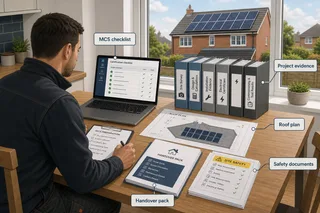
Your handover pack should normally include:
- MCS certificate
- Electrical Installation Certificate
- DNO notification or approval evidence
- System design documents
- Performance estimate
- Product datasheets
The MCS certificate should match the property address, installed technology and system details. If the final installation differs from the quote, for example because a panel model, inverter or layout has changed, the paperwork should reflect what was actually installed. If a battery is installed at the same time, make sure the handover pack also includes the battery model, warranty terms, operating instructions and any relevant commissioning details. Battery warranties often include conditions, cycle limits, throughput limits or location requirements, so the paperwork can matter later. Warranty information Commissioning records User manuals Shutdown procedure Monitoring setup information Labelling information Consumer code and complaints information
How to check whether an installer is genuinely MCS-certified
Do not rely only on a logo in a brochure or a verbal assurance. The safest approach is to check the official MCS installer database and confirm that the company is currently certified for solar PV.
The legal company name should match the business on the quotation and contract. This matters because some trading names, lead-generation companies and subcontracting arrangements can make it unclear who is actually responsible for the installation and certificate.
Ask who will issue the MCS certificate and when it will be provided. The certificate is normally created after commissioning, once the installed system details are known. It should match the property address, technology type and installed capacity. You should also ask whether the proposed panels, inverters and any battery equipment are MCS-certified where relevant. Model numbers matter. Two products can look similar but have different certification status, and substitutions should be confirmed before installation rather than discovered afterwards. Before signing, check: The installer’s legal company name The installer’s current MCS certification status The certified technology scope, such as solar PV Consumer code membership Product model numbers Who is responsible for the design If the sales company, survey company and installation company are different businesses, ask for this to be explained clearly in writing. Who will install the system Who will issue the MCS certificate When the certificate and handover pack will be provided
Red flags in a solar quote
A low price can become expensive if the installation is poorly specified or the paperwork is incomplete. MCS certification reduces some risks, but it does not remove the need to compare solar quotes carefully.
Be cautious if you see:
No current MCS registration details No named installation company No legal company name on the contract No product model numbers No generation estimate No shading assessment Be especially careful with savings claims. A performance estimate is not a guarantee, and bill savings depend on roof orientation, shading, household usage, import tariff, export tariff, self-consumption and whether a battery is installed. A good quote should make the proposed system understandable. You should be able to see what is being installed, where it will go, what it is expected to generate, what assumptions have been used and what paperwork you will receive after commissioning. No explanation of the DNO process No scaffolding detail No clear warranty terms No complaints process Pressure to sign before a proper survey Guaranteed payback claims Vague claims that certification is included Large discounts that expire the same day No explanation of whether the roof is suitable No written confirmation of what happens if products are substituted
MCS and solar batteries
Solar batteries can be installed with a new solar PV system or added later. MCS has standards for battery storage installations, and some tariffs or finance products may distinguish between solar PV certification and battery certification.
A battery does not automatically improve the financial outcome. It can increase self-consumption by storing solar electricity for later use, but suitability depends on your electricity usage pattern, tariff, battery capacity, installed cost and how the system is controlled.
Battery location also needs careful thought. Installers should consider: Access for maintenance Ventilation and operating temperature Manufacturer warranty conditions Electrical safety Fire safety guidance Protection from impact or moisture A battery fitted in an unsuitable location can create practical problems even if the solar array itself is well designed. If you add a battery later, ask what new paperwork will be issued and whether the change affects export settings, monitoring, DNO records or tariff eligibility. You should also ask whether the battery is AC-coupled or DC-coupled, because this can affect metering, inverter arrangements and how the system interacts with export payments. Cable routes Internet or monitoring requirements Noise, where relevant Emergency shutdown information
MCS-certified versus non-MCS solar
The difference between MCS-certified and non-MCS solar is not simply about workmanship. It is also about evidence, consumer protection and access to certain schemes.
A non-MCS installation may still be electrically competent if installed by a suitably skilled contractor, but it may create problems when you try to access SEG payments, prove product eligibility or answer future documentation requests. For most grid-connected domestic solar installations, MCS is the safer and more widely accepted route.
There are situations where MCS may matter less, such as a fully off-grid system that is not seeking export payments or a very small hobby system that is not connected into the home wiring. Even then, electrical safety and product suitability still matter. For a normal UK homeowner installing rooftop solar to reduce bills and export surplus electricity, MCS certification is usually worth treating as a requirement rather than an optional extra.
What affects the quality of an MCS installation
MCS sets a framework, but the outcome still depends heavily on survey quality, design decisions and workmanship. Two certified installers can propose different layouts, inverter sizes, battery capacities and cable routes.
Key quality factors include:
Roof assessment: The installer should consider roof condition, covering type, structure, access and weatherproofing. Shading assessment: Chimneys, trees, neighbouring buildings and dormers can affect output and string design. Electrical design: Consumer unit capacity, earthing, bonding, surge protection and inverter location can all influence the specification. DNO approach: The installer should explain whether G98 notification, G99 approval or export limitation is relevant. Product selection: Panels, inverters, mounting equipment and batteries should suit the property, not just the price point. Cable routes: Internal and external cable runs should be agreed before installation where possible. These details are where real installations often succeed or fail. A tidy quote with an MCS number is not enough if it does not explain how the system will work on your specific property. Output depends on the site, so it is worth understanding what affects efficiency before judging one design against another. Monitoring — The homeowner should know how to check generation, battery operation and fault alerts. Handover quality — Monitoring setup, shutdown instructions, labelling and warranty documents should be clear.
Questions to ask before you choose an installer
Before signing, ask practical questions that force the installer to explain the design rather than just the price.
Are you currently MCS-certified for solar PV? What is your legal company name and MCS registration? Who will issue the MCS certificate? Are the quoted panels and inverter MCS-certified? What annual generation estimate have you used? What assumptions sit behind that estimate?
The best answers are usually specific to the property. Be cautious if the installer gives generic answers without checking the roof, electricity usage, meter position, consumer unit and local grid requirements. How have you assessed shading? What self-consumption assumption is included? What DNO process applies to this system? Is export limitation required? Is scaffolding included? Where will the inverter and any battery be installed? What warranties apply to panels, inverter, battery and workmanship? What documents will I receive after commissioning? When will I receive the MCS certificate? What happens if my export supplier asks for more evidence? What happens if you need to change a product before installation? Who handles complaints if something goes wrong?
Is MCS certification always necessary
MCS is not always a strict legal requirement for every possible solar installation, but it is often practically necessary for a normal UK domestic system. If you want straightforward access to typical SEG export tariffs, recognised installation paperwork and a formal consumer protection route, choosing an MCS-certified installer using certified products is usually the right approach.
It is less relevant if the system is fully off-grid and you are not seeking export payments. It also will not fix problems such as a weak roof, severe shading, leasehold restrictions or unrealistic savings assumptions.
In short, MCS matters because it reduces avoidable risk. It helps connect the technical installation with the paperwork, export eligibility and consumer protections that homeowners often need after the panels are on the roof. If you are comparing solar quotes, make MCS certification one of your first checks, then look closely at the design, survey quality, DNO approach, warranties and handover documents.
Plan, Compare & Buy Renewable Energy Solutions
AI does the thinking.
You get the perfect solar match.
Use RoboMo™ to assess your property, compare available technologies and connect with trusted UK installers, suppliers and manufacturers.
Simply enter your postcode, drop a pin on your roof, create your free account and let RoboMo™ analyse your property to find the best solar panels for your home.

You don't have to think
RoboMo™'s AI analyses your roof and does all the hard work.

Accurate & tailored
AI-powered assessment based on your roof, location, and conditions.

Best options, maximum savings
Compare top solar panels for the best performance and value.

Simple, fast & effortless
Provide a few details, sit back and watch your results unfold.
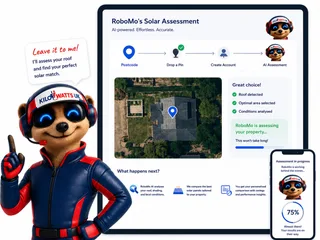
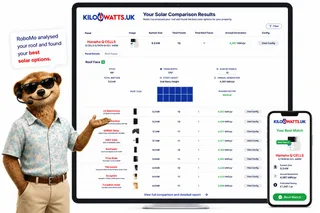
STEP 1
Choose Home, Business or Industrial
Enter your postcode to start your assessment.
STEP 2
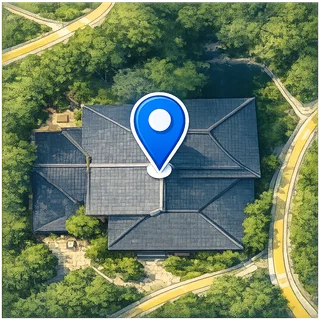
Drop a pin on your roof
STEP 3

Create your free account
STEP 4

Sit back and watch RoboMo™ work
RoboMo™ analyses your roof and builds your personalised solar comparison.

Step 1
Enter your postcode
Start designing your wind energy system in seconds.
Are you an installer, distributor or renewable energy business?
Kilowatts UK is expanding the Flower Turbines partner network across the UK.
Become A Flower Turbines PartnerKilowatts UK is an authorised representative
Flower Turbines
Compact vertical-axis turbines built for real UK sites, not just open farmland.
They start in light wind, sit in a small footprint, and are bird-safe by design. Cluster them as a bouquet and the group performs better together than the same turbines standing alone. Enter your postcode for a location-based generation estimate. Figures use area weather data and will differ if buildings, trees or hills sit in the way.
Starts in light UK wind
Built to generate in typical UK wind, not only open farmland.
Small rooftop or ground footprint
Compact towers for roofs, yards and tight sites.
Bird-safe slow rotation
Slow vertical-axis spin, bird-safe by design.
Bouquet clusters raise output
Grouped turbines outperform the same units standing alone.
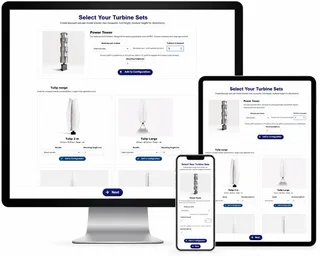

STEP 2

Choose a location
STEP 3
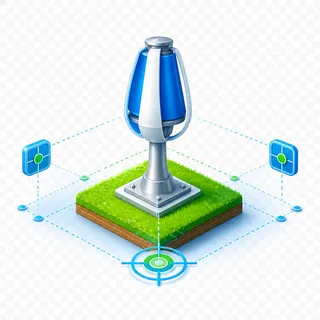
Place your cluster
Tap the map where you want the turbine cluster to go.
STEP 4

Instant generation forecasts
Compare different turbine layouts and see annual generation forecasts instantly.
STEP 5

No commitment required
Explore different configurations before deciding whether to request a quotation.
Related articles
Mo's Mission Nominations
FAQ
Need Help? RoboMo's Got Answers
What does MCS certification mean for solar panels?
MCS stands for Microgeneration Certification Scheme. For UK solar PV, it is a quality assurance scheme covering certified installers, eligible products, system design, commissioning, documentation, consumer protection and complaints handling. An MCS-certified installation should follow recognised standards rather than simply displaying a logo on a quote.
Is MCS certification a legal requirement for solar panels in the UK?
MCS certification is not always a legal requirement for every solar installation, but it is often practically important for domestic grid-connected systems. Many homeowners need an MCS certificate to apply for Smart Export Guarantee payments, satisfy future property sale enquiries, support warranty evidence and show that the installation followed a recognised framework.
Why does MCS matter for Smart Export Guarantee payments?
Energy suppliers commonly ask for an MCS certificate, or equivalent evidence, before setting up Smart Export Guarantee export payments. Without MCS paperwork, it may be harder to access export tariffs. MCS does not set the export rate or guarantee payments, but it can be an important part of proving that the solar installation is eligible.
Does MCS certification guarantee solar panel savings?
No. MCS requires a recognised approach to performance estimation, but an estimate is not a guaranteed financial return. Actual savings depend on roof direction, pitch, shading, system size, inverter settings, household electricity use, import tariff, export tariff, battery storage and how much solar electricity is used in the home.
What does an MCS-certified solar installation include?
An MCS-certified solar PV installation should include a suitable survey, system design, product selection, generation estimate, safe installation, commissioning, consumer protection arrangements and handover paperwork. The final documents should match what has actually been installed, including the correct panel, inverter and battery details where relevant.
What paperwork should I receive after an MCS solar installation?
You should normally receive an MCS certificate, Electrical Installation Certificate, DNO notification or approval evidence, system design information, performance estimate, product datasheets, warranty documents, commissioning records, user manuals, shutdown procedure, monitoring details and complaints information. Keep both digital and paper copies because this paperwork may be needed for export payments, warranty claims or a future property sale.
Does MCS replace DNO approval?
No. MCS does not replace Distribution Network Operator requirements. Most grid-connected solar installations need either DNO notification or approval, depending on system size, inverter capacity and export arrangements. Smaller systems may fall under G98 rules, while larger or higher-export systems may require G99 approval before installation.
Does MCS replace planning permission or Building Regulations?
No. MCS certification is separate from planning permission and Building Regulations. Many domestic rooftop solar systems are permitted development, but restrictions can apply to listed buildings, conservation areas, flats, leasehold properties and ground-mounted systems. Solar installations must also comply with relevant safety, structural, electrical, weatherproofing and fire safety requirements.
How can I check if a solar installer is genuinely MCS-certified?
Check the official MCS installer database and confirm that the company is currently certified for solar PV. Make sure the legal company name matches the quotation and contract, not just a trading name. You should also ask who will issue the MCS certificate, when it will be provided and whether the quoted products are certified where relevant.
What should I ask a solar installer before signing a quote?
Ask whether they are currently MCS-certified for solar PV, what their legal company name is, who will issue the MCS certificate, what products are being installed, how generation has been estimated, how shading has been assessed, what DNO process applies, whether scaffolding is included, where the inverter and battery will go, what warranties apply and what documents you will receive after commissioning.
Can a non-MCS solar installation still be safe?
A non-MCS installation may still be electrically competent if carried out by a suitably skilled contractor, but it can create practical problems. You may struggle to access SEG export payments, prove product eligibility, satisfy future buyer enquiries or show that the installation followed a recognised consumer protection framework. For most UK domestic solar installations, MCS is usually the safer route.
Does MCS cover solar batteries?
MCS has standards for battery storage installations, and battery certification may matter for some tariffs, finance products or compliance checks. If a battery is installed with solar PV, the handover pack should include the battery model, warranty terms, operating instructions, commissioning information and any relevant export or monitoring details.
Can I add a battery later to an MCS solar system?
Yes, a battery can often be added later, but the installer should explain how it affects the system design, export settings, monitoring, DNO records and tariff eligibility. You should also ask whether the battery is AC-coupled or DC-coupled, where it will be installed and what new paperwork will be issued after the work is complete.
What are red flags in a solar quote?
Be cautious if the quote has no current MCS details, no named installation company, no legal company name, no product model numbers, no generation estimate, no shading assessment, no DNO explanation, unclear warranty terms, pressure to sign quickly or guaranteed payback claims. A good quote should clearly explain what is being installed, where it will go, what it is expected to generate and what paperwork you will receive.
Does an MCS certificate mean the quote is automatically good?
No. MCS provides a recognised framework, but you still need to assess the quality of the survey, system design, product choice, cable routes, DNO approach, warranties and handover process. Two MCS-certified installers can propose different systems, so the quote should be specific to your property rather than based on generic savings claims.