


What is the highest watt solar panel available in the UK?
Published: 2026-06-28 13:11:45
Updated: 2026-07-26 18:36:47
For most UK homes, the highest practical solar panel wattage is usually lower, typically around 450W to 500W per panel.
What is the highest watt solar panel available in the UK?
The highest watt solar panels available in the UK are usually large-format commercial, agricultural or utility-scale modules, commonly around 650W to 720W per panel. For most UK homes, the highest practical solar panel wattage is usually lower, typically around 450W to 500W per panel.
The important distinction is “available” versus “suitable”. A very high-watt panel may be technically available through commercial supply routes, but that does not mean it is the best choice for a domestic pitched roof. Panel dimensions, weight, roof layout, wind loading, mounting compatibility, inverter limits, DNO requirements and long-term serviceability all matter.
In short, the highest watt solar panel is not automatically the best solar panel. A well-designed array using slightly lower-watt panels can produce more useful annual electricity than an awkward layout built around oversized modules.
Author and editorial note.
This guide has been prepared by the Kilowatts UK renewable-energy editorial team, drawing on UK solar installation practice, manufacturer data sheets, domestic and commercial system design considerations, and current UK grid-connection requirements. Our editorial focus is practical buyer guidance: helping UK homeowners, landlords and businesses understand which renewable-energy options are technically suitable, financially sensible and safe to install.
Kilowatts UK’s mission is to make renewable-energy decisions clearer for UK customers by explaining solar panels, batteries, heat pumps and related technologies in plain English, without overstating savings, grants or performance claims. Where panel wattages or generation figures are discussed, they should be treated as guide ranges only; a site-specific survey and system design are always needed before choosing equipment.
What a solar panel watt rating really means.
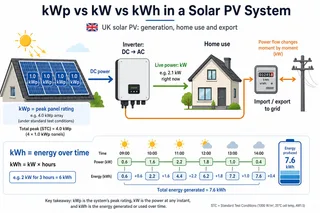
A solar panel’s watt rating is its peak power output under standard test conditions. It is usually shown as W, Wp or watts peak. A 500W panel is rated to produce up to 500 watts in ideal laboratory conditions, not continuously throughout the day and not in every UK weather condition.
This rating is different from annual electricity generation. Panel power is measured in watts, system size is usually described in kWp, and electricity generated over time is measured in kWh. For example, a 4kWp system could be built from 10 x 400W panels or 8 x 500W panels. The real-world output would still depend on the roof and system design.
In the UK, actual solar output at any moment is affected by:
- Cloud cover.
- Roof pitch.
- Roof orientation.
- Shading from trees, chimneys, dormers and nearby buildings.
- Panel temperature.
- Season and time of day.
A shaded 500W panel can easily perform worse than an unshaded 430W panel in a better position. That is why the highest wattage is only one part of the decision. Inverter settings. Cable and system losses. Whether the panels are clean, ventilated and correctly installed.
Typical high-watt solar panel ranges in the UK.
UK solar panel wattages vary by product type and installation setting. The largest panels are generally designed for commercial roofs, agricultural buildings, ground-mounted arrays and solar farms rather than standard house roofs.
430W to 460W panels: These are common on modern domestic solar installations and often suit typical UK pitched roofs. 470W to 500W panels: These can be practical for some homes and light commercial roofs where the dimensions, weight and roof layout work well. 540W to 600W panels: These are more often used on commercial roofs, farm buildings or ground-mounted systems where there is more space. 650W to 720W panels: These are mainly large-format commercial, agricultural or utility-scale modules. One single certified rooftop module. A kit made from multiple panels.
Panels advertised above 720W may exist in some manufacturer ranges, overseas markets or specialist project supply chains, but UK availability, certification, installer familiarity and practical rooftop suitability can be more limited. If you see an “800W solar panel” advertised, check carefully whether it is: For UK buyers, the key question is not simply “does this wattage exist?” It is “can this product be safely sourced, designed, installed, warranted and maintained on my property?” A portable or off-grid product. A bifacial performance claim that includes expected rear-side gain. A module intended for utility-scale projects rather than domestic roofs.
Why a 700W panel is not automatically better than a 450W panel.
A high watt rating often means the panel is physically larger, not necessarily much more efficient. A 700W panel may generate more power than a 450W panel under the same test conditions, but it may also take up much more roof area.
For small or awkward UK roofs, panel efficiency and layout flexibility can matter more than headline wattage. A common domestic panel in the 400W to 450W range may be roughly 1.7m to 1.9m tall and around 1.0m to 1.2m wide. A 650W to 720W commercial panel may be around 2.3m to 2.4m tall and around 1.1m to 1.3m wide.
Large-format modules can also be significantly heavier. Many domestic panels are around 20kg to 25kg, while some large commercial modules can be around 30kg to 38kg or more, depending on the manufacturer and frame type. That difference matters on UK roofs because installers have to consider:
- Manual handling on scaffolding.
- Safe lifting onto pitched roofs.
- Wind loading.
- Clamp zones.
- Roof hooks and rail spacing.
- Tile or slate condition.
Fewer larger panels can sometimes make the roof layout less flexible, even if each panel has a higher watt rating. On many homes, smaller high-efficiency modules allow a cleaner layout and a better total system design. Clearance from roof edges and ridges. Chimneys, roof windows, hips, valleys and dormers. Future maintenance and replacement access.
What is the highest practical wattage for a UK home?
For most UK homeowners, the highest practical solar panel size is usually around 450W to 500W. Some homes can use panels at the upper end of that range successfully, especially where there is a large, simple roof plane with little shading and enough space for safe mounting.
A 650W or 700W module is rarely the best choice for a standard domestic pitched roof. It may be too tall, too heavy, difficult to position around roof features, or outside the preferred handling and mounting approach of many domestic installers. It may also require careful checking against the manufacturer’s clamp zones and the mounting system specification.
The best domestic solar design is usually the one that gives the strongest annual generation and usable self-consumption for the property, not simply the design with the largest individual panel. A good domestic design should consider: Total kWp that can be fitted safely. Expected annual kWh generation. How much electricity the home uses during the day. Whether a battery is planned. Whether an EV charger, heat pump or immersion diverter may be added later. Inverter size and export limit. If you are weighing up different layouts, it can help to compare home solar panel options based on the roof, inverter and expected annual output rather than panel wattage alone. Shading and roof orientation. Practical installation and maintenance access.
When very high-watt panels do make sense.
Very high-watt solar panels can be useful when the site has enough space and the design is suited to large modules. They are most common where installation teams can plan handling, access, row spacing, cable routes and structural checks around larger-format products.
- Commercial roofs with large open areas.
- Agricultural buildings with simple roof planes.
- Ground-mounted solar arrays.
- Solar parks and utility-scale projects.
- Flat roofs where ballast, wind loading and row spacing are professionally designed.
On these projects, larger panels can reduce the number of modules, clamps, electrical connections and installation steps across a large array. That can make sense at scale, particularly where the project is being designed around a specific module format from the start. The same logic does not always transfer to a small domestic roof with limited access and several obstructions. A panel format that works well on a solar farm may be inconvenient, inefficient or unsuitable on a semi-detached house. Larger sites should usually compare commercial solar options or, for heavier-duty applications, compare industrial solar options before choosing a module format.
The installer checks that matter more than headline wattage.
Choosing a high-watt panel is not only a product decision. It is a full system design decision. A competent installer needs to check the panel data sheet, roof structure, mounting layout, inverter limits, grid connection route and long-term maintainability.
Roof fit: The panel dimensions must work around roof edges, ridges, chimneys, roof windows, hips, valleys and access zones. Structural suitability: The roof must be able to support the panel weight, mounting system, wind loads and any site-specific requirements. Clamp zones: Panels must be fixed according to the manufacturer’s installation manual. Incorrect clamping can create warranty and safety issues. Mounting system compatibility: Not every rail, hook, clamp or flat-roof mounting system is suitable for every large-format module. Inverter compatibility: High-watt panels may have current or voltage characteristics that are not suitable for every inverter, optimiser or microinverter. String design: Open-circuit voltage must be checked at low UK winter temperatures because cold weather increases panel voltage.
These details are often where high-watt panel choices succeed or fail. The panel may be technically impressive, but it still has to be installable, serviceable, electrically compatible and appropriate for the property. Current limits — Some larger modern panels have higher operating currents, which must be checked against inverter and optimiser input limits. Grid connection — DNO notification or approval may be required, and larger systems can fall outside the simplest connection route. Maintenance access — Very large panels can make future access, replacement, bird protection and fault-finding more awkward. Warranty conditions — The installation must follow the manufacturer’s mechanical and electrical requirements to preserve warranty cover.
How much electricity can high-watt panels generate in the UK?
UK solar generation is commonly around 750 to 1,000 kWh per kWp per year, depending on location and site conditions. Southern England is often nearer the higher end of that range, while Scotland and northern England are often lower, although still viable for solar.
Using that broad range:
- A 450W panel may generate roughly 340 to 450 kWh per year in many UK settings.
- A 500W panel may generate roughly 375 to 500 kWh per year.
- A 700W panel may generate roughly 525 to 700 kWh per year, if installed in suitable conditions.
These figures are only a guide. Orientation, pitch and shading can change the result significantly. East-west roofs can still work well, especially for homes using electricity in the morning and evening. South-facing roofs usually generate the most annual electricity, but a clean, unshaded east-west design can be more useful than a partly shaded south-facing array. It is also worth remembering that solar panels do not produce their rated wattage all day. A 500W panel may briefly approach its rated output in strong sun and favourable conditions, but output will rise and fall throughout the day. Annual kWh generation is a better measure of real value than the panel’s peak watt rating alone. For more context on realistic annual output, see our guide to how much electricity solar panels generate in the UK.
What about 650W and 800W solar panels?
A 650W solar panel is realistic in the UK market, but it is normally a large-format commercial or utility module rather than a standard domestic rooftop panel. It may be suitable for a warehouse, farm building, ground-mounted array or solar park, but it needs careful structural, electrical and handling checks.
An 800W “solar panel” claim needs more scrutiny. In many cases, it may refer to a kit made from two panels, such as two 400W modules. It may also refer to a portable setup or a bifacial panel where the advertised output includes possible rear-side gain under ideal reflective conditions.
For a UK homeowner, the important question is not whether an 800W listing exists online. The important question is whether the product is: A single certified rooftop module. Available through normal UK supply channels. Compatible with UK installation practice. Suitable for the roof structure and layout. Compatible with the inverter, optimiser or microinverter. Covered by a clear product and performance warranty. If a product appears to offer unusually high wattage at a very low panel-only price, treat the claim carefully. Check the data sheet, certification, dimensions, weight, warranty provider, supplier reputation and whether the advertised wattage is measured under standard test conditions. If you want a deeper look at this type of claim, read our guide to JA Solar Jumbo 800W specs and performance in the UK. Installable by a qualified contractor using an approved mounting method.
Costs and value when choosing higher watt panels.
High-watt panels do not automatically reduce the total cost of a solar installation. The panel price is only one part of the project. Scaffolding, labour, mounting equipment, inverter selection, electrical work, certification, roof complexity, bird protection, monitoring, battery integration and grid connection requirements can all affect the installed cost.
Panel-only pricing is therefore not a reliable way to compare systems. A larger module may reduce the number of panels needed for a given kWp, but it could also increase handling difficulty, mounting requirements or design complexity.
Larger commercial panels can be cost-effective on large projects because fewer modules may be needed for the same total array size. On a small roof, however, oversized panels can create layout compromises that reduce the benefit. Sometimes a slightly lower-watt panel gives better value because it fits the roof properly and avoids unnecessary design complications. When comparing quotes, look beyond the panel wattage and ask for: Total system size in kWp. Estimated annual generation in kWh. Panel efficiency and dimensions. Inverter specification. Battery specification, if included. Export assumptions. The best-value system is not always the one with the largest panels. It is the one that is correctly designed for the property and the customer’s electricity use. Warranty terms. Monitoring options. Scaffolding and access details. DNO approach. Any assumptions about roof condition or remedial work.
How to choose the right panel wattage.
Start with the roof and energy use, not the biggest number on a panel data sheet. A good design balances available roof area, shading, daytime electricity demand, inverter sizing, export arrangements, future battery plans and installation practicality.
Measure the usable roof area accurately. Identify shading from chimneys, trees, dormers and nearby buildings. Compare full panel layouts rather than single-panel wattage. Check panel efficiency, not just peak watts. Check inverter current and voltage compatibility. Consider whether a battery, heat pump or electric vehicle will increase self-consumption.
If two systems have similar total kWp, the one with the highest individual panel wattage is not automatically better. The better system is the one that fits safely, generates well through the year, works with the inverter and matches how the property uses electricity. A practical next step is to book a free home energy survey so the roof, usage profile and system options can be assessed properly. Ask how the design handles DNO requirements and export limits. Confirm that the mounting system is suitable for the panel size and roof type. Check warranty terms and installation requirements. Compare expected annual kWh generation, not just installed kWp.
Bottom line.
The highest watt solar panels available in the UK are generally commercial or utility-scale modules around 650W to 720W. For most homes, the highest practical choice is usually closer to 450W to 500W.
Do not choose a solar panel purely because it has the biggest watt rating. Check the physical size, weight, efficiency, roof layout, shading, inverter compatibility, mounting requirements, DNO position, warranty terms and likely annual generation.
In real UK installations, a well-designed solar PV system usually matters more than chasing the highest watt solar panel available. For homeowners, the right panel is the one that fits the roof safely, works with the electrical design and produces the most useful electricity over the long term.
Plan, Compare & Buy Renewable Energy Solutions
AI does the thinking.
You get the perfect solar match.
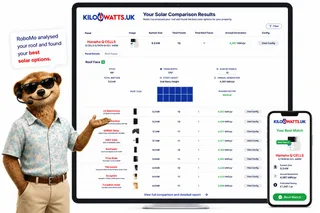
Use RoboMo™ to assess your property, compare available technologies and connect with trusted UK installers, suppliers and manufacturers.
Simply enter your postcode, drop a pin on your roof, create your free account and let RoboMo™ analyse your property to find the best solar panels for your home.

You don't have to think
RoboMo™'s AI analyses your roof and does all the hard work.

Accurate & tailored
AI-powered assessment based on your roof, location, and conditions.

Best options, maximum savings
Compare top solar panels for the best performance and value.

Simple, fast & effortless
Provide a few details, sit back and watch your results unfold.
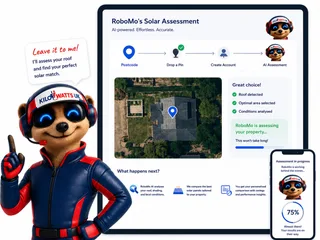
STEP 1
Choose Home, Business or Industrial
Enter your postcode to start your assessment.
STEP 2

Drop a pin on your roof
STEP 3

Create your free account
STEP 4

Sit back and watch RoboMo™ work
RoboMo™ analyses your roof and builds your personalised solar comparison.

Step 1
Enter your postcode
Start designing your wind energy system in seconds.
Are you an installer, distributor or renewable energy business?
Kilowatts UK is expanding the Flower Turbines partner network across the UK.
Become A Flower Turbines PartnerKilowatts UK is an authorised representative
Flower Turbines
Compact vertical-axis turbines built for real UK sites, not just open farmland.
They start in light wind, sit in a small footprint, and are bird-safe by design. Cluster them as a bouquet and the group performs better together than the same turbines standing alone. Enter your postcode for a location-based generation estimate. Figures use area weather data and will differ if buildings, trees or hills sit in the way.
Starts in light UK wind
Built to generate in typical UK wind, not only open farmland.
Small rooftop or ground footprint
Compact towers for roofs, yards and tight sites.
Bird-safe slow rotation
Slow vertical-axis spin, bird-safe by design.
Bouquet clusters raise output
Grouped turbines outperform the same units standing alone.

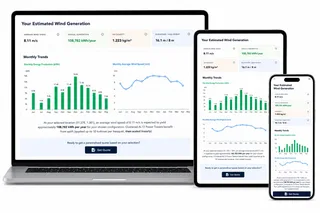
STEP 2

Choose a location
STEP 3

Place your cluster
Tap the map where you want the turbine cluster to go.
STEP 4

Instant generation forecasts
Compare different turbine layouts and see annual generation forecasts instantly.
STEP 5

No commitment required
Explore different configurations before deciding whether to request a quotation.
Related articles

Mo's Mission Nominations
FAQ
Need Help? RoboMo's Got Answers
What is the highest watt solar panel available in the UK?
The highest watt solar panels available in the UK are usually large-format commercial, agricultural or utility-scale modules, commonly around 650W to 720W per panel, with some products advertised slightly above this range. For most UK homes, the highest practical panel rating is usually closer to 450W to 500W because domestic roofs have limits around panel dimensions, weight, access, wind loading, roof layout, shading, mounting compatibility and inverter design.
Are 700W solar panels suitable for UK homes?
A 700W solar panel is usually not the best choice for a typical UK home because it is much larger and heavier than a standard domestic module. Panels in this range are better suited to warehouses, farms, commercial roofs, carports, ground-mounted systems and solar parks where there is more space and easier lifting access. On a house roof, a well-designed array using 400W to 500W panels is often safer, neater and more productive overall.
What wattage solar panels are commonly used on UK homes?
Most modern UK domestic solar installations use panels in the 400W to 460W range. Higher-end domestic panels around 470W to 500W can also work well on larger, simpler roofs with good access, limited shading and a compatible inverter. Older UK solar systems often used panels between 250W and 350W, so today’s domestic panels can deliver much more capacity from a similar roof area.
Does a higher watt solar panel always produce more electricity?
A higher watt panel can produce more power under standard test conditions, but it does not always create the best real-world system. Wattage is partly linked to physical size, so a 700W panel may simply be much bigger than a 450W panel rather than dramatically more efficient. On many UK roofs, smaller high-efficiency panels allow a better layout, avoid shaded areas and generate more useful electricity over the year.
What does a solar panel watt rating mean?
A solar panel watt rating is its peak DC output under laboratory Standard Test Conditions, usually based on 1,000 W/m² irradiance, 25°C cell temperature and a standard light spectrum. It is useful for comparing panels, but it does not mean the panel will produce that wattage all day. In real UK conditions, output changes with sunlight, cloud cover, roof angle, orientation, season, temperature, shading, inverter performance and system losses.
What is the difference between panel wattage and system size?
Panel wattage is the rating of one solar panel, while system size is the combined rating of all panels in the array. For example, ten 400W panels make a 4kWp system, nine 450W panels make a 4.05kWp system, and eight 500W panels make a 4kWp system. These systems could produce similar annual energy if installed on the same roof with similar orientation, pitch, shading and inverter design.
How much electricity does a 4kWp solar panel system generate in the UK?
A well-sited 4kWp solar PV system in the UK might generate roughly 3,200kWh to 4,000kWh per year. Actual output depends on location, roof orientation, roof pitch, shading, panel efficiency, inverter performance, cable losses and installation quality. Southern England usually receives more sunlight than northern Scotland, but roof design and shading can be just as important as location.
How much electricity can one high-watt solar panel generate in the UK?
As a broad guide, UK solar generation is often around 750 to 1,000kWh per kWp per year, depending on the site. On that basis, a 450W panel might generate roughly 340kWh to 450kWh per year, a 500W panel might generate around 375kWh to 500kWh per year, and a 700W panel might generate around 525kWh to 700kWh per year if installed in suitable conditions. These are only guide figures because shading, orientation, pitch and local weather can change the result significantly.
Are 800W solar panels available?
Panels advertised as 800W should be checked carefully. In many cases, the figure may refer to a kit made from two panels, a portable setup, a specialist non-domestic product, a prototype, or a bifacial estimate that includes possible rear-side gain. True single-panel 800W modules are not generally a normal choice for standard UK residential installations, so buyers should check the data sheet, certification, dimensions, weight, warranty and intended installation type.
What is a bifacial solar panel wattage claim?
A bifacial solar panel can generate electricity from both the front and rear sides when light reflects onto the back of the module. Some advertised wattage figures include possible rear-side gain under ideal reflective conditions, which can make the panel appear higher rated than its standard front-side output. For rooftop comparisons, it is important to check the standard test condition rating, the bifacial gain assumptions and whether the installation site can realistically deliver meaningful rear-side light.
What is more important: solar panel wattage or efficiency?
Efficiency is often more important than wattage when roof space is limited. Panel efficiency shows how much sunlight is converted into electricity per square metre, while wattage also depends on the panel’s physical size. A 450W high-efficiency domestic panel may be a better option than a much larger 700W panel if it fits the roof more cleanly, avoids shade and allows a stronger overall system layout.
How large and heavy are high-watt solar panels?
Many domestic solar panels are roughly 1.7m to 1.9m tall, around 1.0m to 1.2m wide and often weigh about 20kg to 25kg, depending on the model. Large commercial panels in the 650W to 720W range can be around 2.3m to 2.4m tall, around 1.1m to 1.3m wide and may weigh around 30kg to 38kg or more. This matters because larger panels can be harder to lift, position, clamp, maintain and fit around chimneys, roof windows, hips, valleys and roof edges.
Can high-watt solar panels cause inverter compatibility issues?
Yes. Very high watt panels can have current and voltage characteristics that do not suit every domestic inverter, optimiser or microinverter. The inverter must be compatible with the panel current, string voltage and MPPT limits. Installers also need to check cold-weather voltage rise because solar panel voltage increases in low temperatures, which can push a string beyond inverter limits if it is not designed correctly.
Do higher watt solar panels reduce installation cost?
Not always. Higher watt panels may reduce the number of panels needed, but they can be larger, heavier, harder to handle and more demanding to mount safely. The total installed cost also includes scaffolding, roof fixings, mounting rails, inverter, cabling, isolators, labour, certification, monitoring, bird protection where used and DNO paperwork. A smaller number of large panels does not automatically make the system cheaper.
Do I need permission to install high-watt solar panels?
Many domestic rooftop solar installations in the UK fall under permitted development, but there are exceptions for listed buildings, conservation areas, national parks, world heritage sites and visually sensitive locations. Building Regulations still apply, including roof loading, wind loading, electrical safety and weatherproofing. Larger systems may also need DNO approval before installation rather than simple notification after installation.
What is the best solar panel wattage for a typical UK home?
For most UK homes, a panel between 400W and 460W is the most practical choice. Panels around 470W to 500W can be worthwhile on larger, simpler roofs where the dimensions, weight, mounting system and inverter design all work well. The best option is not necessarily the highest watt panel, but the system that gives the best annual generation safely, legally and economically.
Are high-watt panels better for commercial solar installations?
High-watt panels are often more suitable for commercial, agricultural and ground-mounted solar installations than for domestic roofs. Larger sites usually have more open space, easier lifting access, fewer obstructions and mounting systems designed for bigger modules. Panels in the 600W to 700W plus range can help reduce panel count, clamps, electrical connections and installation time on large roofs or ground arrays.
What checks should an installer make before using high-watt panels?
An installer should check the panel dimensions, weight, clamp zones, mounting system compatibility, roof structure, wind loading, inverter limits, string voltage, operating current, DNO requirements and warranty conditions. They should also assess shading, roof condition, access, maintenance space and whether replacement panels will be practical in future. A high-watt panel is only suitable if the whole system design supports it.
What mistakes should I avoid when comparing high-watt solar panels?
Avoid assuming that the highest watt panel is automatically the most efficient or the best value. Check the panel dimensions, weight, efficiency, warranty, degradation rate, mounting requirements, inverter compatibility and whether the roof can safely support the system. It is also important to consider shading, roof condition, export limits, likely annual generation and how much of the generated electricity you can use on site.
How should I compare quotes for different solar panel wattages?
Compare the full system rather than the panel wattage alone. Look at total system size in kWp, estimated annual generation in kWh, panel efficiency, panel dimensions, inverter specification, battery options, export assumptions, warranty terms, monitoring, scaffolding, DNO approach and any assumptions about roof condition. If two systems have similar total kWp, the better choice is usually the one that fits safely, generates well through the year and matches your electricity use.