


MCS certification for Kent solar installs
Published: 2026-10-06 03:21:55
Updated: 2026-10-05 20:22:34
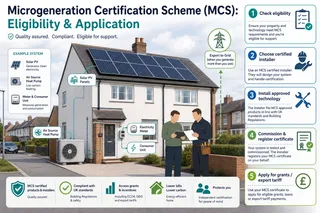
MCS certification for Kent solar installs is a scheme record of the finished system, not planning consent, Building Regulations or a network connection.
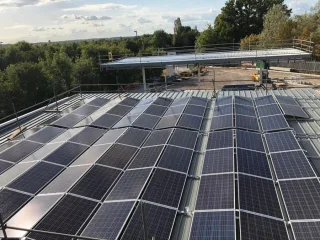
MCS certification for Kent solar installs
MCS certification for Kent solar installs from Kilowatts.uk in Broadstairs. Costs, roofs, planning and what to do next then compare a local system.
MCS certification for Kent solar installs
The certificate is issued for the finished system after the contractor registers it. Many routes to export payments, and some warranties or finance products, expect that registration. Check current scheme terms and the supplier’s current wording rather than assuming older Feed-in Tariff practice still applies. A logo on a van or a website is advertising. It is not the register entry, and it is not an installation certificate for your address.
What the certificate covers, and the three documents to keep apart
An MCS certificate identifies a completed system at your property. It is evidence that an approved contractor registered an installation using eligible products and followed the scheme’s installation standard, as set out in the MCS scheme rules and the MCS solar PV installation standard. It is not a guarantee of annual output, an insurance policy, or proof that the network operator has accepted export.
Treat the paperwork as three separate documents, not one warranty pack. Manufacturer warranties are the maker’s terms for the specified panels and inverters. Read them from the product documents for the models on the quote. They are not an MCS promise, and they do not cover poor fixing, a leaking flashing, or a roof that was already failing.
For a domestic job, expect an insurance-backed workmanship guarantee in the handover pack from the MCS-certified contractor. That guarantee is the contractor’s cover for installation workmanship, arranged so a claim can still be made if the firm cannot honour the workmanship promise. Ask for it by name, with the provider identified on the document. A missing guarantee is a handover gap, not an optional extra you might be offered. It does not replace the manufacturer warranties, and it is not the MCS certificate. The MCS certificate itself only records that the finished system was registered at that address under the scheme. If you later add a battery or change the inverter, ask whether the registered design and the network arrangement still match. A certificate for the original array does not automatically describe a later alteration.
How MCS differs from planning, Building Regulations and the network
In England, including Kent, planning permission, Building Regulations, and the distribution network operator connection are different checks from MCS. The public starting points are the Planning Portal conditions for permitted development of solar equipment, the Building Regulations for the building work, and UK Power Networks guidance on G98 and G99 connections. MCS scheme rules do not decide any of those three. Most domestic roof arrays in England can be permitted development if they meet the national conditions published on the Planning Portal. Those conditions are about the building and the array, not about installer quality. Listed buildings, conservation areas, and designated landscapes, including parts of the Kent Downs, can still need consent. A lease or a freeholder can forbid alterations even where planning law would allow the panels. MCS does not authorise that work. Building Regulations are a legal compliance route for the building work. For a dwelling, electrical safety sits under Part P. Evidence is usually an electrical installation certificate to BS 7671 and, where the work is notifiable, a building control notification or completion record from a competent-person route. That shows the electrical work was certified. It does not show that the products were registered under MCS. An MCS certificate does not, by itself, prove that the roof structure can carry the array, and it does not replace the electrical certificate. If the structure is doubtful, that judgement belongs in the survey. Any structural sign-off a designer or building control asks for is a further document again. Most of Kent is served by UK Power Networks. Notification or application, often discussed under G98 or G99 depending on size and whether export is limited, is a network matter under that operator’s published guidance. Export limits or delays can still apply on a street even when the installer is certified. Confirm the operator for your postcode rather than assuming every Kent address is treated the same. There is no reliable figure here for how long a Kent connection takes.
Comparison table
Kent roofs, coast and designated land
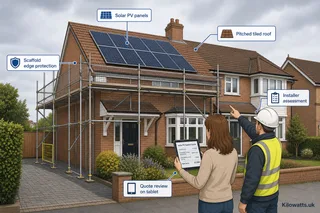
The meaning of MCS does not change because the postcode is in Kent. The design does. Kent roofs commonly mix concrete tile, plain tile, slate, and flat sections, with dormers and chimneys that shade part of an array. Fixings and flashing have to suit that covering. Wind exposure is often stronger near the coast and on higher ground, which affects how the array is held down. A certificate will not choose those details for you.
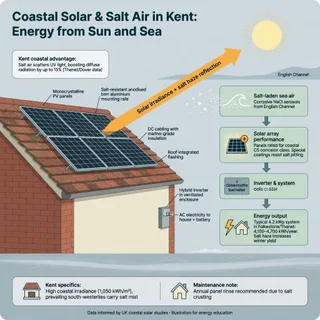
Coastal and estuarine districts, including parts of Thanet, Dover, Folkestone, Sheppey, and Medway, raise corrosion and fixing choices that should be made at survey, not assumed from a standard inland specification. Salt air and exposed ridges can turn cheap brackets and unprotected cut edges into later leaks or staining. Ask what metal, coating, and flashing the design has assumed, and whether that assumption still holds if part of the array sits on a flat section or around a dormer.
MCS paperwork will not tell you whether the existing covering is sound enough to carry the array for the life of the system. A weak roof can make an otherwise compliant design a poor decision. That judgement belongs in the survey, before anyone talks about registration. If the building is listed, in a conservation area, or in a designated landscape such as parts of the Kent Downs, ask what consent the design has assumed. Check with the local planning authority rather than treating a certified installer as permission.
How to check the contractor and match the certificate
Check the contractor on the official MCS certified contractor search before you treat a quote as scheme-backed. Search the legal name that will appear on the contract, not only a trading style printed on the van. Confirm that the certification covers solar PV, and keep the certification number beside that legal name. A website badge, a vehicle livery, or a line on a proposal that says the firm is MCS certified is not that register entry.
The installation certificate is a second record, and it cannot exist until the finished system has been registered at your address. When it arrives, the address, the contracting entity, and the product models should match the quote and what was actually fitted. Subcontracted labour does not remove the duty of the contracting firm to be the party that can register the job. If those names diverge, stop and ask which entity is certified and which entity you are paying.
Use the same match for the rest of the handover, before and after commissioning. The points below are the ones that most often fail to line up.
If export is capped, that written limit is easy to miss on a sales proposal and then discover only when the inverter is commissioned. Product listing matters as well as installer certification. Both the equipment and the contractor need to be eligible for a scheme-compliant job.
Fitting panels without MCS, and when the certificate exists
Panels can be fitted without MCS. The scheme is not a council permit, and it is not what makes the electrical work legal. You may then struggle with an export tariff, or with a buyer, lender, or insurer who asks for certification. Building Regulations and the network connection still apply whether or not the job is registered. Read the current Smart Export Guarantee terms from the supplier you would use. Ofgem sets the SEG framework, but eligibility for payment is in that supplier’s wording, not in a Kent rule of thumb.
The certificate does not exist on the day you accept a quote. It is produced after testing and commissioning, once the contractor registers the finished installation. If the job is never notified to the scheme, you may have no installation certificate even though the contractor is approved. Ask, before you sign, which legal entity will register the system and what you will receive at handover if that registration does not happen.
A Kent postcode does not change the scheme rules. MCS certification is national. What changes locally is the roof, the planning constraint, the exposure, and the network operator’s connection decision. There is no reliable local figure here for certificate fees or issue times. Any admin charge belongs on that firm’s quote, not as a separate council fee.
Who should treat MCS as essential
MCS matters most for grid-tied domestic solar where you may want an export tariff, a documented installation standard, or paperwork a lender, insurer, or buyer will ask for. That applies across Kent housing, from terraces to detached houses, provided the array is within the scheme’s scope and the products are eligible. Owners who will not claim export payments still need a safe electrical installation and a clear handover. MCS is relevant to quality, but it is not, on its own, a statement that every legal route in England requires it.
It is a poor sole test if the real problem is a failing roof, heavy shading from dormers and neighbouring roofs, a listed building, or a lease that forbids alterations. Certification will not fix those, and a registered system on an unsound roof is still a poor project. Very large or mainly commercial systems may sit outside ordinary domestic microgeneration practice. Do not assume one domestic process, or one domestic workmanship guarantee, covers every non-domestic job.
Compare the job against those limits before you compare firm names. A certified contractor who has not looked at the covering, the shading, the consent route, and the export position has not yet given you a design you can judge.
What to settle before you compare quotes
Note how you use electricity through the year, record shading from chimneys and neighbouring roofs, and photograph the covering so a surveyor can see tile, slate, or flat-roof sections. Ask whether the design assumes permitted development or needs consent, which network process applies under UK Power Networks or the operator for your postcode, and whether export will be limited in writing.
Read the quote for the legal entity on the MCS contractor search, the product models, the insurance-backed workmanship guarantee, and what is handed over after commissioning. A line that only says the firm is MCS certified is not that pack. If the roof needs repair first, settle that before treating solar as the next step. Compare systems against the address, the products, the written export limit, the electrical certificate, and the network evidence, rather than against a list of logos.
Plan, Compare & Buy Renewable Energy Solutions
AI does the thinking.
You get the perfect solar match.
Use RoboMo™ to assess your property, compare available technologies and connect with trusted UK installers, suppliers and manufacturers.
Simply enter your postcode, drop a pin on your roof, create your free account and let RoboMo™ analyse your property to find the best solar panels for your home.

You don't have to think
RoboMo™'s AI analyses your roof and does all the hard work.

Accurate & tailored
AI-powered assessment based on your roof, location, and conditions.

Best options, maximum savings
Compare top solar panels for the best performance and value.

Simple, fast & effortless
Provide a few details, sit back and watch your results unfold.
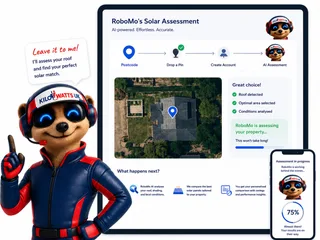
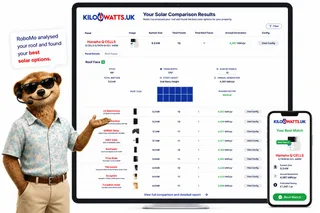
STEP 1
Choose Home, Business or Industrial
Enter your postcode to start your assessment.
STEP 2
Drop a pin on your roof
STEP 3

Create your free account
STEP 4

Sit back and watch RoboMo™ work
RoboMo™ analyses your roof and builds your personalised solar comparison.

Step 1
Enter your postcode
Start designing your wind energy system in seconds.
Are you an installer, distributor or renewable energy business?
Kilowatts UK is expanding the Flower Turbines partner network across the UK.
Become A Flower Turbines PartnerKilowatts UK is an authorised representative
Flower Turbines
Compact vertical-axis turbines built for real UK sites, not just open farmland.
They start in light wind, sit in a small footprint, and are bird-safe by design. Cluster them as a bouquet and the group performs better together than the same turbines standing alone. Enter your postcode for a location-based generation estimate. Figures use area weather data and will differ if buildings, trees or hills sit in the way.
Starts in light UK wind
Built to generate in typical UK wind, not only open farmland.
Small rooftop or ground footprint
Compact towers for roofs, yards and tight sites.
Bird-safe slow rotation
Slow vertical-axis spin, bird-safe by design.
Bouquet clusters raise output
Grouped turbines outperform the same units standing alone.


STEP 2

Choose a location
STEP 3

Place your cluster
Tap the map where you want the turbine cluster to go.
STEP 4

Instant generation forecasts
Compare different turbine layouts and see annual generation forecasts instantly.
STEP 5

No commitment required
Explore different configurations before deciding whether to request a quotation.
Related articles

FAQ
Need Help? RoboMo's Got Answers
What does an MCS certificate actually record for a Kent solar install?
An MCS certificate is a scheme record that an approved contractor registered a finished microgeneration system at a specific address, using eligible products and the published installation standard. It is not a council licence, planning consent, Building Regulations sign-off, or proof that the network operator has accepted export. A firm being MCS certified is not the same as your array being registered. In Kent the scheme rules do not change with the postcode.
Is MCS the same as planning permission, Building Regulations or a grid connection?
No. Planning or permitted development, Building Regulations, and the distribution network operator connection are separate checks from MCS. Most domestic roof arrays in England can be permitted development if they meet the national conditions, but listed buildings, conservation areas and designated landscapes, including parts of the Kent Downs, can still need consent. Electrical evidence is usually an installation certificate to BS 7671, and that does not prove MCS registration. Most of Kent is served by UK Power Networks, but you should confirm the operator for your postcode.
Which documents should I keep apart from the MCS certificate?
Treat the MCS certificate, manufacturer warranties and the insurance-backed workmanship guarantee as three separate documents. Manufacturer warranties cover the specified panels and inverters under the maker’s terms, not poor fixing or a roof that was already failing. For a domestic job, expect an insurance-backed workmanship guarantee in the handover pack, with the provider named on the document. A certificate for the original array does not automatically describe a later battery or inverter change.
How do I check that a contractor is MCS certified before I accept a quote?
Search the official MCS certified contractor register for the legal name that will appear on the contract, not only a trading style on a van or website. Confirm that the certification covers solar PV and keep the certification number beside that legal name. A logo or a line on a proposal is advertising, not the register entry and not an installation certificate for your address. The contracting firm that you pay should be the party able to register the job, even if labour is subcontracted.
When does the installation certificate exist, and what should match on it?
The certificate is produced after testing and commissioning, once the contractor registers the finished system. It does not exist on the day you accept a quote. When it arrives, the address, contracting entity and product models should match the quote and what was fitted, and handover records should list serial numbers for the modules and inverter. If the job is never notified to the scheme, you may have no installation certificate even though the contractor is approved.
Can solar panels be fitted in Kent without MCS?
Panels can be fitted without MCS. The scheme is not a council permit and it is not what makes the electrical work legal. Building Regulations and the network connection still apply whether or not the job is registered. Without registration you may struggle with an export tariff, or with a buyer, lender or insurer who asks for certification. Read the current Smart Export Guarantee terms from the supplier you would use, rather than assuming older Feed-in Tariff practice still applies.
Does a Kent postcode change MCS rules, fees or connection times?
No. MCS certification is national, so a Kent postcode does not change the scheme rules. What changes locally is the roof covering, wind exposure, planning constraints and the network operator’s connection decision. There is no reliable figure here for certificate fees, issue times or how long a Kent connection takes. Any admin charge belongs on that firm’s quote, not as a separate council fee.
When is MCS essential, and when is it a poor sole test of the job?
MCS matters most for grid-tied domestic solar where you may want an export tariff, a documented installation standard, or paperwork a lender, insurer or buyer will ask for. It is a poor sole test if the real problem is a failing roof, heavy shading, a listed building, or a lease that forbids alterations. A registered system on an unsound roof is still a poor project. Very large or mainly commercial systems may sit outside ordinary domestic microgeneration practice, so do not assume one domestic process covers every non-domestic job.