


Coastal solar and salt air in Kent for houses in Thanet
Published: 2026-10-04 13:23:12
Updated: 2026-10-05 04:21:23
Coastal solar in Kent still generates in salt air. Specify rails, hooks and bolts for the real exposure on a Thanet, Dover or Folkestone roof.
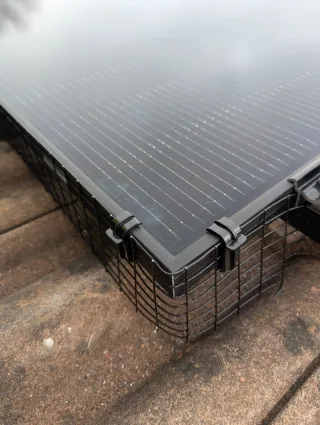
Coastal solar and salt air in Kent
Coastal solar and salt air in Kent from Kilowatts.uk in Broadstairs. Costs, roofs, planning and what to do next then compare a local system.
Coastal solar and salt air in Kent for houses in Thanet, Dover and Folkestone
Coastal solar and salt air in Kent does not stop a rooftop array from generating, and it does not make a house in Thanet, Dover or Folkestone a poor site by default. Salt-laden air is an environmental load. It can leave a film on the glass, settle in crevices, and speed corrosion where moisture stays trapped. Whether that matters depends on how open the roof is to the sea, the wind the fixings must resist, the alloys and coatings in the metalwork, and whether each product warranty covers that exposure. A sound south-east roof can still be a reasonable generation site if those points are specified on a solar installation in Kent rather than copied from an inland job.
The glass is rarely the first part to fail. A terrace in Broadstairs, Margate or Ramsgate that is screened by other buildings is not the same proposal as an open roof above the Dover cliffs or an unsheltered Folkestone seafront elevation. Ordinary module glass and anodised aluminium frames are widely used near the coast and are not inherently unsuitable. The parts that need a conscious specification are usually the rails, hooks, bolts, clamps, penetrations, and the place chosen for the inverter or isolator.
This guide is for houses and small roofs on the north and east Kent coast and the Channel coast, including streets slightly inland that still take sea wind. It is a poor frame for boats, direct wave splash, heavy harbour spray, ground arrays on shingle, or a large commercial roof. Those sites bring structural, flooding and corrosion problems that ordinary residential salt air does not describe. Nothing here is a price, a payback, or a scheme rule. Those depend on the survey, the products named on the quote, and the current official documents.
What salt-laden marine air does to module glass, frames and metal fixings in Kent
Salt air is not a separate electrical fault, and it does not make generation negligible beside the sea. Modules produce electricity in a marine atmosphere. The issues that change a job are soiling, the durability of metals and seals, wind, and whether the products were chosen for that exposure. Rain often washes inclined glass. Flat or low-pitch areas, module frames and the gaps under clamps hold deposits for longer. A salt film is a variable soiling loss, not a fixed annual derate that can be stated for every Thanet, Dover or Folkestone roof.
There is no Kent dataset cited here for salt deposition, percentage output loss, cleaning frequency, or a proven cut in service life versus inland Kent. Treat any brochure claim of a set life reduction, or a set cleaning interval, as a claim that needs a source tied to the products on your quote. The laboratory method people usually mean is IEC 61701, the salt-mist corrosion test for photovoltaic modules. It compares modules under a defined test. It is not a promise that the same module is accepted on every shoreline, and a pass on the module does not cover the rails, hooks, inverter or the installer’s workmanship. The warranty wording still governs.
What an owner can see is the face of the glass. What usually ages first is harder to inspect: a cut or drilled edge, a coating scratched during the install, a mild-steel bracket behind an aluminium rail, and a cable entry that lets water track inside. Anodised aluminium can still look sound while a damaged coated-steel part is already failing. A coastal check that only looks at the front of the modules will miss the parts that decide whether the array stays serviceable.
Why a Thanet street, Dover cliff roof and Folkestone seafront are different sites
Exposure is not a postcode rule. Risk rises with proximity to the sea, onshore wind, a lack of shelter, and details that trap a wet salty film. A sheltered street in Ramsgate can be a simpler corrosion case than an open elevation a little further from the water that takes the full sea wind. Dover and Folkestone add Channel exposure and, in places, cliff or seafront wind that an inland Kent terrace never sees. Copying a fixing layout from a sheltered inland job can be wrong even when the module count is identical. Distance cut-offs in brochures, including a stated number of kilometres from the sea, are manufacturer terms. They are not a UK-wide law, and they should not be applied to the next street without reading the document that states them. ISO 9223 is the engineering framework for classifying atmospheric corrosivity. It is a survey method, not a street rule, and this guide does not assign a corrosivity class to any Kent road. Use the comparison below to decide what to inspect, not as a measurement of your roof.
Overview
Walk the site before comparing quotations. Note whether you can see open water from the roof slope, which way the prevailing onshore wind arrives, and whether an external wall proposed for electrical equipment sits in spray. Those observations change the design more reliably than the town name on the quote.
What actually changes between a sheltered Ramsgate terrace and an open Dover elevation
The same module count can sit on both roofs and still produce two different drawings. On a sheltered Ramsgate terrace, neighbouring roofs often interrupt the sea wind and open water may not be visible from the slope. The bill of materials can stay on the mounting system’s standard domestic rail and hook, provided the warranty does not impose a coastal exclusion for that exposure. The drawing should still name the rail alloy and anodising, the fastener grade at each point the manual requires, and how cut ends are treated. A salty film can sit in crevices even when the street feels inland. The inverter and isolator usually belong in the loft or on an internal wall, with glands and blanking plugs as the enclosure sheet shows.
An open Dover cliff roof, or an unsheltered Folkestone seafront elevation, should not inherit that terrace layout. The drawing note should record the open aspect and that the fixing centres come from a wind calculation for that height, pitch and exposure, not from a photograph of another Kent install. If that calculation needs a different hook or a different spacing, that change appears as its own line. If it does not, the pack should say so. Do not treat a higher price, or a matching price, as evidence either way. This contrast does not imply a set loss of output or a set cut in service life. No such figure is used here.
The metal lines are where the seaside job most often diverges. The open elevation is where the designer checks whether the mounting warranty’s coastal schedule requires A4, often called 316, rather than A2, often called 304, or a named coating at hook screws and clamp bolts. If the manufacturer accepts the standard alloy at that exposure, the quote should cite the page that says so. Isolation between aluminium and steel should be the detail in the manual, drawn at the contacts, and checked against the earthing diagram so the pads do not break the bond. The inverter should come off any sea-facing external wall in the spray path. If it must be outside, the location is a sheltered wall and the ingress rating is the one printed for that place, not a number guessed for the coast.
Where corrosion starts on coastal arrays, usually out of sight under the modules
Corrosion on a coastal array usually starts at interfaces, not as a uniform attack on the panel face. Clamp feet, rail ends, hook screws, earth lugs and any hole made on site are typical starting points, because the protective layer is thinnest or missing there. Dissimilar metals in a wet salty film can corrode faster than either metal alone. Aluminium against some steels, or a stainless fixing on a galvanised part without isolation, is the contact a designer should remove on the drawing rather than discover at the first service visit.
Stainless steel is not one material. A2 and A4 are different alloys, and A4 is the grade more often specified where chlorides are present. That is a materials observation, not a rule that every bolt within a set distance of the Kent coast must be A4. Some mounting systems are aluminium throughout, with stainless fasteners only at defined points, and with isolation where the manufacturer requires it. The right choice is the one the mounting warranty and the structural design both accept. A marine-grade phrase, with no alloy and no coating named, is not a specification.
Cable glands, conduit ends and roof penetrations have to stay weather-tight. Salt water tracking along a cable is a workmanship defect, not an inevitable result of living in Broadstairs, Dover or Folkestone. Frames, junction boxes and connectors should be left as the manufacturer intends. Extra holes, substituted clamps and field modifications can affect both corrosion resistance and warranty, even while the glass still looks new. If a later repair needs a different clamp, that change should go back to the manufacturer’s permitted parts list before it is fitted.
How competent installers specify rails, hooks, clamps and bolts for Kent salt air
A coastal specification is a bill of materials plus a layout, not a label on the quotation. The design should name the rail and hook system, the fastener alloy, any coating or anodising, the clamp type, and how cut ends are treated. Isolation between dissimilar metals should be the method the manufacturer shows, not a washer selected on the day. Those choices belong in the handover pack so a later visit can replace like for like, rather than guessing what was fitted above a Thanet or Dover roof.
Inverter, isolator and any battery enclosure should sit out of direct spray where the design allows. A loft, a garage, or a wall that does not face open water is usually kinder than an external sea-facing wall in the splash zone. The enclosure still needs an ingress rating suitable for the actual location. The correct figure is the one on the product sheet for that place, so this article will not invent one. Glands should match the enclosure, and unused entries should be sealed as the manufacturer shows. A short note on how a solar inverter works is useful background, but the location decision still follows the enclosure sheet and the spray path on that house.
Earthing still has to be a designed path. Isolation pads and coatings can interrupt a bond if they are added without checking the earthing diagram. On a small domestic job that is an easy miss. The metals look protected, and the protective conductor no longer does what the electrical design assumed. Ask for that junction of stainless, aluminium and coated steel to be explicit on the drawing. Wind belongs in the same pack. Exposed coastal roofs can see higher uplift than sheltered roofs of the same size, so fixing centres and hook capacity need a calculation for that elevation.
Product warranties near the Kent coast are not automatic and not automatically void
Warranties near the sea are not automatically void, and they are not automatically valid. They sit in separate documents: the module product and performance warranties, the mounting-system warranty, the inverter warranty, and the installer’s workmanship guarantee. Any coastal exclusion sits in those texts and can change by brand and by revision. The only dependable reading is the current wording for the exact products proposed, including any condition about salt mist, a stated distance from the sea, or a maintenance schedule. An IEC 61701 result, an ISO 9223 discussion, or a line that the kit is approved for the coast does not replace those pages.
If a manufacturer requires inspections or cleaning to keep a coastal warranty, that schedule is part of the quote. Finding it after installation is how a guarantee becomes a dispute. Ask who holds the workmanship guarantee, whether that is the installer or a separate guarantee provider, and what it covers if a flashing or a gland fails and lets salt water in. That promise is different from a module performance warranty, which concerns electrical output under the manufacturer’s terms, not a corroded hook or a stained frame. A long module warranty period in general literature is not evidence of a tested coastal life.
Certification of an installer, including common UK solar scheme membership, is not by itself evidence that the rails, bolts and enclosures are accepted for a marine atmosphere. Do not look for a universal coastal clause in a scheme rule, and do not treat this article as a quotation of one. Positions on certification, network connection and building regulations should be taken from the current official text. If a quote says the kit is approved for the coast, ask which document says that, and for which component.
Wind uplift, roof condition and local planning on exposed Kent coastal houses
Wind and roof condition change a coastal Kent job as often as salt chemistry does. Before hooks are ordered, the covering needs an honest view of age, slip, fixing fatigue and remaining life. Putting an array on a failing tile or felt roof turns a solar job into a roofing job, and salt air will exploit a poorly weathered penetration. On open Thanet headlands and unsheltered Dover or Folkestone elevations, the wind design and the roof survey should be written down before the price is treated as fixed. A ballasted flat roof needs its own wind and drainage check, because salt can sit in ponding that an inclined tile roof sheds.
Planning is local, not a consequence of the word coastal. In England, the Planning Portal sets out permitted-development guidance for roof-mounted solar, with conditions and with exceptions. Conservation areas, listed buildings and Article 4 directions exist in parts of these towns, and they can constrain appearance, panel position and sometimes the fixing approach. They do not apply to every sea view. Check the record for the address with Thanet District Council, Dover District Council, or Folkestone and Hythe District Council, and read the current Planning Portal text rather than a coastal rule of thumb. This article cannot tell you whether a particular roof is permitted development, or how a listed-building application would be decided.
Grid connection is a separate question from salt. In Kent the distribution network operator is UK Power Networks. The notification or application route depends on the equipment and the local network, and in Great Britain that process sits alongside the current engineering recommendations used for generation connections, including G98 and G99 where they apply. Salt air does not create a special connection class, and it does not remove the need for a proper electrical design. The quote documents, not a coastal postcode, are what you can hold the installer to on both the metal schedule and the connection paperwork.
What Kent homeowners should ask before accepting a coastal solar quote near the sea
A coastal quote can be compared with an inland one without guessing at a premium. You are looking for named products, a wind check for that elevation, and warranty extracts that mention the coast where the manufacturer has such a condition. A higher price is not proof of a better specification, and a matching price is not proof that the seaside has been ignored. Until the alloy, coating and fixing differences are written down, neither reading is fair.
Before the survey, take a few photos from the street and from any safe upper window or loft hatch. Record whether the sea horizon is visible, which neighbouring buildings shelter the roof, the apparent pitch, and any existing rust on flashings or aerial brackets. Those pictures help you test whether the design treats the roof as open or sheltered. They are not a substitute for a roof inspection, and they are not a reason to climb a sea-facing roof. If you want that inspection booked, use a free home energy survey.
If those answers are vague, pause before you accept the job. A competent installer can show the metal schedule, the basis of the fixing layout, and the warranty pages without treating salt air as a mystery. If the covering is already failing, or the building is listed, resolve those constraints first. Solar on a coastal Kent house is a normal design problem when the exposure is named. It is a poor gamble when the quote could have been written for any inland postcode.
Plan, Compare & Buy Renewable Energy Solutions
AI does the thinking.
You get the perfect solar match.
Use RoboMo™ to assess your property, compare available technologies and connect with trusted UK installers, suppliers and manufacturers.
Simply enter your postcode, drop a pin on your roof, create your free account and let RoboMo™ analyse your property to find the best solar panels for your home.

You don't have to think
RoboMo™'s AI analyses your roof and does all the hard work.

Accurate & tailored
AI-powered assessment based on your roof, location, and conditions.

Best options, maximum savings
Compare top solar panels for the best performance and value.

Simple, fast & effortless
Provide a few details, sit back and watch your results unfold.
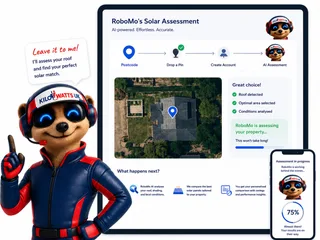

STEP 1
Choose Home, Business or Industrial
Enter your postcode to start your assessment.
STEP 2
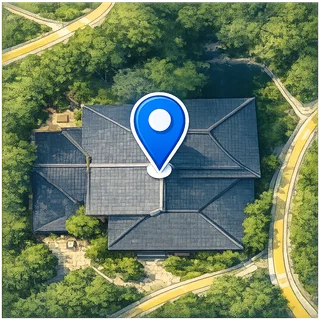
Drop a pin on your roof
STEP 3

Create your free account
STEP 4

Sit back and watch RoboMo™ work
RoboMo™ analyses your roof and builds your personalised solar comparison.

BATTERY ROI TOOL
See what a battery saves on your bill
Enter the day rate, off-peak rate and export rate. The calculator ranks batteries in the Kilowatts shop over 10 years.
Home batteries also suit offices and small commercial sites. Industrial batteries are listed on their own calculator.

Step 1
Enter your postcode
Start designing your wind energy system in seconds.
Are you an installer, distributor or renewable energy business?
Kilowatts UK is expanding the Flower Turbines partner network across the UK.
Become A Flower Turbines PartnerKilowatts UK is an authorised representative
Flower Turbines
Compact vertical-axis turbines built for real UK sites, not just open farmland.
They start in light wind, sit in a small footprint, and are bird-safe by design. Cluster them as a bouquet and the group performs better together than the same turbines standing alone. Enter your postcode for a location-based generation estimate. Figures use area weather data and will differ if buildings, trees or hills sit in the way.
Starts in light UK wind
Built to generate in typical UK wind, not only open farmland.
Small rooftop or ground footprint
Compact towers for roofs, yards and tight sites.
Bird-safe slow rotation
Slow vertical-axis spin, bird-safe by design.
Bouquet clusters raise output
Grouped turbines outperform the same units standing alone.


STEP 2

Choose a location
STEP 3

Place your cluster
Tap the map where you want the turbine cluster to go.
STEP 4

Instant generation forecasts
Compare different turbine layouts and see annual generation forecasts instantly.
STEP 5

No commitment required
Explore different configurations before deciding whether to request a quotation.
Related articles
Mo's Mission Nominations
FAQ
Need Help? RoboMo's Got Answers
Does salt air in Thanet, Dover or Folkestone stop a rooftop solar array from generating?
No. Salt-laden air is an environmental load, not an electrical fault, and modules still produce electricity in a marine atmosphere. A sound south-east roof can still be a reasonable generation site if the exposure, wind and metalwork are specified for that house rather than copied from an inland job. What changes is soiling, the durability of metals and seals, and whether the products and warranties cover that exposure.
Is ordinary module glass unsuitable near the Kent coast?
Ordinary module glass and anodised aluminium frames are widely used near the coast and are not inherently unsuitable. The glass is rarely the first part to fail. Rails, hooks, bolts, clamps, penetrations and the location of the inverter or isolator usually need a conscious specification. A check that only looks at the front of the modules can miss cut edges, scratched coatings and trapped moisture under clamps.
Are a sheltered Ramsgate terrace and an open Dover cliff roof the same design problem?
No. Exposure is not a postcode rule. A street screened by other buildings is a different proposal from an open roof above the Dover cliffs or an unsheltered Folkestone seafront elevation, even with the same module count. Risk rises with proximity to the sea, onshore wind, lack of shelter and details that trap a wet salty film. Harbour edge, wave splash and heavy spray are harsher than ordinary residential salt air and sit outside a normal house quote.
Does an IEC 61701 salt-mist test mean the whole coastal installation is covered?
No. IEC 61701 is a laboratory salt-mist corrosion test for photovoltaic modules under defined conditions. A pass on the module does not cover the rails, hooks, inverter or the installer’s workmanship, and it is not a promise that the same module is accepted on every shoreline. The current warranty wording for the exact products still governs, including any condition about salt mist, distance from the sea or a maintenance schedule.
Must every bolt near the Kent coast be A4 stainless steel?
Not automatically. A2 and A4 are different stainless alloys, and A4, often called 316, is the grade more often specified where chlorides are present. That is a materials observation, not a rule that every bolt within a set distance of the sea must be A4. The right choice is the alloy, coating and isolation that the mounting warranty and the structural design both accept. A phrase such as marine grade, with no alloy and no coating named, is not a specification.
Where should the inverter sit on a coastal Kent house?
Where the design allows, the inverter, isolator and any battery enclosure should sit out of direct spray, such as in a loft, a garage or on a wall that does not face open water. A sea-facing external wall in the splash path is a poorer default. If equipment must be outside, use a sheltered wall and the ingress rating printed for that location, not a figure guessed for the coast. Glands should match the enclosure and unused entries should be sealed as the manufacturer shows.
How often should coastal solar panels in Kent be cleaned, and how much output does salt film cost?
There is no Kent dataset cited for a fixed cleaning interval or a set annual output loss from salt film. Rain often washes inclined glass, while flat or low-pitch areas, frames and gaps under clamps hold deposits for longer. Treat any brochure claim of a set life reduction or a set cleaning interval as a claim that needs a source tied to the products on your quote. If a manufacturer requires inspections or cleaning to keep a coastal warranty, that schedule should be in the quote before installation.
What should a coastal solar quote for a Kent house actually name?
Ask for a bill of materials and a layout, not only a coastal label. The pack should name the rail and hook system, fastener alloy, coating or anodising, clamp type, how cut ends are treated, and the isolation method the manufacturer shows between dissimilar metals. Fixing centres and hook capacity should come from a wind calculation for that elevation, not from a photograph of another Kent install. Also ask who holds the workmanship guarantee and what it covers if a flashing or gland fails.