


Commercial solar for farms in the UK
Published: 2026-07-18 17:36:29
Updated: 2026-07-25 10:26:21
Find out commercial solar for farms in the UK, including costs, what affects price, and how to choose an installer.
Is commercial solar a good fit for farms?
Commercial solar options for farms can be a strong investment when the farm uses a lot of electricity during daylight. The best projects are usually dairy, poultry, cold storage, packing, irrigation, controlled-environment agriculture, workshops, and estates with future electric loads such as EV charging or electric machinery.
In plain terms, commercial farm solar means a solar PV system installed on agricultural buildings or land to reduce the electricity the business buys from the grid. It is a different decision from leasing land to a utility-scale solar developer. For most farms, the first question is not “how many panels will fit?” but “how much of the generated electricity can the farm use at the right time?”
A short UK summary is simple.
- Rooftop solar is usually the first option to assess.
- High daytime electricity use usually improves the financial case.
- Grid connection, export limits, and roof condition can decide whether the project works.
- Export income is useful, but using power on site is usually worth more.
- Batteries can help some farms, but they should be modelled carefully.
- Grants and incentives are not guaranteed and vary by country, scheme, and funding window.
- A well-designed system should be based on real electricity data, not only roof area.
A few terms are useful before comparing quotes. A kWp, or kilowatt peak, is the rated size of the solar PV system under standard test conditions. A kWh, or kilowatt hour, is a unit of electricity used or generated. MPAN stands for Meter Point Administration Number and identifies an electricity supply point. The DNO, or Distribution Network Operator, is the local electricity network company that assesses grid connection applications. A good farm solar design is built around the site’s load profile. Annual electricity bills are useful, but half-hourly data is much better because it shows when the farm actually uses electricity. This matters because solar generation peaks in daylight and is much lower in winter.
Which farms usually benefit most?
Farms with consistent daytime electricity demand tend to get the clearest benefit from solar because they avoid buying electricity at commercial import rates. Solar output is strongest from late spring to early autumn, so businesses with summer cooling, ventilation, pumping, processing, or packing loads often have a better match.
Dairy farms can work well because milk cooling, vacuum pumps, parlour equipment, water heating, washdown systems, and refrigeration create regular electrical loads. Solar will not cover every load, especially early morning or evening milking, but it can reduce daytime grid use significantly where demand is steady.
Poultry units can also be strong candidates due to ventilation, lighting, feeding systems, and climate control. The financial case depends on the flock cycle, welfare requirements, ventilation patterns, and whether demand continues through daylight hours. Cold stores and packhouses often have a good seasonal match because refrigeration and processing demand can be high when solar generation is also high. These sites may also benefit from controls that allow some cooling or charging loads to be scheduled into daylight periods. Irrigation can be a good fit where pumping is concentrated in sunny months. The match is less reliable if pumping is occasional, weather-dependent, or mainly at night because of abstraction licence conditions or operational preferences. Grain stores are more variable. Handling, drying, fans, and conveyors can use substantial electricity, but the demand is seasonal and may not always coincide with peak solar production. Solar can still help, especially if the site also has workshops, offices, cold storage, or other year-round loads. Mixed farms, estates, and diversified rural businesses may benefit where several loads can be combined behind the same supply. Examples include farm shops, cafes, holiday accommodation, workshops, offices, electric forklifts, EV charging, water treatment, biomass auxiliaries, or refrigeration. Commercial solar may be less attractive where electricity use is mainly at night, in winter evenings, or across short seasonal peaks. It may still work, but the design may need a smaller PV system, export arrangements, load shifting, or battery storage to make sense.
Rooftop solar versus ground-mounted solar on farms
Rooftop solar is often the simplest route for farms because it uses existing buildings and avoids taking productive land out of use. It can also have lower planning sensitivity than a field-based array, although permitted development rights have limits and should not be assumed.
Ground-mounted solar gives more design freedom and can suit farms with limited roof space, unsuitable roofs, or larger power requirements. Larger farm estates and high-demand sites may also want to compare industrial solar options where system size, grid connection, and operational requirements are closer to industrial-scale energy projects. Ground-mounted systems normally need planning permission and can trigger issues around landscape impact, agricultural land quality, glint and glare, ecology, drainage, fencing, security, and grid connection distance.
The choice usually comes down to practical constraints rather than preference.
Rooftop solar
Usually lower visual impact and a good first option, but limited by roof area, structure, asbestos, shading, access, roof lifespan, fire safety, and cable routes.Split-site solar
Useful for farms with several suitable buildings, but multiple meters, private cables, wayleaves, and ownership arrangements can make design and billing more complex.Ground-mounted solar
More flexible for larger systems, but affected by planning, land quality, cable routes, security, maintenance access, fencing, ecology, drainage, and continued agricultural use.
Rooftop systems are usually best where the buildings are structurally sound, close to the main electrical supply, and have enough unshaded roof area. South-facing roofs can generate strongly, but east-west roof layouts can also be useful because they spread generation across more of the day. Ground-mounted systems may be better where the roof is fragile, shaded, old, asbestos-containing, or due for replacement. They may also be suitable where the farm has high electricity demand and enough land close to the connection point. Long cable runs can add cost, so the best field is not always the most convenient one visually. Some farms can continue grazing sheep around ground-mounted arrays, but standard solar layouts are usually less compatible with cattle and horses. If the farm is tenanted, landlord consent and lease terms need to be checked before either roof or land is committed.
What does commercial solar cost for farms in the UK?
Commercial rooftop solar often costs around £700 to £1,100 per kWp installed. Ground-mounted farm solar is often around £600 to £1,000 per kWp, depending on civil works, security, cabling, and grid costs. Larger and simpler projects can have a lower cost per kWp, while difficult roofs, long cable runs, asbestos, export limitation, and transformer upgrades can increase the final price.
As broad UK guide figures, a 50 kWp farm system may cost roughly £40,000 to £60,000. A 100 kWp system may cost roughly £75,000 to £120,000. A 250 kWp system may cost roughly £170,000 to £275,000. A 1 MWp system may cost roughly £650,000 to £1 million.
Those figures should be treated as early budgeting ranges, not quotations. The real price depends on survey findings, structural requirements, access, grid work, inverter specification, monitoring, metering, and whether the farm needs additional works such as trenching, roof replacement, switchgear upgrades, or battery storage. Costs are usually made up of several parts.
- Solar panels, mounting, inverters, cables, isolators, monitoring, and metering.
- Labour, access equipment, scaffolding, lifting, and health and safety provision.
- Electrical design, protection, earthing, labelling, and commissioning.
- Structural assessment and any roof reinforcement or roof replacement.
- Grid application work, export limitation, switchgear, transformer work, or DNO charges.
- Groundworks, fencing, security, trenching, and civil engineering for ground-mounted systems.
- Ongoing inspection, maintenance, cleaning, monitoring, and possible inverter replacement.
Battery storage can add substantial cost and should be assessed separately. A battery can improve self-consumption where the farm has evening milking, overnight refrigeration, night ventilation, timed water heating, or constrained export capacity. It is not automatically worthwhile, especially if it sits underused for much of the year.
How much electricity can farm solar generate?
A well-sited UK solar PV system usually generates around 850 to 1,100 kWh per kWp per year. Southern England is generally closer to the higher end, while Scotland, Wales, Northern England, and exposed upland areas can still perform well but may produce slightly less annually.
Using that range, a 50 kWp system may generate around 42,500 to 55,000 kWh per year. A 100 kWp system may generate around 85,000 to 110,000 kWh per year. A 250 kWp system may generate around 212,500 to 275,000 kWh per year. A 1 MWp system may generate around 850,000 to 1,100,000 kWh per year. For more background on generation assumptions, see this guide to how much electricity solar panels generate in the UK.
Annual generation is only half the story. A farm that uses most of that electricity on site will usually see a stronger return than one that exports most of it. Exported electricity can be paid for through the Smart Export Guarantee or commercial export agreements, but export prices are usually lower than the value of avoiding imported electricity. Seasonality matters too. Solar output is higher in summer and lower in winter. That can suit irrigation, refrigeration, ventilation, and some poultry or packing operations, but it may be less aligned with farms whose main electricity demand is winter evening use.
- The main factors affecting generation are:
- Location and annual solar irradiation.
- Roof orientation and tilt.
- Shading from trees, silos, chimneys, vents, ridges, or nearby buildings.
- Panel specification and inverter design.
- Dirt, dust, bird fouling, ammonia, and coastal corrosion.
- Cable losses and system layout.
- Downtime from faults, grid outages, or poor monitoring.
- Export limitation or curtailment where the DNO restricts export.
For farms, the most important modelling output is not just annual kWh. It is the split between self-consumed electricity, exported electricity, and any curtailed electricity that cannot be used or exported.
What affects payback and financial return?
Farm solar payback can be around 4 to 8 years where daytime self-consumption is high. Projects that export a large share of their generation can take longer, sometimes 8 to 12 years or more. The difference is usually driven by how much solar electricity replaces imported electricity rather than how much the system generates in total.
Key financial factors include the farm’s import tariff, export tariff, standing and capacity charges, system cost, finance terms, maintenance, inverter replacement, insurance, tax treatment, and any grid upgrade costs. Half-hourly data gives a more reliable estimate than annual bills because it shows whether generation and demand overlap.
The best financial modelling compares expected generation against the farm’s real load profile. For example, a dairy unit, poultry house, cold store, and grain store may all use substantial electricity, but they do not use it in the same pattern. A single generic forecast can mislead if it ignores seasonal operations. A simple way to understand the return is to separate solar electricity into three categories.
Exported solar
Electricity sent to the grid and paid for under an export arrangement. This has value, but usually less than avoided import.Curtailed solar
Electricity the system could have generated but cannot use or export because of export limits or control settings. This has little or no direct value.Self-consumed solar
Electricity generated and used directly on the farm. This is usually the most valuable because it reduces imported electricity.
Load shifting can improve returns without increasing the system size. Timers, controls, ice builders, hot water scheduling, EV charging, and machinery charging can help move some demand into daylight hours. These changes should be practical for the operation, not disruptive to animal welfare, production, product quality, or staff routines. Finance also changes the return. Some farms buy systems outright, while others use asset finance, loans, hire purchase, power purchase agreements, or roof lease arrangements. Each option affects ownership, tax treatment, maintenance responsibility, savings, and long-term flexibility. Independent tax and finance advice is sensible before committing to a large system.
Government support, grants, and export payments
There is no single UK-wide grant that automatically pays for farm solar. Support changes over time and can differ between England, Scotland, Wales, and Northern Ireland. Some local authorities, rural programmes, or regional funds may offer time-limited energy grants, but availability is inconsistent and application windows can close quickly.
The Feed-in Tariff scheme is closed to new applicants. The Renewable Heat Incentive does not support new solar PV installations. The Smart Export Guarantee can pay for exported electricity from eligible small-scale low-carbon generators up to 5 MW, but rates and terms vary by supplier. Farms should compare export tariffs carefully because prices, contract lengths, metering requirements, and eligibility rules can differ.
- Grant and support options to check include:
- England: Defra’s Farming Investment Fund and related productivity grant rounds have, at times, included support for solar PV linked to farm productivity. These rounds are not permanently open, and rules can change, so farms should check current Defra and Rural Payments Agency guidance before assuming eligibility.
- Scotland: Farmers should check Scottish Government rural funding, local enterprise support, and energy-efficiency programmes. Availability for solar PV can vary, and some schemes focus on efficiency, innovation, or wider decarbonisation rather than standalone generation.
- Wales: Business Wales, Farming Connect, the Development Bank of Wales, and Welsh Government rural business programmes may signpost relevant finance or grant windows. Eligibility and coverage for solar PV can change.
- Northern Ireland: DAERA, Invest NI, local council programmes, and rural business support schemes may offer periodic energy or productivity funding. Farms should confirm whether solar PV is eligible in the current round.
- Local support: Some councils and regional programmes funded through mechanisms such as local growth or shared prosperity funds may offer business decarbonisation grants. These are usually area-specific and time-limited.
Commercial installations usually pay 20% VAT, and the domestic zero-rate VAT relief does not normally apply to commercial farm solar. Businesses may be able to use capital allowances for qualifying solar expenditure, including the Annual Investment Allowance or full expensing where eligible, but tax advice should be taken before relying on this. Government policy supports more solar deployment, but planning and grid capacity remain real barriers in rural areas. A politically positive national direction does not guarantee that a specific farm can connect quickly, export freely, receive a grant, or build on a sensitive site. Before applying for grant funding, farms should check whether the scheme requires quotes before ordering, whether work must not start until approval, whether second-hand equipment is excluded, whether batteries are eligible, whether export-only systems are allowed, and whether the grant affects tax or finance arrangements.
Grid connection and export limits
Grid connection is one of the main practical bottlenecks for farm solar. The Distribution Network Operator decides whether the local network can accept the generator and what export capacity is available. Many commercial farm systems need a G99 application, and approval can take weeks or months depending on size and complexity.
Smaller systems may sometimes use a simpler process, but farms should not assume this. Commercial agricultural supplies, three-phase connections, private transformers, existing generators, and larger PV arrays can all affect the application route.
Export capacity may be lower than the installed solar capacity. This does not always stop a project, but it changes the design. Export limitation equipment can cap the amount sent to the grid, allowing a larger system to serve on-site demand while staying within an agreed export limit. For example, a farm may install a larger PV system to meet daytime refrigeration, pumping, or ventilation loads, while agreeing to export only a smaller amount to the grid. This can work well where on-site use is high. It works less well if most generation would be curtailed because the farm cannot use it and cannot export it. Multiple meters can complicate farm projects. A site may have separate MPANs for the farmhouse, dairy, grain store, poultry sheds, workshops, irrigation pumps, rented units, or diversification businesses. Solar connected behind one meter does not automatically offset consumption behind another. Private wire arrangements may be possible on some estates, but they need careful legal, electrical, wayleave, and metering review. Transformer upgrades, long cable runs, trenching, and network reinforcement can materially affect cost. Grid checks should happen early, before the project is designed around an export level that may not be available.
- Important grid questions to ask early include:
- Who is the DNO for the site?
- What is the authorised import capacity?
- Is the supply single-phase or three-phase?
- Does the farm have a private transformer?
- What export capacity is likely to be available?
- Will the project need G99 approval?
- Is export limitation acceptable?
- Are there existing generators, batteries, or CHP units on site?
- Are future loads, such as EV chargers or refrigeration, likely to change the connection requirement?
Roof condition, asbestos, and installation risks
Agricultural roofs need careful assessment before panels are installed. A large roof area does not mean the building can safely accept extra load, wind uplift, access equipment, and long-term fixings. Older steel portal frames, purlins, roof sheets, fixings, corrosion, and previous repairs all matter.
Asbestos cement roofs do not always make solar impossible, but they add specialist requirements and can make standard fixing methods unsuitable. In some cases, roof replacement before solar is the sensible route, especially if the roof is nearing the end of its life.
The remaining roof life is important. Solar panels can operate for 25 years or more, so installing them on a roof that may need replacement in five years can create avoidable removal and reinstallation costs. If a roof is already due for refurbishment, combining roof work with solar can sometimes be more practical. Farm environments are harsher than many standard commercial sites. Poultry units can have ammonia and dust. Grain stores can create dust that affects inverter siting and cleaning intervals. Livestock buildings can have moisture, corrosion risk, and cable damage from animals or rodents. Coastal farms may need corrosion-resistant mounting. Rodents, livestock, pressure washing, and machinery movements all influence cable protection. Good installation design should consider safe access, non-fragile working methods, correct fixings for the roof profile, waterproofing, wind loading, earthing and bonding, surge protection, monitoring, and clear emergency isolation. Inverters should not be placed in very hot, dusty, enclosed, damp, corrosive, or hard-to-access locations. A wider commercial electrical inspection may also be useful where existing boards, wiring, earthing, or metering arrangements need checking before solar is specified. Insurance should be considered before installation. Some insurers have requirements for fire safety, DC cable routes, isolation, inverter location, maintenance, labelling, and documentation. Farms should tell their insurer about the proposed system early, especially for livestock buildings, grain stores, cold stores, or high-value produce storage.
Planning and land considerations
Rooftop solar on agricultural and commercial buildings may fall under permitted development in some cases, but there are limits and conditions. Planning permission may be needed for listed buildings, conservation areas, scheduled monuments, protected landscapes, or unusual building positions. This guide explains more about when you may need planning permission for solar panels in the UK.
Ground-mounted commercial solar usually needs planning permission. Planning authorities may consider landscape impact, glint and glare, ecology, flood risk, drainage, access, agricultural land quality, heritage impact, public rights of way, nearby homes, roads, railways, or airfields. In England, best and most versatile agricultural land includes Grades 1, 2, and 3a, and its use can be more sensitive.
Planning is not only about whether panels are allowed. It can also affect layout, screening, biodiversity measures, drainage, fencing height, CCTV, access tracks, transformer housing, construction hours, and decommissioning. Some sites may need ecological surveys, heritage input, landscape assessment, or glint and glare analysis. Construction timing also matters. Installation works should be planned around lambing, calving, harvest, bird turnaround, milk collection, packhouse operations, school holiday visitor peaks, and biosecurity requirements. A technically sound design can still fail commercially if it disrupts the farm at the wrong time. For tenanted farms, the solar decision needs to match the tenancy. Landlord consent, repairing obligations, roof ownership, meter ownership, finance terms, insurance responsibilities, and end-of-term obligations should be clear before signing contracts. Farms should also consider future land use. A ground-mounted array may restrict drainage works, field access, future buildings, tenancy changes, stewardship options, or development plans. Rooftop solar may affect future roof replacement, building extension, or changes in use.
Should farms add battery storage?
Battery storage can help a farm use more of its solar generation on site, especially where demand continues after sunset. It may suit evening milking, overnight refrigeration, night ventilation, timed water heating, EV charging, or sites with export constraints.
It should not be treated as an automatic add-on. Battery payback depends on the difference between import and export value, cycling frequency, usable capacity, controls, and how reliably the farm can charge and discharge the battery. Oversized batteries may sit idle for parts of the year, while undersized systems may not capture much surplus. Farms considering storage should compare the solar-only case with a properly modelled commercial solar battery storage option.
Battery sizing should be based on the actual surplus solar profile and the farm’s evening or overnight demand. A battery that looks sensible on an annual average may perform poorly if the surplus only appears in summer, or if the farm’s winter night demand is high when solar generation is low. A standard grid-tied battery does not automatically provide backup during a power cut. If resilience is required, the system needs to be designed for backup operation, with suitable switching, protection, load prioritisation, and safety arrangements. This is more complex than adding storage for bill savings alone. Backup design should identify which loads are essential. For example, a farm may want to prioritise ventilation, refrigeration, controls, water pumps, lighting, or communications rather than the whole site. Existing diesel generators, automatic changeover switches, and battery systems must be designed to work safely together. Battery location also matters. Agricultural sites need suitable fire safety separation, ventilation, weather protection, access, impact protection, and clear emergency procedures. Insurer requirements should be checked before purchase.
How to choose a farm solar installer
Choosing an installer is not just about the lowest price per panel. Farm projects need practical understanding of agricultural buildings, rural grid constraints, safe access, animal and crop operations, biosecurity, and harsh site conditions.
A good proposal should be based on site-specific information rather than assumptions. Before specifying the system, the installer should ask for electricity bills, half-hourly consumption data where available, MPAN details, import capacity, site plans, roof dimensions, roof material, asbestos records, structural information, cable routes, planned expansions, and tariff details.
Grid process
Check who handles G99 applications, export limitation design, DNO correspondence, metering, commissioning paperwork, and witness testing where required.Farm experience
Ask whether the installer has worked on agricultural roofs, livestock buildings, poultry units, grain stores, cold stores, irrigation systems, and rural ground-mounted systems.Electrical design
Ask how the installer will deal with earthing, bonding, surge protection, cable protection, isolation, labelling, fire safety, existing generators, and multiple meters.Financial modelling
Ask for a clear estimate of generation, self-consumption, export, curtailment, savings, export income, maintenance costs, and assumptions used.Operations planning
Make sure installation access, traffic routes, biosecurity, livestock movements, milk collection, crop storage, and seasonal work are planned around the farm.Structural approach
Confirm whether a structural survey is included and how fragile roofs, asbestos, purlins, corrosion, fixings, roof age, and wind loading will be assessed.Monitoring and maintenance
Ask what monitoring is provided, who receives alerts, what the maintenance schedule includes, and how faults are reported.Insurance and documentation
Confirm that commissioning records, shutdown procedures, circuit diagrams, labels, warranties, manuals, and insurer requirements will be provided.
Be cautious of proposals that size the system only from roof area, ignore grid export limits, assume all generation will be used on site, omit structural checks, understate asbestos issues, or include a battery without showing how it will cycle through the year. It is also worth comparing quotations on scope, not just headline price. A cheaper quote may exclude scaffolding, structural surveys, grid applications, export limitation, monitoring, trenching, metering, or post-installation support. These omissions can make a low initial price misleading.
What information should you prepare before getting quotes?
Preparing the right information helps installers produce meaningful designs and reduces the risk of later cost changes. It also helps the farm compare quotes on a like-for-like basis.
- At least 12 months of electricity bills.
- Half-hourly consumption data if available.
- MPAN details for each electricity supply.
- Current import capacity and tariff details.
- Export tariff details if already agreed.
- Site plan showing meters, main buildings, and cable routes.
- Roof dimensions, roof age, roof pitch, and roof material.
- Structural information for frames and purlins.
- Asbestos register where relevant.
- Details of generators, batteries, CHP, or backup systems.
- Planned new loads such as EV charging, refrigeration, pumps, or processing equipment.
- Tenancy, ownership, and landlord consent details.
- Any planning constraints or sensitive site designations.
- Details of insurance requirements or previous insurer comments.
- Known operational constraints, such as harvest periods, flock cycles, calving, lambing, or visitor access.
The more complex the farm, the more important this information becomes. Multiple buildings, several meters, private transformers, rented units, or planned expansion can all change the best design. If half-hourly data is not immediately available, the farm’s electricity supplier or metering provider may be able to supply it. Smart meters, half-hourly meters, and online energy portals can be useful, but the data should cover a representative period. A single quiet month is not enough for a seasonal farm business. It is also useful to prepare a list of business plans for the next five to ten years. New cold storage, irrigation, EV charging, robotic milking, automation, diversification, or additional tenancies can all affect the right solar size and grid strategy.
The practical route to a good farm solar project
A strong commercial solar project starts with energy data, then checks roofs, grid, planning, ownership, and finance before final design. The right size is usually the system that gives the best balance between self-consumption, cost, export limits, and operational fit.
Do not assume the biggest possible array is the best option. A smaller system with high daytime use can outperform a larger export-heavy system. Equally, a larger system can make sense where the farm has steady loads, suitable roofs, future electrification plans, and an export agreement that supports the economics.
A practical project route usually looks like this. 1. Gather electricity bills, half-hourly data, MPANs, tariff details, roof information, and site plans. 2. Identify the main daytime, evening, seasonal, and future electrical loads. 3. Check roof condition, asbestos, access, shading, and structural suitability. 4. Review planning constraints, tenancy issues, insurer requirements, and operational timing. 5. Make an early DNO/grid assessment, including export capacity and G99 requirements. 6. Model solar generation against the farm’s actual demand profile. 7. Compare solar-only, solar with export limitation, and solar with battery storage where relevant. 8. Review capital cost, finance, tax treatment, grants, export payments, maintenance, and risk. 9. Choose an installer based on competence, scope, evidence, and site-specific design. 10. Keep commissioning documents, monitoring access, maintenance records, and emergency procedures organised. For most UK farms, the practical first step is to gather bills, half-hourly data, MPANs, roof details, and site plans, then ask for a design that shows expected self-consumption, export, grid assumptions, costs, and maintenance requirements. If you are ready to review installer options, you can compare commercial solar quotes based on your site requirements.
Ready to compare your options?
Get tailored comparisons and connect with trusted installers in under a minute.
Plan, Compare & Buy Renewable Energy Solutions
AI does the thinking.
You get the perfect solar match.
Use RoboMo™ to assess your property, compare available technologies and connect with trusted UK installers, suppliers and manufacturers.
Simply enter your postcode, drop a pin on your roof, create your free account and let RoboMo™ analyse your property to find the best solar panels for your home.

You don't have to think
RoboMo™'s AI analyses your roof and does all the hard work.

Accurate & tailored
AI-powered assessment based on your roof, location, and conditions.

Best options, maximum savings
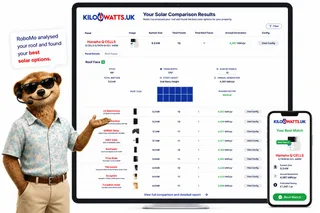
Compare top solar panels for the best performance and value.

Simple, fast & effortless
Provide a few details, sit back and watch your results unfold.
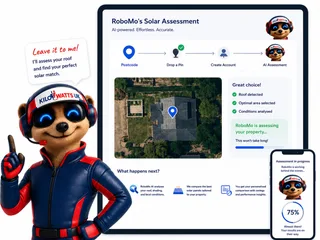
STEP 1
Choose Home, Business or Industrial
Enter your postcode to start your assessment.
STEP 2

Drop a pin on your roof
STEP 3

Create your free account
STEP 4

Sit back and watch RoboMo™ work
RoboMo™ analyses your roof and builds your personalised solar comparison.

Kilowatts UK is an authorised representative
Flower Turbines
Compact vertical-axis turbines built for real UK sites, not just open farmland.
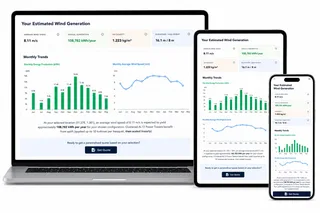
They start in light wind, sit in a small footprint, and are bird-safe by design. Cluster them as a bouquet and the group performs better together than the same turbines standing alone. Enter your postcode for a location-based generation estimate. Figures use area weather data and will differ if buildings, trees or hills sit in the way.
Starts in light UK wind
Built to generate in typical UK wind, not only open farmland.
Small rooftop or ground footprint
Compact towers for roofs, yards and tight sites.
Bird-safe slow rotation
Slow vertical-axis spin, bird-safe by design.
Bouquet clusters raise output
Grouped turbines outperform the same units standing alone.

Step 1
Enter your postcode
Start designing your wind energy system in seconds.
STEP 2

Choose a location
STEP 3

Place your cluster
Tap the map where you want the turbine cluster to go.
STEP 4

Instant generation forecasts
Compare different turbine layouts and see annual generation forecasts instantly.
STEP 5

No commitment required
Explore different configurations before deciding whether to request a quotation.
Related articles
Mo's Mission Nominations
FAQ
Need Help? RoboMo's Got Answers
Is commercial solar a good investment for farms?
Commercial solar can be a strong investment for farms with consistent electricity use during daylight hours. It works best when the farm can use a high proportion of the solar power on site, because avoiding imported electricity is usually worth more than exporting surplus power to the grid. Dairy farms, poultry units, cold stores, packhouses, irrigation systems, workshops, controlled-environment agriculture, and diversified rural businesses often have the strongest case.
Which types of farms benefit most from solar panels?
Farms with regular daytime demand usually benefit most. Dairy farms can use solar for milk cooling, pumps, refrigeration, washdown systems, and parlour equipment. Poultry farms often have ventilation, lighting, feeding, and climate-control loads. Cold stores, packhouses, irrigation systems, and farms with workshops, EV charging, or processing equipment can also be good candidates. Farms with most electricity use at night or only during short seasonal peaks may need a smaller system, battery storage, load shifting, or a carefully modelled export arrangement.
Is rooftop or ground-mounted solar better for a farm?
Rooftop solar is usually the first option to assess because it uses existing buildings, avoids taking land out of production, and may have fewer planning issues. It depends on roof condition, structural strength, shading, asbestos, access, fire safety, and cable routes. Ground-mounted solar can suit farms with unsuitable roofs, limited roof space, or larger electricity requirements, but it normally needs planning permission and can raise issues around land quality, landscape impact, ecology, drainage, fencing, security, and cable distance.
How much does commercial solar cost for farms in the UK?
Commercial rooftop solar for farms often costs around £700 to £1,100 per kWp installed, while ground-mounted systems are often around £600 to £1,000 per kWp. As broad budget ranges, a 50 kWp system may cost around £40,000 to £60,000, a 100 kWp system around £75,000 to £120,000, a 250 kWp system around £170,000 to £275,000, and a 1 MWp system around £650,000 to £1 million. Final costs depend on roof condition, access, structural work, grid connection, cabling, metering, export limitation, groundworks, and whether battery storage is included.
How much electricity can farm solar panels generate?
A well-sited UK solar PV system typically generates around 850 to 1,100 kWh per kWp each year. A 50 kWp system may generate roughly 42,500 to 55,000 kWh annually, a 100 kWp system around 85,000 to 110,000 kWh, and a 250 kWp system around 212,500 to 275,000 kWh. Actual generation depends on location, roof orientation, shading, panel layout, inverter design, dirt, downtime, and any export limitation. For farms, the most important figure is how much generation is self-consumed, exported, or curtailed.
What is the typical payback period for farm solar?
Farm solar payback can be around 4 to 8 years where daytime self-consumption is high. Projects that export a large share of their generation may take longer, sometimes 8 to 12 years or more. Payback depends on the farm’s electricity tariff, export rate, system cost, finance terms, maintenance, grid costs, tax treatment, and how closely solar generation matches the farm’s load profile. Half-hourly electricity data gives a much more reliable forecast than annual bills alone.
Why is self-consumption so important for farm solar?
Self-consumption means using solar electricity directly on the farm instead of buying power from the grid. It is usually the most valuable part of a solar project because commercial import rates are normally higher than export payments. Exported electricity can still earn income, but it is often worth less than avoided import. A good design should show expected self-consumption, export, and curtailment rather than only quoting annual generation.
Can farms get grants or government support for solar panels?
There is no automatic UK-wide grant for farm solar. Support varies by country, region, scheme, and funding window. Some Defra, devolved government, local authority, rural business, or decarbonisation schemes may offer support at certain times, but eligibility changes and funding rounds can close quickly. The Feed-in Tariff is closed to new applicants, and the Smart Export Guarantee may pay for exported electricity from eligible systems up to 5 MW, with rates and terms set by suppliers.
Do farms pay VAT on commercial solar installations?
Commercial farm solar installations usually attract 20% VAT. The domestic zero-rate VAT relief does not normally apply to commercial agricultural solar projects. Some businesses may be able to use capital allowances for qualifying expenditure, such as the Annual Investment Allowance or full expensing where eligible, but farms should take tax advice before relying on any allowance or relief.
Will the farm need DNO approval for solar panels?
Many commercial farm solar systems need approval from the Distribution Network Operator, often through a G99 application. The DNO checks whether the local network can accept the generator and what export capacity is available. Export capacity may be lower than the solar system size, so export limitation equipment may be needed. Grid checks should be done early because connection limits, transformer upgrades, long cable routes, and reinforcement costs can significantly affect the design and budget.
Can solar connected to one farm meter offset electricity used on another meter?
Not automatically. Many farms have several MPANs for different buildings, supplies, rented units, pumps, the farmhouse, or diversified businesses. Solar connected behind one meter normally offsets electricity used behind that same meter only. Private wire arrangements may be possible on some sites, but they need careful review of electrical design, ownership, wayleaves, metering, legal responsibilities, and billing.
Can solar panels be installed on old or asbestos farm roofs?
Solar may be possible on older or asbestos cement roofs, but the roof must be assessed carefully. The structure needs to support the additional loads, wind uplift, fixings, and maintenance access. Asbestos adds specialist requirements and can make standard fixing methods unsuitable. If a roof is near the end of its life, replacing or refurbishing it before installing solar may be more practical than removing and reinstalling panels later.
Does farm solar need planning permission?
Rooftop solar on agricultural or commercial buildings may fall under permitted development in some cases, but limits and conditions apply. Planning permission may be needed for listed buildings, conservation areas, protected landscapes, scheduled monuments, or unusual site circumstances. Ground-mounted commercial solar usually needs planning permission and may be assessed for landscape impact, agricultural land quality, glint and glare, ecology, flood risk, drainage, access, heritage impact, public rights of way, and nearby homes or infrastructure.
Should farms add battery storage to solar panels?
Battery storage can help farms use more solar electricity on site, especially where demand continues into the evening or overnight. It may suit evening milking, refrigeration, night ventilation, water heating, EV charging, or sites with limited export capacity. However, batteries are not automatically worthwhile. The financial case depends on usable capacity, cycling frequency, controls, import and export prices, and the farm’s real surplus solar profile. A solar-only option should be compared with a properly modelled solar-and-battery option.
Does a solar battery provide backup during a power cut?
A standard grid-tied battery does not automatically provide backup during a power cut. If backup power is required, the system must be designed with suitable switching, protection, load prioritisation, and safety controls. The farm should decide which loads are essential, such as ventilation, refrigeration, water pumps, controls, lighting, or communications. Existing diesel generators and automatic changeover systems must also be designed to work safely with any battery system.
What information should a farm prepare before requesting solar quotes?
A farm should prepare at least 12 months of electricity bills, half-hourly consumption data if available, MPAN details, tariff information, import capacity, site plans, roof dimensions, roof age, roof material, asbestos records, structural information, cable route information, and details of any existing generators, batteries, or CHP. It is also useful to include future plans such as EV charging, robotic milking, cold storage, irrigation, processing equipment, or new tenancies, because these can change the right system size and grid strategy.
How should farms choose a commercial solar installer?
Farms should choose an installer based on competence, agricultural experience, design quality, and scope rather than headline price alone. A good installer should understand farm buildings, rural grid constraints, fragile roofs, asbestos, animal welfare, biosecurity, seasonal operations, harsh environments, and safe access. Their proposal should clearly show generation, self-consumption, export, curtailment, grid assumptions, structural checks, maintenance, monitoring, warranties, and all included costs.
What are warning signs in a farm solar quote?
Warning signs include a system sized only from roof area, no use of half-hourly data, unrealistic assumptions that all generation will be used on site, no mention of DNO approval, omitted export limits, no structural survey, understated asbestos issues, unclear cable routes, no maintenance plan, or a battery included without evidence of how it will charge and discharge through the year. Quotes should be compared on full scope, not just price per panel.
What is the best first step for a farm considering solar?
The best first step is to gather electricity bills, half-hourly data, MPANs, tariff details, roof information, site plans, and details of future electrical loads. The project should then be assessed for load profile, roof suitability, grid connection, planning, insurance, tenancy issues, finance, and maintenance. The right system is usually the one that gives the best balance of self-consumption, cost, export capacity, operational fit, and long-term flexibility.