LinkedIn profile for David Coleman David Coleman
Founder & Renewable Energy Author, kilowatts.uk


LinkedIn profile for David Coleman David Coleman
Founder & Renewable Energy Author, kilowatts.uk
Article
Its best role is reducing daytime grid import from small household loads.

Its best role is reducing daytime grid import from small household loads.
This review was first published around late June 2026. The verdict in the article below is unchanged. This note only records what EcoFlow UK's own store pages make clearer as of 4 November 2026.
On 3 November 2026, EcoFlow UK listed the STREAM 800W microinverter at £129, and the kit with two 500W rigid panels at £549. Those are product prices, not installed prices. The inverter-only option does not include panels or the PV cable. Published specs are 800VA rated output, two MPPT inputs (up to 600W each, 16 to 60V), IP67, and a 10-year warranty. We compared those published specs. We have not tested the hardware.
The useful clarification is the connection method. EcoFlow UK states that, in the UK, the STREAM DIY cable must be wired into the distribution board by a professional installer or electrician. It is not a plug-into-a-socket product today. That does not remove the need to confirm the exact model, UK grid settings, type-test evidence, and who will notify the DNO. A shop listing is not the same as an ENA type-test entry or an MCS certificate. For EV charging, nothing material has changed. An 800W unit can trim daytime import if the car is at home in sun, but it cannot run a typical 7kW home charger, and many chargers will not start on solar surplus alone at this power level. Treat it as a small self-consumption accessory. Check the live EcoFlow UK price before you buy, and budget separately for mounting and a qualified electrical connection.
The update above is what has changed since then.
The EcoFlow Stream 800W micro inverter can be a useful small solar self-consumption product for the right UK home, but it should not be judged like a full rooftop solar system. Its best role is reducing daytime grid import from small household loads. Its weaker areas are UK compliance uncertainty, installation detail, modest winter output, limited EV charging value, and variable payback.
A realistic UK expectation for an 800W solar setup is roughly 500 to 950kWh per year, depending on panel size, direction, tilt, shading and location. At electricity prices of around 22p to 30p per kWh, that generation is worth about £110 to £285 per year only if you use all of it on site. In practice, many homes will export some unused energy, and export payment eligibility is not guaranteed for DIY or non-standard balcony-style systems.
The first point to check is the exact product. EcoFlow has used similar naming around PowerStream and newer Stream products, and some information online refers to European balcony solar kits rather than UK-ready equipment. Before buying, confirm the precise model number, UK connection method, warranty, grid certification, inverter settings, and whether the inverter is accepted for UK connection. As a review verdict, it is best viewed as a compact solar accessory for offsetting daytime electricity use. It is not a replacement for a 3kWp to 5kWp rooftop array, it is not normally a backup power supply during a power cut, and it will only make a modest difference to an EV unless the car is at home in daylight and the charging setup can use small amounts of surplus energy. If you are deciding between a small kit and a full installation, it is worth using a tool to compare home solar first.
A microinverter converts DC electricity from solar panels into AC electricity that can be used by household appliances. The 800W figure is the maximum AC output at one time, not the amount of energy it will produce in a day.
This distinction matters. A system may reach close to 800W in good summer sun with suitable panels, but output changes constantly with cloud, season, angle, temperature, dirt, and shading. In winter, the same setup may produce very little for long periods, especially if panels are vertical, shaded, north-facing, or mounted behind balcony railings.
A simple way to think about the numbers is: An 800W inverter can sometimes be paired with more than 800W of panel capacity, if the product specification allows it. For example, an 800W AC inverter might be connected to 900W to 1,000W of panels where the voltage, current and input limits are compatible. This can improve generation in weaker light, mornings, evenings, and winter, although output will still clip at the inverter's 800W AC limit in strong sun. Clipping is not automatically a fault; it is part of how inverter sizing works. For UK buyers, the important distinction is between:
For a well-sited UK setup, an 800W solar arrangement might generate roughly 500 to 950kWh per year. The lower end is more realistic for shaded, vertical, northern, or poorly orientated installations. The higher end needs a good site, suitable tilt, little shading, and stronger southern UK conditions.
Typical UK solar yield is around 750 to 1,100kWh per kWp per year, and a system using 800W of panels is about 0.8kWp. If you are unsure how panel capacity is described, this guide explains what kWp means in solar panel sizing.
Indicative annual generation for an 800W-class system is: This is why an 800W system is much smaller than a normal domestic rooftop array. A typical 4kWp UK solar system may generate around 3,000 to 4,400kWh per year, so the EcoFlow-style 800W category is closer to a small load-offset system than a whole-home energy system. Daily output is also highly seasonal: Anyone expecting steady 800W production throughout the day will be disappointed. The inverter may only reach near maximum output for short periods in good conditions. For broader context on expected generation, see this guide to solar panel output.
The biggest UK concern is not whether 800W is useful. It is whether the exact equipment and installation method are acceptable for UK grid connection and electrical safety.
Some European balcony solar products are sold around simplified plug-in rules in other countries. The UK does not have the same national 800W balcony solar exemption. Small generation is usually assessed under Engineering Recommendation G98 when it falls within the 16A per phase threshold, which is about 3.68kW at UK mains voltage. An 800W inverter sits below that capacity threshold, but it still needs suitable type testing, grid protection, and DNO notification.
A CE or UKCA product mark is not the same as evidence that a microinverter is acceptable for UK grid connection. For a UK installation, the exact model should be checked against relevant certification evidence, such as the ENA Type Test Register, and the grid voltage and frequency protection settings must be appropriate for the UK. A compliant small system is normally notified to the Distribution Network Operator after installation under G98 if the inverter is type-tested and the total generation remains within the relevant limit. If the product is not type-tested for UK use, a more involved G99 process may be required. If the property already has solar, a battery inverter, a vehicle-to-grid system, or other generation, the combined generation position matters, not just the new 800W inverter on its own. The practical compliance checks are:
If these points cannot be confirmed before purchase, the product carries more risk than a standard UK-installed solar PV system using established MCS/G98 documentation.
The phrase 'plug-and-play' can be misleading in a UK setting. A standard 13A socket is not automatically a suitable permanent connection point for generation equipment, even if the power level sounds small.
Backfeeding a ring final circuit needs proper assessment. The circuit rating, protective devices, RCD type, cable route, existing loads, earthing, bonding, isolation, labelling, and outdoor cable protection all matter. Extension leads, travel adapters, plug adapters, and multi-way adapters should not be used for permanent outdoor solar generation.
For a permanent installation, a dedicated circuit, fixed spur, or installer-approved connection may be more appropriate than simply plugging equipment into the nearest socket. Work in some locations may also be notifiable under Part P of the Building Regulations. Flats, leasehold homes, balconies, and rented properties may need permission from a landlord, freeholder, or management company. If you are unsure who should carry out the work, read more on choosing a qualified electrician. A sensible UK installation process usually looks like this:
For costs, the product price is only one part of the decision. A very simple installation may only need limited electrical work, but many UK homes will need more than that. As a planning allowance, buyers should consider: These are not quotes and should not be treated as fixed prices. They are useful because they show why a low headline kit price can turn into a much less attractive payback if mounting or electrical work is significant.
An 800W microinverter can reduce grid import while an EV is charging in sunshine, but it cannot fully power a normal UK home EV charger. A typical home EV charger is 7kW, while a three-pin plug charge is usually around 2.0kW to 2.3kW. By comparison, 800W is small.
The numbers are important:
A good summer day from an 800W solar setup could theoretically support a small number of EV miles if the energy is actually captured by the car. Using the common estimate of around 3 to 4 miles per kWh, the practical EV value might look like this: In winter, the EV benefit may be negligible. On a dull winter day, the system may produce less than 1kWh, and much of that may be used by household background loads before the car sees it. There is another practical limitation. Many EV chargers have a minimum charging current of around 6A, which is about 1.4kW at 230V. An 800W solar system alone is below that level. Smart EV chargers that follow solar surplus usually need current clamps and compatible controls, and a small 800W system may not reliably produce enough surplus to trigger solar-only charging. If EV charging is a major goal, a dedicated home EV charger with a larger solar array may be a better route.
The EcoFlow 800W microinverter category works best where the household can use daytime generation directly. It is particularly suitable for homes with a steady base load or flexible daytime appliances.
A home with a 250W daytime base load may absorb much of the output in dull weather but export excess during strong sunny periods. For example, a 250W continuous load over eight daylight hours uses about 2kWh. On a day when the 800W solar setup produces 2kWh, most of that energy could be used on site. On a sunny day producing 5kWh, the same home may export a lot unless appliances, battery storage or EV charging are timed to match generation. A west-facing setup may produce less annual energy than a perfect south-facing roof, but it may better match late-afternoon household demand. That can improve savings because self-consumed electricity is usually worth more than exported electricity. Good use cases include:
This type of system is less convincing when the site is poor or the expectations are too high. Shading is especially important. Balcony rails, trees, neighbouring buildings, dormers, chimneys, and parapets can all reduce output sharply.
Vertical balcony panels can work, but they usually produce less annual energy than well-tilted roof panels. They may perform relatively better in low winter sun than flat panels, but that does not remove the general winter output problem in the UK. The most common disappointment is financial rather than technical. If a buyer spends heavily on the kit, adds a battery, pays for complex mounting, and then uses only half the generated electricity, the payback can become long. The product may still be interesting as a low-carbon or learning project, but the investment case is much weaker.
The financial case depends on four numbers:
The basic formula is:
If SEG export is not available, the cautious assumption is that exported energy is worth £0. Some energy suppliers may pay for export only where the installation has suitable evidence, often including MCS certification or equivalent documentation. Many DIY, plug-in or balcony-style systems may not qualify. SEG export payments should therefore be confirmed before relying on them in a payback calculation.
Using an import price range of 22p to 30p per kWh, the gross value of generation is:
Most homes will not self-use 100% unless they have a suitable battery, a steady daytime load, or actively schedule appliances. More realistic examples are: The payback then depends on installed cost. A low-cost kit with straightforward mounting and safe connection has a much better case than a battery-heavy or complex installation. Indicative payback planning: This shows the key buyer point: an 800W microinverter system can pay back reasonably if it is inexpensive, well-sited and heavily self-consumed. It can also become financially weak if the installed cost rises above £1,500 to £2,500 and the site only produces modest usable energy. A practical UK budget might look like this:
These ranges are for planning only. Actual costs depend on the EcoFlow package, panel choice, mounting method, electrician requirements, property condition and whether any remedial electrical work is needed. For a more complete cost comparison, you can review solar and battery costs before choosing between a small kit, rooftop PV, or solar with battery storage.
The mounting may be harder than the electrical product choice. Solar panels must resist wind uplift, and balcony fixings must be structurally suitable. A loose panel on a balcony, flat roof, or garden frame is a safety risk.
Cables should be UV-resistant, protected from abrasion, routed with strain relief, and kept away from standing water. Outdoor AC and DC connectors need suitable weather protection. MC4-style connectors should not be mixed between manufacturers unless approved, because poor connector compatibility is a common cause of overheating and faults.
The inverter also needs ventilation. Outdoor electronics can derate output or age faster if they are exposed to heat, trapped under panels without airflow, or installed where water can collect. Inverter lifespan and warranty vary by model, but microinverters are often considered around a 10 to 15 year component, while panels may have longer performance warranties. The details worth checking on an installer quote or installation plan include:
If the panels are installed on a balcony, the risk profile is higher than many buyers expect. Falling-object risk, public liability, landlord consent, building appearance rules and structural fixing quality all matter. A small solar panel can still be dangerous if it becomes loose in high winds.
Before treating any EcoFlow Stream or PowerStream 800W product as suitable for a UK home, check the technical and compliance details rather than relying on a product page headline.
If the product is supplied with a mainland European plug or relies on a travel adapter, that is a warning sign for UK permanent use. A moulded UK plug also does not, by itself, prove that the whole installation is safe or compliant for generation. Buyers should also check what happens during a power cut. A standard grid-tied microinverter must shut down when the grid fails to protect engineers and the public network. Unless the system has a properly designed backup or off-grid mode, it should not be expected to keep household sockets live during an outage.
The EcoFlow Stream 800W micro inverter idea is useful for a narrow but real UK use case. It can reduce daytime grid import, make practical use of a small sunny space, and offer a lower-commitment route into solar than a full rooftop system. For the right home, that is a sensible benefit.
The numbers are modest but not meaningless. A realistic UK setup might generate around 500 to 950kWh per year, with annual savings commonly in the £50 to £200 range depending on self-consumption, tariff and site quality. Stronger results are possible where the system is well-sited, installed at low cost, and matched to daytime loads. Poorer results are likely where panels are shaded, vertical, north-facing, expensive to mount, or unable to qualify for export payment.
Its weaknesses are just as important. Output is small compared with a normal rooftop array, winter generation is low, EV charging impact is limited, export income is uncertain, and UK compliance is not as simple as some balcony solar marketing suggests. The best projects are designed around safe connection, proper mounting, verified certification, DNO notification and realistic self-consumption. If you want meaningful EV solar charging or large annual savings, a larger rooftop solar system, battery, and compatible EV charger may be more appropriate. If you want a small solar offset and are willing to check the installation properly, an 800W microinverter can be worth considering. For tailored advice on whether a compact setup or full PV system makes more sense, you can book a free survey.
Solar comparison
Enter your postcode to assess your roof, compare solar options and get quotes from UK installers.
Choose home, business or industrial, then enter your postcode. RoboMo maps the roof and ranks panel brands by fit.
1. Postcode Start the assessment for your property.
2. Pin the roof Mark the array on the map.
3. Compare RoboMo™ builds your options.
Battery ROI tool
Enter the day rate, off-peak rate and export rate. The calculator ranks batteries in the Kilowatts shop over 10 years. Home batteries also suit offices and small commercial sites.
Reading
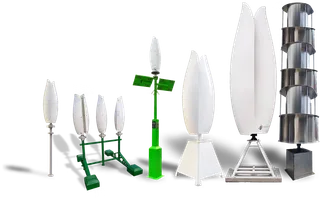
They need clean wind at the rotor, a safe mounting position, planning acceptability, suitable grid connection arrangements.
Read article
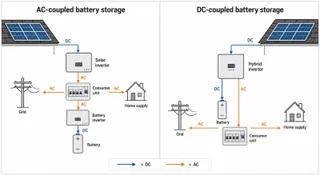
Choose an AC-coupled battery if you already have solar panels with a working inverter, have microinverters.
Read article
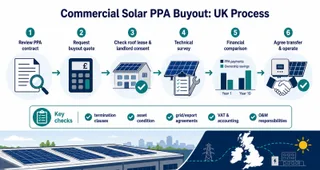
Discover the reality of buying out a solar power purchasing agreement (PPA) in the UK.
Read article
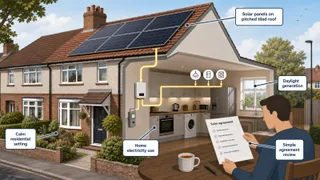
A power purchase agreement solar deal is a long-term contract where a third party funds, owns and usually maintains solar panels on your roof.
Read article
Write for Kilowatts.uk
Write it here under your own name. Sign in, put a profile up, and start a guide. Pay only if you want more links from your articles out to your own site.
Create a Kilowatts.uk account, or sign in if you already have one.
Put your name, photo and experience on a public author page.
Write a guide or a blog. Free authors can put one followed link to their own site in articles each month.
FAQ
Live help
Talk to RoboMo™ and get instant answers.
Live chat