


peak shaving battery: UK homeowner guide
Published: 2026-08-13 22:49:00
Updated: 2026-08-18 00:24:40
It suits homes with regular evening use, spare solar generation, or a suitable time-of-use tariff.
Peak shaving battery quick answer for UK homes
A peak shaving battery stores electricity when it is cheaper or available from your solar panels, then discharges it when your home would otherwise import more expensive peak-time electricity. It suits homes with regular evening use, spare solar generation, or a suitable time-of-use tariff. It is less convincing where electricity use is low, tariffs are flat, installation is complex, or the battery cannot be cycled usefully.
Domestic peak shaving is about shifting electricity use, not creating free energy. A battery can reduce peak-rate imports and improve solar self-consumption, but it will not automatically make a house independent from the grid. The design should be based on real consumption data, tariff rules, solar generation, inverter capability, safe siting and the local network connection process.
A quick eligibility check is useful before asking for quotes. If several of these points apply, a battery is more likely to merit proper modelling.
What a peak shaving battery does
A peak shaving battery charges from solar PV or the grid, stores electricity, and releases it when household demand would otherwise be met by grid import. In a UK home, this is usually done to reduce peak-rate consumption on a time-of-use tariff, make better use of solar generation, or manage larger electrical loads more smoothly.
The battery system normally includes battery modules, an inverter or hybrid inverter, monitoring equipment, isolators and software controls. The inverter is critical because it determines how much power can be delivered at a given moment. Battery capacity determines how much energy can be stored.
The term comes partly from commercial energy management, where batteries may reduce high demand events or help manage site capacity. In homes, the logic is simpler. Charge when electricity is available at a better value, discharge when it avoids more expensive import, and do so safely and within the equipment’s limits. For broader background, it helps to understand the role of home battery storage before focusing on peak shaving.
How domestic peak shaving differs from commercial battery storage
Home peak shaving is not the same as commercial battery storage. Businesses may be managing maximum demand charges, half-hourly metering, capacity constraints, industrial loads or more complex energy management systems. Most homes are instead trying to optimise solar self-consumption and tariff timing.
That difference matters because commercial battery case studies can make domestic systems look simpler than they are. A UK homeowner usually needs to know whether the battery will charge reliably, discharge at the right time, avoid interfering with an EV charger or heat pump, and comply with the local grid connection requirements.
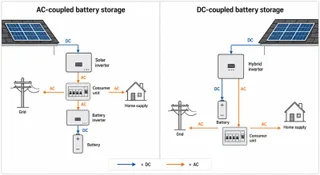
A domestic battery can be AC-coupled to an existing solar PV system, installed with a hybrid inverter, or used without solar where the system supports grid charging. Each route has different design implications. Existing solar equipment, export limits, consumer unit space, meter location and available wall space can all affect what is practical, especially when a battery is added to existing solar.
How a peak shaving battery works day to day
A typical solar-linked system charges when PV generation exceeds the home’s immediate demand, then discharges later when the home would otherwise import from the grid. A tariff-led system may charge from the grid during cheaper periods and discharge during more expensive periods, if the battery settings and tariff rules allow it.
The controls matter as much as the hardware. Poor scheduling can leave the battery full before a sunny day, empty before the peak period, or competing with other loads in the home. Good settings should reflect the tariff, solar forecast where supported, export value, household routine and any reserve needed for backup.
The usual operating choices involve clear trade-offs.
Load control
The battery avoids supplying certain large loads where doing so would empty it too quickly.Backup reserve
The battery keeps some charge for outages, but that reduces capacity available for peak shaving.Solar priority
The battery stores spare PV generation for later use, but may reduce export income.Tariff charging
The battery imports at a cheaper time, but the saving must exceed losses and installation cost.
When a peak shaving battery is most likely to make sense
A peak shaving battery is most likely to suit a home with regular peak-period demand, useful solar export during the day, or a time-of-use tariff with enough difference between cheap and expensive periods. It can also be relevant for homes with EVs or heat pumps, but those loads need careful control. Do not assume the battery will cover everything. The table below is a practical first screen, not a payback promise. A competent proposal should still use real consumption data, site checks and written assumptions.
| Home situation | Likely fit for peak shaving | What to check before buying |
|---|---|---|
| Solar PV with regular daytime export and evening demand | Stronger fit | Solar generation profile, export value, usable battery capacity and inverter compatibility |
| Time-of-use tariff with predictable cheap and peak periods | Possible stronger fit | Smart meter data, charge window, tariff terms and whether the battery can fill in time |
| Very low electricity use on a flat-rate tariff | Weaker fit | Whether there is enough avoidable peak import to justify the system |
| Home with EV charging | Depends on controls | Whether the EV charger will drain the home battery and whether charging can be scheduled separately |
| Home with a heat pump | Depends on winter demand | Heating pattern, peak winter load and battery inverter output |
| Backup power expected during outages | Requires specific design | Backup gateway, protected circuits and manufacturer-supported operation |
Overview
Half-hourly smart meter data is often more useful than annual consumption because it shows when energy is used. Two homes with the same yearly electricity use can need different battery designs if one has a sharp evening peak and the other spreads demand across the day.
Pros and cons for UK homeowners
The main advantage of a peak shaving battery is control. It gives the home more flexibility over when imported or generated electricity is used, which can be valuable with solar panels and time-of-use tariffs. The main drawback is that value depends heavily on the property, tariff and installation rather than on the battery alone. A balanced decision should include practical downsides. Batteries have losses, warranties have conditions, tariffs can change, and some homes do not have a suitable location or enough peak demand.
| Potential benefit | Practical limitation |
|---|---|
| Reduces peak-rate grid imports | Only valuable if the tariff and usage pattern support it |
| Stores spare solar generation for evening use | May reduce export income and will involve conversion losses |
| Can support wider electrification plans | EVs and heat pumps can overwhelm a small battery if unmanaged |
| May offer backup capability | Backup is not automatic and needs specific hardware and wiring |
| Improves visibility through monitoring | App settings and commissioning must be understood by the homeowner |
Overview
A battery should be treated as part of the home’s electrical design, not as a standalone appliance. The right question is not just whether the battery is good, but whether the complete system is well matched to the property.
What size battery should a UK homeowner consider
Battery size should be based on usable capacity, power output and your actual electricity pattern. Usable capacity is measured in kWh and describes how much energy can be stored for use. Power output is measured in kW and describes how much the battery and inverter can deliver at a moment in time.
This distinction is one of the most common homeowner misunderstandings. A battery with a large capacity does not automatically run several high-power appliances at once. An oven, electric shower, heat pump and EV charger can create loads that exceed the output of many residential systems, especially if they run together.
A sensible sizing conversation should cover these points before any capacity is recommended. If you are at the early planning stage, start by checking what battery size your home may realistically need before comparing brands.
Charge rate
Whether the battery can fill during the available solar or off-peak window.Future loads
Whether an EV, heat pump or home extension may change demand.Backup reserve
Whether some capacity should be held back for power cuts.Inverter output
How much power can be delivered at once without importing from the grid.Usable capacity
How much of the battery’s stored energy is available for normal use.Discharge timing
Whether it lasts through the peak period or empties too early.
Oversizing can reduce value if the battery is rarely filled and emptied usefully. Undersizing can be frustrating if it empties before the evening peak ends. The best answer balances storage capacity, inverter output, budget, space, safety requirements, tariff timing and future plans.
How solar panels change the peak shaving case
Solar PV often strengthens the case for a peak shaving battery because it can provide energy to store during the day and use later. This is especially relevant where a home exports electricity while people are out, then imports again in the evening.
The calculation is not automatic. Export payments, import tariffs and battery losses all matter. If exported solar has a useful value, storing every spare unit is not always the best financial choice. The battery must save enough imported electricity to justify the lost export value, efficiency losses and installation cost. Understanding how solar panels work is useful because generation timing is central to the battery case.
Seasonality is also important in the UK. Spring and summer may provide regular solar charging, while winter generation is lower and household demand is often higher. A battery can still help with tariff shifting in winter, but it should not be presented as if solar alone will reliably cover winter evening use without proper modelling.
Can you use a peak shaving battery without solar panels
A peak shaving battery can work without solar panels if it charges from the grid during cheaper periods and discharges during more expensive periods. This is tariff-led battery operation rather than solar self-consumption. It depends heavily on the tariff, battery controls, charge window, inverter capability and the difference between cheap and peak prices.
Without solar, the battery is not capturing self-generated electricity. It is moving grid electricity from one time to another. That means the case should allow for round-trip losses, standing charges, tariff conditions, changes in household demand and the full installed cost. The decision is different from a solar-linked setup, so it is worth reviewing whether a battery without solar is likely to suit your usage pattern.
This route may interest households that cannot install solar panels because of roof condition, shading, lease restrictions, conservation constraints or limited space. Even then, the first step is to examine actual import patterns. If the home does not use much energy in the expensive period, the battery has little useful work to do.
Worked examples using your own tariff figures
Worked examples are useful only if the assumptions are visible. Rather than relying on generic savings claims, you can test the logic using your own import tariff, export rate, usage data and quoted system cost. This avoids invented figures and shows whether the battery is solving a real problem.
For a solar-plus-battery home, the core question is whether stored solar is worth more than exported solar after losses. If a unit of solar electricity would otherwise be exported, the benefit of storing it is the avoided import value minus the export value you give up, adjusted for the system’s actual efficiency. The installer should be able to show this calculation using your tariff and the manufacturer’s performance assumptions.
For a grid-charging home, the core question is whether the peak-to-off-peak spread is large enough after losses and costs. If the battery charges at a cheap rate and discharges during an expensive rate, the benefit depends on the difference between those rates, the amount cycled, and the efficiency of the battery and inverter. If the spread narrows or the battery does not cycle often, the case weakens. Use these checks when reviewing a quote.
A good estimate should make it clear what is known, what is assumed and what could change. If the installer cannot explain the assumptions, the savings claim is not strong enough to rely on.
Costs and savings depend on the whole installation
There is no single reliable UK cost for a peak shaving battery because the installed price depends on the property, equipment and electrical work required. Capacity is only one part of the quote. Inverter choice, solar compatibility, consumer unit work, cable routes, monitoring, backup hardware, access requirements and commissioning can all change the final price.
Savings are equally site-specific. They depend on tariff structure, solar generation, household demand, export value, battery efficiency, cycle pattern and control settings. A simple payback claim is not useful unless it states the battery size, usable capacity, tariff, usage profile, solar output, export assumption and installation cost behind the calculation.
Quotes should be itemised enough to compare like with like. A cheaper proposal may exclude backup hardware, consumer unit work, monitoring, export control equipment or additional commissioning. A more expensive quote may be justified if it solves a real installation constraint, but the reason should be clear in writing. For context before assessing quotes, compare the components that affect home battery costs.
UK compliance and installer checks
A grid-connected home battery must be considered as part of the property’s electrical installation and its connection to the local distribution network. In the UK, storage is generally treated as generation for connection purposes because it can export electricity. Depending on the inverter arrangement, aggregate generation capacity, export capability and existing solar PV, the installer may need to notify the Distribution Network Operator under G98 or apply under G99.
The exact route should be confirmed by the installer against current DNO and Energy Networks Association guidance. This is not just paperwork. It can affect export limits, inverter settings, commissioning records and whether prior approval is needed before the system is connected. Existing solar PV can be especially important because adding a battery may change the combined export behaviour of the site.
MCS can also be relevant where battery storage is installed with solar PV or as part of a certified renewable installation route. Homeowners should not assume that every battery-only installation is automatically covered in the same way as an MCS solar PV installation. Ask the installer what certification, workmanship standards, consumer protections and handover documents apply to the specific job. Electrical work should be carried out by a competent person, with Building Regulations Part P considered where domestic electrical work is notifiable. The installer should also follow the battery and inverter manufacturer’s commissioning instructions. If warranty terms depend on location, internet connection, firmware, temperature range or commissioning steps, those requirements should be documented before installation.
Battery location, safety and access
Battery location is a practical safety decision, not only an aesthetic one. Lithium battery systems must be installed in locations permitted by the manufacturer, with suitable access for maintenance, safe cable routes and protection from conditions the product is not designed to tolerate.
Some batteries are designed for indoor use, some for outdoor use, and some only for certain sheltered conditions. The enclosure rating, temperature limits, ventilation requirements and clearances should all be checked against the actual location. A convenient cupboard, loft, narrow side passage or busy utility room may not be suitable once access, heat, moisture and escape routes are considered.
Homeowners should ask for the proposed location to be justified before accepting a quote. The answer should cover manufacturer instructions, fire access, isolation points, cable protection, internet connectivity if required, and how the system would be safely worked on later. If the installer cannot explain why the location is suitable, ask for an alternative.
Backup power is not always included
A home battery does not automatically keep the house running during a power cut. Many systems are designed for solar self-consumption and tariff optimisation, and they shut down safely when the grid fails unless backup equipment and specific wiring are included.
If backup matters, it must be stated at the design stage. The installer may need a backup gateway, emergency power supply output, protected circuits or another manufacturer-approved arrangement. Backing up the whole home is usually more demanding than supporting selected essentials such as lighting, broadband, refrigeration and a few sockets. This is why claims that a battery will work during a power cut should be checked against the exact equipment and wiring design.
Backup also changes the operating strategy. If the battery always discharges to reduce peak imports, there may be little energy left when an outage occurs. Some systems allow a reserve to be held back, but that reduces the amount available for peak shaving. It is a trade-off, not a free extra.
EV chargers, heat pumps and larger electrical loads
EV chargers and heat pumps can improve the wider value of a home energy plan, but they can complicate battery operation. An EV can drain a home battery quickly if the charger is not controlled separately, while a heat pump can create long winter demand that a small battery may only partly support.
The goal is usually to coordinate loads rather than trying to power every large load from the battery. Many homes will get better results by scheduling EV charging in a cheap tariff window and reserving the home battery for household evening loads. Heat pumps need a different approach because demand is weather-dependent and often highest when solar generation is lowest.
A quote should explain how the battery will interact with these loads.
EV charging
Whether the charger can be scheduled so it does not empty the home battery unnecessarily.Load priority
Which circuits or appliances the battery is expected to support.Future upgrades
Whether the system can adapt if an EV charger, heat pump or solar array is added later.Inverter limits
Whether high-power loads will still import from the grid when they exceed inverter output.Heat pump operation
Whether winter demand has been modelled realistically rather than using summer solar assumptions.
This is where installer-level design makes a difference. A battery that looks suitable on annual consumption may be poorly matched once half-hourly EV charging or winter heating demand is considered.
Common mistakes to avoid before you buy
The biggest mistake is treating battery capacity as the only decision. A well-matched smaller system can be more useful than a larger battery with poor controls, unsuitable inverter output, weak tariff logic or no clear installation plan.
Another common issue is accepting a savings forecast without understanding the assumptions. The estimate should show the tariff, export value, battery use, seasonal variation and whether the model includes efficiency losses. If the claim depends on a tariff that may change, that risk should be acknowledged.
Avoid these practical mistakes during the buying process.
A good proposal should feel specific to the home. If the recommendation would be the same for almost any property, it is probably not detailed enough.
What to ask an installer before agreeing
Before requesting quotes, gather a recent electricity bill, tariff details, smart meter data if available, and information about any existing solar PV system. If you have an EV charger, heat pump or planned electrical upgrades, include those details because they may change the design.
Ask the installer to explain the operating strategy in plain English. You should understand when the battery will charge, when it will discharge, what happens in winter, whether export is limited, whether backup is included, and how app settings will be managed after handover.
Useful questions include the following.
Design basis
What consumption data, tariff and solar generation assumptions have been used.Export control
Whether the DNO has set or may set any export limit.Backup function
Whether power-cut operation is included or excluded.Battery location
Why the proposed position meets manufacturer requirements.Connection route
Whether the installation is being notified or applied for under G98 or G99.Certification and handover
What MCS, electrical and product documentation, settings, warranties, manuals and commissioning records will be provided.
A peak shaving battery can be a sensible part of a UK home energy plan, especially with solar PV and regular evening demand. It is not a universal answer. The safest decision is to judge it against real consumption, current tariff terms, competent installation, clear compliance steps and realistic savings assumptions. If solar is part of the plan, it also makes sense to compare home solar options alongside the battery design.
Official checks and source notes
Because battery storage involves tariffs, electrical safety and grid connection, homeowners should verify key claims against official or primary sources rather than relying only on sales material. Ofgem is the relevant source for general energy retail and smart meter information. Your Distribution Network Operator and the Energy Networks Association are the right route for connection guidance and G98 or G99 processes.
MCS consumer guidance is relevant where solar PV and certified renewable installations are involved. Manufacturer installation manuals are also primary documents because they set product-specific requirements for siting, clearances, temperature range, enclosure suitability, commissioning and warranty conditions.
These checks do not replace a competent installer, but they help you ask better questions. A trustworthy proposal should align with the DNO process, Building Regulations expectations, manufacturer instructions and the actual way your home uses electricity.
Plan, Compare & Buy Renewable Energy Solutions
AI does the thinking.
You get the perfect solar match.
Use RoboMo™ to assess your property, compare available technologies and connect with trusted UK installers, suppliers and manufacturers.
Simply enter your postcode, drop a pin on your roof, create your free account and let RoboMo™ analyse your property to find the best solar panels for your home.

You don't have to think
RoboMo™'s AI analyses your roof and does all the hard work.

Accurate & tailored
AI-powered assessment based on your roof, location, and conditions.

Best options, maximum savings
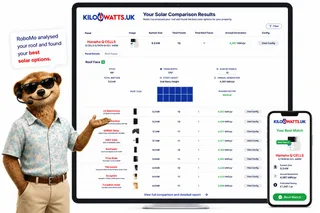
Compare top solar panels for the best performance and value.

Simple, fast & effortless
Provide a few details, sit back and watch your results unfold.
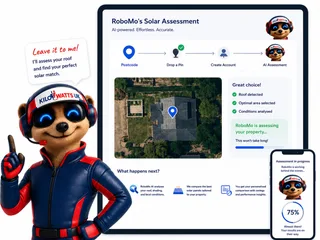
STEP 1
Choose Home, Business or Industrial
Enter your postcode to start your assessment.
STEP 2

Drop a pin on your roof
STEP 3

Create your free account
STEP 4

Sit back and watch RoboMo™ work
RoboMo™ analyses your roof and builds your personalised solar comparison.

Step 1
Enter your postcode
Start designing your wind energy system in seconds.
Are you an installer, distributor or renewable energy business?
Kilowatts UK is expanding the Flower Turbines partner network across the UK.
Become A Flower Turbines PartnerKilowatts UK is an authorised representative
Flower Turbines
Compact vertical-axis turbines built for real UK sites, not just open farmland.
They start in light wind, sit in a small footprint, and are bird-safe by design. Cluster them as a bouquet and the group performs better together than the same turbines standing alone. Enter your postcode for a location-based generation estimate. Figures use area weather data and will differ if buildings, trees or hills sit in the way.
Starts in light UK wind
Built to generate in typical UK wind, not only open farmland.
Small rooftop or ground footprint
Compact towers for roofs, yards and tight sites.
Bird-safe slow rotation
Slow vertical-axis spin, bird-safe by design.
Bouquet clusters raise output
Grouped turbines outperform the same units standing alone.
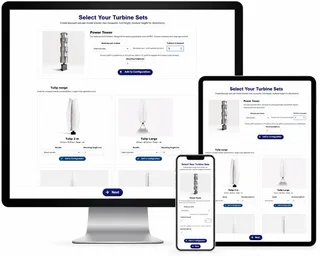
STEP 2

Choose a location
STEP 3

Place your cluster
Tap the map where you want the turbine cluster to go.
STEP 4

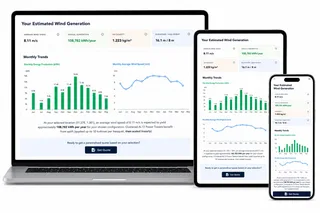
Instant generation forecasts
Compare different turbine layouts and see annual generation forecasts instantly.
STEP 5

No commitment required
Explore different configurations before deciding whether to request a quotation.
Related articles
Mo's Mission Nominations
FAQ
Need Help? RoboMo's Got Answers
What is a peak shaving battery for a UK home?
A peak shaving battery stores electricity when it is cheaper or available from your solar panels, then uses it when your home would otherwise import at a more expensive time. In most homes, it is about reducing peak-rate grid use rather than going off-grid. Its value depends on your usage pattern, tariff, solar generation and installation design.
When is a peak shaving battery most likely to make sense?
It is more likely to suit homes with regular evening electricity use, spare daytime solar generation, or a time-of-use tariff with a useful cheap period. It is less convincing if your electricity use is low, your tariff is flat, or the battery cannot charge and discharge often enough. Half-hourly smart meter data is usually more useful than annual consumption for checking this.
Can I use a peak shaving battery without solar panels?
Yes, if the system supports charging from the grid during cheaper periods and discharging during more expensive periods. This is tariff-led storage, not solar self-consumption. The saving must be enough to cover battery losses, tariff conditions and the installed cost, so it needs careful modelling.
How do I know what size battery I need?
Battery sizing should look at usable capacity in kWh, inverter output in kW, charge rate and your normal demand pattern. A large battery does not automatically mean it can run several high-power appliances at once. Oversizing can reduce value if the battery is rarely used fully, while undersizing can mean it empties before the peak period ends.
Will a home battery keep my house running in a power cut?
Not automatically. Backup power usually needs specific hardware, compatible equipment and wiring for selected circuits. If outage protection matters to you, ask the installer to confirm in writing what will work, what will not, and how much battery reserve is needed.
Can a peak shaving battery work with an EV charger or heat pump?
Yes, but these loads need careful control because they can use energy quickly. An EV charger may drain a home battery unless charging is scheduled separately or the system is configured to prevent it. A heat pump can also create higher winter demand, so the inverter output and battery capacity need to be checked against real usage.
What should I check before asking for battery quotes?
Gather your smart meter data, current tariff, export rate, solar generation information and details of any planned EV charger or heat pump. Check that there is a suitable location for the battery under the manufacturer’s requirements. A good quote should state the assumptions used, including tariff, expected cycling, losses and whether any network connection process is needed.
Are savings from a peak shaving battery guaranteed?
No, savings are not guaranteed because tariffs, export rates, household behaviour and battery performance can change. The financial case should compare avoided peak imports against lost export value, round-trip losses and the full installed cost. Be cautious with generic payback claims that do not use your own data.