


sigenergy battery: UK homeowner guide
Published: 2026-08-17 22:07:19
Updated: 2026-08-20 07:05:14
A Sigenergy battery can suit a home with evening electricity demand, spare solar generation to store, or a tariff that makes off-peak charging worthwhile.
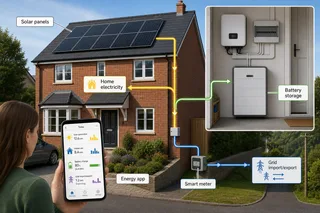
sigenergy battery - UK homeowner guide
Learn sigenergy battery with UK-specific guidance, including costs, savings, rules, and what to do next.
Is a Sigenergy battery right for a UK home?
A Sigenergy battery can suit a home with evening electricity demand, spare solar generation to store, or a tariff that makes off-peak charging worthwhile. It is not right for every property. The answer depends on usable capacity, inverter power, tariff spread, solar surplus, DNO requirements, backup expectations, installation complexity and how your household uses electricity.
In UK quotes, “Sigenergy battery” normally means the SigenStor home energy storage platform, not a loose standalone battery. Judge it as a complete installed system. That includes battery modules, the energy controller or inverter arrangement, monitoring, electrical protection, commissioning and any backup equipment.
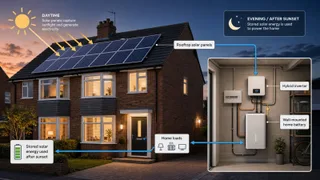
A battery does not generate electricity. It stores solar or grid electricity and releases it later. Savings only happen when stored energy replaces higher-cost import, captures solar that would otherwise be exported, or supports a tariff strategy that still works after losses, export value and installation cost are included. If you need the basics first, it is worth understanding how home batteries work before comparing brands.
What a Sigenergy system normally includes
A Sigenergy home battery quote should name the actual SigenStor components being supplied. This matters because a modular energy storage platform can be configured in different ways. Two quotes that both say “Sigenergy battery” may not include the same capacity, inverter power, backup capability or future expansion route.
Current UK product documentation should be checked at quote stage, because model ranges, approved combinations, operating limits and warranty terms can change. Do not rely on forum comments, old screenshots or a single headline kWh figure. Ask the installer for the datasheet and warranty document for the exact models on your quotation.
A clear specification should separate the battery modules from the power electronics. Battery capacity is measured in kWh and describes how much energy can be stored. Inverter or energy controller power is measured in kW and describes how quickly the system can charge or discharge. A large battery paired with a restricted power rating may still be limited when several appliances run at once.
Battery modules
The quote should name the SigenStor battery module type, the number of modules, the nominal capacity and the usable capacity where the manufacturer publishes it.Energy controller or inverter
The quote should state the exact SigenStor energy controller or inverter model, its power rating, phase type and how it interacts with solar PV and the grid.Monitoring and controls
The quote should explain what app or portal is used, what settings the homeowner can change and what support is available after commissioning.Backup equipment
If backup is included, the quote should name the gateway, changeover or backup arrangement and identify the circuits that will remain powered.Warranty documents
The installer should provide the current UK warranty terms, including duration, capacity retention basis, throughput or cycle conditions where applicable, registration requirements and exclusions.
This level of detail makes a quote auditable. Without it, it is hard to compare home battery options or understand whether the design suits your home.
Sigenergy battery price UK: why quotes vary
There is no reliable single installed UK price for a Sigenergy battery without a property survey and a named specification. A battery-only retrofit, a new solar-plus-battery installation and a backup-enabled system can involve different labour, equipment and grid-connection work, even if the battery brand is the same.
Homeowners searching for “Sigenergy battery price UK” are usually trying to understand the installed cost, not only the equipment cost. The final quote can be affected by battery capacity, inverter size, scaffolding, cable routes, consumer unit condition, meter position, earthing arrangement, DNO application work, commissioning time and whether backup circuits are required. For wider context, review typical home battery costs before judging whether a Sigenergy quote is competitive.
A cautious quote is not necessarily a bad quote if it explains the assumptions. A weak quote hides the system design behind a single line item and gives a payback claim without showing the usage, tariff and export assumptions behind it.
Simple retrofit battery
This may suit a home with existing solar, a compatible electrical layout and no backup requirement, but the existing inverter, metering and export arrangement still need careful checks.New solar and battery installation
This can be easier to design as one system, because the solar array, inverter, battery size and monitoring can be specified together from the start.Backup-enabled installation
This is usually more involved because the installer must decide which circuits are backed up, how changeover is handled and which high-load appliances are excluded.Future-ready installation
This may include extra thought for an EV charger, heat pump, larger solar array or later battery expansion, but it should still be justified by likely use rather than treated as essential.
The fairest way to compare quotes is to ask each installer to state the same core assumptions: battery capacity, usable capacity where available, inverter power, backup inclusion, DNO route, consumer unit work, monitoring, warranty documents and commissioning scope.
How to estimate savings without guessing
A Sigenergy battery can reduce electricity bills when it stores energy that would otherwise be exported, or when it charges during a cheaper tariff period and discharges when electricity would otherwise be imported at a higher rate. It cannot guarantee a fixed annual saving because tariffs, household behaviour, solar output and export payments all affect the result.
The best calculation starts with half-hourly smart meter data where available. That shows when the home actually imports electricity, not just the annual total. A household with steady evening demand will usually use a battery differently from a household that is mostly empty, has low night-time use or already consumes most of its solar generation during the day.
A practical model should examine each half-hour period. Could the battery have charged? Did it have enough stored energy? Would discharge have replaced import? Was storing solar worth more than the export payment you would have received? It should also allow for round-trip losses, because not every unit charged into a battery returns as a usable unit in the home.
Solar self-consumption value
Stored solar is valuable when it replaces grid import later, but the lost export payment should be included in the comparison.Off-peak charging value
Grid charging only works financially when the difference between low-rate charging and higher-rate avoided import is large enough after losses and tariff conditions.Battery utilisation
A battery that cycles regularly is usually easier to justify than one that remains partly unused for long periods.Seasonal variation
Summer may provide more solar surplus, while winter may provide less solar charging but more opportunity for tariff-based charging.Behaviour changes
Cooking times, EV charging, heat pump operation, working from home and appliance use can change the result materially.
A credible battery payback estimate should show a base case and a sensitivity case. For example, it should explain what happens if export rates improve, import rates fall, household demand changes or the battery is used less often than expected. Exact savings claims without these assumptions should be treated cautiously.
Solar, tariffs and grid charging
A Sigenergy battery is often installed with solar panels. It can also be part of a tariff-led strategy, where the battery charges from the grid during cheaper periods and discharges later. The right approach depends on your tariff rules, export arrangement, battery settings and daily demand profile.
If you are installing new solar at the same time, the design can be optimised as one package. The installer can size the solar array, select the inverter or energy controller, estimate likely surplus generation and match the battery to expected household use. Oversizing storage without enough solar surplus can lead to poor utilisation, especially during darker months, so it helps to compare solar options before committing to a combined system.
If you are retrofitting a battery to an existing solar installation, compatibility is more important. The existing inverter, generation meter, consumer unit, cable routes, monitoring platform and export settings may influence whether an AC-coupled arrangement, hybrid replacement or wider system upgrade is more suitable. A separate guide to adding a battery can help frame those retrofit checks. The installer should explain whether the battery is expected to charge mainly from solar, from the grid, or from both. They should also explain how the system behaves if there is a full battery on a sunny day, an export limit from the DNO, a high household load, or a tariff schedule that changes seasonally.
DNO approval, G98, G99 and export limits
Grid-connected batteries and inverters must be handled correctly because they can interact with the local electricity network. In the UK, installers normally manage the relevant Distribution Network Operator process, either as notification or application depending on the system design, existing generation and export capability.
Homeowners will often hear the terms G98 and G99. These are engineering recommendation routes used for connecting generation equipment to the distribution network. The correct route depends on the inverter capacity, whether there is existing solar, whether export is limited, and how the equipment is configured. The installer should tell you which route applies before work starts.
Export limits can affect the finished design. If the DNO restricts export, the battery and inverter controls may need to be configured so the system does not exceed the agreed limit. If the installer changes the inverter model, power rating or configuration after the quote, the grid paperwork may also need to be revisited. A good quotation should state who is responsible for DNO paperwork, whether approval is required before installation, what assumptions have been made about export, and what happens if the DNO imposes conditions. This is especially important where a home already has solar PV and the new battery system changes the total generation or export arrangement.
Backup power is not automatic
Many homeowners assume a home battery will keep the whole property running in a power cut. That is not how every grid-tied installation works. A standard battery system may shut down during an outage unless suitable backup hardware, wiring and commissioning have been included. Backup should be treated as a separate design requirement. The installer needs to decide whether the system will support a small essential-loads board, selected circuits or a wider part of the home. High-demand appliances such as electric showers, ovens, heat pumps and EV chargers may be unsuitable for backup operation or may need strict limits. The key question is not “does it have backup?” It is “what exactly is backed up, for how long, and under what conditions?” The answer should include whether solar can continue charging the battery during an outage, whether switchover is automatic, which circuits are excluded and how the system behaves if the battery is already low when the outage starts. If your priority is resilience, compare the battery design with a dedicated whole-house battery setup rather than assuming both approaches are the same. If backup is important to you, make sure it appears as a named item in the quote. Do not infer it from marketing wording or from the fact that the battery has an emergency-power function in its product literature.
How Sigenergy compares with other home battery options
Sigenergy is usually considered as an integrated modular storage platform. It should be compared with other installed system types, not with isolated component names that perform different roles. An inverter brand, a solar panel brand and a battery module supplier are not always direct substitutes for one another. The right comparison is practical. How well does the system fit your existing installation? How much disruption is involved? Is backup needed? Is the monitoring clear? How does future expansion work? Can the installer support the product properly? A cheaper equipment list may not be cheaper once electrical work, compatibility issues and commissioning are included.
| System type | Where it may suit | Main strengths | Main checks before choosing |
|---|---|---|---|
| Integrated modular system such as SigenStor | New solar-and-battery installs or homes wanting a coordinated storage platform | Unified controls, modular expansion potential and integrated design options | Exact module sizes, inverter rating, backup equipment, warranty terms and installer experience |
| AC-coupled retrofit battery | Homes with existing solar where the current inverter is retained | Often less disruptive for retrofits and can work alongside existing PV equipment | Metering compatibility, export settings, space, monitoring overlap and DNO implications |
| Hybrid inverter plus battery | New solar installations or existing systems being substantially upgraded | Solar and battery can be designed together through one inverter platform | Whether replacing existing equipment is justified, inverter capacity and future expansion limits |
| Lower-complexity battery option | Homes with modest demand and no backup requirement | Potentially simpler design where requirements are limited | Product support, warranty clarity, monitoring quality and whether low cost compromises suitability |
| Backup-focused system | Homes where resilience is a major requirement | Can support selected circuits during outages when designed correctly | Backup rating, circuit selection, solar charging during outage and high-load appliance exclusions |
Overview
A fair Sigenergy review for a UK homeowner should look beyond headline specifications. The important question is whether the installed design matches your usage, property, tariff and future plans.
What installers should check before recommending a battery
Before recommending any battery, a competent installer should assess the property as well as the product. The consumer unit, earthing arrangement, meter tails, main fuse, isolation arrangements, cable routes, installation space, ventilation, access and fire-safety considerations can all affect the design.
For a new solar and battery installation, the roof still matters. Orientation, shading, roof covering, available area, access, structural condition and planning constraints can influence how much solar energy is likely to be available for storage. A well-specified battery cannot compensate for a poorly performing solar array.
For a retrofit battery, the survey should pay close attention to the existing solar inverter, generation meter, export arrangement and monitoring setup. Some homes are better suited to an AC-coupled battery, while others may justify a hybrid inverter change if the wider system is being upgraded. Electrical work should be designed, installed, inspected and tested by competent people in line with applicable UK electrical requirements. If solar PV is included and you are relying on MCS documentation for export tariff eligibility or handover records, make sure the installer explains exactly what is covered and what paperwork you will receive.
Sigenergy-specific documents to check
Because battery ranges and warranty terms can change, the most reliable evidence is the current UK documentation for the exact components being installed. A quote should not depend on generic claims such as “ten-year battery” or “whole-house backup” unless the documents and design support those statements.
Ask the installer to provide the manufacturer datasheet, installation manual extracts where relevant, warranty statement, commissioning requirements and any limitations that affect your installation. Check these before you pay a deposit, not after the equipment arrives.
Current datasheet
Confirm the SigenStor module type, battery capacity, usable capacity where published, power rating, operating limits and approved combinations.Warranty statement
Check warranty duration, capacity retention terms, registration requirements, workmanship exclusions, transferability and any throughput or operating-condition limits.Backup documentation
Confirm whether the quoted hardware supports your requested backup arrangement and whether solar charging during an outage is included in the design.DNO evidence
Ask which G98 or G99 process applies and whether the system relies on export limitation.Handover pack
Make sure you will receive commissioning records, user settings, shutdown instructions, warranty information and support contact details.
This is not paperwork for its own sake. It protects you from comparing mismatched quotes and helps ensure the system you buy is the system that gets installed.
Common mistakes to avoid
The most common mistake is choosing a battery purely by the largest kWh figure you can afford. A battery that is too large for your generation and demand may not cycle enough to justify the extra cost, especially in winter when solar surplus is lower.
Another mistake is assuming the app tells the whole story. Monitoring is useful, but a polished app cannot fix poor sizing, unsuitable inverter power, weak tariff assumptions, missing DNO paperwork or misunderstood backup capability.
Be cautious with quotes that promise exact savings without showing the assumptions. Battery economics depend on usage, tariffs, export rates, round-trip losses and behaviour. A credible installer should be willing to explain the model and show what changes if your tariff or demand changes. Also avoid comparing bare battery module prices with fully installed system prices, or relying on old datasheets and forum comments for warranty terms.
- Do not assume backup is included unless the quote states it clearly.
- Do not oversize storage without checking winter usage and solar surplus.
- Do not ignore DNO requirements or export limits.
- Do not accept a quote that fails to name the inverter or energy controller.
- Do not choose a system without knowing who will support it after commissioning.
A battery is a long-term electrical asset. The cheapest decision at quote stage can become expensive if it leads to poor compatibility, unclear warranty cover or a system that does not match how the home uses electricity.
What to ask before accepting a Sigenergy quote
Before accepting a Sigenergy battery quote, make sure the specification is detailed enough for another competent installer to understand. If two quotes use different capacity, inverter, backup or DNO assumptions, they are not truly comparable.
Ask the installer to explain the operating strategy in normal household terms. You should know whether the battery is expected to charge from solar, cheaper-rate grid electricity or both. You should also know what settings you can change, what happens after a tariff change and who provides support if the monitoring does not look right.
Exact products
Which SigenStor battery modules, energy controller or inverter and optional gateway or backup equipment are included?Capacity basis
Is the quoted capacity nominal or usable, and can the system be expanded later without replacing major components?Charging strategy
Is the savings estimate based on solar charging, grid charging or a combined approach?Backup scope
Which circuits are backed up, which appliances are excluded and what happens during a power cut?Grid process
Is the design being submitted under the appropriate DNO process, and who handles any conditions or export limits?Warranty and support
Are the current UK warranty documents, commissioning records, user guidance and aftercare included before acceptance?
If the installer cannot answer these questions clearly, the risk is not necessarily the Sigenergy product itself. The risk is that the installed design has not been specified carefully enough.
The practical next step for UK homeowners
A Sigenergy battery is worth considering if you want a modern modular storage system and your home has the demand profile to use it well. It may not be the best choice if your electricity use is low, your solar surplus is limited, your budget is tight, or you do not need the integrated features being quoted.
The most useful preparation is to gather your annual electricity use, recent bills, half-hourly smart meter data if available, details of any existing solar PV system and a clear view of whether backup power matters to you. With that information, an installer can model a sensible battery size, explain the DNO route and produce a quote that can be compared fairly.
Treat the decision as a system design exercise, not a brand purchase. A well-specified Sigenergy installation can work well for the right UK home, but the evidence should come from your usage data, the current manufacturer documents and a quote that explains exactly what is being installed.
Plan, Compare & Buy Renewable Energy Solutions
AI does the thinking.
You get the perfect solar match.
Use RoboMo™ to assess your property, compare available technologies and connect with trusted UK installers, suppliers and manufacturers.
Simply enter your postcode, drop a pin on your roof, create your free account and let RoboMo™ analyse your property to find the best solar panels for your home.

You don't have to think
RoboMo™'s AI analyses your roof and does all the hard work.

Accurate & tailored
AI-powered assessment based on your roof, location, and conditions.

Best options, maximum savings
Compare top solar panels for the best performance and value.

Simple, fast & effortless
Provide a few details, sit back and watch your results unfold.
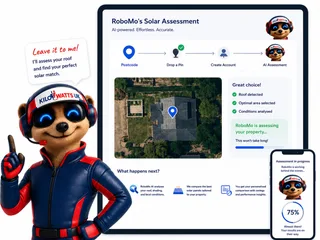
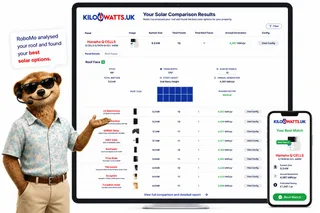
STEP 1
Choose Home, Business or Industrial
Enter your postcode to start your assessment.
STEP 2

Drop a pin on your roof
STEP 3

Create your free account
STEP 4

Sit back and watch RoboMo™ work
RoboMo™ analyses your roof and builds your personalised solar comparison.

Step 1
Enter your postcode
Start designing your wind energy system in seconds.
Are you an installer, distributor or renewable energy business?
Kilowatts UK is expanding the Flower Turbines partner network across the UK.
Become A Flower Turbines PartnerKilowatts UK is an authorised representative
Flower Turbines
Compact vertical-axis turbines built for real UK sites, not just open farmland.
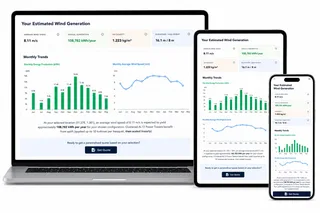
They start in light wind, sit in a small footprint, and are bird-safe by design. Cluster them as a bouquet and the group performs better together than the same turbines standing alone. Enter your postcode for a location-based generation estimate. Figures use area weather data and will differ if buildings, trees or hills sit in the way.
Starts in light UK wind
Built to generate in typical UK wind, not only open farmland.
Small rooftop or ground footprint
Compact towers for roofs, yards and tight sites.
Bird-safe slow rotation
Slow vertical-axis spin, bird-safe by design.
Bouquet clusters raise output
Grouped turbines outperform the same units standing alone.
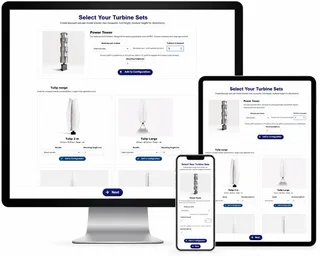
STEP 2

Choose a location
STEP 3

Place your cluster
Tap the map where you want the turbine cluster to go.
STEP 4

Instant generation forecasts
Compare different turbine layouts and see annual generation forecasts instantly.
STEP 5

No commitment required
Explore different configurations before deciding whether to request a quotation.
Related articles
Mo's Mission Nominations
FAQ
Need Help? RoboMo's Got Answers
What is a Sigenergy battery for UK homes?
In UK quotes, a “Sigenergy battery” usually means the SigenStor home energy storage platform rather than a loose standalone battery. A full system may include battery modules, an energy controller or inverter, monitoring, electrical protection and optional backup equipment. Always ask for the exact model names and current UK datasheets in your quote.
Is a Sigenergy battery worth it if I already have solar panels?
It may be worthwhile if you regularly export spare solar during the day and import electricity later at a higher price. The installer should check your existing inverter, generation meter, consumer unit, cable routes and export arrangement before recommending a design. A proper savings estimate should include lost export payments, battery losses and your actual usage pattern.
Can I charge a Sigenergy battery from the grid on a cheap tariff?
A Sigenergy system may be used for tariff-led charging where the battery charges during cheaper periods and discharges later. Whether this saves money depends on the tariff spread, battery losses, household demand and any tariff conditions. Do not rely on a simple headline saving without seeing the assumptions behind it.
How much does a Sigenergy battery cost in the UK?
There is no reliable single installed price without a property survey and a named specification. Costs can vary with battery capacity, inverter power, backup equipment, cable routes, consumer unit work, scaffolding, commissioning and any DNO application work. Compare quotes by checking the same items in each one, not just the final total.
Will a Sigenergy battery keep my house running in a power cut?
Backup power is not automatic with every grid-tied battery installation. If you want power during an outage, the quote should clearly state the backup equipment, whether switchover is automatic and which circuits are included. High-load appliances such as EV chargers, electric showers, ovens and heat pumps may be excluded or need strict limits.
Do I need DNO approval for a Sigenergy battery?
Grid-connected batteries and inverters must be handled through the correct Distribution Network Operator process. Your installer should explain whether the installation falls under a notification or application route, often referred to as G98 or G99 depending on the design. The quote should say who is responsible for the paperwork and what happens if export limits or DNO conditions apply.
What should I check in a Sigenergy battery quote?
A good quote should name the battery modules, usable capacity where available, inverter or energy controller model, power rating, phase type, monitoring, warranty documents and commissioning scope. If backup is included, it should list the backup hardware and circuits. Avoid quotes that only say “Sigenergy battery” without a clear system specification.
How do I choose the right Sigenergy battery size?
The right size depends on your evening demand, solar surplus, tariff strategy and how often the battery is likely to cycle. A larger battery is not always better if it sits partly unused for long periods. Ask the installer to model your half-hourly smart meter data where possible and show how the battery would be used across different seasons.