


PPA vs Buying Commercial Solar in the UK: A Decision Framework
Published: 2026-07-18 16:08:36
Updated: 2026-07-26 18:34:43
Buying commercial solar is usually better when the business can use cash or finance, expects to remain on site long term.
PPA vs buying commercial solar in the UK
A commercial solar PPA is usually best when a business wants to reduce upfront capital spend and is comfortable signing a long-term electricity contract. Buying commercial solar is usually better when the business can use cash or finance, expects to remain on site long term, and wants the highest lifetime financial benefit from the system.
The right choice depends on the building, the balance sheet, and the electricity load profile. In practice, the decision should be based on half-hourly consumption data, roof condition, lease length, DNO constraints, tax position, insurance requirements, export value, and appetite for maintenance responsibility.
At a glance
In short, a PPA reduces capital outlay but gives up some control and long-term upside. Purchase requires more commitment at the start but normally gives the business the strongest financial benefit after payback.
- Choose a PPA if capital is constrained, the site is stable, and long-term contract terms are acceptable.
- Choose purchase if ownership, control, and lifetime savings matter most.
- Model both options using half-hourly electricity data, not only annual bills.
- Check roof, landlord, DNO, tax, and insurance issues before treating any quote as reliable.
- Compare whole-life outcomes, not just the first-year p/kWh rate.
The comparison should not be based only on the first-year electricity price. A fair decision looks at the full life of the project, including export value, indexation, maintenance, inverter replacement, downtime, roof access, roof repairs, insurance conditions, and what happens if the property is sold or the tenant changes.
How a commercial solar PPA works
A commercial solar PPA, or power purchase agreement, is an arrangement where a third party funds, owns, operates, and usually maintains the solar PV system. The system is installed on the business roof or land, and the business buys the electricity generated onsite at an agreed p/kWh rate.
The attraction is simple. The business can access onsite solar electricity without paying for the installation upfront. The PPA provider earns revenue by selling the generated electricity over the contract term, which often runs for 10 to 25 years.
A PPA is not the same as receiving free solar panels. The customer still pays for electricity, and the contract can create long-term obligations. Some PPAs use a fixed unit rate, some apply annual indexation linked to inflation or a fixed escalator, and some offer a discount to the grid price rather than a fixed long-term rate. The details matter. A PPA may charge for electricity generated, electricity consumed, or a defined minimum amount. It may also decide who receives export income, who owns environmental attributes, who pays for meter changes, and what happens if the roof needs repair. A good PPA proposal should make clear: the starting unit rate and how it changes over time; whether the customer must buy a minimum amount of electricity; who owns the solar equipment during and after the term; who receives export income; who is responsible for monitoring, maintenance, insurance, and performance; what happens if the building is sold, the lease is assigned, or the tenant leaves; For many UK businesses, the PPA decision is less about “is solar worthwhile?” and more about “is this long-term energy contract better than using our own capital or finance?” who pays for panel removal and reinstatement if roof works are needed.
How buying commercial solar works
Buying commercial solar means the business funds the installation itself, either from cash, borrowing, hire purchase, asset finance, or another finance route. The business owns the panels, inverters, mounting system, cabling, meters, monitoring equipment, and associated electrical works.
This usually gives more control. The business can choose the design, specify equipment standards, decide how export is handled, and later consider additions such as commercial solar battery storage, commercial EV charging, or heat pumps. It also keeps the benefit of reduced grid imports and may receive export payments for unused electricity.
The trade-off is responsibility. The owner must budget for operations and maintenance, monitoring, cleaning where needed, insurance implications, and likely inverter replacement during the life of the system. Commercial inverters commonly have shorter design lives than solar panels, so inverter replacement should be included in whole-life calculations rather than treated as an afterthought. Purchased commercial solar often has a payback period of around 4 to 8 years, but that range can move significantly. A site with high daytime demand, a simple roof, low grid connection cost, and strong import tariff savings may perform well. A site with low self-consumption, weak roof structure, high access costs, or export restrictions may look much less attractive. Buying is not automatically the best answer just because the lifetime savings may be higher. If the business has a higher-return use for capital, limited borrowing capacity, or uncertainty about remaining on site, a PPA may still be the more practical route.
Cost and savings comparison
Typical UK commercial solar panel installation purchase costs vary by scale and site complexity. As a broad market guide, small commercial systems can be around £900 to £1,300 per kWp, medium rooftop systems around £650 to £1,100 per kWp, and large commercial rooftop systems around £550 to £900 per kWp. A 50 kWp system may cost roughly £45,000 to £65,000, a 100 kWp system roughly £75,000 to £120,000, and a 250 kWp system roughly £160,000 to £250,000.
Those figures are only starting points, not guaranteed prices. Structural works, roof repairs, asbestos issues, scaffolding, craneage, metering changes, DNO requirements, access systems, battery storage, switchgear upgrades, and out-of-hours installation can change the final installed cost materially.
Onsite commercial solar PPA rates are commonly set below the customer’s grid import tariff, but there is no universal rate that applies to every UK business. Larger, simpler, creditworthy sites with strong daytime consumption tend to receive more competitive PPA terms. Smaller, complex, high-export, or uncertain sites tend to receive weaker offers or may struggle to attract a provider at all.
Whole-life comparison
The main financial distinction is that purchase usually produces higher lifetime savings, while a PPA usually reduces upfront cost. Purchase exposes the business to asset and maintenance risk. A PPA transfers much of that technical risk to the provider but creates long-term contract, indexation, and property-risk considerations.
Example decision snapshots
These simplified examples show how the same technology can lead to different commercial decisions. They are not quotations or guarantees; a real project should be modelled using site-specific consumption data, roof surveys, DNO feedback, and current tariff information.
Owner-occupied manufacturer with high daytime demand
A manufacturer owns its building, runs machinery during daylight hours, and expects to remain on site for the long term. Most solar generation would be used onsite rather than exported. In this case, buying is often attractive because the business can capture the full avoided grid import value after payback and has control over future upgrades. Leased warehouse with limited capital budget A warehouse tenant has a stable operation and a long lease, but capital is being reserved for stock, vehicles, or expansion. A PPA may be attractive if landlord consent is available and the contract term fits the lease. The tenant gives up some lifetime upside but avoids a large capital commitment. Seasonal site with low summer consumption A business with high winter demand but low summer daytime use may export a larger share of generation when solar output is strongest. In this case, both PPA and purchase need careful modelling. Buying the largest possible system may not be sensible, and a PPA provider may price the project less competitively if export value is weak. These scenarios highlight the core point: PPA vs buying commercial solar in the UK is rarely decided by roof size alone. The best option is usually determined by self-consumption, tenure, capital strategy, and contract risk.
The practical decision framework
The strongest comparison starts with half-hourly MPAN consumption data, not just annual electricity bills. Annual use can hide weekend shutdowns, seasonal changes, bank holiday loads, overnight baseload, and periods where solar generation would be exported at a lower value than avoided grid imports.
A good feasibility model should show how much solar electricity is used onsite, how much is exported, what the import tariff is, what export is worth, and how performance changes if electricity prices move. For purchase, it should also include O&M, inverter replacement, degradation, tax assumptions, insurance changes, and finance cost. For a PPA, it should include the starting unit rate, indexation, minimum payments, buyout options, roof access obligations, and end-of-term position.
Export control
Purchase usually makes export arrangements clearer, while PPA export rights depend on the contract.Risk allocation
A PPA shifts some technical risk to the provider, while purchase leaves more operational risk with the owner.Upfront capital
A PPA normally needs little or no upfront capital, while purchase requires cash or finance.Lifetime savings
Purchase usually wins where the system is well sized and the business remains onsite.Contract flexibility
Purchase usually gives more freedom, while a PPA can restrict future roof and energy decisions.Maintenance responsibility
A PPA usually includes monitoring and maintenance, while purchase needs an O&M arrangement.
The decision is often a capital allocation question as much as an energy question. If the business has a better use for capital, a PPA may be rational even if buying would save more over the full system life. If the business owns the premises, has strong cash reserves, and expects to stay for decades, purchase is often hard to beat. Property certainty — Both options need roof suitability, legal consent, and a clear plan for access or future roof works. Grid position — Both options can be affected by G98/G99 requirements, export limits, protection settings, and DNO timescales.
A simple scoring approach
Before requesting final proposals, score the site against the following points:
This approach keeps roof, grid, and property issues inside the commercial decision rather than treating them as late-stage technical details.
When a PPA makes sense
A PPA can be a good fit for businesses that want lower upfront cost, predictable onsite electricity pricing, and outsourced technical responsibility. It can also suit organisations with capital budget constraints or those that prefer to treat solar as an energy procurement contract rather than an owned asset.
The site still needs to be attractive to a provider. The roof should be suitable for a long-term installation, the business should have stable electricity demand, and the contract term should match the likely occupation of the premises. Credit strength matters because the PPA provider is relying on long-term electricity payments.
A PPA may be less suitable if the business expects to move, has a short lease, has uncertain trading prospects, or cannot secure landlord and lender consent. It may also be difficult where the roof is near replacement, the installation is small, daytime demand is low, or DNO export limits weaken the project economics. The biggest mistake is treating the PPA rate as the only decision point. A lower first-year p/kWh figure may not be the best offer if indexation is aggressive, buyout terms are expensive, minimum payments are onerous, or roof repair provisions are impractical. A PPA is generally worth exploring when:
- the business wants solar but does not want to fund the installation;
- the site has strong daytime electricity consumption;
- the company has a stable trading outlook;
- the lease or ownership position supports a long-term agreement;
- landlord, lender, and insurer requirements can be satisfied;
- the PPA rate, indexation, and termination terms remain attractive under realistic scenarios.
A PPA should be treated like any other long-term energy contract. Legal review is important, especially where the business is a tenant, has a mortgage over the property, or may sell or restructure during the term.
When buying commercial solar makes sense
Buying solar is often strongest for owner-occupiers, long-term tenants with secure rights, and businesses with high daytime electricity use. Offices, factories, cold stores, food processing sites, leisure centres, and seven-day operations can be good candidates because they often use a meaningful share of solar generation onsite.
Purchase is also attractive when the business can use available capital or low-cost finance without displacing higher-priority investment. Tax treatment may also be relevant, as purchased commercial solar may qualify for capital allowances depending on the business and current rules. Specialist tax advice is needed before relying on allowances.
Buying may be less suitable where the roof is weak, nearing replacement, or difficult to access. It can also be less attractive where consumption is mainly at night, export value is low, borrowing cost is high, or the business does not want to manage a technical asset. The most common purchase mistake is oversizing the array because the roof has space. The best system is usually the one that matches the site’s load profile and connection constraints, not simply the largest possible installation. Buying is generally worth exploring when: the business owns the site or has a secure long lease; the roof is in good condition and has a suitable remaining life; the organisation can use cash, borrowing, or asset finance efficiently; daytime consumption is strong enough to use most generation onsite; the business wants to keep export income and future upgrade options; the board is comfortable with O&M, warranties, insurance, and inverter replacement planning. For many owner-occupiers, the most robust approach is to compare purchase, finance, and PPA side by side. This shows whether the extra lifetime value from ownership justifies the capital commitment.
Roof, grid, and property issues that affect both options
Both PPA and purchase projects can fail if roof, grid, and property issues are left too late. These are not minor technical details; they directly affect pricing, risk, contract terms, and whether the project can proceed.
Most commercial solar systems need a DNO application. Very small generation may fall under G98, while larger commercial systems usually need G99. The DNO may limit export, require protection settings, request additional information, or identify reinforcement works. Export limitation can sometimes allow a larger array where onsite consumption is high, but it needs correct design, commissioning, and monitoring.
Roof condition is equally important. A roof near the end of its life is a poor candidate unless remedial works are completed first. Removing and reinstalling panels for roof repairs is expensive and disruptive. Fragile roofs, asbestos risks, ballast loads, fixing compatibility, roof warranties, wind loading, drainage, and safe access requirements can all affect suitability and cost. Tenanted premises need careful review. Landlord consent is usually required, and mortgagee or superior landlord consent may also be needed. The contract should explain what happens if the business sells, relocates, assigns the lease, or needs access for roof works. Insurer requirements should also be checked early. Some insurers may ask for specific documentation, isolation arrangements, fire safety information, maintenance records, or installation standards. These requirements can affect layout, equipment selection, access routes, and commissioning paperwork. The key point for both routes is timing. A PPA provider or installer can give an initial indication from bills and satellite imagery, but final commercial terms should not be relied upon until the roof, grid, metering, legal, and insurance position has been checked.
UK government support, export, and policy considerations
The historic Feed-in Tariff is closed to new applicants, so most normal commercial rooftop solar projects in the UK are not driven by that type of direct generation subsidy. Current government-related factors are usually more indirect, including export rules, tax treatment, planning policy, grid reform, and any sector-specific public funding.
The Smart Export Guarantee applies to eligible small-scale low-carbon generators up to 5 MW, but export rates vary by supplier and eligibility requirements should be checked. Larger or more complex commercial arrangements may use negotiated export tariffs. In either case, export income is usually less valuable than avoiding grid imports, so self-consumption remains central to the business case.
Planning is often manageable for commercial rooftop solar, and many rooftop installations can fall under permitted development rights. However, listed buildings, conservation areas, sensitive sites, unusual roof designs, and ground-mounted schemes need closer checks. Building Regulations, structural safety, fire considerations, CDM duties, and insurer requirements still apply. Businesses monitoring UK solar policy should focus less on the idea of a single universal grant and more on practical changes that affect project delivery. Grid capacity, DNO timescales, planning reform, tax rules, export markets, and public sector procurement frameworks can all change whether a project is easy, delayed, or commercially attractive. For PPA vs purchase decisions, policy and export assumptions should be treated cautiously. A project should still make sense under realistic self-consumption, tariff, and export scenarios rather than relying on uncertain future incentives.
Due diligence before signing a PPA or purchase contract
For a PPA, the commercial terms can matter as much as the solar design. The headline p/kWh rate should be checked alongside the indexation formula, minimum payment obligations, export treatment, data access, insurance responsibilities, roof repair procedures, early termination rights, and end-of-term options.
Indexation
Understand whether the price is fixed, inflation-linked, or escalated by a defined formula.Roof works
Agree who pays for panel removal and reinstatement if the roof needs repair.Performance
Check monitoring, fault response times, availability assumptions, and performance reporting.Export rights
Confirm who receives export income and who controls export metering arrangements.Starting price
Check the initial p/kWh rate and how it compares with your current and expected grid tariff.Minimum payments
Confirm whether you pay only for electricity consumed or whether minimum generation or consumption commitments apply.
For purchase, the proposal should show total installed cost rather than only the panel price. It should set out structural survey requirements, DNO costs, grid assumptions, monitoring, O&M, inverter replacement, warranties, insurance implications, degradation assumptions, and export values. Installer quality is critical in both routes. Commercial solar is not just a panel installation job. Cable routes, switchgear capacity, CT clamp locations, metering cabinet space, fire alarm interfaces, access equipment, earthing, bonding, labelling, as-built drawings, and commissioning paperwork all affect long-term performance and maintainability. A well-presented proposal should make the assumptions visible. If a quotation does not explain self-consumption, export, DNO status, roof constraints, O&M, and end-of-term treatment, it is not yet a complete basis for comparing PPA and purchase. Exit position — Review buyout, termination, sale of property, lease assignment, and end-of-term ownership terms. Legal consents — Confirm landlord, lender, superior landlord, and insurer requirements before signing. System size — Check that the proposed kWp matches the site load profile and grid constraints. Equipment — Review panel, inverter, mounting, monitoring, and metering specifications. Design assumptions — Confirm generation estimates, shading assumptions, orientation, pitch, and degradation. Electrical works — Check switchgear capacity, cable routes, isolation, earthing, bonding, and metering. Programme — Understand lead times for surveys, DNO approval, equipment, access, and commissioning. O&M — Budget for monitoring, inspections, cleaning where justified, fault response, and inverter replacement. Documentation — Require commissioning certificates, as-built drawings, warranties, test results, and handover information.
Final verdict
A commercial solar PPA is usually the better route when the business wants low upfront cost, outsourced maintenance, and a contract-based energy solution. Buying commercial solar is usually the better route when the business can fund the project, expects to remain onsite, and wants maximum lifetime savings and control.
The best decision is site-specific. Before choosing, model both options using half-hourly electricity data, inspect the roof, check DNO constraints, confirm property consents, and compare whole-life outcomes rather than headline rates.
In real UK commercial solar projects, the right answer is rarely simply PPA or purchase. It is the option that fits the building, the business, the balance sheet, and the length of time the organisation expects to use the site. For a capital-light route, a well-negotiated PPA can make sense. For long-term owner-occupiers with suitable roofs and strong daytime demand, buying the system will often deliver the greatest lifetime value.
Plan, Compare & Buy Renewable Energy Solutions
AI does the thinking.
You get the perfect solar match.
Use RoboMo™ to assess your property, compare available technologies and connect with trusted UK installers, suppliers and manufacturers.
Simply enter your postcode, drop a pin on your roof, create your free account and let RoboMo™ analyse your property to find the best solar panels for your home.

You don't have to think
RoboMo™'s AI analyses your roof and does all the hard work.

Accurate & tailored
AI-powered assessment based on your roof, location, and conditions.

Best options, maximum savings
Compare top solar panels for the best performance and value.

Simple, fast & effortless
Provide a few details, sit back and watch your results unfold.
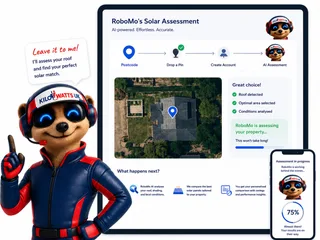
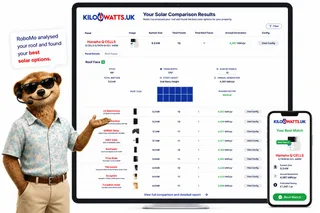
STEP 1
Choose Home, Business or Industrial
Enter your postcode to start your assessment.
STEP 2

Drop a pin on your roof
STEP 3

Create your free account
STEP 4

Sit back and watch RoboMo™ work
RoboMo™ analyses your roof and builds your personalised solar comparison.

Step 1
Enter your postcode
Start designing your wind energy system in seconds.
Are you an installer, distributor or renewable energy business?
Kilowatts UK is expanding the Flower Turbines partner network across the UK.
Become A Flower Turbines PartnerKilowatts UK is an authorised representative
Flower Turbines
Compact vertical-axis turbines built for real UK sites, not just open farmland.
They start in light wind, sit in a small footprint, and are bird-safe by design. Cluster them as a bouquet and the group performs better together than the same turbines standing alone. Enter your postcode for a location-based generation estimate. Figures use area weather data and will differ if buildings, trees or hills sit in the way.
Starts in light UK wind
Built to generate in typical UK wind, not only open farmland.
Small rooftop or ground footprint
Compact towers for roofs, yards and tight sites.
Bird-safe slow rotation
Slow vertical-axis spin, bird-safe by design.
Bouquet clusters raise output
Grouped turbines outperform the same units standing alone.
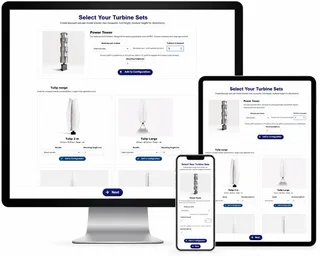
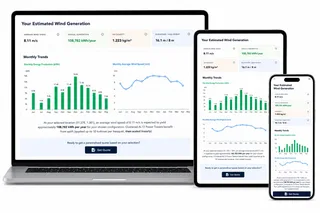
STEP 2

Choose a location
STEP 3

Place your cluster
Tap the map where you want the turbine cluster to go.
STEP 4

Instant generation forecasts
Compare different turbine layouts and see annual generation forecasts instantly.
STEP 5

No commitment required
Explore different configurations before deciding whether to request a quotation.
Related articles
Mo's Mission Nominations
FAQ
Need Help? RoboMo's Got Answers
Is a solar PPA better than buying commercial solar?
A solar PPA is usually better if your business wants to avoid upfront capital spend and is comfortable entering a long-term electricity agreement. Buying commercial solar is usually better if you can fund the system through cash or finance, expect to remain on site long term, and want the highest lifetime savings and control over the asset.
How does a commercial solar PPA work?
Under a commercial solar PPA, a third-party provider funds, owns, installs, operates, and usually maintains the solar PV system on your roof or land. Your business then buys the electricity generated onsite at an agreed p/kWh rate for the contract term, which is often between 10 and 25 years.
Are commercial solar PPAs free?
No. A PPA can remove or reduce the upfront installation cost, but your business still pays for the electricity generated by the solar panels. The key difference is that you pay through a long-term electricity contract rather than buying and owning the system yourself from the start.
What are the main disadvantages of a solar PPA?
The main disadvantages are long contract terms, less control over the solar asset, possible indexation of the electricity rate, restrictions on roof works or property changes, and reduced lifetime upside compared with ownership. The headline p/kWh rate should always be reviewed alongside termination rights, minimum payments, export income, end-of-term options, and landlord or lender consent requirements.
What are the main advantages of buying commercial solar panels?
Buying commercial solar gives the business ownership, control, and usually the strongest long-term financial return. The business keeps the benefit of avoided grid imports, may receive export income, can decide how the system is maintained or upgraded, and is not tied to a PPA provider’s long-term electricity contract.
What are the risks of buying commercial solar?
The main risks are upfront capital cost, maintenance responsibility, inverter replacement, insurance requirements, roof suitability, DNO constraints, and performance assumptions that may not match actual site consumption. A purchase proposal should include whole-life costs, not just the installed price of the panels.
How long is a commercial solar PPA contract?
Commercial solar PPA contracts commonly run for 10 to 25 years, although the exact term depends on the provider, site, system size, credit profile, and project economics. The contract length should be checked against the business’s lease term, property plans, and likelihood of remaining on site.
Can a tenant use a solar PPA?
Yes, a tenant can sometimes use a solar PPA, but the lease position must support the contract term and landlord consent is usually required. Mortgagee, superior landlord, insurer, and planning or roof warranty requirements may also need to be checked before the project can proceed.
What happens at the end of a commercial solar PPA?
The end-of-term position depends on the PPA contract. Options may include extending the agreement, buying the system, transferring ownership, or requiring the provider to remove the equipment. These terms should be agreed before signing, including who pays for removal, reinstatement, and any roof-related works.
Which option gives the highest lifetime savings?
Buying commercial solar usually gives the highest lifetime savings when the site has strong daytime electricity demand, a suitable roof, manageable grid constraints, and long-term occupation certainty. A PPA normally gives lower lifetime upside but reduces upfront capital spend and transfers much of the technical operation and maintenance responsibility to the provider.
What data is needed to compare a PPA with buying solar?
The most important data is half-hourly electricity consumption, because annual bills do not show when electricity is used. A proper comparison should also include import tariffs, export values, roof condition, DNO position, lease or ownership details, finance costs, tax assumptions, O&M costs, inverter replacement, PPA indexation, and end-of-term terms.
Does export income matter for commercial solar?
Yes, but export income is usually less valuable than using the solar electricity onsite to avoid grid imports. Sites with high daytime self-consumption normally have stronger economics, while sites that export a large share of generation need more careful modelling under both PPA and purchase options.
Do commercial solar projects need DNO approval?
Most commercial solar projects need a DNO application. Very small systems may fall under G98 rules, while larger commercial installations usually require G99 approval. The DNO may impose export limits, request protection settings, or identify reinforcement requirements, all of which can affect system size, cost, and returns.
Should roof condition be checked before choosing a PPA or purchase?
Yes. Roof condition is critical for both routes because removing and reinstalling solar panels for later roof repairs can be expensive and disruptive. A roof nearing the end of its life should normally be repaired or replaced before installation, and structural capacity, access, asbestos risk, drainage, warranties, and insurer requirements should all be reviewed early.
Is a solar PPA affected if the business sells the building or leaves the site?
Yes, it can be. A PPA is a long-term contract tied to the site, so the agreement should clearly explain what happens if the property is sold, the lease is assigned, the tenant leaves, or the business restructures. These provisions are especially important for tenants and businesses with uncertain long-term occupation plans.