


Solar panel installation in Medway starts with the roof
Published: 2026-10-06 01:47:45
Updated: 2026-10-05 18:48:21
Solar panel installation in Medway turns on the roof, terrace scaffold, Medway planning and UK Power Networks. A survey decides the layout.
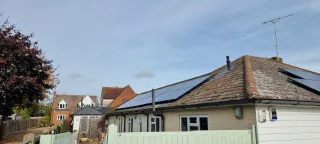
Solar panel installation in Medway
Solar panel installation in Medway from Kilowatts.uk in Broadstairs. Costs, roofs, planning and what to do next then compare a local system.
Solar panel installation in Medway starts with the roof
Solar panel installation in Medway means fixing a photovoltaic array to a building you control, connecting it through an inverter, and finishing the electrical tests and the distribution network step before anyone treats the system as live. A sales visit, a shade sketch from a map, or a delivery of panels is not an installation. Design, mounting, electrical work, testing, and network acceptance are separate parts of the same job.
For homes in Rochester, Chatham, Gillingham, and Rainham, the useful question is whether that sequence is realistic on the actual roof, not whether the postcode sits in Kent. Orientation, pitch, shade, covering condition, scaffold access, planning status, and what the network will accept matter more than the town name. South-east England is generally a stronger solar resource than northern Britain, but a shaded or awkward roof can erase that advantage.
Output is driven by the roof plane you can actually use. An unshaded, well-oriented array on a sound covering will usually outperform an equivalent array that sits in chimney shade or faces a poor slope. East- and west-facing roofs can still be sensible where daytime use lines up with generation. A small clear array is often more useful than a large one that is shaded for much of the day. Cloud in Kent does not make photovoltaic generation pointless. Panels still produce in diffuse light, and geometry usually matters more than a vague sense that the weather is not sunny enough. There is no single Medway system size or annual yield that can be stated without a surveyed design and a cited method.
How Rochester, Chatham and Gillingham roofs differ
The unitary authority covers mixed housing, and the street pattern changes the job even when the postcode is still Medway. Older streets in Rochester and parts of Chatham often have smaller roof planes, party walls, chimneys, lead details, and uneven tiles. Newer estates around Gillingham and Rainham may look simpler, yet hips, dormers, and limited south-facing area still cut the usable layout. Tight urban plots mean neighbouring roofs and trees cast shade that a postcode irradiance figure will not show. Scaffolding is a programme item, not a footnote. Narrow terraces, pavement space, and where the scaffold must stand can dominate disruption and timing. Party-wall proximity matters when the array or the access sits close to a boundary. A house that looks fine from a satellite image can still be a poor week's work if the loft is blocked, the meter cupboard is inaccessible, or the covering is too fragile to walk.
Overview
Rochester's historic core is the clearest reminder that Medway is not one roof type. A standard tiled semi on a later estate and a designated building in an older street can need different consent routes and different mounting details. Treat local character as a survey input, not as a reason to assume every house is either ideal or impossible. Nearby Kent towns such as Canterbury raise the same roof-by-roof questions.
Planning permission is not automatic in Medway
Many householder rooftop photovoltaic installs in England can proceed as permitted development, but that route has conditions and exclusions. It is unsafe to say planning permission is never required in Medway, and equally unsafe to say it is always required. The framework is the Town and Country Planning (General Permitted Development) (England) Order, usually called the GPDO. The Planning Portal publishes the householder summary of those conditions. Medway Council is the local planning authority, so listing, conservation-area status, and any Article 4 direction should be checked on the council's records for the address, not inferred from a national leaflet.
The conditions themselves move when the Order is amended. Projection, positioning, and equipment limits must be read from the GPDO text and Planning Portal guidance in force on the day you rely on them. An older summary, including this one, is not the legal test. In practice, the installer or designer should identify whether the property is listed, whether it sits in a conservation area, and whether the proposed array stays inside the conditions permitted development actually allows.
Equipment on a principal elevation, work that affects a listed building's character, or a flat where the leaseholder does not control the roof are the situations that most often surprise people who were told solar does not need planning. Listed building consent is a separate question from ordinary planning permission. Flats and many non-domestic buildings are outside the ordinary householder route. If consent is needed, the roof should not be treated as ready for scaffold until that route is clear. A survey can still be useful while you wait, because structure, shade, and cable routes do not depend on the planning outcome. What should not happen is a layout sold as permitted development without anyone checking designation. Historic streets in Rochester are the obvious place to slow down. They are not the only place.
Grid connection is a separate permission from planning
Planning consent, where it is required, does not switch the system on. The installer must follow the distribution network operator's process for the proposed size and for whether export is limited. Medway addresses are commonly in the UK Power Networks area, but the operator for a specific address should be confirmed with an address-level lookup, such as the Energy Networks Association operator check or the operator's own postcode tool. A regional label is not a connection offer.
The documents designers usually work to are ENA Engineering Recommendation G98, often the notification route for smaller connections, and G99, where the proposal needs a fuller application. Which one applies depends on capacity, phases, export limitation, and the equipment. Those thresholds change, and they must be rechecked against the current ENA text and the operator's guidance before a quote is treated as connection-ready. A remembered cut-off is not evidence.
Export limitation is a design choice the homeowner often does not see until late. Where unrestricted export is not accepted, inverter settings and sometimes extra hardware keep export within an agreed limit. That decision can change the quote and the commissioning sheet. It can also mean the roof looks finished while the system is still waiting to be energised. Installed and accepted on the network are not the same day. They should appear as separate lines in the handover pack: test results on one side, the connection reference or notification status on the other.
What a proper survey checks before a price
A competent survey is about whether the roof can hold and weatherproof an array, and whether the electrics can take the design, not only how many panels an aerial photo will accept. On older Kent roofs, fragile tiles, uneven planes, and lead details dictate layout. Suspected asbestos is a specialist route, not a standard photovoltaic install. Satellite design misses tile condition, cable routes, and loft access, which is why two quotes for the same postcode can describe different jobs. How panels are placed is a survey question, not a map guess.
The electrical side includes where the inverter can live without overheating or becoming a noise problem, how cables reach the consumer unit, and whether the meter position allows a clean connection. Loft hatches blocked by stored belongings, and a meter cupboard that cannot be opened, are ordinary reasons a visit overruns. Bird nesting under arrays is common enough that proofing is a design choice made before the scaffold comes down, not an afterthought once birds have moved in.
Homeowners should expect the surveyor to say what would make the job unsuitable, not only a panel count. If the covering is unsafe, the shade is heavy for most of the day, or consent and ownership are unclear, a lower price does not fix the constraint. A sensible starting point is how many panels a home needs, then testing that against the roof you actually have.
Installed on the roof is not the same as accepted on the network
Programme length in Medway is not a local norm that can be quoted as fact. It depends on scaffold, parts, weather, consent, and the network step. On terraces, the disruptive days are usually the scaffold and the roof work. Electrical work can be shorter if routes are clear, or it can spill into another visit if the consumer unit or meter access was misread. The homeowner's role is practical: loft access, a clear cupboard, and someone who can decide if a tile or cable route is worse than expected.
Building Regulations electrical safety still applies when planning permission does not. Cable routes, isolation, labelling, and the condition of the consumer unit are part of a compliant job. For dwellings, notifiable electrical work is typically either notified by an installer on a competent-person scheme or submitted through building control. The designer should say which route they will use, and that choice should be in the quote, not assumed after the scaffold is up. A general builder fitting modules is not a substitute for that electrical design.
Roof work that looks finished is not the same as a system that has been tested, documented, and accepted for connection. Commissioning should leave a handover pack with the array layout, inverter details, shutdown steps, test results, and the warranties that actually apply to the products fitted. Warranties are product-specific. A long module warranty on a datasheet is not a promise that every component, or the roof fixings, lasts the same time. Quality schemes such as the Microgeneration Certification Scheme, or an equivalent a lender or incentive actually accepts, matter where a finance product or an export-tariff route requires them. They are not a reason to skip the network process, and a badge is not a performance guarantee. If a scheme rule affects your application, read the current scheme rules rather than a sales summary. What you can judge on the day is simpler: labelled isolators, a clear shutdown explanation, and paperwork that matches the equipment on the wall, with the connection status stated separately from the roof completion date.
Batteries, export and what actually cuts the bill
A grid-tied system does not require a battery. The main household benefit is usually electricity used in the home instead of bought from the supplier. Export payments, where they exist, come from the supplier's Smart Export Guarantee tariff. Ofgem sets that framework. The supplier sets the rate and the terms. Whether your supplier must offer a tariff, and whether the installation must sit on a named quality scheme to qualify, has to be read from current Ofgem guidance and the supplier's terms. Those rules are rechecked at application, not copied from an old quote. They are not a fixed Medway income, and they should not be treated as the reason to install.
A battery can make sense where a useful share of generation would otherwise be exported and evening use is high enough to justify the extra equipment, space, and round-trip losses. It can be a poor fit where daytime use already absorbs most of the output, where there is nowhere sensible to put the battery, or where the household expects a short stay. Adding storage can also change the connection proposal, so it is not a silent add-on after the network step has been agreed. Backup during a power cut is not a standard feature of a grid-tied inverter. If that behaviour matters, it has to be specified, not assumed.
East-west layouts are a related judgement. They may generate less at the midday peak than a clear south-facing plane, yet they can match a household that uses power in the morning and late afternoon. The comparison only works once shade and usable area are known. Self-consumption is about when the home uses electricity, not about a town average. How much electricity panels generate still depends on that surveyed layout.
Why this guide will not quote a Medway payback
This guide does not state a Medway payback, grant, bill saving, export rate, or VAT treatment. No surveyed generation figure, occupancy pattern, or tariff has been supplied, and marketing averages are not evidence. Payback also moves when export is limited, when a battery is added, and when daytime use is low. Anyone offering one local payback without those inputs is estimating, not measuring. Whether solar is worth it is a household question, not a postcode slogan.
Grants, loans, and tax treatment change, and eligibility is set by the scheme in force at the time, not by the town. If a finance route needs a quality scheme or a particular connection status, that condition belongs in the current scheme rules. It should be checked before you compare prices, because a design that cannot meet it is not the same product as one that can. The honest comparison is scoped equipment and constraints, not a headline saving.
Who should wait before booking
This is a reasonable path for owner-occupiers, or landlords acting with proper authority, who have a structurally sound roof, a realistic unshaded area, and a reason to use or export daytime generation. It is also reasonable for people in Rochester, Chatham, or Gillingham who want a feasibility view before they pay for a full design. It is a poor fit where the roof is heavily shaded for most of the day, the covering is unsafe, or the household will leave before the system has a sensible period of use.
Renters without landlord consent, short leases, and flats without control of the roof are usually unsuitable until ownership and permission are clear. Designated buildings are not automatically excluded, but they are not standard permitted-development jobs. Anyone expecting a same-week install, a guaranteed bill reduction, or a system designed only from a satellite image is not ready for a contract. Those expectations fail for reasons of access, consent, and physics, not because the installer was slow to reply.
If several of those limits apply at once, pause and resolve the one that blocks the job. Consent and asbestos are hard stops. Shade and a small roof plane are design limits. They may still allow a modest array, or they may show that the roof is the wrong asset. A survey is the right tool once you know you control the roof and you are willing to hear that the answer is no.
What to measure and ask before you compare designs
Before you compare installers, note roof orientation as you understand it, obvious shade from chimneys and trees, whether the property is listed or in a conservation area, and whether you own the roof. Photographs of the consumer unit, the meter position, and the loft hatch save a wasted visit. You do not need to calculate a yield. You do need to be able to say what must not be assumed. A residential solar panel installation quote should start from those facts.
Ask how the array will be fixed and weathered on your covering, where the inverter will sit, whether export limitation is likely, and which connection route the designer expects: G98 notification, G99 application, or a successor process after they have rechecked the current thresholds. Ask which electrical notification route they will use, competent-person scheme or building control. Ask what is excluded: scaffold licences, bird proofing, consumer-unit work, and any planning drawings. A quote that cannot explain those items is not yet comparable with one that can. Prices vary with those exclusions, so a lower figure without a scope is not evidence of a better design. When the constraints are clear, you can book a free home energy survey.
Compare prices only after a surveyed scope names the equipment, the mounting and weathering method, and the constraints. If consent is unresolved, if the covering is unsafe or unconfirmed, or if the export limit is still unknown, a start date is not a comparable offer. What remains unknown is whether the layout is lawful on that building, whether the roof can be weatherproofed, and whether the network will accept the export the quote assumes. The honest outcome is another question, not a scaffold booking.
Plan, Compare & Buy Renewable Energy Solutions
AI does the thinking.
You get the perfect solar match.
Use RoboMo™ to assess your property, compare available technologies and connect with trusted UK installers, suppliers and manufacturers.
Simply enter your postcode, drop a pin on your roof, create your free account and let RoboMo™ analyse your property to find the best solar panels for your home.

You don't have to think
RoboMo™'s AI analyses your roof and does all the hard work.

Accurate & tailored
AI-powered assessment based on your roof, location, and conditions.

Best options, maximum savings
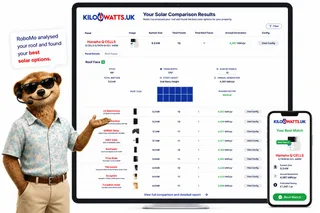
Compare top solar panels for the best performance and value.

Simple, fast & effortless
Provide a few details, sit back and watch your results unfold.
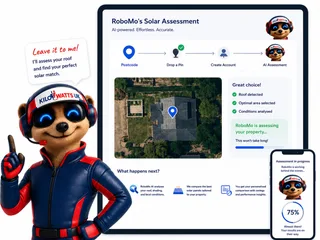
STEP 1
Choose Home, Business or Industrial
Enter your postcode to start your assessment.
STEP 2
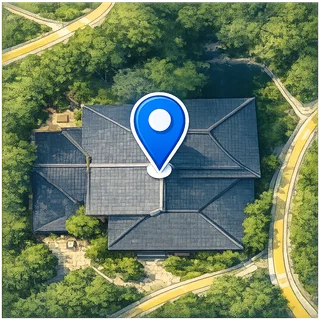
Drop a pin on your roof
STEP 3

Create your free account
STEP 4

Sit back and watch RoboMo™ work
RoboMo™ analyses your roof and builds your personalised solar comparison.

Step 1
Enter your postcode
Start designing your wind energy system in seconds.
Are you an installer, distributor or renewable energy business?
Kilowatts UK is expanding the Flower Turbines partner network across the UK.
Become A Flower Turbines PartnerKilowatts UK is an authorised representative
Flower Turbines
Compact vertical-axis turbines built for real UK sites, not just open farmland.
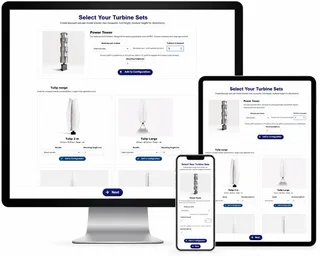
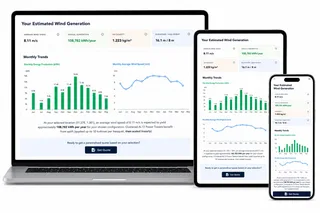
They start in light wind, sit in a small footprint, and are bird-safe by design. Cluster them as a bouquet and the group performs better together than the same turbines standing alone. Enter your postcode for a location-based generation estimate. Figures use area weather data and will differ if buildings, trees or hills sit in the way.
Starts in light UK wind
Built to generate in typical UK wind, not only open farmland.
Small rooftop or ground footprint
Compact towers for roofs, yards and tight sites.
Bird-safe slow rotation
Slow vertical-axis spin, bird-safe by design.
Bouquet clusters raise output
Grouped turbines outperform the same units standing alone.
STEP 2

Choose a location
STEP 3

Place your cluster
Tap the map where you want the turbine cluster to go.
STEP 4

Instant generation forecasts
Compare different turbine layouts and see annual generation forecasts instantly.
STEP 5

No commitment required
Explore different configurations before deciding whether to request a quotation.
Related articles
FAQ
Need Help? RoboMo's Got Answers
Is a solar quote the same as a completed installation in Medway?
No. A sales visit, a shade sketch from a map, or a delivery of panels is not an installation. A proper job covers design, mounting, electrical work, testing, and the distribution network step before the system is treated as live. Installed on the roof and accepted on the network are separate stages and should appear as separate lines in the handover pack.
Does living in Rochester, Chatham, Gillingham or Rainham decide whether solar will work?
The town name matters less than the actual roof. Orientation, pitch, shade, covering condition, scaffold access, planning status, and what the network will accept all change the job. South-east England is generally a stronger solar resource than northern Britain, but chimney shade, a poor slope, or a small broken roof plane can erase that advantage. There is no single Medway system size or annual yield that can be stated without a surveyed design.
Do I always need planning permission for rooftop solar in Medway?
Not always, and not never. Many householder rooftop photovoltaic installs in England can proceed as permitted development under the GPDO, but that route has conditions and exclusions that must be read from the current Order and Planning Portal guidance. Medway Council is the local planning authority, so listing, conservation-area status, and any Article 4 direction should be checked for the address. Listed building consent is separate from ordinary planning permission, and flats and many non-domestic buildings sit outside the ordinary householder route.
Who is the network operator for a Medway address, and does planning permission connect the system?
Planning consent, where it is needed, does not switch the system on. Medway addresses are commonly in the UK Power Networks area, but the operator for a specific address should be confirmed with an address-level lookup rather than assumed from a regional label. Designers usually work to ENA Engineering Recommendation G98 or G99, depending on capacity, phases, export limitation, and equipment. Those rules change, so a remembered cut-off is not a connection offer.
What should a survey check before I accept a price?
A competent survey looks at whether the roof can hold and weatherproof an array, and whether the electrics can take the design, not only how many panels an aerial photo suggests. Expect checks on structure and covering, daytime shade, inverter location, cable routes, loft and meter access, scaffold stance, and any export limit. Suspected asbestos is a specialist route, not a standard photovoltaic install. A lower price does not fix an unsafe covering, heavy shade, or unclear consent and ownership.
Is building regulations electrical work still required if planning permission is not?
Yes. Cable routes, isolation, labelling, and the condition of the consumer unit are part of a compliant job even when planning permission is not required. For dwellings, notifiable electrical work is typically either notified by an installer on a competent-person scheme or submitted through building control. The designer should say which route they will use, and that choice should be in the quote. A general builder fitting modules is not a substitute for that electrical design.
Do I need a battery, and will export payments cover the cost?
A grid-tied system does not require a battery. The main household benefit is usually electricity used at home instead of bought from the supplier. Export payments, where they exist, come from a supplier’s Smart Export Guarantee tariff; Ofgem sets the framework and the supplier sets the rate and terms, which must be checked at application. A battery can help where a useful share of generation would otherwise be exported and evening use is high, but it adds cost, space, losses, and can change the connection proposal. Backup during a power cut is not a standard feature of a grid-tied inverter unless it is specified.
What paperwork should I expect when the roof work looks finished?
Roof completion is not the same as a tested, documented, and network-accepted system. The handover pack should include the array layout, inverter details, shutdown steps, test results, and the warranties that apply to the products actually fitted. A long module warranty on a datasheet does not mean every component or the roof fixings lasts the same time. Quality schemes such as MCS, or an equivalent a lender or incentive accepts, can matter for finance or an export tariff, but a badge is not a performance guarantee and does not replace the network process.