


Is solar panel installation in Rochester realistic?
Published: 2026-10-06 01:56:24
Updated: 2026-10-05 18:57:05
Solar panel installation in Rochester depends on the roof, Medway planning and UK Power Networks, not the town name. A survey decides the layout.
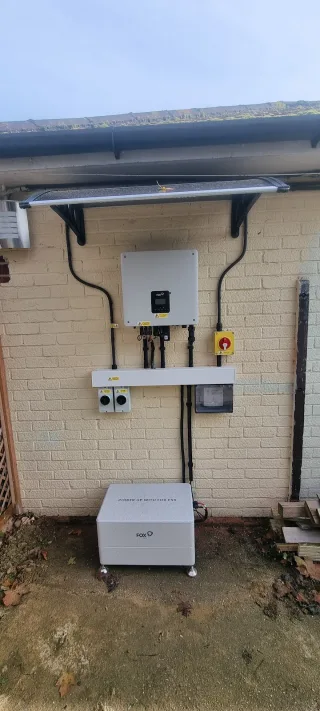
Solar panel installation in Rochester
Solar panel installation in Rochester from Kilowatts.uk in Broadstairs. Costs, roofs, planning and what to do next then compare a local system.
Is solar panel installation in Rochester realistic?
Solar panel installation in Rochester is realistic for many owner-occupied houses, but the town name does not decide it. Roof condition, orientation, shade, scaffold access, the consumer unit, and whether Medway Council treats the property as ordinary householder permitted development or as a heritage case settle a yes or a redesign. A competent job fits photovoltaic modules, mounting and cabling, an inverter and a connection into the consumer unit, with network paperwork that matches the final equipment.
Rochester here means the Medway town in Kent, not the city in the United States. Daylight in the South East is relatively favourable by UK standards, yet annual output is still set by the individual roof, not by a Kent average. South-facing and lightly shaded slopes usually do best. East-west roofs can still be worth modelling if the household uses electricity through the day.
A quote built only from a satellite image is not a survey. Narrow streets, party walls, ageing coverings and chimneys change both the layout and the programme. If you are comparing local options, start from a site-specific design rather than a national package size. Kilowatts sets out how that local work is scoped on the Rochester residential solar installation page.
What a domestic photovoltaic install includes
In a UK house, solar panel installation means a system that turns daylight into electricity. It is not the same as solar thermal, which heats water. The electrical side usually includes modules on the roof or another structure, DC cabling, an inverter or microinverters, an AC connection at the consumer unit, and generation metering. A short guide to how solar panels work is a useful starting point before you compare kit. A battery, an EV charger or a heat pump can sit alongside it, but each is a separate design with its own limits. Do not assume those items sit inside a photovoltaic price.
The records buyers use to compare a finished job are part of the specification, not an afterthought. Owners should expect product datasheets, serial numbers, a commissioning record, and an electrical certificate for the installation work. Where the installer is registering the system under the Microgeneration Certification Scheme, an MCS certificate is the usual quality record that export and assurance routes often ask for. MCS is a certification scheme, not a promise of a particular yield. Current eligibility rules for any scheme should be checked rather than assumed. Those documents are much harder to reconstruct after the scaffold has gone, so they belong in the agreement before anyone is on the roof.
Connection to the distribution network is separate from planning consent and from Building Regulations. In practice, smaller type-tested domestic inverters are often notified after commissioning, commonly under the G98 process. A larger inverter, additional generation on the same supply, or an export arrangement the operator will not accept on notification usually needs a formal application first, commonly under G99. A figure often used as the step between those routes is about 16 amps per phase, roughly 3.68 kW on a single-phase supply, but that is a reference point, not a substitute for the operator's current process. The application or notification must match the equipment that is actually installed.
Roofs, shade and the houses people actually live in
Central Rochester and the later estates around the town do not present the same job. Streets in the older core are often two- or three-storey terraces with party walls, chimneys on the ridge or the party line, and limited rear access for scaffold. Later housing toward the outskirts more often has wider plots and simpler access, but it can still be shaded or short of useful south-facing area. Each elevation should be treated on its own.
Coverings follow that pattern more often than a single "Rochester roof" does. Older terraces are commonly clay or concrete tile, with slate on some older and civic roofs. Later estates more often use interlocking concrete tiles. Fragile tiles, failing underlay, awkward leadwork or a roof already near the end of its life should be dealt with before panels go on. Those are patterns to confirm on site, not a substitute for looking at the covering.
Shade from chimneys, dormers, trees and neighbouring roofs can cut output even when the slope faces south. Partial shade is often better handled by splitting the array, or by module-level electronics, than by forcing one string through a chimney shadow. Soiling and poor orientation also reduce annual generation, which is why solar panel placement should be settled on the actual roof. Cloud does not make photovoltaic panels useless in Britain, and panels still work when cloudy. Systems are judged on a year of weather, not on a single bright afternoon. Bird nesting under arrays is common enough in the South East that proofing is worth discussing at survey, not after the first season.
Planning status is a property question, not a town rule
Medway Council is the local planning authority for Rochester. Kent County Council does not decide ordinary domestic roof arrays here. Many householder photovoltaic installs proceed as permitted development, but that route is not automatic. The national position is summarised in the Planning Portal's householder guidance on solar panels. It has to be read against the property itself, using Medway Council's current planning maps and constraint layers for the address, not a guess from the street name.
The historic core around the cathedral, castle and High Street is more likely to raise heritage questions than later housing toward the outskirts. That is not a blanket ban, and it is not the same as every house inside an old street being listed. Listed building consent is a separate question from householder permitted development. A conservation area can restrict panels on particular elevations. An article 4 direction can remove permitted-development rights that would otherwise apply. Only the listing, the conservation-area boundary and any article 4 direction, checked on Medway's maps and read with the current national guidance, settle whether a visible layout can proceed as drawn.
Freeholder, leaseholder and lender consent are separate from planning. Renters, and owners of flats who do not control the roof, generally cannot commission a rooftop system themselves. Householder permitted development is aimed at dwellinghouses, so a flat is often outside that route even when the roof looks suitable from the street. A ground-mount or outbuilding array is a different design and can have its own planning limits. Scaffold over a highway, where it is needed in a tight terrace, is also a separate consent from planning permission.
How connection and the consumer unit can resize the job
Roof area is not the only cap on system size. Spare ways in the consumer unit, earthing and bonding, the supply type, and where the inverter can sit all affect whether the proposed array can be connected as drawn. Most houses are single-phase. Heat, noise and access for the inverter are easy to miss on a roof-led quote. Building Regulations for the electrical work are not replaced by a planning approval.
The network operator must be confirmed by postcode, not assumed from the town name. For Rochester and much of the South East the operator is commonly UK Power Networks, but the postcode lookup is the check that should sit in the quote. Export limits can hold a design below the figure the roof could physically hold. A limit is a connection condition, not a sign that the panels have failed. If the inverter, a hybrid arrangement, or the export cap changes after the paperwork was started, the operator may treat it as a different proposal.
A programme that assumes "the installer will sort the grid" without naming the route is not a complete plan. Ask whether the quoted kit is a notification or a formal application, what rating or export arrangement pushes it from one to the other, and what happens to the start date if the operator asks for a change. Timescales for that process and for any electrical upgrade can move the job even when the roof is straightforward.
What moves the price of solar panel installation in Rochester
There is no stable Rochester price, typical system size or town yield worth quoting. Scaffold, electrical upgrades, heritage-sensitive layouts and roof repairs move the cost as much as the module count, and those items are not uniform from one street to the next. A useful comparison is between surveys that have seen the building, not between headline kilowatts taken from a satellite image or a national package. You can compare home solar options once those site constraints are known.
In practice the price moves when access is difficult, when the covering has to be repaired before anyone can fix through it, when the visible layout has to change for a listed building or a conservation area, and when the consumer unit or cable route cannot take the design as drawn. Bird proofing, module-level electronics for chimney shade, and a battery or hybrid inverter are optional design choices. They should be shown as separate lines so two quotes can be compared. An export limit that forces a smaller inverter does not make the roof cheaper to scaffold.
A satellite quote can be a useful first filter. It cannot see fragile tiles, the consumer unit, party-wall constraints or whether the elevation is the one a conservation area will accept. If one price excludes roof repairs and another includes them, or one assumes notification and another has priced a formal application, the totals are not yet comparable. Any grant, export arrangement or VAT treatment should be checked against the current official rules before it is treated as part of the saving.
When a Rochester install is a good fit, and when it is not
An owner-occupier with a sound, accessible roof, enough unshaded area, and a clear right to alter the building is the usual good fit. Homes with daytime use, such as people in during the day, home working, or loads that can be scheduled, generally use more of the generation on site. Export can still have value under whatever arrangement applies at the time, including schemes such as the Smart Export Guarantee where the installation qualifies. That value is not fixed and should not be treated as a guaranteed saving. A wider look at whether solar is worth it still has to be read against this roof, not a national average. The poor fits are practical rather than theoretical. A roof that is structurally unsound, or that cannot be fixed through safely, should be repaired or replaced first. Shade that covers the only usable elevation for much of the day can make the array disappointing even if the paperwork is simple. A listed elevation, or a prominent conservation-area slope, may be unsuitable for a standard on-roof layout even when the electrics are fine. A leasehold flat without roof control is usually a stop, not a negotiation with the installer. Very small roofs can take a few modules. Scaffold, cable routes and electrical work still have to be justified, and that judgement needs a survey rather than a rule of thumb. Thinking about how many panels a home needs only helps after the usable area is measured. Savings depend on self-use, the export arrangement in force, and future electricity prices. Those are too changeable to quote as a Rochester payback.
What a proper survey should settle before you compare prices
The visit should record orientation, pitch, seasonal shading, covering condition, rafter or truss type, and a cable route that does not damage historic fabric. On terraces, party-wall and scaffold arrangements can matter even when planning permission does not. Satellite views miss fragile coverings and the consumer unit, which is why two remote quotes for the same postcode can describe different jobs.
Ask for the connection assumption in writing, including the operator confirmed for that postcode, whether the route is notification or application, and any export limit. Ask which handover records are included, and whether MCS registration is part of the quoted scope. If those answers are vague, the price is not yet comparable with a fuller survey.
What to do next if you are weighing a local system
Measure how the household actually uses electricity across the day, and note which elevations are shaded in the morning and afternoon. Check Medway Council's current planning maps for the address, and read them with the Planning Portal's householder guidance on solar panels, rather than assuming the historic centre is uniformly restricted or that the outskirts are uniformly straightforward. Confirm the network operator by postcode. For this part of Kent that is commonly UK Power Networks, then ask how the proposed kit will be notified or applied for.
Then compare surveys, not slogans. A sound proposal will say what happens if the roof needs work, if the consumer unit cannot take the design, if an export limit resizes the inverter, or if the visible layout has to change for heritage reasons. Those are the points that decide whether solar panel installation in Rochester is a straightforward job or a redesign. A free home energy survey is the practical next step if the roof and the right to alter it look workable.
Plan, Compare & Buy Renewable Energy Solutions
AI does the thinking.
You get the perfect solar match.
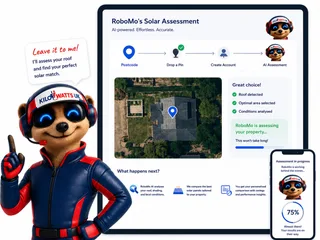
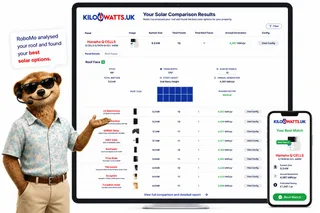
Use RoboMo™ to assess your property, compare available technologies and connect with trusted UK installers, suppliers and manufacturers.
Simply enter your postcode, drop a pin on your roof, create your free account and let RoboMo™ analyse your property to find the best solar panels for your home.

You don't have to think
RoboMo™'s AI analyses your roof and does all the hard work.

Accurate & tailored
AI-powered assessment based on your roof, location, and conditions.

Best options, maximum savings
Compare top solar panels for the best performance and value.

Simple, fast & effortless
Provide a few details, sit back and watch your results unfold.
STEP 1
Choose Home, Business or Industrial
Enter your postcode to start your assessment.
STEP 2
Drop a pin on your roof
STEP 3

Create your free account
STEP 4

Sit back and watch RoboMo™ work
RoboMo™ analyses your roof and builds your personalised solar comparison.

Step 1
Enter your postcode
Start designing your wind energy system in seconds.
Are you an installer, distributor or renewable energy business?
Kilowatts UK is expanding the Flower Turbines partner network across the UK.
Become A Flower Turbines PartnerKilowatts UK is an authorised representative
Flower Turbines
Compact vertical-axis turbines built for real UK sites, not just open farmland.
They start in light wind, sit in a small footprint, and are bird-safe by design. Cluster them as a bouquet and the group performs better together than the same turbines standing alone. Enter your postcode for a location-based generation estimate. Figures use area weather data and will differ if buildings, trees or hills sit in the way.
Starts in light UK wind
Built to generate in typical UK wind, not only open farmland.
Small rooftop or ground footprint
Compact towers for roofs, yards and tight sites.
Bird-safe slow rotation
Slow vertical-axis spin, bird-safe by design.
Bouquet clusters raise output
Grouped turbines outperform the same units standing alone.
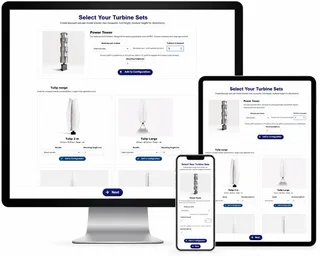
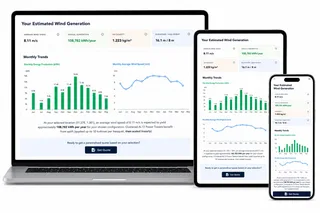
STEP 2

Choose a location
STEP 3

Place your cluster
Tap the map where you want the turbine cluster to go.
STEP 4

Instant generation forecasts
Compare different turbine layouts and see annual generation forecasts instantly.
STEP 5

No commitment required
Explore different configurations before deciding whether to request a quotation.
Related articles
FAQ
Need Help? RoboMo's Got Answers
Is solar panel installation realistic for houses in Rochester?
It can be realistic for many owner-occupied houses, but the town name does not decide it. Roof condition, orientation, shade, scaffold access, the consumer unit and whether Medway Council treats the property as ordinary householder permitted development or as a heritage case all matter. Daylight in the South East is relatively favourable by UK standards, yet annual output still depends on the individual roof, not a Kent average. A quote based only on a satellite image is not a survey.
What does a domestic solar installation usually include?
A photovoltaic system turns daylight into electricity. It is not the same as solar thermal, which heats water. A typical job includes modules, mounting and DC cabling, an inverter or microinverters, an AC connection at the consumer unit and generation metering. A battery, EV charger or heat pump can sit alongside it, but each is a separate design and should not be assumed to sit inside a photovoltaic price.
Which documents should I expect when the job is finished?
Ask for product datasheets, serial numbers, a commissioning record and an electrical certificate for the installation work. Where the installer is registering the system under the Microgeneration Certification Scheme, an MCS certificate is the usual quality record that export and assurance routes often ask for. MCS is a certification scheme, not a promise of a particular yield. Current eligibility rules for any scheme should be checked rather than assumed, and these records are much harder to reconstruct after the scaffold has gone.
Do I need planning permission from Medway Council?
Medway Council is the local planning authority for Rochester. Many householder photovoltaic installs proceed as permitted development, but that route is not automatic and must be checked against the property, not the street name. Listed building consent is separate from householder permitted development. A conservation area or an article 4 direction can restrict or remove rights that would otherwise apply, so the listing, conservation-area boundary and any article 4 direction should be checked on Medway’s current maps alongside national householder guidance.
How does the electricity network affect system size?
Connection to the distribution network is separate from planning consent and from Building Regulations. Smaller type-tested domestic inverters are often notified after commissioning, commonly under G98, while a larger inverter, extra generation on the same supply or an export arrangement the operator will not accept on notification usually needs a formal application first, commonly under G99. About 16 amps per phase, roughly 3.68 kW on a single-phase supply, is often used as a reference between those routes, but it is not a substitute for the operator’s current process. The network operator should be confirmed by postcode; for Rochester it is commonly UK Power Networks, and the paperwork must match the equipment that is actually installed.
What usually changes the cost of a Rochester installation?
There is no stable Rochester price, typical system size or town yield worth quoting. Scaffold, electrical upgrades, heritage-sensitive layouts and roof repairs can move the cost as much as the module count. Bird proofing, module-level electronics and a battery or hybrid inverter are optional and should be shown as separate lines so quotes can be compared. Any grant, export arrangement or VAT treatment should be checked against the current official rules before it is treated as part of the saving.
Which homes are a good fit, and which are not?
An owner-occupier with a sound, accessible roof, enough unshaded area and a clear right to alter the building is the usual good fit. Homes with daytime electricity use generally use more of the generation on site. A structurally unsound roof, heavy shade on the only usable elevation, a listed or prominent conservation-area slope that cannot take a standard layout, or a leasehold flat without control of the roof are common poor fits. Renters and owners who do not control the roof generally cannot commission a rooftop system themselves.
What should a proper survey settle before I compare prices?
The visit should record orientation, pitch, seasonal shading, covering condition, rafter or truss type and a workable cable route. On terraces, party-wall and scaffold arrangements can matter even when planning permission does not. Ask in writing which operator applies to the postcode, whether the connection route is notification or a formal application, any export limit, which handover records are included and whether MCS registration is part of the quoted scope. If those answers are vague, two prices are not yet comparable.