


Grants for electric chargers at home?
Published: 2026-08-17 13:06:59
Updated: 2026-08-19 00:10:54
Yes. Some UK households can still get help towards a home electric vehicle charger, but the support is targeted rather than universal.
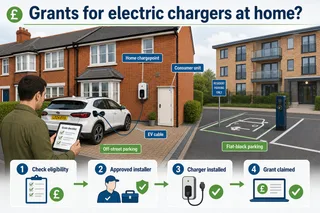
Grants for electric chargers at home?
Understand grants for electric chargers at home in the UK, with clear explanations, examples, and practical next steps.
Are there grants for electric chargers at home in the UK?
Yes. Some UK households can still get help towards a home electric vehicle charger, but the support is targeted rather than universal. The main route to check is the OZEV EV chargepoint grant, which is most relevant to renters, flat owners and some landlord or leasehold situations with dedicated off-street parking.
At the time of writing, GOV.UK guidance has described the EV chargepoint grant as covering up to 75% of eligible purchase and installation costs, capped at £350 including VAT. Check the current GOV.UK and OZEV guidance before accepting a quote, because grant availability, caps, eligible applicants, approved equipment and application processes can change.
The grant is not usually a refund for buying any charger online and arranging the work later. Eligibility normally depends on the applicant, the property type, the parking arrangement, permissions, the approved installer route, and whether the chosen chargepoint is on the approved list.
Current grant position at a glance
Grant support may exist, but only if the home, applicant and installation route fit the current OZEV rules. The old broad Electric Vehicle Homecharge Scheme for many homeowners with private driveways should not be assumed to apply.
Before spending money, check the live GOV.UK page for the EV chargepoint grant, the OZEV-approved installer list and the approved chargepoint model list. These are the sources that decide whether the job can be grant-supported, not a retailer’s product description or a general article about EV charging.
Grant contribution
GOV.UK has described the domestic EV chargepoint grant as up to 75% of eligible costs, capped at £350 including VAT.Main applicant groups
Renters and flat owners are the common domestic groups to investigate first, subject to the current eligibility wording.Property requirement
A dedicated off-street parking space is normally central to the home grant route.Equipment route
The charger should be an approved model for the scheme and installed through an approved installer process.Timing risk
Buying equipment before eligibility is confirmed can prevent a claim from being made.Last checked
Verify the grant amount, cap and eligibility on GOV.UK before publication, quotation acceptance or ordering, because the scheme can change.
Quick eligibility checklist before you ask for quotes
Most failed grant enquiries are not caused by the car itself. They usually fail because the property, parking, permission or installation route does not match the scheme requirements.
Use this checklist before choosing a charger. It will not replace the official OZEV rules, but it will help you decide whether a grant-backed quote is realistic. First, check your tenure: renter, flat owner, leaseholder, landlord or owner-occupier. Different routes may apply. Then confirm that you have a dedicated off-street parking space linked to the property.
If you rent or live in a flat, get written approval from the landlord, freeholder, managing agent or residents’ management company where needed. Do not buy the charger first and assume the grant can be claimed afterwards.
Installer
Use an installer who is approved for the relevant OZEV grant process.Charger model
Confirm that the proposed charger is approved for the scheme before ordering.Vehicle position
Check the current rules on eligible vehicles and evidence required.Timing
Do not buy the charger first and assume the grant can be claimed afterwards.Electrical suitability
Make sure the supply, consumer unit, earthing arrangement and cable route can support a compliant installation.
Who is most likely to qualify?
The grant is most relevant where a resident does not have the simple position of owning a freehold house with a private driveway. Renters, flat owners and some leasehold situations are the usual starting points, provided there is suitable off-street parking and the necessary permissions can be obtained.
For a renter, the landlord’s permission can be as important as the charger choice. The landlord may need to approve the fixing position, cable route, exterior changes, electrical work and responsibility for the equipment at the end of the tenancy. A grant may reduce the upfront cost, but it does not remove the need for consent.
For a flat owner, the freeholder, managing agent or residents’ management company may be involved because car parks, walls, risers, ducts, fire-stopping, distribution equipment and routes through communal areas may be shared. In many flat developments, the paperwork and ownership questions take longer than the installation itself. Owner-occupiers in houses with private driveways should be careful not to rely on older information. Many people remember the earlier, broader domestic charger grant, but current support is more targeted. They may still install a home charger, but the decision is often based on charger features, installation complexity, electrical capacity and tariff use rather than a standard domestic grant.
What usually makes a home charger grant application fail?
Applications and quotations often run into problems when the property situation does not match the scheme rules or when permissions have not been agreed. A wall-mounted chargepoint is only one part of the job; the paperwork, ownership position and installation route also need to fit.
Parking is a common blocker. A dedicated off-street space is usually central to domestic grant eligibility. If the vehicle is parked on the road, across a pavement, in an unallocated communal area or in a space not clearly linked to the property, the grant and installation route may become difficult or unsuitable.
Another frequent mistake is buying equipment too early. Grant-backed installations are normally tied to approved chargepoints and approved installers, so purchasing a charger independently and then asking an installer to “apply the grant” later can leave the customer outside the process. Electrical constraints can also affect the quote, including consumer unit condition, supply capacity, earthing arrangement and cable route.
Property status
The applicant may not fit the current renter, flat owner or landlord-related eligibility route.Parking arrangement
The parking space may be on-street, unallocated or too difficult to cable safely.Permissions
The landlord, freeholder or managing agent may not have approved the works in writing.Installer approval
The installer may be electrically competent but not approved for the relevant grant process.Charger approval
The selected charger may not be listed as eligible for the scheme.Timing
The applicant may have bought equipment or started work before the correct grant route was confirmed.
How much does the grant cover?
The grant should be treated as a contribution towards eligible charger and installation costs, not as a promise that the installation will be free. GOV.UK has described the EV chargepoint grant as covering up to 75% of eligible costs, capped at £350 including VAT, but the live GOV.UK page should be checked before relying on that figure.
The final cost to the household depends on the site. A neat wall-mounted charger close to a suitable consumer unit is very different from a flat car park bay reached through communal areas, long cable routes, fire-stopping points and landlord approvals. Extra consumer unit work, protective devices, groundworks, load management, signal improvement and access arrangements can all affect the quote.
It is also worth separating the grant from running costs. A home charger does not make electricity free; it provides a safer, more convenient way to charge at home and may help you use off-peak tariffs where your meter, charger, vehicle and tariff are suitable.
How property type changes the answer
The better question is not simply “which charger qualifies?” but “does this applicant, property and parking arrangement qualify, and can the installation be completed correctly?” The charger model matters, but tenure, permissions and parking often decide whether the grant route is realistic. For houses, installation can be more straightforward because the parking space, meter position and consumer unit are usually within one property boundary. For flats and rented homes, the work may cross ownership boundaries or affect communal areas, so approval, access and liability need to be clear before work starts.
| Household situation | Grant likelihood in principle | Practical issue to check early |
|---|---|---|
| Renter with dedicated off-street parking | More likely to be relevant if current scheme rules are met | Written landlord permission and approved installer route |
| Flat owner with an allocated bay | More likely to be relevant, but often more complex | Freeholder or managing-agent approval for cable routes and communal areas |
| Owner-occupier in a house with a driveway | Often less likely under the current domestic grant focus | Whether any local, devolved or property-specific support exists |
| Home with on-street parking only | Usually difficult for domestic grant and installation planning | Pavement crossing, permissions and safe cable management |
| Communal car park with no existing EV infrastructure | Possible in some cases, but rarely a quick one-off job | Capacity, billing, ownership, fire strategy and future expansion |
What installers check before confirming eligibility or a quote
A good installer will ask for more than the make of your car. They need to understand the property, the electrical supply, the route to the parking space and any grant conditions before confirming whether the job is straightforward.
For a typical UK home, the technical conversation often starts with a 7kW single-phase charger because that suits many domestic supplies. Some homes may need a lower charging rate, dynamic load management, or Distribution Network Operator notification or approval depending on the proposed charger, existing demand and supply characteristics. Faster 11kW or 22kW charging is usually associated with three-phase supplies and is not the normal expectation for most domestic properties.
Photographs are often requested before a site visit or final quote. This is not just administration; it helps identify whether the job needs additional protective equipment, a long cable run, signal improvement for smart functions or permission from another party. The installer will also look at other significant loads in the home, such as heat pumps, electric showers, batteries and similar high-demand equipment. If you are unsure who should carry out the work, check how to choose a qualified electrician before accepting a grant-backed quote.
Meter and main fuse
The installer needs to understand the incoming supply and available capacity.Consumer unit
Space, condition and protective devices affect how the charger can be connected.Earthing arrangement
The earthing system influences charger selection and safety design.Cable route
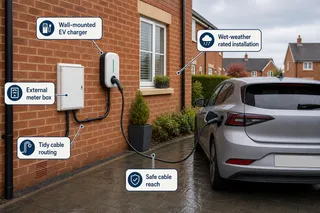
Distance, walls, floors, ducts and outside areas affect labour and compliance.Charger location
The unit should be accessible, weather-suitable and positioned safely for the parking space.Internet or mobile signal
Smart chargers may need reliable connectivity for scheduling and compliance features.
Permissions for renters, flats and communal parking
For renters and flat owners, permission is often the difference between a workable installation and a stalled enquiry. A technically simple charger can still be blocked if the proposed route crosses shared walls, external finishes, risers, service cupboards or communal car parks.
Written permission is preferable to a casual email or verbal agreement. The person giving consent should have the authority to approve the works, especially where a managing agent is acting for a freeholder or residents’ management company. If you are not sure whether consent is needed, read more about home charger permission before work starts.
In communal car parks, a one-off charger can create wider questions for the building. Other residents may ask for the same facility later, and the electrical infrastructure may not have been designed for many chargers. In those cases, a building-wide EV infrastructure plan may be more sensible than allowing separate cable routes to appear bay by bay.
Local, devolved and building-specific support
The OZEV domestic grant is not the only form of support that may exist, but other schemes should be treated separately. Local authority projects, devolved nation programmes, workplace schemes, landlord-led infrastructure support or building-wide EV charging initiatives may have different rules, budgets and application routes.
Do not assume that a local or building-specific scheme will match the domestic OZEV grant. Some may support public or shared infrastructure rather than a private home charger. Others may be time-limited, restricted to certain areas or dependent on landlord, council or managing-agent participation.
The safest approach is to check the main GOV.UK and OZEV guidance first, then ask your council, landlord, freeholder or managing agent whether any separate EV charging support applies to your property. Keep the two routes distinct so that a local initiative is not mistaken for a guaranteed home charger grant.
Do solar panels, batteries or heat pumps affect the grant?
Solar panels, batteries and heat pumps do not automatically make a household eligible for an EV charger grant. The grant question is mainly about the applicant, property type, parking and approved installation route, while the wider energy system affects design and long-term value.
Where solar PV is already installed, a compatible smart charger may be able to divert surplus generation into the car in suitable conditions. That can be useful, but it depends on the charger, inverter arrangement, household demand, export tariff and when the vehicle is parked at home. If the car is usually away during sunny hours, the benefit may be smaller than expected.
Heat pumps matter because they add another significant electrical load to the property. If a home has, or plans to install, a heat pump alongside an EV charger, the installer may pay closer attention to maximum demand and whether dynamic load management is needed. The aim is not simply to fit more devices, but to make sure the property’s supply and controls are suitable for real use.
What should you do before applying or asking for quotes?
Start by confirming the current grant rules, then collect the information an approved installer will need. This avoids wasting time on a charger model or installation route that cannot be supported by the scheme.
If you are renting or living in a flat, get the permission process moving early. Landlords and managing agents may need drawings, method statements, insurance details, installer information or confirmation of how the cable route will be made safe. For communal car parks, it may be better to ask about a building-wide EV charging plan rather than treating each charger as a separate one-off request.
Before you accept a quote, ask who handles the grant paperwork, whether the quoted charger is eligible for the relevant scheme, what happens if extra electrical work is discovered and what completion documents you will receive. A cheaper quote that ignores permissions, DNO requirements or load management can become more expensive later. For a broader view of the process, see what to know before you install an EV charger at home.
Is it still worth installing a home charger without a grant?
For many households, yes. A dedicated home charger can be worthwhile even without grant support because it is designed for regular EV charging, can offer safer and more convenient charging than a standard socket, and may support smart scheduling for off-peak electricity tariffs where available.
The decision depends on how often you charge at home, your annual mileage, whether you have off-street parking, and how long you expect to keep using the property. If your parking is uncertain, you are planning to move soon, or your electrical installation needs substantial upgrades, the case may be weaker. A charger may also be one of the upgrades buyers notice, although the impact on house value depends on the property and local demand.
For renters and flat owners, the grant can help reduce the upfront barrier where eligibility is met. For owner-occupiers who do not qualify, the better next step is to compare charger features, installation requirements, load management options and smart tariff compatibility before choosing a unit.
The practical answer for UK households
There are grants for electric chargers at home in the UK, but they are targeted rather than universal. Renters and flat owners with dedicated off-street parking are the main groups to investigate first, while many owner-occupiers in houses with driveways should not assume they can claim.
The safest route is to check the current GOV.UK and OZEV guidance, confirm your property and parking position, get any landlord or managing-agent permission in writing, and use an installer who can explain both the electrical design and the grant process. Do that before buying a charger, because eligibility is linked to the approved installation route as well as the equipment itself.
Plan, Compare & Buy Renewable Energy Solutions
AI does the thinking.
You get the perfect solar match.
Use RoboMo™ to assess your property, compare available technologies and connect with trusted UK installers, suppliers and manufacturers.
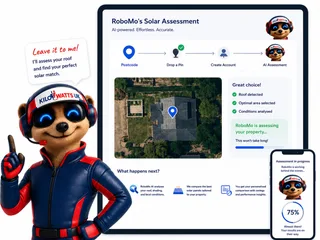
Simply enter your postcode, drop a pin on your roof, create your free account and let RoboMo™ analyse your property to find the best solar panels for your home.

You don't have to think
RoboMo™'s AI analyses your roof and does all the hard work.

Accurate & tailored
AI-powered assessment based on your roof, location, and conditions.

Best options, maximum savings
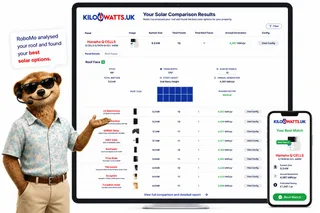
Compare top solar panels for the best performance and value.

Simple, fast & effortless
Provide a few details, sit back and watch your results unfold.
STEP 1
Choose Home, Business or Industrial
Enter your postcode to start your assessment.
STEP 2

Drop a pin on your roof
STEP 3

Create your free account
STEP 4

Sit back and watch RoboMo™ work
RoboMo™ analyses your roof and builds your personalised solar comparison.

Step 1
Enter your postcode
Start designing your wind energy system in seconds.
Are you an installer, distributor or renewable energy business?
Kilowatts UK is expanding the Flower Turbines partner network across the UK.
Become A Flower Turbines PartnerKilowatts UK is an authorised representative
Flower Turbines
Compact vertical-axis turbines built for real UK sites, not just open farmland.
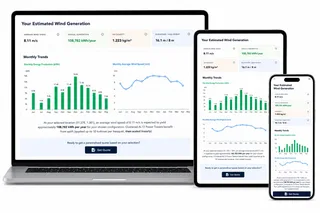
They start in light wind, sit in a small footprint, and are bird-safe by design. Cluster them as a bouquet and the group performs better together than the same turbines standing alone. Enter your postcode for a location-based generation estimate. Figures use area weather data and will differ if buildings, trees or hills sit in the way.
Starts in light UK wind
Built to generate in typical UK wind, not only open farmland.
Small rooftop or ground footprint
Compact towers for roofs, yards and tight sites.
Bird-safe slow rotation
Slow vertical-axis spin, bird-safe by design.
Bouquet clusters raise output
Grouped turbines outperform the same units standing alone.
STEP 2

Choose a location
STEP 3

Place your cluster
Tap the map where you want the turbine cluster to go.
STEP 4

Instant generation forecasts
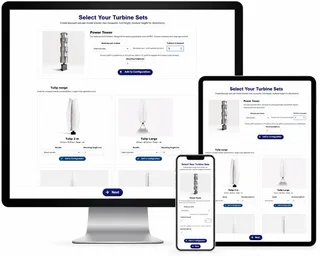
Compare different turbine layouts and see annual generation forecasts instantly.
STEP 5

No commitment required
Explore different configurations before deciding whether to request a quotation.
Related articles
Mo's Mission Nominations
FAQ
Need Help? RoboMo's Got Answers
Are there still grants for home EV chargers in the UK?
Yes, but support is targeted and not available to every homeowner. The main domestic route to check is the OZEV EV chargepoint grant, which is commonly relevant to renters, flat owners and some leasehold or landlord situations. Always check the current GOV.UK guidance before accepting a quote, as eligibility and grant values can change.
How much can the OZEV EV chargepoint grant cover?
GOV.UK has described the grant as covering up to 75% of eligible purchase and installation costs, capped at £350 including VAT. Treat this as a contribution, not a guarantee that the charger will be free. Check the live GOV.UK page before relying on any figure.
Can homeowners with a private driveway get a charger grant?
Many owner-occupiers in houses with private driveways are no longer covered by the old broad home charger grant. They can still install a home charger, but they should not assume a standard domestic grant applies. It is worth checking for any current national, local, devolved or property-specific support before ordering.
Who is most likely to qualify for a home charger grant?
Renters and flat owners with dedicated off-street parking are often the main domestic groups to investigate. Eligibility also depends on permissions, the approved installer route and whether the charger is approved for the scheme. The property and parking arrangement usually matter as much as the car.
Do I need permission before installing an EV charger in a rented home or flat?
Usually, yes. Renters may need written landlord permission, while flat owners may need approval from the freeholder, managing agent or residents’ management company. This is especially important where cables, walls, ducts or car parks are shared.
Can I buy a charger first and claim the grant later?
You should not assume that is possible. Grant-backed installations are normally tied to approved chargepoints, approved installers and the correct application process. Buying equipment or starting work before eligibility is confirmed can mean the grant cannot be claimed.
Does the grant apply if I only have on-street parking?
Domestic grant eligibility usually depends on having a dedicated off-street parking space linked to the property. On-street parking, pavement crossing and unallocated communal spaces can create both grant and safety issues. Ask an approved installer and check the current scheme rules before planning any installation.
Do solar panels or a home battery affect charger grant eligibility?
Solar panels or a home battery do not automatically make a charger grant available. They may affect the best charger choice, load management and how you schedule charging, but grant eligibility is still based on the official scheme rules. Tell your installer about any solar, battery, heat pump or other high-demand equipment before they quote.