


The 0% VAT rate on residential solar installations in the UK
Published: 2026-09-02 10:45:34
Updated: 2026-09-02 05:37:29
From 1 April 2027, qualifying residential solar panels and battery storage installations are currently expected to move to the reduced VAT rate of 5%.
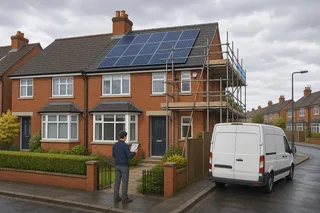
The 0% VAT rate on residential solar installations in
You can check official guidance details at the HMRC VAT Notice 708/6 regarding energy-saving materials.
The 0% VAT rate on residential solar installations in the UK
The 0% VAT rate on qualifying residential solar installations in the UK is scheduled to end on 31 March 2027. From 1 April 2027, qualifying residential solar panels and battery storage installations are currently expected to move to the reduced VAT rate of 5%, unless government policy changes before then.
VAT is applied to the qualifying supply and installation. It is not paid as a grant or rebate after the work is done. The key points are whether the property qualifies as residential accommodation, whether the installer is supplying and installing qualifying energy-saving materials, whether batteries or extras are included, and how the project is invoiced, paid for and completed around the deadline.
The official source to check is the current version of HMRC VAT Notice 708/6 on energy-saving materials. It covers the VAT treatment for qualifying installations, including solar panels and battery storage. Check it before relying on a quote, website claim or verbal assurance.
Quick answer for homeowners
If you are arranging a qualifying domestic solar PV installation before the scheduled cut-off, 0% VAT may apply where the installer supplies and installs the qualifying materials. If the same type of qualifying work takes place from 1 April 2027, the current expectation is that 5% VAT will apply instead.
The relief is UK-wide because VAT is a UK tax. The broad position applies across England, Scotland, Wales and Northern Ireland. The details still depend on the property, the customer, the contract and the scope of works, especially for mixed-use buildings, landlord-owned homes, holiday lets, unusual ownership structures or projects that combine solar with unrelated electrical or building work.
Goods-only purchases need care. Buying panels, an inverter or a battery as standalone goods is not the same as paying an installer for a qualifying supply-and-install project. The VAT treatment may be different, so it helps to understand the basics of a solar installation before comparing quotes.
What the current 0% VAT rule covers
The current relief applies to qualifying energy-saving materials installed in residential accommodation. For a domestic solar project, this can include the solar PV equipment and installation service where the installer is supplying and installing the qualifying materials as part of one eligible job.
Battery storage can also be relevant. HMRC guidance currently recognises battery storage in the energy-saving materials rules, including batteries installed with solar and qualifying standalone battery installations. Ask the installer to confirm the VAT rate used, the part of the job it applies to, and the basis for that treatment against the latest HMRC wording.
Not every item on a solar-related quote is automatically covered. A clear quotation should separate the qualifying solar or battery work from any non-qualifying extras. This matters where the job includes wider rewiring, consumer unit changes for general household reasons, roofing repairs, building works or optional upgrades that are not part of the qualifying installation.
What changes from 1 April 2027
From 1 April 2027, the VAT rate on qualifying residential solar panels and battery storage is scheduled to rise from 0% to 5%. That is a five percentage point change on the qualifying pre-VAT value of the work. It is not a fixed discount and not a forecast of energy bill savings. For example, if the qualifying pre-VAT installation value were £6,000, VAT at 5% would add £300. If the qualifying pre-VAT installation value were £10,000, VAT at 5% would add £500. These are simple arithmetic examples only. They are not predictions of installed system prices, savings, payback or future tariff value. For wider context, compare the VAT effect with overall solar and battery costs, not just the tax line.
Overview
The VAT impact is only one part of the decision. A rushed installation with weak design, poor roof assessment or unclear warranties can cost more in the long run than the VAT difference.
Why the deadline is not just a calendar date
A domestic solar project is rarely complete simply because a quote was accepted before a deadline. The usual process includes survey, roof checks, electrical assessment, system design, equipment availability, scaffolding, grid connection paperwork where needed, installation, commissioning, invoicing and handover.
VAT timing can involve tax-point rules. In general VAT terms, the basic tax point is often linked to when goods are supplied or services are completed, but an earlier invoice or payment can sometimes create an actual tax point for the amount invoiced or paid. The correct treatment can depend on the facts, the contract and HMRC rules, so projects that span the deadline need specific confirmation.
A deposit paid before 31 March 2027 may not, by itself, guarantee that the whole installation receives 0% VAT if the work is completed later. The date on a quote is not the same as the date of supply. If your project may run close to the deadline, ask the installer how they will treat staged payments, invoices, completion and any work carried out after the cut-off.
UK-wide position and property edge cases
For ordinary owner-occupied homes, the main question is usually whether the work is a qualifying installation of energy-saving materials in residential accommodation. For less straightforward properties, the answer may require closer checking.
Mixed-use properties can be more complicated because part of the building may be residential and part may be commercial. Landlords, rented homes, blocks of flats, holiday accommodation, annexes, outbuildings and homes with business use can also raise questions about who the supply is to and what type of accommodation is being improved.
Where the position is not obvious, ask the installer for written VAT confirmation and, if needed, take tax advice. A solar installer can explain the installation scope, but they should not be expected to resolve every unusual VAT ownership or property-status question without support.
Solar panels, batteries and retrofits
Solar panels and battery storage are often sold together, but they are not the same from a design perspective. A battery installed at the same time as a new solar array can be specified as an integrated system. A retrofit battery has to work with the existing inverter, metering, consumer unit, cable routes and control equipment.
A standalone battery retrofit may qualify under the current VAT relief where it meets the HMRC conditions, but it should still be checked carefully. The installer should state whether the battery is being supplied and installed as a qualifying energy-saving material and whether any associated works are included in the same VAT treatment.
Battery value depends on far more than VAT. Usable capacity, charge and discharge rate, inverter compatibility, tariff choice, round-trip efficiency, warranty terms and the household’s load profile all affect whether storage is worthwhile. If storage is central to the quote, check what a home battery does before deciding whether the VAT timing justifies proceeding.
A homeowner should not choose a battery purely because of a VAT deadline. The better question is whether the battery specification fits the property, the solar generation profile and the way electricity is actually used.
How installers normally assess a qualifying project
A competent installer will normally start with the property rather than the product catalogue. Roof orientation, roof covering, shading, structural condition, access, loft space, cable routes and the consumer unit can all affect the design and the final installed cost.
They will also consider how the system connects to the electricity network. Some domestic systems can be handled through standard notification routes. Larger export arrangements or certain inverter and battery configurations may need DNO approval before connection. This can affect timing, especially close to a VAT deadline.
A good survey should also test whether the proposed system makes sense for the household. A large array on a shaded roof, a battery with little useful cycling, or an export arrangement that has not been checked properly can undermine the financial case, regardless of VAT.
Common mistakes to avoid before the deadline
The most common mistake is treating 0% VAT as an automatic solar discount. It is a VAT treatment for qualifying supplies, and the installer’s paperwork should make the assumed rate visible.
Another common problem is comparing headline prices without checking the scope. One quote may include scaffolding, bird protection, monitoring, electrical remedial work and handover documentation, while another may leave some of those items as exclusions or provisional extras. If you are comparing specifications, use a structured way to compare home solar rather than judging on the headline figure alone.
A cheap quote is not automatically a good quote if it relies on vague assumptions. Before the deadline, speed should not replace proper design, clear documentation and safe installation practice.
What a good solar VAT quote should show
A well-prepared quote should help you understand the technical design and the VAT position. It should not simply show a total price and a promise that VAT is included.
The installer should explain what is being supplied, what is being installed, which VAT rate has been assumed, and whether any parts of the project fall outside the qualifying energy-saving materials treatment. If the quote is revised after survey, the VAT wording should be revised too.
Good paperwork protects both sides. It reduces the risk of disputes and makes it easier to understand what was agreed if HMRC guidance, project timing or the installation scope becomes important later.
How to plan if you want 0% VAT before 31 March 2027
If you want to complete a qualifying solar or battery project before the scheduled VAT change, start earlier than you think you need to. The deadline is not only about installation day. It also depends on survey availability, design changes, grid paperwork, scaffolding, equipment availability and installer workload.
Ask for a written, itemised quote and specifically ask how the installer is applying HMRC VAT Notice 708/6. If your project includes mixed-use property, rented accommodation, a landlord arrangement, a standalone battery, significant electrical remedial works or non-solar building works, get the VAT position clarified before you sign. A proper home energy survey can also help identify design issues before a deadline becomes urgent.
You should also decide what the system is meant to achieve. Lower grid consumption, better self-use of solar generation, tariff flexibility, carbon reduction and backup power are related goals, but they do not always lead to the same specification.
The bottom line for homeowners
The scheduled end date for the current 0% VAT rate on qualifying residential solar installations is 31 March 2027. From 1 April 2027, qualifying residential solar panels and battery storage are currently expected to move to 5% VAT.
The deadline is worth understanding, but it should not be the only reason to proceed. Check the current HMRC VAT Notice 708/6, ask installers to show the VAT treatment clearly, keep proper records and compare complete installed specifications rather than headline prices alone.
For projects close to the cut-off, do not rely on assumptions about deposits, quote dates or verbal promises. Get the tax-point position, installation scope and deadline risk confirmed in writing before committing.
Plan, Compare & Buy Renewable Energy Solutions
AI does the thinking.
You get the perfect solar match.
Use RoboMo™ to assess your property, compare available technologies and connect with trusted UK installers, suppliers and manufacturers.
Simply enter your postcode, drop a pin on your roof, create your free account and let RoboMo™ analyse your property to find the best solar panels for your home.

You don't have to think
RoboMo™'s AI analyses your roof and does all the hard work.

Accurate & tailored
AI-powered assessment based on your roof, location, and conditions.

Best options, maximum savings
Compare top solar panels for the best performance and value.

Simple, fast & effortless
Provide a few details, sit back and watch your results unfold.
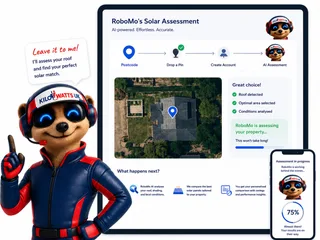
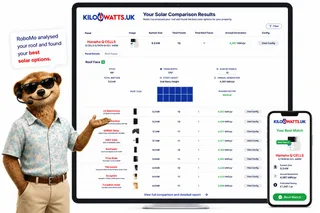
STEP 1
Choose Home, Business or Industrial
Enter your postcode to start your assessment.
STEP 2

Drop a pin on your roof
STEP 3

Create your free account
STEP 4

Sit back and watch RoboMo™ work
RoboMo™ analyses your roof and builds your personalised solar comparison.

Kilowatts UK is an authorised representative
Flower Turbines
Compact vertical-axis turbines built for real UK sites, not just open farmland.
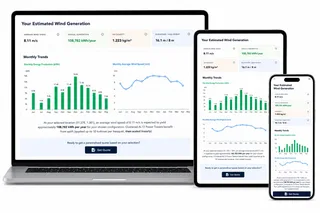
They start in light wind, sit in a small footprint, and are bird-safe by design. Cluster them as a bouquet and the group performs better together than the same turbines standing alone. Enter your postcode for a location-based generation estimate. Figures use area weather data and will differ if buildings, trees or hills sit in the way.
Starts in light UK wind
Built to generate in typical UK wind, not only open farmland.
Small rooftop or ground footprint
Compact towers for roofs, yards and tight sites.
Bird-safe slow rotation
Slow vertical-axis spin, bird-safe by design.
Bouquet clusters raise output
Grouped turbines outperform the same units standing alone.
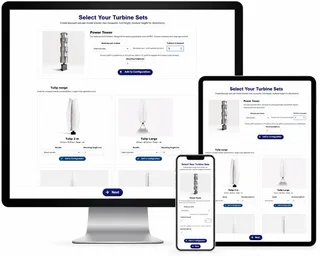
Step 1
Enter your postcode
Start designing your wind energy system in seconds.
STEP 2

Choose a location
STEP 3

Place your cluster
Tap the map where you want the turbine cluster to go.
STEP 4

Instant generation forecasts
Compare different turbine layouts and see annual generation forecasts instantly.
STEP 5

No commitment required
Explore different configurations before deciding whether to request a quotation.
Related articles
Mo's Mission Nominations
FAQ
Need Help? RoboMo's Got Answers
When is the 0% VAT rate on residential solar installations due to end?
The current 0% VAT rate for qualifying residential solar installations is scheduled to end on 31 March 2027. From 1 April 2027, qualifying installations are currently expected to move to the reduced 5% VAT rate, unless government policy changes before then. Always check the latest HMRC VAT Notice 708/6 before relying on a quote.
Does 0% VAT apply automatically to every solar panel purchase?
No. The relief generally applies to qualifying energy-saving materials supplied and installed in residential accommodation. Buying solar panels, an inverter or a battery as standalone goods may be treated differently from a qualifying supply-and-install job. Ask the installer to confirm the VAT treatment in writing.
Are solar batteries included in the 0% VAT rules?
Battery storage can fall within the energy-saving materials rules, including batteries installed with solar and some qualifying standalone battery installations. The exact treatment depends on the scope of the work and the latest HMRC guidance. Your quote should say how the battery is being treated for VAT and whether any associated works are included.
Will paying a deposit before 31 March 2027 guarantee 0% VAT?
Not necessarily. VAT timing can depend on tax-point rules, including when work is completed, when invoices are issued and when payments are made. A deposit or quote date alone may not fix the VAT rate for the whole project if installation is completed after the deadline. Get written confirmation from the installer if your project may span the cut-off date.
What should I look for in a solar quote before the VAT deadline?
The quote should state whether prices are VAT-inclusive and which VAT rate has been applied. It should separate qualifying solar or battery work from any non-qualifying extras, such as unrelated roofing, building or electrical works. It should also explain what happens if the survey, equipment, DNO paperwork or installation is delayed beyond 31 March 2027.
Does the 0% VAT rate apply across the whole UK?
Yes, VAT is a UK tax, so the broad position applies in England, Scotland, Wales and Northern Ireland. The details still depend on the property, customer, contract and installation scope. Mixed-use buildings, landlord-owned homes, holiday accommodation, blocks of flats and homes with business use may need closer checking.
How much difference would 5% VAT make after the scheduled change?
The change would add 5% VAT to the qualifying pre-VAT value of the work, if the expected reduced rate applies from 1 April 2027. For example, 5% VAT on a qualifying £6,000 pre-VAT installation would be £300. This is only the VAT effect and is not a forecast of solar prices, savings or payback.
Should I rush to install solar just to get 0% VAT?
The VAT saving can be useful, but it should not replace proper design and due diligence. A poor roof assessment, weak system design, unclear warranties or rushed paperwork can cost more than the VAT difference. Choose a competent installer, get an itemised quote and keep copies of your contract, invoices and handover documents.