


Balcony solar panels, also known as plug-and-play or plug-in
Published: 2026-08-26 18:46:22
Updated: 2026-08-26 11:50:37
Balcony solar panels are expected to have a clearer legal route in Great Britain from 27 August 2026.
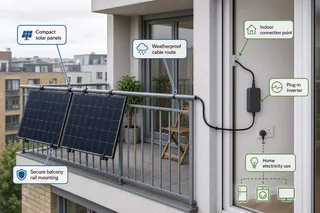
Balcony solar panels, also known as plug-and-play or plug-in
Balcony solar panels also known as plug-and-play or plug-in solar become legal in Great Britain starting August 27.
Are balcony solar panels legal in Great Britain.
Balcony solar panels are expected to have a clearer legal route in Great Britain from 27 August 2026, but only where the system meets the final published rules. That does not mean any plug-in kit can be clamped to a balcony and connected to any socket. The answer depends on electrical compliance, DNO notification, safe fixing, landlord or freeholder permission, planning constraints, insurance and fire-safety rules.
For now, treat the 2026 date as something to check against official sources, not a reason to buy unproven equipment early. Check the final UK Government or regulator announcement for Great Britain, Energy Networks Association guidance on G98 and G99, your local Distribution Network Operator’s process, BS 7671 wiring requirements where electrical work is involved, product type-test evidence, and any export-payment rules set by your electricity supplier.
Great Britain means England, Scotland and Wales. Northern Ireland has separate network and regulatory arrangements, so advice written for Great Britain should not be assumed to apply there without checking the local position.
What balcony solar is designed to do.
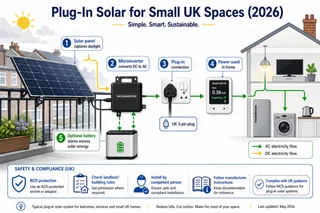
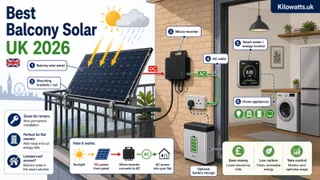
Balcony solar, also called plug-in or plug-and-play solar, is a small solar PV system intended for homes that cannot easily fit a conventional roof array. It usually consists of one or two solar panels mounted on a balcony, wall frame, patio structure or similar external support, with a microinverter converting the panels’ direct current into alternating current for the home.
The electricity is normally used first by appliances that are running at the same time. In a flat or small home, that might include a fridge-freezer, router, ventilation equipment, standby loads, computer equipment or other modest daytime demand. If the home is using less power than the solar system is producing, surplus electricity may try to flow towards the grid unless the system is designed and approved to handle that correctly.
A balcony system is not simply a smaller rooftop installation. It has less space, less choice over angle, more shading risk from railings and neighbouring balconies, and more dependence on the building owner’s rules. It can still be useful in the right circumstances, but it should be judged as a limited self-consumption product rather than a whole-home energy solution.
How plug-in balcony solar works in practice.
A typical balcony solar setup has four main parts: the PV panels, the mounting system, the microinverter and the connection into the property’s electrical installation. The panels produce DC electricity, the microinverter changes it to AC electricity, and the home uses that electricity if demand exists at the same moment. If you are new to PV, it is worth understanding how solar works before comparing plug-in products.
The connection method needs particular care. A phrase such as plug-and-play can make the system sound like a household appliance, but a generator connected in parallel with the public electricity network has safety implications. It must not energise a circuit in a way that endangers electricians, overloads wiring, defeats protective devices or creates a network problem.
In real projects, the inverter documentation often matters more than the panel label. A good product should provide UK-relevant grid connection evidence, clear installation instructions, a defined connection method, isolation arrangements, warranty information and a route for DNO notification where required.
What the 2026 change should and should not be taken to mean.
The expected 27 August 2026 change should be read as a route for compliant systems, not a blanket approval for all equipment sold online. The final rules should define what is allowed, how systems may be connected, which parties must be notified, and what product evidence is acceptable.
Until the final published wording is available, be cautious about any claim that a kit is automatically legal because it is below a particular wattage or because it is sold as a European balcony solar product. The UK connection and safety position depends on more than the panel rating.
If a retailer cannot explain these points in plain terms, that is a warning sign. A compliant system should not depend on vague assurances or an instruction to ignore the network operator.
G98, G99 and DNO notification.
For small generators connected to the distribution network, the Energy Networks Association’s Engineering Recommendations G98 and G99 are the main terms householders are likely to encounter. In broad terms, G98 is associated with smaller, type-tested generation equipment, while G99 covers larger or more complex connections. The correct route depends on the final scheme rules, inverter capacity, product certification and whether other generation or storage already exists at the property.
The Distribution Network Operator is the company responsible for the local electricity network, not necessarily the company that sends your energy bill. In many small-generation cases there is a notification process, and in some cases permission is needed before connection. If a battery, export limitation, multiple inverters or an existing solar system is involved, the position can become less straightforward.
Do not assume that because a balcony solar kit is small, the network process is irrelevant. The DNO needs enough information to understand how generation connects to the network, how it behaves during faults and whether export needs to be limited.
Permissions for renters, leaseholders and flats.
Electrical compliance does not give you the right to alter a building you do not control. If you rent, get written permission from the landlord before fixing panels externally or changing the electrical installation. If you own a leasehold flat, the lease, freeholder, managing agent or residents’ management company may control balcony alterations, external appearance and communal structures.
This is often the hardest part of balcony solar in blocks of flats. The balcony rail may not be yours to modify, the outside face of the building may be controlled, and the building insurer may have rules about external fixings, fire load, access, wind risk or cladding interfaces.
Planning constraints can also apply. Listed buildings, conservation areas, flats with visible front elevations and developments with specific planning conditions may need further checks, so read up on planning permission checks before assuming a balcony system is allowed. The practical approach is to separate the decision into legal connection, building permission, planning position and structural safety rather than treating them as one yes-or-no question.
Safety checks that come before performance.
The first safety question is whether the panels can be fixed securely for the lifetime of the installation. A compact panel can still become dangerous if it detaches from an upper floor in high wind, if fixings corrode, if clamps are attached to unsuitable railings, or if vibration loosens the assembly over time.
The electrical checks are just as important. A competent person will look at the consumer unit, circuit loading, RCD protection, earthing, isolation, cable routing, weather exposure and the manufacturer’s connection instructions. A dedicated and properly assessed connection is very different from plugging uncertified equipment into a convenient indoor socket.
Where the balcony is high, exposed, coastal, difficult to access or attached to a building with cladding concerns, do not treat mounting hardware as a minor accessory. It may be the deciding factor in whether the project is sensible.
The 800 W question.
Many balcony solar discussions mention 800 W, but buyers should not treat that figure as a complete rule until the final Great Britain wording is published. The key question is what the limit refers to. It could be discussed in relation to inverter AC output, installed panel DC capacity, permitted export capacity or another definition set by the scheme.
That distinction matters. Solar panels are often rated by their DC peak capacity under standard test conditions, while microinverters are rated by AC output. A system could have more panel capacity than inverter output, or an export limit that is lower than the possible generation. Those are not the same thing.
Before buying, ask the supplier to state in writing how its product fits the final rules. The answer should identify the inverter’s rated AC output, the total panel capacity, whether export is allowed or limited, and what evidence is provided for DNO notification or approval.
Likely output and savings.
The output from a balcony solar kit depends heavily on orientation, tilt, shading and the household’s ability to use electricity during daylight hours. A sunny, south-facing balcony with little shading is a very different proposition from a vertical panel behind railings on a shaded north-facing elevation.
The safest way to estimate savings is to avoid generic promises and work from your own usage. Read your smart meter or half-hourly consumption data to understand how much electricity your home normally uses during daylight periods. Then compare that with a conservative generation estimate from the supplier or installer, adjusted for the real balcony position rather than an ideal roof. A broader guide to solar generation can help you sense-check exaggerated output claims.
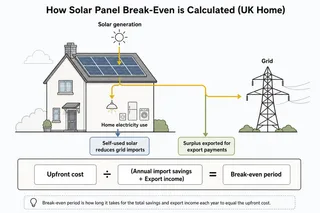
A useful calculation is self-used solar electricity multiplied by the import unit rate you would otherwise pay. Exported electricity should be treated separately, because export payments depend on metering, supplier terms and eligibility evidence. If most of the output is produced when you have little demand, the financial benefit may be much lower than the panel rating suggests.
When batteries help and when they do not.
Battery add-ons can store some solar electricity for later use, which may help if the home is empty during the day and demand rises in the evening. They can also make a small system feel more useful because less generation is immediately surplus. Before adding one to a balcony kit, understand how home batteries work.
The trade-off is cost, complexity and losses. A battery adds another warranty, another control system and another set of safety requirements. It also does not automatically provide whole-home backup during a power cut. Standard grid-tied equipment normally shuts down when the grid fails unless the system has approved backup capability and suitable isolation.
A battery is more likely to make sense where there is regular surplus generation, a reliable charging arrangement and evening demand that can actually use the stored energy. It is less convincing on a shaded balcony where the panels rarely produce enough surplus to justify the extra equipment.
Export payments and Smart Export Guarantee uncertainty.
Some buyers assume any surplus electricity will automatically be paid for, but export payments are not automatic. In Great Britain, the Smart Export Guarantee is a supplier-led route for payment for exported electricity, and suppliers set their own evidence and metering requirements within the scheme.
For balcony solar, check this before installation rather than after. A supplier may require evidence about the generating equipment, the installation route, the meter, export MPAN arrangements and sometimes certification or documentation that a basic kit seller may not provide. Requirements vary, so do not assume eligibility.
If export income is central to the buying decision, get written confirmation from the export supplier before committing. For many small balcony systems, the more realistic case is self-consumption first, with export treated as uncertain unless all requirements have been confirmed.
Cost factors and better alternatives.
Balcony solar kits are often marketed as a lower-cost alternative to rooftop solar, but the purchase price is only one part of value. Mounting hardware, compliant connection equipment, electrical assessment, DNO paperwork, access equipment, permissions and aftercare can all affect the real cost and suitability. A cheap kit may be poor value if it lacks UK-relevant documentation or safe mounting hardware. A more expensive all-in-one kit may also be poor value if the balcony is shaded, the lease prohibits external equipment or the household cannot use much daytime electricity.
Overview
For a homeowner with a suitable roof, conventional solar PV may still be the more practical long-term route. For a renter or leaseholder, balcony solar only becomes attractive when permission, fixing, electrical compliance and usage all line up. If you have a roof and want the next step, you can compare home solar options before deciding whether a balcony kit is the right compromise.
Legal and practical checklist before buying.
The best way to avoid a bad purchase is to collect the evidence before the box arrives. Product photos, simple installation videos and broad claims about plug-and-play solar are not enough for a UK electricity connection or a balcony on a shared building.
A responsible supplier should be able to explain the connection method, what standard the microinverter has been tested to, how DNO notification is handled, what mounting assumptions apply and what the customer must do before commissioning. You should also check whether the final Great Britain rules apply to the exact kit and connection method, whether the stated wattage refers to inverter AC output, panel DC capacity or export capacity, and whether your electricity supplier would accept the system for export payments.
Before buying, get landlord, freeholder or managing-agent permission in writing where needed. Check planning constraints for listed buildings, conservation areas and visible elevations. Assess shading in different seasons, not only on a sunny day in summer. Treat balcony brackets, corrosion resistance and wind exposure as safety-critical.
If any of those points cannot be answered clearly, pause the purchase. The risk with balcony solar is rarely that solar technology does not work. It is that the product, property and permissions do not fit together.
Who balcony solar is suitable for.
Balcony solar is most suitable for people with a sunny, structurally suitable mounting position, written permission where required, a compliant connection route and enough daytime electricity demand to use a meaningful share of the generation. It can be a sensible compromise where roof solar is impossible.
It is less suitable for shaded balconies, high-rise exposed locations without engineered fixing, buildings with strict appearance or fire-safety rules, and households expecting large bill reductions. It is also unsuitable where the plan depends on uncertified equipment, unclear socket connection claims or ignoring the DNO process.
The practical answer is cautious but positive. A compliant balcony solar kit on the right property can offset a small amount of daytime electricity use. A poorly documented kit on a shaded, restricted or unsafe balcony is not made sensible by being described as plug-and-play.
Plan, Compare & Buy Renewable Energy Solutions
AI does the thinking.
You get the perfect solar match.
Use RoboMo™ to assess your property, compare available technologies and connect with trusted UK installers, suppliers and manufacturers.
Simply enter your postcode, drop a pin on your roof, create your free account and let RoboMo™ analyse your property to find the best solar panels for your home.

You don't have to think
RoboMo™'s AI analyses your roof and does all the hard work.

Accurate & tailored
AI-powered assessment based on your roof, location, and conditions.

Best options, maximum savings
Compare top solar panels for the best performance and value.

Simple, fast & effortless
Provide a few details, sit back and watch your results unfold.
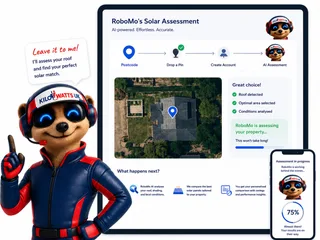
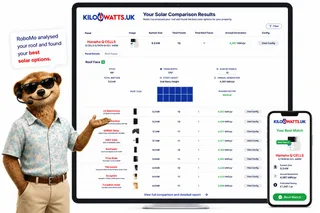
STEP 1
Choose Home, Business or Industrial
Enter your postcode to start your assessment.
STEP 2

Drop a pin on your roof
STEP 3

Create your free account
STEP 4

Sit back and watch RoboMo™ work
RoboMo™ analyses your roof and builds your personalised solar comparison.

Step 1
Enter your postcode
Start designing your wind energy system in seconds.
Are you an installer, distributor or renewable energy business?
Kilowatts UK is expanding the Flower Turbines partner network across the UK.
Become A Flower Turbines PartnerKilowatts UK is an authorised representative
Flower Turbines
Compact vertical-axis turbines built for real UK sites, not just open farmland.
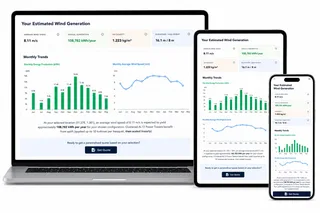
They start in light wind, sit in a small footprint, and are bird-safe by design. Cluster them as a bouquet and the group performs better together than the same turbines standing alone. Enter your postcode for a location-based generation estimate. Figures use area weather data and will differ if buildings, trees or hills sit in the way.
Starts in light UK wind
Built to generate in typical UK wind, not only open farmland.
Small rooftop or ground footprint
Compact towers for roofs, yards and tight sites.
Bird-safe slow rotation
Slow vertical-axis spin, bird-safe by design.
Bouquet clusters raise output
Grouped turbines outperform the same units standing alone.
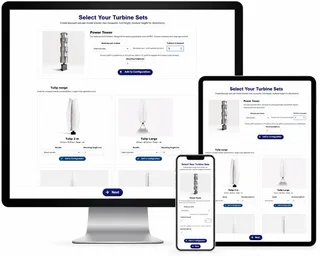
STEP 2

Choose a location
STEP 3

Place your cluster
Tap the map where you want the turbine cluster to go.
STEP 4

Instant generation forecasts
Compare different turbine layouts and see annual generation forecasts instantly.
STEP 5

No commitment required
Explore different configurations before deciding whether to request a quotation.
Related articles
Mo's Mission Nominations
FAQ
Need Help? RoboMo's Got Answers
Are balcony solar panels legal in Great Britain?
They are expected to have a clearer route from 27 August 2026, but only for systems that meet the final published rules. A plug-in kit is not automatically acceptable just because it is small or sold online. You still need to check electrical compliance, DNO requirements, safe fixing, permissions, planning constraints and insurance conditions.
Can I just plug a balcony solar kit into a normal socket?
Do not assume that a household socket is a safe or compliant connection point. A solar inverter connected in parallel with the grid has to protect electricians, the public network and your home’s wiring. The manufacturer should give UK-relevant instructions, grid protection evidence and a clear connection method.
Do I need to tell the DNO about balcony solar?
In many small-generation situations the Distribution Network Operator must be notified, and some cases may need approval before connection. The route may involve G98 or G99 depending on the inverter, certification, export arrangements and any existing solar or battery equipment. Your DNO is the local network company, not necessarily your electricity supplier.
Can renters or leaseholders install balcony solar panels?
Only with the right permissions. Renters should get written landlord consent before fixing panels externally or changing electrics, and leaseholders may need approval from the freeholder, managing agent or residents’ management company. Flats can also involve building insurance, fire-safety, balcony ownership and appearance rules.
Will I need planning permission for balcony solar panels?
Some homes may need planning checks, especially listed buildings, conservation areas, visible elevations or blocks with specific planning conditions. Flats and external alterations can be more complicated than roof-mounted panels on a house. Check the local position before buying equipment.
How much electricity will balcony solar generate in the UK?
Output depends strongly on orientation, tilt, shading and the time of day you use electricity. A sunny south-facing balcony is very different from a shaded or north-facing one. Treat sales estimates cautiously and compare them with your own daytime electricity use.
Will I get paid for exported electricity from balcony solar?
Export payments are not automatic. In Great Britain, Smart Export Guarantee payments depend on supplier rules, metering, documentation and eligibility evidence. If export income matters to the decision, get written confirmation from an export supplier before installation.
Is a battery worth adding to a balcony solar system?
A battery can help if the panels regularly make surplus electricity that you can use later. It also adds cost, losses, controls, safety requirements and another warranty to manage. It will not automatically give whole-home backup during a power cut unless the system is specifically designed and approved for that.