Founder & Renewable Energy Author, kilowatts.uk


Founder & Renewable Energy Author, kilowatts.uk
Article
Discover the top plug-in solar kits for UK homes in 2026. Perfect for small roofs, rentals, or low-commitment solar power.
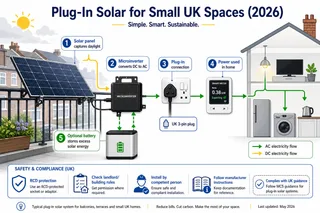
Plug-in solar appeals to UK households that want a small, lower-commitment way to generate some daytime electricity.
Plug-in solar appeals to UK households that want a small, lower-commitment way to generate some daytime electricity. It can suit flats, rented homes with permission, sheds, balconies, garden offices and small roofs where a full array is not practical. If you are trying to power most of a home, compare plug-in kits against a proper installed system before buying.
When reviewing plug-in solar options for UK readers, prioritise clear electrical specifications, safe installation instructions, realistic output claims and support from a UK-facing supplier. A useful kit should make it easy to understand panel wattage, inverter limits, cable routing, weather protection and whether the setup is intended for temporary or permanent use.
Do not judge a plug-in kit only by the headline wattage. A panel's rated output is tested under standard conditions, and actual UK generation depends on shading, angle, orientation and season. If you are new to the basics, read our guide to how solar panels work before comparing products.
A small plug-in system can offset some background daytime load, such as routers, fridges, standby appliances or a laptop. It is unlikely to cover high-demand appliances on its own. For context on output expectations, compare the kit's wattage with typical UK solar generation patterns in our guide to expected solar generation. For homes with suitable roof space, plug-in solar may be less compelling than a professionally designed array. If your aim is long-term bill reduction rather than experimenting with a small setup, it is worth taking time to compare home solar options before choosing a product.
We may earn a commission if you purchase through links on this page. This does not affect the price you pay.
Solar comparison
Enter your postcode to assess your roof, compare solar options and connect with trusted UK installers.
Choose home, business or industrial, then enter your postcode. RoboMo maps the roof and ranks panel brands by fit.
1. Postcode Start the assessment for your property.
2. Pin the roof Mark the array on the map.
3. Compare RoboMo™ builds your options.
Battery ROI tool
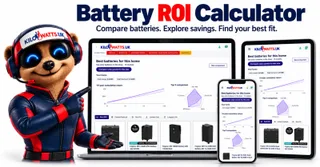
Enter the day rate, off-peak rate and export rate. The calculator ranks batteries in the Kilowatts shop over 10 years. Home batteries also suit offices and small commercial sites.
Reading
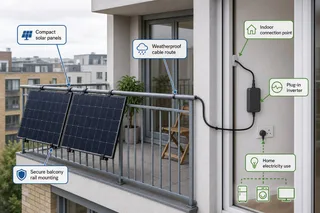
Balcony solar panels are expected to have a clearer legal route in Great Britain from 27 August 2026.
Read article
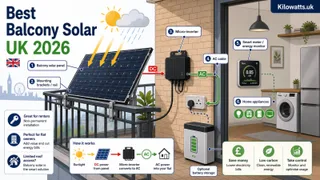
Discover the best balcony solar kits for renters, flat owners, and homes with limited roof access in the UK.
Read article
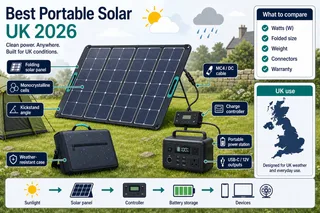
Discover the best portable solar panels for the UK market in 2026. Our expert guide reviews top-rated products for charging devices, camping.
Read article
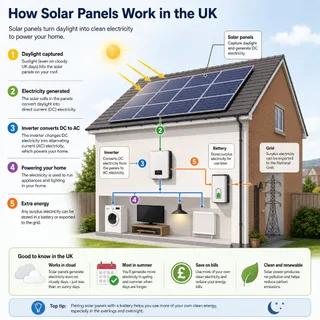
Discover the benefits and costs of solar panels for your UK home or business.
Read article
Write for Kilowatts.uk
Write it here under your own name. Sign in, put a profile up, and start a guide. Pay only if you want more links from your articles out to your own site.
Create a Kilowatts.uk account, or sign in if you already have one.
Put your name, photo and experience on a public author page.
Write a guide or a blog. Free authors can put one followed link to their own site in articles each month.
FAQ
Live help
Talk to RoboMo™ and get instant answers.
Live chat