


Commercial Rooftop Solar for Warehouses, Factories
Published: 2026-09-28 06:25:08
Updated: 2026-09-28 02:10:33
Which UK sites suit commercial rooftop solar? Warehouses and day-shift factories often do; offices, farms, schools and hotels can if roof and tenure fit.
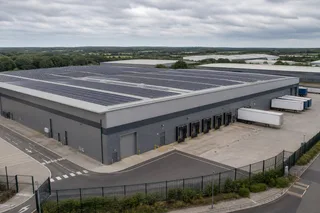
Commercial Rooftop Solar for Warehouses, Factories, Offices, Farms, Schools and Hotels
Find out commercial rooftop solar in the UK, including costs, what affects price, and how to choose an installer.
Which business sites suit commercial rooftop solar
Warehouses, day-shift factories and cold stores are usually the strongest candidates for commercial rooftop solar. A usable roof and electricity use through daylight hours often coincide. Offices, schools, hotels and farm buildings can also suit, but only where the roof, the tenure and the local network support the array. A sector label is not enough. The same warehouse can be an excellent site or a poor one depending on load, lease and roof condition.
Commercial rooftop solar means a photovoltaic array fixed to a non-domestic roof, mainly to supply electricity used on that site. It is not a domestic system, and it is not a ground-mounted solar farm, even when the occupier is a farm, a school or a hotel. Self-consumption is the electricity used while the panels are generating. Export is the surplus that leaves the site. Those two outcomes matter more than the roof area visible on a satellite photo.
The better sites have a sound, accessible roof with meaningful clear area, limited shading, a long remaining covering life, and a reason to import power from morning into late afternoon. Single-occupier freeholds with day operations meet that test more often than night-only sites, buildings lined up for redevelopment, or short leases with no landlord consent. Business solar panels still have to pass that premises test before funding, ownership or a quote comparison is worth pursuing.
What installers check before sizing an array
A satellite roof area is not a design. The first size estimate should come from how the site uses electricity through the day, then from what the roof structure and the local network will accept. Where half-hourly data exists, that profile is more useful than the annual total on a bill. The array only offsets import while it is generating. Sites without interval data need logged demand or a deliberately cautious assumption, or the proposal will be drawn to fill the roof rather than the load. Flat roofs are a structural and warranty problem as much as a solar one. Ballasted frames can avoid piercing a membrane, but only if the deck can carry the weight, drainage paths stay clear, and the membrane warranty allows the system. A newly laid roof with no allowance for fixings can still be a poor candidate. Edge zones, rooflights, smoke vents and rooftop plant often remove a large share of the area that looks free from above. East-west layouts are common on flat roofs because a lower tilt can fit more capacity and spread output across working hours. A due-south pitch is not a precondition. Heavy shade, or a steep north-facing pitch, is usually a weak resource. UK commercial roofs are commonly flat membrane decks, low-pitch metal, pitched industrial sheets, or older cement sheets that may contain asbestos. The electrical side stops as many schemes as the covering does. There needs to be room for inverters, and cable routes that meet fire-safety expectations. Where a building has more than one MPAN, decide which supply the array connects to. Safe access for later maintenance has to be planned. An export limit can force a smaller system or export-limitation equipment. The same modules will usually produce more in southern England than in northern Scotland, but shading, tilt, soiling and an export cap can outweigh latitude. Module warranties are often marketed over a period of around two decades. Inverters are usually expected to be replaced sooner. That is warranty language, not a measured service life for a UK commercial roof.
Where warehouse solar panels usually work
Logistics and distribution buildings often have the clearest roofs in the commercial stock: large flat or low-pitch decks, relatively simple plant, and access from an industrial estate rather than a constrained high street. That geometry is why warehouse solar panels are a common enquiry. It does not make every shed a good project. A vast roof over a small office and a lightly used store can export most of what it generates. Export is rarely worth as much as electricity that would otherwise have been imported.
The load changes the answer. Fulfilment with conveyors, daytime van charging, refrigeration, or a busy goods-in operation can absorb far more of the output than a dark store with minimal plant. Retail warehouses sit in a similar pattern when the store trades through the day, with the extra constraint that installation has to work around public access and delivery slots. On exposed estates, wind uplift and edge zones affect how a ballasted system is laid out, so the usable area is smaller than the roof plan.
Tenure is the other early filter. A freehold occupier with a sound covering and no plan to strip the roof can move straight to survey. A lease with only a few years left, a landlord who has not agreed a licence for alterations, or a park where the roof owner and the meter holder are different parties can make a technically clear roof unviable. If the covering is already near replacement, renew the roof first. Lifting an array later to replace a failed deck is disruptive, and that risk should be visible before anyone treats a tired warehouse roof as free space.
When factory solar panels are a strong fit
Factory solar panels tend to suit sites where process plant runs through daylight. Compressors, chillers, ovens, production lines and factory lighting can create a steady import that lines up with generation better than an office that empties at five. A cold store is often a particularly good match because refrigeration does not stop when the shift changes. A factory that runs only at night is a different proposition: most of the daytime output would be exported unless a genuine base load is already there.
Older industrial roofs need a closer look than a new clad shed. Pitched asbestos-cement sheets are still common, and they are not a surface for a routine fix. If a refurbishment survey shows asbestos, a straightforward factory solar installation usually stops until the roof strategy is safe and agreed. Lightweight sheets with no reliable drawings can fail a loading check even when they look intact from the yard. Process soiling, rooftop extract and neighbouring structures also cut yield in ways a clean aerial image will not show.
Electrically, factories are rarely short of a three-phase supply. That does not mean the switchroom can take the inverters, or that the cable route from roof to board is simple. Live production limits when installers can isolate, drill or lift, so programme and access belong in the scope, not as a surprise after order. Harmonic-rich plant and a full main board are ordinary reasons a design changes between first look and final schematic. Size the array to the daytime profile and the connection the network will accept, not to the largest layout that fits between the rooflights.
Office solar panels and multi-let buildings
Office solar panels can work well where cooling, IT, lifts and ventilation run through office hours and the roof is not already crowded with plant. Air-conditioned buildings often have a daytime electrical shape that sits closer to solar output than a building whose peaks are in the evening. Hybrid working cuts that advantage if floors are half empty. Recent consumption data matters more than a pre-pandemic assumption about a full floor plate.
The roof is usually the tighter limit. Offices often have a smaller roof relative to floor area, with risers, condensers and screening that shade the remaining space. City-centre buildings can also lose sun to neighbours for much of the day. Older structures may not have drawings that support a ballast or fixing design without a structural survey. A listed facade or a conservation-area roof is a planning question at the start, not a detail for the installer to discover after the yield model is finished.
Multi-let offices fail commercially more often than they fail technically. If each tenant has its own meter and nobody has agreed a host supply, there may be no straightforward way to use or share the generation. A landlord supply that serves common parts can be a valid connection, but only if those common-part loads are large enough in daylight and the lease allows the works. Service-charge arrangements, reinstatement at lease end, and who keeps the bill saving all need a written answer before a kW figure is treated as a project.
Farm solar panels on agricultural buildings
Farm solar panels, in this context, means photovoltaic modules on barns, grain stores, packing sheds and other agricultural buildings. It does not mean a ground-mounted solar farm on a field beside the yard. A clear rural roof can look ideal from the lane and still be a weak rooftop project once structure, covering and the network are checked.
Demand depends on the enterprise, not on the fact that the occupier is a farm. A dairy parlour, poultry ventilation or a diversified site with processing, workshops or cold storage may import through the day. Grain drying and some seasonal irrigation are intense for a short period and a poor template for an array sized to that peak. Storage barns with almost no electrical load will export nearly everything. Tenant farmers also need the landowner’s consent, and a short agricultural tenancy can end before a rooftop system has had a straightforward operating life.
Rural connections are a frequent limit. The local distribution network operator may accept only a small export, require a formal application, or indicate reinforcement that changes the programme. Do not assume a connection cost or a timescale from another farm. Roof condition is the other common stop: lightweight steel, uncertain drawings, corrosion in livestock buildings, and older cement sheets that may contain asbestos. No farm or small-business grant should be assumed. If a scheme only works because of an unnamed grant, it is not yet a scheme.
School solar panels and term-time demand
School solar panels often match term-time weekdays, when classrooms, kitchens, IT and ventilation are in use. That is a better daytime fit than a business whose demand arrives after dark. The awkward period is the summer holiday, when generation is high and occupancy is low unless the site has a summer let, a pool, a server room or another steady load. An array sized as if the school were full in July will export, or be limited, for much of the sunniest season.
The building owner is not always obvious from the gate. Local-authority schools, academies, dioceses and independent schools can have different consent routes, different meters and different rules on who may alter the roof. Those are legal and estates questions, and they should be settled from the actual title and funding agreement rather than from a general description of the sector. Installation access during term also has safeguarding and timetabling constraints that a closed-site warehouse does not.
Pitched roofs, campus plant and older fabric are typical design limits. Listed school buildings and conservation areas need an early planning check. Rules are not the same in England, Scotland, Wales and Northern Ireland, and permitted development should not be treated as automatic. Schools are not automatically grant-funded. A live scheme, if one exists at the time you tender, has to be confirmed from an official source. Educational value is a reason to investigate a sound roof, not a substitute for load, structure and consent.
Hotel solar panels and hospitality loads
Hotel solar panels suit buildings with a genuine daytime base load, not merely a large guest-room count. Kitchens, laundry, pools, spas and corridor services can run while the sun is up, and a breakfast service can catch the start of the generation curve. Guest-room peaks around check-in and evening dining usually do not. A hotel that is quiet by day and full at night will see much of a rooftop array as export.
Season and building type change the fit. A summer-busy seaside hotel may occupy the building in the high-generation months. A city business hotel with steadier midweek occupancy is a different load shape. A winter-led destination may not use much power in the months when the array produces most. Complex roofs, screened plant and older masonry are common. Listed hotels and buildings in conservation areas should be checked for planning constraints before a layout is promised to a lender or a board.
Ownership is often the hidden constraint. A managed or franchised hotel may not have the right to grant roof rights, and the party that pays the electricity bill may not be the party that owns the building. Leisure clubs on the same supply can improve self-consumption. A separate leisure meter can do the opposite. Ask who holds the supply contract, how long the operating agreement runs, and what happens to the array if the operator changes. Without those answers, a clear roof is only a technical maybe.
How site fit compares across premises types
The useful comparison is not which sector sounds greenest. It is where daytime import, a workable roof and control of the building usually line up, and where one of those fails often enough to change the project. The bands below are scenarios for a first sift, not a prediction for a named site. A night-shift factory can be weaker than a well-loaded hotel, and a constrained rural barn can lose to a smaller urban office with a clear roof and a long lease. Read the grid as a way to brief a survey, not as a scoring system. Stronger means that factor often helps. Weaker means it often needs an answer before design time is spent. Workable means the factor can go either way and should be measured rather than assumed. No column implies a price, a yield or a payback. Two sites in the same row can diverge completely once half-hourly data, a structural note and a network response are on the table.
When a PPA for commercial rooftop solar is the wrong first question
A PPA for commercial rooftop solar is a funding route, not a test of whether the roof should have panels. In a typical power purchase agreement, a third party owns the array, and the occupier buys the power or grants roof rights for a long period. That can avoid upfront capital. It does not remove the need for a sound roof, daytime demand, a connection the network will accept, or a tenure long enough for the contract. Credit strength, contract length and who controls the roof become part of the project.
A PPA is not cost-free electricity. The occupier usually gives up some control, accepts a long agreement, and may see less of the bill saving than an owner-occupier who funds the system. Sale of the building, a break clause, or a change of operator has to be dealt with in the contract. Funders set their own minimum size, term and credit tests. Those thresholds are commercial offers, not a technical standard, and they should not be guessed. A very large roof with poor self-consumption or a constrained export can still be unattractive to a funder.
Owner funding, a landlord-funded system and a third-party PPA are different ways to pay for the same technical scheme. Choose the route after the site fit is clear. If the roof needs replacing, the lease is short, the demand is mostly at night, or the network position is unresolved, changing the funder does not repair the project. Get the consumption shape, the roof report and the connection position first, then ask which funding route still makes sense on those facts.
What changes the price of a commercial solar installation
There is no standard rate that can be applied from one UK business to another. A figure from a different roof type, region or year is not a quote. Installed cost, annual yield and payback should be taken from a site-specific proposal, not from a generic range. What moves the price is usually the building, not the module brochure. Access, live-site working, edge protection, cable distance to the switchroom, structural strengthening, membrane compatibility and making good all sit outside a simple price per panel.
Enabling works are where apparently similar quotes diverge. An asbestos strategy, a roof renewal, a new cable route that satisfies fire-safety expectations, export-limitation equipment, or network works required by the distribution network operator can dominate both cost and programme. On weaker rural and edge-of-town networks, that connection step is often the item that decides whether a large array is realistic. Ask each bidder to separate generation equipment from building and connection works so the roof is not hiding inside a single lump sum.
Business rates, VAT and any capital-allowance treatment can change the case for the company that pays. They also change, and they should be confirmed from current official guidance and professional advice rather than from an old article or a sales conversation. Export income is not the same as avoided import. If most of the energy would leave the site, the project depends on what the network will accept and what an offtaker will actually pay. Neither should be assumed. A smaller commercial solar installation matched to daytime import can be the better buy when a roof-filling layout would mostly be exported.
How to shortlist commercial solar installers
Shortlisting commercial solar installers is more useful once the constraints are written down than after a roof-area sketch. You want proposals that show how array size follows daytime import, what the roof can carry, which supply is being connected, and what happens if the network limits export. A module count with no consumption profile is not yet a design.
A structured way to compare commercial solar installation quotes is to read them against the same roof, load and connection notes. Ignore any comparison that only ranks the largest system or the lowest headline figure. The useful quote is the one that states its assumptions and separates enabling works from the array.
Before you invite prices, gather the documents that change the design. Twelve months of half-hourly data, or the best logged profile you can obtain, is the starting point. Add roof age, warranty terms, any asbestos survey, lease expiry, landlord consent, MPAN and import capacity, and a note of planned roof works. If those items are missing, ask the installer what they have assumed. Assumptions made in silence are a common source of later variations.
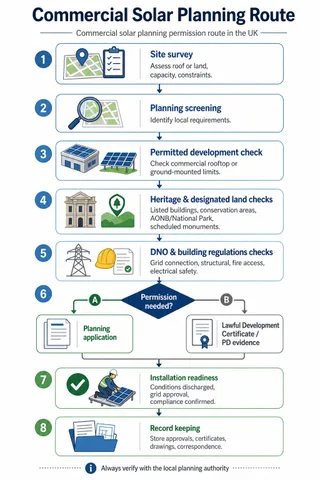
Treat planning as unsettled until it is checked for the nation the building is in. Some non-domestic rooftop schemes proceed without a full application where the relevant permitted-development conditions are met. Listed buildings, conservation areas and awkward roof positions often are not in that category. The same caution applies to connection offers: do not transfer a neighbour’s timescale or cost onto your site. With the profile, the roof note and the tenure position in one pack, you can commission surveys on the premises that are actually suited, and drop the ones that only have a large roof.
Plan, Compare & Buy Renewable Energy Solutions
AI does the thinking.
You get the perfect solar match.
Use RoboMo™ to assess your property, compare available technologies and connect with trusted UK installers, suppliers and manufacturers.
Simply enter your postcode, drop a pin on your roof, create your free account and let RoboMo™ analyse your property to find the best solar panels for your home.

You don't have to think
RoboMo™'s AI analyses your roof and does all the hard work.

Accurate & tailored
AI-powered assessment based on your roof, location, and conditions.

Best options, maximum savings
Compare top solar panels for the best performance and value.

Simple, fast & effortless
Provide a few details, sit back and watch your results unfold.
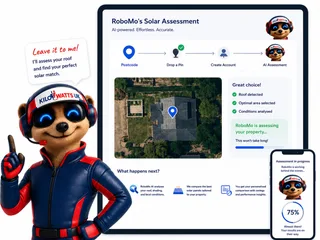
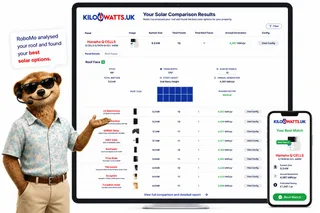
STEP 1
Choose Home, Business or Industrial
Enter your postcode to start your assessment.
STEP 2
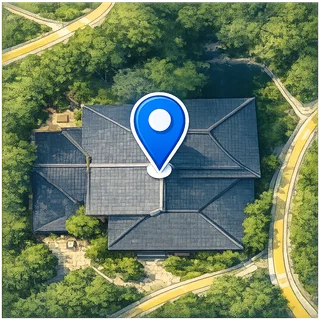
Drop a pin on your roof
STEP 3

Create your free account
STEP 4

Sit back and watch RoboMo™ work
RoboMo™ analyses your roof and builds your personalised solar comparison.

Kilowatts UK is an authorised representative
Flower Turbines
Compact vertical-axis turbines built for real UK sites, not just open farmland.
They start in light wind, sit in a small footprint, and are bird-safe by design. Cluster them as a bouquet and the group performs better together than the same turbines standing alone. Enter your postcode for a location-based generation estimate. Figures use area weather data and will differ if buildings, trees or hills sit in the way.
Starts in light UK wind
Built to generate in typical UK wind, not only open farmland.
Small rooftop or ground footprint
Compact towers for roofs, yards and tight sites.
Bird-safe slow rotation
Slow vertical-axis spin, bird-safe by design.
Bouquet clusters raise output
Grouped turbines outperform the same units standing alone.
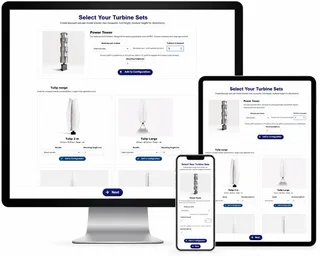
Step 1
Enter your postcode
Start designing your wind energy system in seconds.
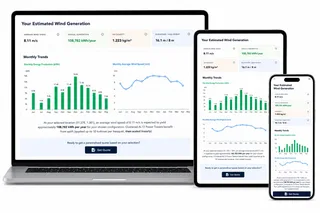
STEP 2

Choose a location
STEP 3

Place your cluster
Tap the map where you want the turbine cluster to go.
STEP 4

Instant generation forecasts
Compare different turbine layouts and see annual generation forecasts instantly.
STEP 5

No commitment required
Explore different configurations before deciding whether to request a quotation.
Related articles
Mo's Mission Nominations
FAQ
Need Help? RoboMo's Got Answers
Which commercial buildings usually suit rooftop solar?
Warehouses, day-shift factories and cold stores are often the strongest candidates, because a usable roof and electricity use through daylight hours can coincide. Offices, schools, hotels and farm buildings can also suit, but only where the roof, the tenure and the local network support the array. A sector label is not enough. The same type of building can be an excellent site or a poor one depending on load, lease and roof condition.
Is commercial rooftop solar the same as a home system or a solar farm?
Commercial rooftop solar means a photovoltaic array fixed to a non-domestic roof, mainly to supply electricity used on that site. It is not a domestic system, and it is not a ground-mounted solar farm, even when the occupier is a farm, a school or a hotel. Self-consumption is the electricity used while the panels are generating. Export is the surplus that leaves the site, and it is rarely worth as much as electricity that would otherwise have been imported.
How should a commercial rooftop array be sized?
A satellite view of the roof is not a design. Usable array size is the smaller of clear roof area, structural capacity, daytime import and the export the local network will accept. Where half-hourly data exists, that profile is more useful than the annual total on a bill. Without interval data, the site needs logged demand or a deliberately cautious assumption, or the proposal may be drawn to fill the roof rather than the load.
What can stop a scheme even when the roof looks large and clear?
Rooflights, smoke vents, plant, shading and edge zones often remove a large share of the area that looks free from above. A tired covering, a deck that cannot carry the system, or a membrane warranty that does not allow the installation can also stop the project. If the roof is already near replacement, renew the covering first, because lifting an array later is disruptive. Night-only use, a short lease or a building lined up for redevelopment can make a clear roof a poor project.
Can solar go ahead on a leased building, or on a roof that may contain asbestos?
Older cement sheets may contain asbestos, and they are not a surface for a routine fix. If a survey shows asbestos, a straightforward installation usually stops until the roof strategy is safe and agreed. A short lease, a landlord who has not agreed alterations, or a split between the roof owner and the meter holder can make a technically clear roof unviable. Tenant farms, multi-let offices and managed or franchised hotels need written consent, and a clear answer on who keeps the bill saving, before a layout is treated as a project.
Should a farm, school or small business assume a grant or a quick grid connection?
No farm, school or small-business grant should be assumed, and schools are not automatically grant-funded. If a live scheme exists when you tender, confirm it from an official source rather than from a general description of the sector. The local network may accept only a small export, require a formal application, or indicate reinforcement, and another site’s cost or timescale is not a reliable guide. If a proposal only works because of an unnamed grant or an assumed connection, it is not yet a scheme.
Do schools, hotels and offices use enough power while the panels are generating?
Schools often match term-time weekdays, but summer holidays can mean high generation and low occupancy unless there is a summer let, a pool or another steady load. Hotels suit rooftop solar where kitchens, laundry, pools or corridor services create a daytime base load, not merely a large number of guest rooms. Offices can fit where cooling, IT and ventilation run through office hours, although hybrid working and a crowded roof often weaken the case. Recent consumption data matters more than a typical label for that type of building.
Is planning permission automatic, and how long is the equipment expected to last?
Listed buildings and roofs in conservation areas should be checked for planning constraints before a layout is promised. Rules are not the same in England, Scotland, Wales and Northern Ireland, and permitted development should not be treated as automatic. Module warranties are often marketed over a period of around two decades, while inverters are usually expected to be replaced sooner. That is warranty language, not a measured service life for a particular UK commercial roof.