


Compare Solar PV Panels: A Straightforward Guide for UK
Published: 2026-08-22 19:48:25
Updated: 2026-08-22 16:29:29
Cut through the noise and learn how to compare solar PV panels, choose the right installer, and avoid overpaying.
Compare Solar PV Panels - A Straightforward Guide for UK
Cut through the noise and learn how to compare solar PV panels, choose the right installer, and avoid overpaying.
Overview
If you are trying to compare solar PV panels right now, you have probably already seen the headlines. Record solar generation, volatile energy prices, and neighbours with new arrays on their roofs. The challenge is cutting through the noise to work out what actually applies to your home. This guide strips away the sales pressure and gives you a straightforward comparison framework. By the time you finish reading, you will know exactly what to compare, what a fair price looks like in 2026, and how to choose panels and an installer without the guesswork. We are focusing purely on solar PV electricity generation, not solar thermal, and everything here is specific to the UK market.
Why Comparing Solar PV Panels Matters in 2026
Solar supplied more energy to the National Grid in July 2026 than any previous month on record. That momentum is not just a headline: it reflects a technology that has matured and is now a mainstream part of the UK energy mix. With research suggesting three million UK households plan to install solar panels in the next five years, the market is busier than ever. Busy markets attract both excellent installers and those who rely on high-pressure tactics, which is why comparing properly is your best defence against overpaying.
Energy price volatility remains the top concern driving this demand. Locking in your own generation is increasingly viewed as a long-term hedge against future bill shocks. A typical 3.5kWp system costs around £7,600 according to the Energy Saving Trust, but prices vary significantly by brand, installer, and system size. A genuine like-for-like comparison can save you thousands over the life of the system. The right comparison is not just about the upfront price, either. Efficiency, warranty length, degradation rates, and installer quality all shape your return over the next two and a half decades.
Solar PV vs. Solar Thermal: Know the Difference
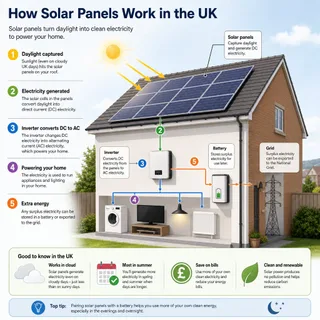
Before you compare solar PV panels in any detail, you need to be clear on what you are comparing. Solar PV panels convert sunlight into electricity. Solar thermal systems use sunlight to heat your water. They are completely different technologies and serve different purposes, yet they are often confused in online searches. If you want the basics before comparing brands and quotes, start with how solar works.
A typical solar thermal system costs around £6,000, but it will not power your appliances, your electric vehicle, or a heat pump. For most UK homeowners, PV is the more versatile choice. It offsets electricity bills, which are typically higher than gas bills, and it qualifies you for Smart Export Guarantee payments on surplus energy you send to the grid. If your primary goal is cutting electricity costs, focus on PV. If you only want to reduce hot water heating bills, thermal might be worth a look, but a PV system paired with a solar diverter can actually do both by sending excess generation to your immersion heater.
What to Compare When Choosing Solar PV Panels
When you sit down to compare solar PV panels, five factors matter more than any glossy brochure or sales pitch. Start with these and you will quickly separate the meaningful differences from the marketing noise.
Efficiency tells you how well the panel converts sunlight into usable electricity. Premium brands like SunPower reach 22 to 24 percent, while mainstream options like UKSOL sit around 19 to 21 percent. Higher efficiency means more power from limited roof space, which matters if your south-facing area is tight.
Warranty length is a direct signal of manufacturer confidence. The industry standard is 25 years, but the range is wide. Sharp offers 15 years, while SunPower extends to 40 years. A longer warranty is not just peace of mind; it protects your investment over the full lifespan of the system. Degradation rate describes how quickly the panel loses performance year on year. Premium panels degrade slower, which compounds significantly over 25 years. A panel that retains 92 percent of its output after two decades will deliver noticeably more energy than one that drops to 85 percent. Temperature coefficient is often overlooked but genuinely relevant for UK summer performance. It measures how much efficiency drops when panels get hot. A lower coefficient means better output on bright July afternoons when you could be generating the most. If you want to go deeper into the UK factors behind output, our guide to solar panel efficiency explains the details. Aesthetics matter if you live in a listed building or conservation area. Roof-integrated panels, such as those from Viridian Solar, replace tiles rather than sitting on top of them. They can be the difference between getting planning approval and being turned down flat.
Solar Panel Brand Comparison: Efficiency, Warranty and Suitability
Putting the numbers side by side makes it easier to see where each brand fits. Here is how the major players stack up in 2026.
SunPower sits at the premium end with 22 to 24 percent efficiency and a warranty of up to 40 years. If you have limited roof space and want maximum output per square metre, this is the benchmark. REC delivers 21 to 22 percent efficiency with a 25-year warranty and a strong reputation for low degradation rates, making it a favourite among installers who prioritise long-term reliability.
LONGi offers 20 to 22 percent efficiency and a 25-year warranty, backed by substantial global manufacturing scale. It is a solid mid-to-high performer that often hits a sweet spot on price versus performance. Panasonic brings consistent Japanese engineering with 20 to 22 percent efficiency and a 25-year warranty, a dependable choice if brand heritage matters to you. UKSOL and Viridian both operate in the 19 to 21 percent efficiency range. UKSOL is a reliable budget-friendly option that keeps costs down without cutting corners on the essentials. Viridian differentiates itself with roof-integrated panels designed for planning-sensitive homes, a niche solution that can be the only viable route for some properties. Sharp and SOLARWATT also fall in the 19 to 21 percent bracket, but note that Sharp offers a shorter 15-year warranty, so check the small print before committing.
How Much Do Solar PV Panels Cost in the UK?
The Energy Saving Trust pegs a typical 3.5kWp system at around £7,600, and most comparison sites use this as their baseline. The price you actually pay depends on system size, panel brand, installer overheads, and the complexity of your roof. For a wider view of what affects quotes, see our guide to UK solar pricing.
System size price ranges for 2026 break down roughly as follows. A 2kW system costs between £4,600 and £5,800, suitable for small homes with low daytime electricity usage. A 4kW system, the most common choice for households of three to four people, ranges from £5,000 to £7,000. A 6kW system, aimed at larger families or homes with an electric vehicle, falls between £6,000 and £8,000.
The price per kilowatt drops as system size increases, but resist the temptation to oversize. A system should be matched to your actual consumption patterns, not the largest array your roof can physically hold. Installation costs vary with scaffolding requirements, roof pitch, and whether your consumer unit needs upgrading. Financing options include outright purchase, which typically delivers the best long-term return, as well as green mortgages and fixed-term payment plans stretching from three to ten years.
Payback Periods and Long-Term Savings
The Energy Saving Trust estimates a payback period of 9 to 15 years, a wide range that reflects how much your usage habits and export tariff affect the maths. A typical system can cut electricity bills by 50 to 70 percent, but the real variable is how much of your generation you consume on site rather than exporting to the grid. For a fuller explanation of the numbers, read about solar payback periods.
The Smart Export Guarantee, or SEG, pays you for surplus electricity you send back. Rates vary by supplier, so it is worth comparing SEG tariffs alongside your installation quotes. Adding a battery storage system can push self-consumption from around 30 to 50 percent up to 70 or 80 percent, dramatically shortening your payback period. Think of it this way: every unit of solar electricity you use yourself is effectively locked in at zero pence per kilowatt-hour for the next 25 years. That is the hedge against future price rises that makes the upfront investment stack up.
Does Your Roof Qualify? Key Suitability Checks
Not every roof is a good candidate, and an honest suitability check before you get quotes will save you time and disappointment.
Orientation is the starting point. South-facing roofs are ideal, but east/west splits can still work well, generating across a longer portion of the day even if total output is lower. A roof pitch of 30 to 40 degrees is optimal. Shading from trees, chimneys, or neighbouring buildings can significantly reduce output, though micro-inverters or power optimisers can mitigate the impact on individual panels.
Space is the next filter. A typical installation needs around 20 square metres of roof area. A 4kW system requires roughly 16 panels covering over 25 square metres. Your roof must also be structurally sound enough to support the panels for 25-plus years. If you are planning to re-roof within the next few years, do that first, or consider solar tiles as an integrated option that combines both jobs. Planning permission is not required for most homes, but conservation areas and listed buildings have restrictions. Check the planning permission rules before you commit.
Batteries, EV Chargers and Heat Pumps: What to Add and What to Skip
Solar PV rarely exists in isolation anymore. The question is which additions make financial sense for your household.
A battery is the single biggest upgrade for maximising savings. It stores daytime generation for evening use, pushing self-consumption much higher and insulating you from peak-rate electricity. Costs vary by capacity and chemistry, but batteries are increasingly bundled with new installations, and retrofitting one later is often more expensive than including it from day one. If you already have panels installed, compare the practicalities of adding a battery before you price a retrofit.
An EV charger is a natural pairing if you drive an electric vehicle. Charging on sunshine during the day can cut your fuel costs dramatically, and some chargers can be configured to prioritise solar generation automatically. Heat pumps pair well with solar PV in principle, but the maths only works if your system is sized for the higher electricity demand a heat pump introduces. Model your total consumption before committing to both technologies at once. Adding technology for the sake of it can extend your payback period. Compare what you actually need, not what is available.
How to Compare Installers and Avoid the Sales Pressure
The installer you choose matters as much as the panels themselves. Start with MCS certification. It is the industry standard and a non-negotiable requirement for SEG eligibility. Without it, you cannot claim export payments.
Compare at least three quotes and insist they are like-for-like: same panel brand, same system size, same warranty terms. A cheaper quote that swaps in a lower-spec panel or a shorter warranty is not a saving; it is a different product. Check Trustpilot scores and review volume. Established names like iHeat, rated 4.8 stars across more than 10,700 reviews, and Glow Green, rated Excellent from over 14,000 reviews, have the track record to back their claims. Ask whether the company uses its own installation teams or subcontracts the work. Subcontracting can affect accountability and quality control, so it is a question worth asking directly.
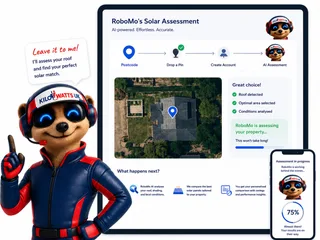
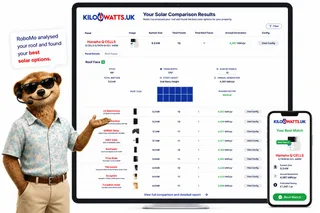
Independent tools can help you assess your roof's potential before you speak to a salesperson. An AI-powered solar assessment, like the RoboMo tool available through our platform, gives you a clear picture of what your roof can generate, so you arrive at conversations with installers informed and confident rather than starting from scratch. You can also use our solar panel comparison and battery storage recommendations to shortlist options that match your home before you request quotes from our vetted installer directory.
Maintenance, Lifespan and Hidden Considerations
Solar panels typically last 25 to 30 years, though performance degrades gradually over that period. Premium brands degrade slower, which is part of what you pay for upfront. Maintenance is minimal. There are no moving parts to wear out, and an occasional clean, particularly if you live in a dusty area or near trees that drop sap or attract birds, is usually all that is needed.
Check your home insurance policy before installation. Most providers cover roof-mounted panels as standard, but confirming with your insurer avoids surprises later. Electrical work must comply with Part P of the Building Regulations, so ensure your installer handles certification and provides the necessary paperwork on completion. On the environmental side, a typical domestic system saves several tonnes of CO2 per year. If sustainability is part of your motivation, that figure is worth factoring into your decision alongside the financial return.
Your Next Steps: Compare With Confidence
You do not need to be a solar expert to make a confident decision. You need the right framework and the right installer. Start with a free solar and battery assessment to understand your roof's potential before you talk to any salesperson. Use the comparison framework above to shortlist panel brands and system sizes that match your roof and budget. Get at least three quotes from MCS-certified installers and compare them like-for-like. If your budget allows, include a battery from day one. The savings compound, and retrofitting later often costs more. The UK solar market in 2026 is busy, competitive, and full of genuine opportunity for households that take the time to compare properly. You are now equipped to do exactly that.
Plan, Compare & Buy Renewable Energy Solutions
AI does the thinking.
You get the perfect solar match.
Use RoboMo™ to assess your property, compare available technologies and connect with trusted UK installers, suppliers and manufacturers.
Simply enter your postcode, drop a pin on your roof, create your free account and let RoboMo™ analyse your property to find the best solar panels for your home.

You don't have to think
RoboMo™'s AI analyses your roof and does all the hard work.

Accurate & tailored
AI-powered assessment based on your roof, location, and conditions.

Best options, maximum savings
Compare top solar panels for the best performance and value.

Simple, fast & effortless
Provide a few details, sit back and watch your results unfold.
STEP 1
Choose Home, Business or Industrial
Enter your postcode to start your assessment.
STEP 2

Drop a pin on your roof
STEP 3

Create your free account
STEP 4

Sit back and watch RoboMo™ work
RoboMo™ analyses your roof and builds your personalised solar comparison.
BATTERY ROI TOOL
See what a battery saves on your bill
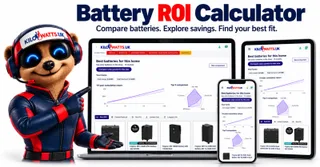
Enter the day rate, off-peak rate and export rate. The calculator ranks batteries in the Kilowatts shop over 10 years.
Home batteries also suit offices and small commercial sites. Industrial batteries are listed on their own calculator.

Step 1
Enter your postcode
Start designing your wind energy system in seconds.
Are you an installer, distributor or renewable energy business?
Kilowatts UK is expanding the Flower Turbines partner network across the UK.
Become A Flower Turbines PartnerKilowatts UK is an authorised representative
Flower Turbines
Compact vertical-axis turbines built for real UK sites, not just open farmland.
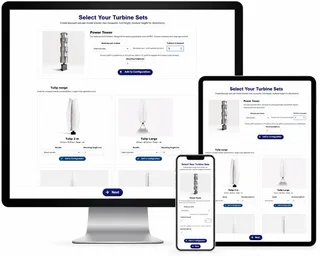
They start in light wind, sit in a small footprint, and are bird-safe by design. Cluster them as a bouquet and the group performs better together than the same turbines standing alone. Enter your postcode for a location-based generation estimate. Figures use area weather data and will differ if buildings, trees or hills sit in the way.
Starts in light UK wind
Built to generate in typical UK wind, not only open farmland.
Small rooftop or ground footprint
Compact towers for roofs, yards and tight sites.
Bird-safe slow rotation
Slow vertical-axis spin, bird-safe by design.
Bouquet clusters raise output
Grouped turbines outperform the same units standing alone.
STEP 2

Choose a location
STEP 3

Place your cluster
Tap the map where you want the turbine cluster to go.
STEP 4

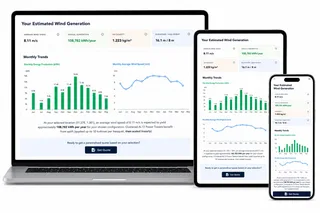
Instant generation forecasts
Compare different turbine layouts and see annual generation forecasts instantly.
STEP 5

No commitment required
Explore different configurations before deciding whether to request a quotation.
Related articles

Mo's Mission Nominations
FAQ
Need Help? RoboMo's Got Answers
What should I compare when choosing solar PV panels in the UK?
Compare panel efficiency, product warranty, performance warranty, degradation rate, inverter type, installer quality and the total installed cost. Check whether the quote includes scaffolding, roof works, monitoring, electrical upgrades, DNO paperwork and any battery or EV charger. The cheapest quote is not always best if the components, workmanship or aftercare are weaker.
How much do solar PV panels cost in the UK in 2026?
Costs vary by system size, panel brand, roof complexity, access requirements and installer. The Energy Saving Trust has used around £7,600 as a typical figure for a 3.5kWp domestic system, but your home may be higher or lower. Always compare like-for-like quotes rather than relying on a headline price.
Which solar panel brand is best for my home?
There is no single best solar panel brand for every UK roof. Premium high-efficiency panels can be useful where roof space is limited, while mainstream panels may offer better value where there is plenty of space. Look at warranty terms, expected long-term output, degradation figures and whether the installer has experience fitting that brand.
How long does it take for solar panels to pay for themselves?
Many UK households see payback estimates in the region of 9 to 15 years, but the result depends on system cost, electricity prices, export tariff and how much solar energy you use at home. Homes with high daytime electricity use often benefit more. A battery can improve self-consumption, but it also adds cost, so it should be modelled carefully.
Do I need a battery with solar panels?
You do not need a battery for solar PV to work, but it can help you use more of your own generation in the evening. Without a battery, surplus electricity is usually exported to the grid under a Smart Export Guarantee tariff if you have an eligible arrangement. Whether a battery is worthwhile depends on your usage pattern, tariff, budget and available space.
Is my roof suitable for solar PV panels?
A good solar roof usually has enough unshaded space, a sound structure and a favourable orientation. South-facing roofs are often ideal, but east and west-facing roofs can still perform well. Shading from chimneys, trees or nearby buildings should be assessed before you accept a quote.
Do solar panels need planning permission in the UK?
Many domestic rooftop solar installations are covered by permitted development rights, but there are exceptions. Listed buildings, conservation areas, flats and unusual roof layouts may need extra checks or consent. Rules can vary by property and location, so confirm the position before installation.
How do I compare solar installers and avoid sales pressure?
Ask for a written survey-based quote, an estimated generation figure and a clear breakdown of all equipment and labour. Check workmanship cover, product warranties, reviews and whether the installer explains DNO and export arrangements clearly. Avoid signing on the day if you feel rushed or if discounts depend on an immediate decision.