


Choosing the Best Home EV Charger for Your UK House
Published: 2026-06-28 23:33:10
Updated: 2026-07-26 18:18:37
4 kW smart charger that suits your car, parking space, electricity tariff, electrical supply and future energy plans.
What is the best EV charger for home use?
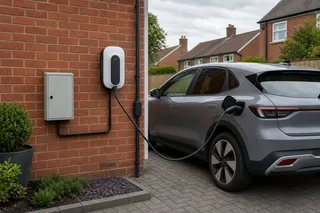
The best EV charger for home use in the UK is usually a 7 kW or 7.4 kW smart charger that suits your car, parking space, electricity tariff, electrical supply and future energy plans. For most homes, the best choice is not simply the fastest or most expensive unit. It is the charger that can be installed safely, works reliably with your tariff, is convenient to use every day, and fits your driveway or garage layout.
For many UK homeowners, the right starting point is a smart 7 kW charger installed by a qualified electrician after a proper site survey. From there, the best model depends on what matters most to your household: cheap overnight charging, solar integration, appearance, cable storage, app control, or keeping the upfront cost sensible.
In short:
- Choose a 7 kW or 7.4 kW charger for most single-phase UK homes.
- Prioritise a safe, compliant installation over small product differences.
- Pick strong tariff integration if you do most charging overnight.
- Pick solar compatibility if your car is often at home during daylight.
- Pick tethered for daily convenience and untethered for a neater look.
- Check Wi-Fi, cable route, parking position and main fuse capacity before buying.
Common all-round options include the Ohme Home Pro, Ohme ePod, myenergi zappi, Hypervolt Home 3 Pro, Andersen A3, Pod Point Solo 3S, Wallbox Pulsar Max, EO Mini Pro 3 and Rolec QUBEV Smart. The right one depends on the household rather than one model being best for everyone.
Best home EV charger by household type
For many UK homes, the practical shortlist starts with a smart 7 kW unit that includes suitable electrical protection, load management options, open PEN conductor protection or a compliant earthing design, a reliable app, and installer support. Once those basics are covered, the best charger depends on the way you will actually charge.
Best for most tariff-focused drivers: Ohme Home Pro or Ohme ePod are often strong choices where cheap overnight tariff integration is the priority. Best for homes with solar panels: myenergi zappi is one of the best-known choices for solar surplus charging, especially where solar PV is already installed or planned. Best for a neat tethered installation: Hypervolt Home 3 Pro is often considered where appearance, cable management and app features matter. Best for premium design: Andersen A3 is usually chosen where cable concealment and finish options justify a higher price. Best for straightforward mainstream charging: Pod Point Solo 3S is a familiar UK option for simple scheduled charging. Best for compact spaces: EO Mini Pro 3 or Wallbox Pulsar Max can suit visible or narrow installation areas.
This is not a fixed league table. A cheaper charger with reliable scheduling can be better than a premium unit if you only need overnight charging. A solar-focused charger can be excellent for one household and poor value for another if the car is never at home when the panels are generating. Best for lower upfront cost — Rolec QUBEV Smart and other entry-level smart chargers may suit users who want a functional unit without paying for premium design.
Quick comparison of popular UK home EV chargers
The following comparison is a practical starting point, not a substitute for checking current manufacturer specifications, tariff compatibility and installer advice.
The best comparison method is to start with your needs rather than the product name. If you have solar, shortlist solar-capable chargers first. If you are choosing an EV tariff, check charger and vehicle compatibility first. If the charger will sit on the front of the house, consider cable storage and appearance before buying.
What makes a charger “best” in a real UK installation?
The best home charger is the one that matches the property as much as the vehicle. Installer-level details often decide whether a charger works well long term, especially in older homes, flats, detached garages or properties with high electrical demand.
A standard single-phase home charger can draw around 32 A at full output. That is a major load, particularly in a house with an electric shower, induction hob, heat pump, hot tub, battery system or a smaller main fuse. Load balancing can reduce charger output temporarily when the home is using a lot of electricity, helping avoid overloading the supply.
Good charger selection usually considers these points before choosing a brand:
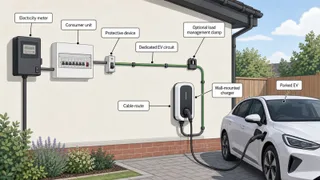
- The location of the consumer unit and electricity meter.
- The property main fuse rating.
- The charger cable route and installation distance.
- The position of the car charging port.
- The strength of Wi-Fi or mobile signal at the charger.
- The need for solar monitoring or CT clamps.
A charger with excellent app features can still be frustrating if it is fitted where Wi-Fi is weak. A compact unit can be a poor choice if the cable has to trail across a walkway. A premium tethered charger can be inconvenient if the cable is too short for the way you park. The condition of the consumer unit. The type of earthing arrangement at the property. Whether DNO approval or notification is needed. Whether the charger will be exposed, visible or vulnerable to impact.
7 kW, 7.4 kW and 22 kW home chargers
Most UK homes use a 7 kW or 7.4 kW charger because that is the practical maximum for a typical single-phase domestic supply. A 7.4 kW charger typically adds around 25 to 30 miles of range per hour, depending on the vehicle, driving efficiency and charging losses.
A 3-pin plug is much slower and is usually limited to around 2.3 kW. It may add only around 6 to 8 miles of range per hour, so it can be acceptable as an occasional backup but is usually inconvenient for regular EV use. It is also important that any socket used for EV charging is suitable, safely installed and not overloaded.
A 22 kW charger sounds attractive but is rarely the right answer for a normal UK house. It usually needs a three-phase electricity supply, which most homes do not have. It also only helps if the car’s onboard AC charger can accept 22 kW. Many EVs cannot, so the extra hardware may make no difference. For typical charging times, a 7.4 kW home charger may charge a 50 kWh battery in about 7 to 8 hours allowing for losses. Larger batteries take longer, and most drivers do not charge from completely empty to completely full every day. In real use, replacing the previous day’s mileage overnight is usually more important than achieving the fastest possible full charge.
Tethered or untethered EV charger
A tethered charger has the cable permanently attached. An untethered charger has a socket, so you plug in your own Type 2 cable. Most modern UK EVs use Type 2 for AC charging, so a tethered Type 2 unit suits many drivers.
Tethered is usually best if you want the simplest daily routine. You park, grab the cable and plug in. This matters if you charge several times a week or arrive home late and do not want to unpack a cable from the boot.
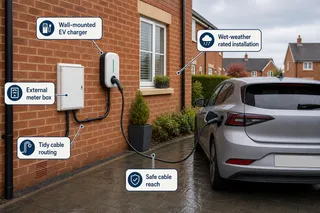
Untethered is usually best if the charger is in a very visible position, if you want a neater look when not charging, or if multiple vehicles with different cable preferences may use the same point. It can also be useful in shared or semi-shared parking situations, although billing, permission and access issues still need resolving. The overlooked issue is cable route. A tethered cable is convenient only if it reaches comfortably without crossing a path, sitting under a tyre, or stretching tightly around the car. Before choosing, check where the charging port is on your current EV and where it is likely to be on a future one.
Smart charging and electricity tariffs
Smart charging can make a large difference to running costs because it lets the charger schedule charging for cheaper periods where your tariff supports this. Some tariffs integrate with the charger, some integrate with the car, and some require compatibility with selected brands or models.
Ohme chargers are often chosen by drivers who want strong tariff-focused scheduling. They can be particularly attractive where the user wants cost-based or target-based charging through supported tariff integrations. Other chargers can also schedule charging, but the depth of tariff integration varies.
You should check tariff compatibility before installation, not after. Compatibility can depend on the electricity supplier, the car, the charger model and the app connection. It can also change over time, so manufacturer and supplier compatibility lists matter. Smart charging may pause or delay charging to use lower-cost periods. That is usually fine for overnight charging, but drivers who must leave early with a full battery should understand how to override schedules and set a required departure time.
Example: when tariff integration matters
A commuter who drives most weekdays and plugs in overnight may benefit from a charger with strong tariff integration, because the charger can automatically prioritise cheaper charging windows where supported. In this situation, the best charger is often the one that works smoothly with the driver’s chosen electricity supplier, vehicle and app.
By contrast, a household that only charges occasionally and does not use an EV-specific tariff may not need the most advanced tariff features. A reliable smart charger with simple scheduled charging may be enough.
Solar panels and EV chargers
If you have solar panels, the best EV charger is often one that can detect surplus generation and adjust charging accordingly. The myenergi zappi is widely known for this, and some other chargers, including Hypervolt models, also support solar-related features.
Solar EV charging works best when the car is parked at home during daylight, especially in spring and summer. It is less useful if the car leaves every weekday morning and returns after sunset. Many domestic solar arrays cannot supply a full 7 kW EV charge rate by themselves for long periods, so the charger may still use grid electricity.
Solar panel direction also affects whether a solar-compatible charger is worth paying extra for. South-facing panels usually give the highest annual generation in the UK. East-facing panels can help with morning charging, west-facing panels can help later in the day, and east-west arrays can spread output across more hours. North-facing panels are usually less productive, so they may provide less regular surplus for EV charging. If you are planning solar alongside EV charging, it can help to compare home solar panel options before choosing the charger. If you also have a home battery, setup matters. Without careful configuration, an EV charger may pull energy from the battery when you intended to save it for the house. A home battery is also much smaller than an EV battery in many cases, so it should not be assumed that stored solar will fully charge the car.
Example: when solar charging is worth it
A household where the car is parked on the driveway during weekdays can make better use of solar surplus charging than a household where the car is away from 8am to 6pm. For the first household, a solar-aware charger may reduce grid imports and make better use of daytime generation. For the second household, a tariff-focused overnight charger may offer better value, even if solar panels are installed.
How much does a home EV charger cost in the UK?
A typical UK home EV charger installation often costs around £800 to £1,500 including the charger and a standard installation. Budget installations may be nearer £700 to £1,000, while premium chargers or complex jobs can reach £1,500 to £2,500 or more.
The charger unit is only part of the cost. Installation complexity can be just as important. Long cable runs, groundworks, detached garages, older consumer units, difficult cable routing, load management equipment or supply upgrade requirements can all increase the final price.
Untethered units can sometimes be slightly cheaper than tethered versions. Solar-compatible chargers and design-led chargers are often more expensive than basic smart units. That extra cost may be worthwhile if it reduces running costs, improves convenience, or avoids visual clutter, but it is not automatically worth paying for. For running costs, the electricity tariff matters more than the charger hardware. A smart charger can help access cheap overnight periods where compatible, but the pence per mile still depends on your tariff and your car’s efficiency.
What to expect from a home EV charger survey
A proper survey is one of the most important parts of choosing the best charger. It helps confirm whether your preferred charger can be installed safely, where it should go, and whether extra electrical work is needed.
A survey may be done in person or partly through photos and video, depending on the installer and property. You should expect the installer to ask for details about your car, parking space, electricity supply and preferred charging routine.
What the installer should check
A good EV charger survey should normally review:
- The electricity meter, main fuse and service head.
- The consumer unit and available spare ways.
- The property earthing arrangement.
- The likely cable route from supply to charger.
- The wall or post where the charger will be mounted.
- The distance from the charger to the parked vehicle.
Whether the cable could create a trip hazard. Wi-Fi or mobile signal strength at the charger location. Existing high-load appliances such as electric showers, heat pumps or hot tubs. Whether load balancing is recommended. Whether DNO approval is needed before installation. Any solar PV, battery storage or future energy plans.
How to prepare for the survey
Before the survey, it helps to gather:
Photos of your electricity meter, service head and consumer unit. A photo of the proposed charger location. The make and model of your EV or plug-in hybrid. Where the charging port is on the vehicle. Details of your current or planned electricity tariff. Information about solar panels, home battery storage or heat pumps.
This preparation can reduce delays and help the installer recommend the right charger first time. It can also prevent a common problem: buying a charger online before discovering that the property needs a different solution. Any known issues with Wi-Fi near the driveway or garage. Details of parking restrictions, leasehold permissions or shared access.
What a good installer should check
The installer matters as much as the charger. EV charger installation must be designed around the property, comply with wiring regulations, and be notified where required. A proper survey should identify issues before the job starts.
A good installer should check the supply, earthing arrangement, consumer unit, cable route, charger location, Wi-Fi signal and parking layout. They should also confirm whether the installation needs DNO approval before work begins. In many cases the DNO is notified after installation, but approval may be needed first for higher-demand or constrained supplies.
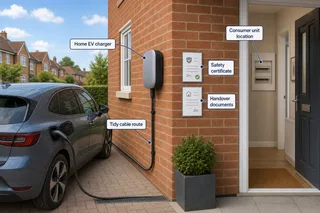
The handover should include electrical certification, app pairing, charger commissioning, schedule setup and a clear explanation of isolation and emergency shutdown. The installer should also show you how to override smart charging if you need urgent charging outside the normal schedule. If you want the property assessed before committing to equipment, you can book a free home energy survey.
Key EV charger terms explained
Understanding a few common terms makes it easier to compare chargers and avoid buying the wrong unit.
kW
Kilowatt. A measure of charging power. A 7.4 kW charger delivers energy faster than a 3-pin plug.AC charging
Alternating current charging. Home EV chargers normally provide AC power, which the car converts using its onboard charger.Tethered charger
A charger with a fixed cable attached.Type 2 connector
The standard AC charging connector used by most modern EVs in the UK and Europe.DC rapid charging
Faster charging usually found at public rapid chargers, not typical domestic wall boxes.Untethered charger
A charger with a socket, where you use a separate charging cable.
kWh — Kilowatt-hour. A measure of energy. EV battery sizes and electricity use are measured in kWh. Single-phase supply — The normal electricity supply type for most UK homes. It usually supports a 7 kW or 7.4 kW charger, subject to survey. Three-phase supply — A higher-capacity supply found in some larger homes and commercial buildings. Usually needed for 22 kW AC charging. Load balancing — A feature that reduces EV charging power when the home is using a lot of electricity. CT clamp — A current sensor used to monitor energy flow, often for load balancing or solar surplus charging. DNO — Distribution Network Operator. The company responsible for the local electricity network. Open PEN conductor protection — A safety feature or design approach used with some EV chargers to reduce risks associated with certain earthing faults. Consumer unit — The modern name for a fuse box. It contains protective devices for household circuits. Smart charging — Charging that can be scheduled, delayed or adjusted automatically, often through an app or electricity tariff integration.
When a home EV charger may not be suitable
A standard home EV charger is usually best for households with off-street parking. It is not always suitable for homes with on-street parking, shared bays, leasehold restrictions, or no safe way to route a cable.
Trailing a charging cable across a public pavement is normally not a practical solution. Some local authorities are trialling cross-pavement channels, but availability and rules vary by area. Flats and apartments can also be more complicated because they may require freeholder, landlord or managing agent permission.
A charger may also be delayed or require extra work if the electrical supply is not suitable. A small main fuse, looped supply, older consumer unit or high household demand may mean the installer needs DNO input, load management or remedial electrical work. In some homes, that may involve residential fuse box upgrades before the charger can be installed safely. Solar-optimised chargers may not be worthwhile if the car is away during daylight most of the year. Premium chargers may not be worthwhile if the unit is hidden in a garage and budget is the priority. A 22 kW charger is usually not worthwhile unless the property has three-phase supply and the vehicle can use that AC charging speed.
How to choose the best EV charger for your home
Start by deciding what problem the charger needs to solve. If you want the lowest running cost, focus on tariff compatibility. If you have solar panels, focus on surplus charging and monitoring. If the charger will be visible, focus on cable storage and finish. If your home has high electrical demand, focus on load balancing and supply assessment.
Use this practical order when comparing chargers:
Safety and compliance first. Installer quality before small feature differences. Electrical supply suitability before charger speed. Tariff compatibility before app preferences. Solar integration where daytime charging is realistic. Cable route and parking position before tethered design. For most UK homes, a good smart 7 kW charger from a reputable manufacturer is the right answer. The best model is the one that fits your property, your car, your tariff and your daily routine without adding unnecessary cost or complexity. Wi-Fi or data connection before relying on smart features. Warranty and support before cosmetic extras.
Plan, Compare & Buy Renewable Energy Solutions
AI does the thinking.
You get the perfect solar match.
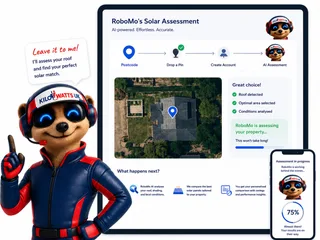
Use RoboMo™ to assess your property, compare available technologies and connect with trusted UK installers, suppliers and manufacturers.
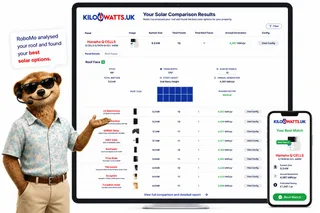
Simply enter your postcode, drop a pin on your roof, create your free account and let RoboMo™ analyse your property to find the best solar panels for your home.

You don't have to think
RoboMo™'s AI analyses your roof and does all the hard work.

Accurate & tailored
AI-powered assessment based on your roof, location, and conditions.

Best options, maximum savings
Compare top solar panels for the best performance and value.

Simple, fast & effortless
Provide a few details, sit back and watch your results unfold.
STEP 1
Choose Home, Business or Industrial
Enter your postcode to start your assessment.
STEP 2

Drop a pin on your roof
STEP 3

Create your free account
STEP 4

Sit back and watch RoboMo™ work
RoboMo™ analyses your roof and builds your personalised solar comparison.

Step 1
Enter your postcode
Start designing your wind energy system in seconds.
Are you an installer, distributor or renewable energy business?
Kilowatts UK is expanding the Flower Turbines partner network across the UK.
Become A Flower Turbines PartnerKilowatts UK is an authorised representative
Flower Turbines
Compact vertical-axis turbines built for real UK sites, not just open farmland.
They start in light wind, sit in a small footprint, and are bird-safe by design. Cluster them as a bouquet and the group performs better together than the same turbines standing alone. Enter your postcode for a location-based generation estimate. Figures use area weather data and will differ if buildings, trees or hills sit in the way.
Starts in light UK wind
Built to generate in typical UK wind, not only open farmland.
Small rooftop or ground footprint
Compact towers for roofs, yards and tight sites.
Bird-safe slow rotation
Slow vertical-axis spin, bird-safe by design.
Bouquet clusters raise output
Grouped turbines outperform the same units standing alone.
STEP 2

Choose a location
STEP 3

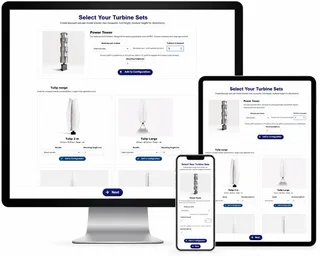
Place your cluster
Tap the map where you want the turbine cluster to go.
STEP 4

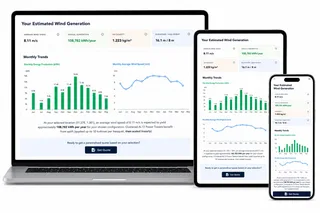
Instant generation forecasts
Compare different turbine layouts and see annual generation forecasts instantly.
STEP 5

No commitment required
Explore different configurations before deciding whether to request a quotation.
Related articles
Mo's Mission Nominations
FAQ
Need Help? RoboMo's Got Answers
What is the best EV charger for home use in the UK?
For most UK homes, the best EV charger is a smart 7 kW or 7.4 kW charger installed by a qualified electrician after a proper survey. The right model depends on your car, driveway or garage layout, electricity tariff, Wi-Fi signal, electrical supply and whether you want features such as solar charging, app control or cable storage. A safe, reliable installation is usually more important than choosing the most expensive charger.
Is a 7 kW charger enough for home use?
Yes, a 7 kW or 7.4 kW charger is enough for most UK households. It is usually the practical maximum for a standard single-phase domestic electricity supply and can typically add around 25 to 30 miles of range per hour, depending on the vehicle and charging losses. Most drivers do not need to charge from empty to full every day, so overnight charging is usually more than sufficient.
Should I choose a 7 kW or 22 kW home EV charger?
A 7 kW or 7.4 kW charger is normally the best choice for UK homes. A 22 kW charger usually requires a three-phase electricity supply, which most domestic properties do not have. It will also only charge faster if your EV’s onboard AC charger can accept 22 kW. For many households, a 22 kW unit adds cost and complexity without providing a real benefit.
Is a tethered or untethered EV charger better?
A tethered charger is usually better for everyday convenience because the cable is permanently attached, so you simply park and plug in. An untethered charger can look neater when not in use and may suit visible locations or homes where different vehicles may use the charger. The best choice depends on where the car parks, where the charging port is, and whether the cable can reach safely without crossing a walkway or being stretched.
Which EV charger is best for cheap overnight charging?
Chargers with strong smart charging and tariff integration are usually best for cheap overnight charging. Ohme chargers are often chosen for tariff-focused charging because they can work well with supported suppliers and tariffs, but compatibility should always be checked before installation. Some chargers schedule by time, while others integrate more deeply with tariffs, vehicles or supplier apps.
Which EV charger is best for solar panels?
A solar-compatible charger is best if you want to use surplus solar electricity to charge your EV. The myenergi zappi is one of the best-known options for solar surplus charging, while some other chargers also offer solar-related features. Solar charging is most useful when the car is at home during daylight; if the car is usually away during the day, a tariff-focused overnight charger may offer better value.
How much does a home EV charger cost in the UK?
A typical home EV charger installation in the UK often costs around £800 to £1,500 including the charger and a standard installation. Simpler installations may cost less, while premium chargers, long cable runs, detached garages, consumer unit work, load management or supply upgrades can increase the price. The final cost depends on both the charger model and the complexity of the installation.
Can I use a normal 3-pin plug to charge an electric car?
A 3-pin plug can be used as an occasional backup, but it is much slower than a dedicated home charger and is not usually the best option for regular EV charging. It may add only around 6 to 8 miles of range per hour and the socket must be suitable, safely installed and not overloaded. A dedicated 7 kW home charger is generally faster, safer and more convenient for daily use.
Do I need a survey before installing a home EV charger?
Yes, a survey is strongly recommended before installing a home EV charger. The installer should check the electricity meter, main fuse, consumer unit, earthing arrangement, cable route, parking position, Wi-Fi signal and any high-demand appliances. A survey helps confirm whether the charger can be installed safely and whether load balancing, DNO approval or electrical upgrades may be needed.
What should a good EV charger installer check?
A good installer should check the property’s electrical supply, main fuse, earthing system, consumer unit, cable route, charger location, Wi-Fi or mobile signal and parking layout. They should also consider high-load appliances such as electric showers, heat pumps or hot tubs, and confirm whether DNO notification or approval is required. After installation, they should provide certification, commission the charger and explain how to use the app, schedules and emergency isolation.
Do I need Wi-Fi for a smart EV charger?
Most smart EV chargers need a reliable Wi-Fi, mobile data or other network connection to use app features, software updates and tariff-based smart charging. If the charger is fitted on a driveway or garage wall with weak signal, smart features may be unreliable. Signal strength should be checked during the survey so the installer can recommend a suitable charger location or connectivity solution.
What is load balancing on an EV charger?
Load balancing reduces the charger’s output when the home is using a lot of electricity. This can help avoid overloading the supply, especially in homes with electric showers, induction hobs, heat pumps, hot tubs or smaller main fuses. It is an important feature where household demand is high or where the electricity supply has limited spare capacity.
Do I need permission from the DNO to install an EV charger?
Many EV charger installations require DNO notification, and some need DNO approval before installation. The DNO is the Distribution Network Operator responsible for the local electricity network. Whether approval is needed depends on the property’s supply, existing demand, main fuse, charger rating and any network constraints. A qualified installer should assess this before work begins.
Can I install an EV charger if I do not have off-street parking?
A home EV charger is usually most suitable for properties with off-street parking, such as a driveway or garage. If you rely on on-street parking, trailing a cable across a public pavement is normally not a safe or practical solution. Some local authorities are trialling pavement channels or other options, but rules vary by area and permission may be needed.
Are home EV chargers suitable for flats or apartments?
Home EV chargers can be installed at some flats and apartments, but they are often more complicated than standard driveway installations. You may need permission from the freeholder, landlord, managing agent or residents’ association, and the electrical supply, parking bay ownership, cable route and billing arrangements all need to be considered. A survey is essential before choosing a charger.
What is open PEN conductor protection?
Open PEN conductor protection is a safety feature or design approach used with some EV charger installations to reduce risks linked to certain earthing faults. Many modern EV chargers include built-in protection, while some installations may need a specific earthing arrangement or additional equipment. The installer should confirm the correct method for your property.
How do I choose the right EV charger for my home?
Start with your charging routine and property requirements rather than the charger brand. If low running cost is the priority, check tariff compatibility. If you have solar panels, look for solar surplus charging. If the charger will be visible, consider design and cable storage. If the property has high electrical demand, make load balancing and supply assessment a priority. For most UK homes, a reputable smart 7 kW charger installed correctly is the best solution.